Michael Hann

There’s a magic to hearing music in such small audiences: Divine Comedy reviewed

From our UK edition

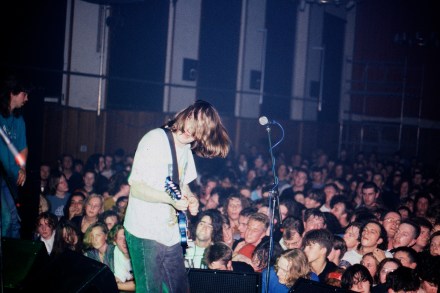
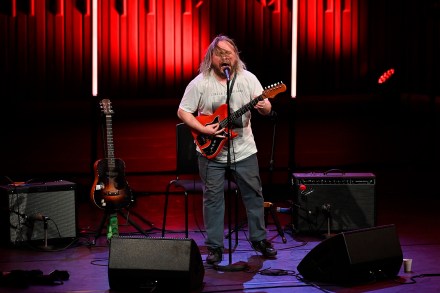
Three shows in a week! Why, it was just like the first week of March. There was, however, little of that last-days-of-Weimar giddiness about these. How could there be, when there were 300-odd people dotted around Barbican Hall’s 2,000 seats, and 50 or so of us at Oslo — normally a packed, standing-only club — sat on stools, unable even to waggle a hip? One felt sad for Working Men’s Club, a young quartet from Yorkshire whose first album — released earlier this month — had critics cheering. They should have been swanning around the country, heading off to Europe, maybe popping across the Atlantic, to play in New York and LA at least. Instead, their tour was three half-hour shows in one evening in a single London club.

‘Cocaine addiction is time-consuming’: the rise and fall of Kevin Rowland and Dexys

From our UK edition

When Dexys Midnight Runners reached No. 1 in the singles charts in spring 1980 with the song ‘Geno’, the band had to travel to London for their coronation appearance on Top of the Pops. For the first time they could afford the train fare. But Kevin Rowland — their singer, leader, creative director, boss, whatever you want to call him — insisted they continue to jump the barriers at Birmingham New Street. ‘I said, “Come on lads, we’re still going to bunk the trains.” And they went, “What?” “Come on, the inspector’s coming. We’ve got to get in the toilets.” And the drummer said, “Kev. We’re No. 1 in the charts and we’re bunking the trains…”. “GET IN!

The people who were idiots at gigs in early March are still idiots

From our UK edition

Is the world ready for the return of live rock music? On the evidence of the first gig in London since lockdown, no. The people who were arseholes at gigs in early March are still arseholes at gigs, but there’s rather more than an obstructed sightline at stake now. Miles Kane was the guinea pig for the experiment, playing to 150 people who’d applied for tickets and who stood in a summer downpour watching him play acoustically. More on Kane later, but his presence was the least important thing here. The gig was the first in a series of small shows in Camden Market, and the organisers had taken care: masks were compulsory and the ground was marked with green dots to ensure everyone stood where they were supposed to.

The problem with livestreaming heavy metal? No moshpits

From our UK edition

There was only so long anyone could put up with the live musical performances of the early days of lockdown: musicians in their living rooms, performing stripped-back versions of their songs in broadcasts that froze or stuttered. The time would come, inevitably, when everyone wanted more. Viewers would want something more closely approximating a full show; musicians would want to be paid. Laura Marling was early through the gates: last month, she promoted her latest album with two concerts at the Union Chapel in London, played to an empty hall but streamed for UK and US audiences.

Dysfunctional music for dysfunctional people: The Public Image is Rotten reviewed

From our UK edition

A star is born, but instead of emerging into the world beaming for the cameras, he spits and snarls and announces his intention to destroy the establishment via the medium of rock records. But who is it? Is it Bob Geldof or John Lydon? Citizens of Boomtown: The Story of the Boomtown Rats — another in the ongoing trend of the BBC screening films that are fundamentally ads for a band’s new album — made the case for Geldof, suggesting he and his bandmates singlehandedly dragged Ireland into the modern age (the Daily Telegraph’s chief rock critic popped up to say they were the first roar of the Celtic Tiger).

The power of cheap music: pop podcast round-up

From our UK edition

Noël Coward was so right that his words have become a cliché: it is indeed extraordinary how potent cheap music can be. Its potency, however, is not innate. Amanda Prynne, from Coward’s Private Lives, would not have been especially struck by ‘Some day I’ll Find You’ had it been playing on a wireless in a shop; its impact came from hearing it as she again encountered her ex-husband. For cheap music to be potent, context is everything. Without a wider meaning, a cheap little pop song is just notes and chords. With meaning, the most throwaway frippery can become an object of fascination. That’s often true of the best known of songs.

Joyous and very, very funny: Beastie Boys Story reviewed

From our UK edition

The music of the Beastie Boys was entirely an expression of their personalities, a chance to delightedly splurge out on to record everything that amused them. And early on, in their teens-get-drunk debut album, Licensed To Ill, that resulted in obnoxiousness. But mostly they were kinetic and colourful, which is why the new Apple TV+ film about them works so well. The format suits the story. Beastie Boys Story simply documents a stage show where winningly they talk the audience through their personal history. It’s much like Netflix’s Springsteen on Broadway. But since the third Beastie, Adam Yauch, died in 2012, the band no longer perform, so where Springsteen punctuated his memories with songs, the Beasties do it with film clips.

Releasing a charity single is a performance – but don’t mock attention-seeking superstars, pity them

From our UK edition

You can’t move for them. At least, you wouldn’t be able to if you could leave your house. NHS charity singles as far as the eye can see – from Queen, from the collection of second division 90s musicians billed as the Indie Allstars, from the rather bigger names gathered together by Radio 1 to record Foo Fighters’ 'Times Like These'. From unknowns – The Singing Dentist, The Ideas. And from the charity hero du jour, Captain Tom Moore, accompanied by star of stage, screen and the Christmas CD market, Michael Ball. Then there are the charity gigs that have been announced, to raise money for the NHS, or to give NHS staff a free night out – gigs by Liam Gallagher, Manic Street Preachers, Rick Astley, Paul Heaton and Jacqui Abbott.

Livestream-hopping is just as irritating as being at a real festival

From our UK edition

The ghost of Samuel Beckett oversaw the Hip Hop Loves NY livestream last Thursday night. Time and time again its host, the veteran hip-hop TV presenter Ralph McDaniels — known to all his guests, unnervingly, as ‘Uncle Ralph’ — tried to connect to some Golden Age legend. Time and time again, his attempts at a straightforward interview went wrong. We saw Uncle Ralph, on one half of the screen, ask a question about Covid-19, nod along to the answer, then say, ‘Thank you, doctor.’ But we didn’t have a doctor on screen, or on our audio. We had Ice T. ‘I ain’t no doctor,’ Ice-T said. Cut to Nas. But Nas was inaudible, and his picture was breaking up. ‘I see Chuck D!’ He did, but we didn’t.

Felt longer than the lockdown itself: BBC1’s One World – Together At Home reviewed

From our UK edition

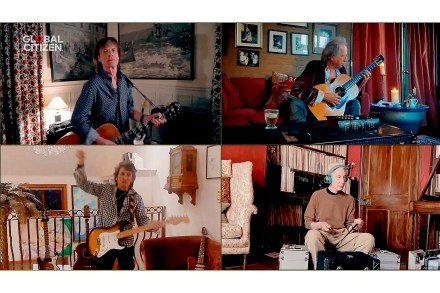
You have to admire the spirit of the organisers of last weekend’s One World: Together at Home concert. To put on an event that seemed to last longer than lockdown itself is the sort of can-do attitude we love to see. The main event — the really star-studded portion that was shown live on Saturday night on the big three US networks, and then adapted for the UK and shown on BBC1 on Sunday — began only after six whole hours of preamble from slightly lesser turns. Six hours. That’s an awful lot of watching people sit with an acoustic guitar in front of their webcam. Or sometimes not even sit with an acoustic guitar — Jessie J appeared to be doing karaoke with her own CDs and singing over the top of them.

Taylor Swift is fascinating – but you really wouldn’t want to be her

From our UK edition

There had been some question about whether Taylor Swift’s Netflix special would actually appear. Last year it seemed that the ownership of her old songs by her previous record label would scupper it. But no, Ms Swift is not to be resisted, and lo, Miss Americana is available right now on Netflix, one of its two big music documentaries for the spring. Many older men seem to have a visceral distaste for Ms Swift. If you share that distaste, then I’m sorry, it’s your loss, because she’s a fascinating figure (who has also made three truly terrific albums in Fearless, Red and 1989), and Miss Americana is well worth watching.

The magic of Bryan Ferry

From our UK edition

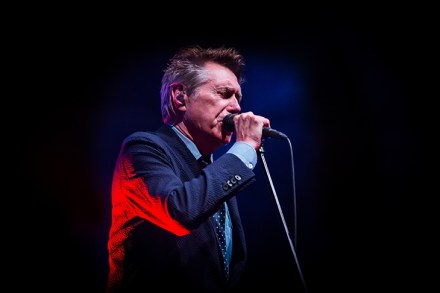
The accepted line about Bryan Ferry is that his is one of the greatest reinventions in English pop culture: Peter York said, in 1976, that his life was ‘the best possible example of the ultimate art-directed existence’. But watching him at the Albert Hall, I couldn’t help thinking of my father. That’s not to diminish the show — which was a lush and all-enveloping pleasure, like getting into bed in a very good hotel — but I couldn’t help wondering if there was actually something very specific about Ferry that tends to get ignored: his generation. He’s 74 now, though from a distance you might put him in his mid-fifties, especially in his beautifully cut suit.

Grimly compelling: The Whitney Houston Hologram Tour reviewed

From our UK edition

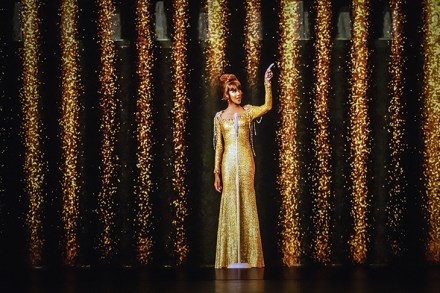
‘No matter what they take from me,’ sang Whitney Houston towards the end of a peculiar evening in Hammersmith, ‘they can’t take away my dignity.’ You want a bet on that? Eight years after she died, here was Houston — in holographic form — treading the boards once more. In death, as in life, she continues to be an object for others to make money from.The Houston on stage was not, of course, the addict who crumpled towards the end of her life; nor the one who couldn’t hit the high notes of ‘I Will Always Love You’ on her final tours. It was the beautiful young woman with the staggering voice.

Dazzling and nonsensical in equal measure: Madonna at the London Palladium reviewed

From our UK edition

You might have thought Madonna was not a singer but a professional footballer judging by the talk before she took to the stage at the Palladium last Wednesday night. She’d missed ten out of 93 appearances, and she’d been picking up the kind of niggling injuries — would her knees stand up to the strains of a long, hard season? How’s her hip? — associated with hard-running midfielders. Just as in the Premier League, there were gripes about ticket prices — go on Ticketmaster and they range from £69 to £511.50 (yes, there are tickets available throughout the run; you’ve got until 16 February to see her).

You have to be a terrific snob not to see the appeal of Slipknot

From our UK edition

Every development in heavy music is derided by mainstream critics. When Black Sabbath and Led Zeppelin emerged in the late 1960s, they were sneered at for their lumpen, troglodyte stupidity. A decade on, AC/DC were reviled for precisely the same reasons. When Metallica and Slayer helped lead the thrash metal movement in the mid-1980s, it was at first only enthusiasts for extreme noise who cheered them on. The disdain never lasts. People who grew up listening to those bands became critics or editors or broadcasters or musicians, and each of them was absorbed seamlessly into the rock canon. That’s precisely what’s happened to the Iowa band Slipknot, too.

Best gig of the week: the fuzzy, slacker melodies of teenage quintet Disq

From our UK edition

Come January, when the proper pop stars are all in the gym working off the pounds before they emerge, blinking and svelte, into the watery winter sun, the small venues of London attempt to pack in the curious by filling their schedules with seasons of up-and-coming artists. In east London this past week, the excellent promoter Eat Your Own Ears ran three free nights of new acts. In Islington, the Lexington offered first the Winter Sprinter — five nights of sweet-toothed indie pop, where you might have caught the Portland Brothers, the occasional duo featuring Steven Adams, once of the Broken Family Band, and the best songwriter almost no one in the country has heard of — and then the Five Day Forecast, in conjunction with the new music website the Line of Best Fit.

A son-et-lumière spectacular: The Chemical Brothers at the O2 Arena reviewed

From our UK edition

How does one account for the phenomenon that is the Chemical Brothers, a quarter of a century on from their first records, just getting bigger and bigger? Only now are they touring the arenas of the UK for the first time. They’re nominated for a Grammy. Their current album, No Geography, is a top-five hit. Wasn’t the 1990s dance-music explosion meant to have ended with, well, the 1990s? They’re not alone either: Underworld, too, are now playing arenas, and not just to people who want to shout the refrain to ‘Born Slippy’: ‘Lager! Lager! Lager! Lager!’ Perhaps there’s something in the fact that neither group was completely contained by dance music.

Rap that feels like a sociology lecture: Loyle Carner at Alexandra Palace reviewed

From our UK edition

A few years ago, I asked the young American soul singer Leon Bridges — a latter-day Sam Cooke, with the old-fashioned song arrangements to match — if he ever pondered the incongruity of being a black man, backed by a white band, playing music in the African-American tradition to audiences that (in the UK at least) were almost entirely white. ‘I have a song called “Brown Skin Girl”,’ he replied, ‘and I ask “Where my brown-skinned girls at?” And there’s maybe one or two in the crowd. It’s a little awkward sometimes.’ His words came to mind watching Adia Victoria.

Range and power – and amazingly she sang all her songs: Christina Aguilera at Wembley reviewed

From our UK edition

In every respect bar its austere pews, the Union Chapel is one of the best venues in London: beautiful and atmospheric, it encourages concert-goers to listen rather than chat. There’s no bringing in booze from the bar, so you’re not disturbed by people going hither and thither (though the couple next to me had smuggled in a thermos of tea and a pack of Choco Leibniz). It suited the Delines, from Oregon, down to the ground. Though they released their first album only five years ago, the Delines are hardly a young band. They’re middle-aged and their songs are middle-aged: sad and weary laments for lives that have slipped out of focus.

Fascinating and compelling: Bruce Hornsby at Shepherd’s Bush Empire reviewed

From our UK edition

In the unlikely event that Bruce Hornsby and Morten Harket, A-ha’s singer, ended up featuring in the Daily Mail for, I don’t know, getting into a fight in a supermarket over the last luxury Scotch egg, they would be described as ‘“The Way It Is” hitmaker’ and ‘the “Take on Me” star’. In neither case, I suspect, would that be how they would choose to be remembered. In Hornsby’s case, I know it’s not, because he told me so earlier this year. And when he played that song — a piece of high-class MOR so persuasive that it’s been sampled by hip-hop stars and used incessantly in TV montages since 1986 — at his London show, he introduced it by saying it was ‘why some of you are here.