Michael Hann

Simon says… farewell

Early in 1987, a middle-aged woman approached me on the record counter of the Slough branch of Boots. ‘What do you have by Ladysmith Black Mambazo?’ she demanded. Nothing. Boots in Slough wasn’t big on South African isicathamiya choral music. ‘Well,’ she suggested, ‘you really ought to get their records in. They’re going to be huge.’ She was wrong, but I knew why she was so sure. Ladysmith Black Mambazo had been among the standout guests on Paul Simon’s Graceland, released a few months before. Graceland made Simon, by my reckoning, the first pop star who had emerged from the rock’n’roll era to make a major cultural impact across three decades. By the 1980s, the Stones had become just a touring machine. McCartney was adrift.

I can’t wait for England to be knocked out of the World Cup

From our UK edition

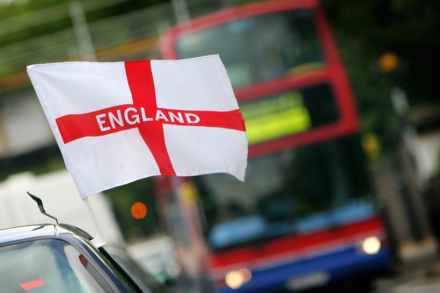
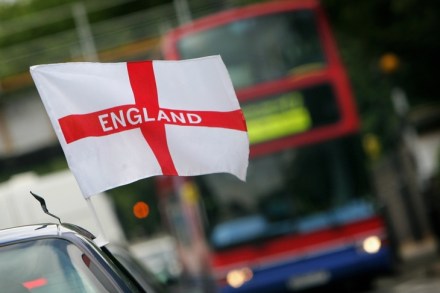
On Monday evening, I watched a man in a smart shirt and trousers put his friend in a headlock while bellowing at the top of his voice. In the central London pub I was in, guttural roars filled the room; the floor shook with people jumping up and down. A few minutes later and a few hundred yards away, people – well, overwhelmingly men – flooded on to Tottenham Court Road to stop the traffic and share their emotions with drivers. They didn’t just hail them from the pavement; they stepped in front of cars until they decided each driver had witnessed enough of their ritual. This happened because Harry Kane had scored an injury time winner against Tunisia in England’s first World Cup group game.

Mad about the girl

From our UK edition

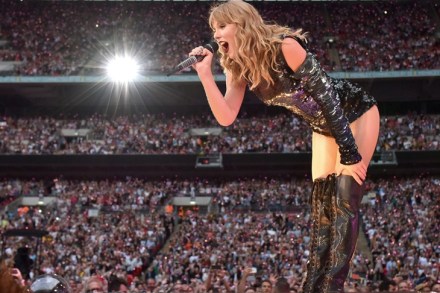
Imagine living Taylor Swift’s life. She has been staggeringly, life-dominatingly famous since she was 17. Not for a single moment in her entire adulthood (she’s now 28) has she been able to do any of the everyday things the rest of us take for granted. No wonder, then, that so much of what surrounds her seems so peculiar. No wonder her last two albums (2014’s fabulous 1989, last year’s rather less fabulous Reputation) have been dominated by songs about how other people perceive her life: every thing she does, as she is well aware, goes through a filter. She sings not about her love life — her relationships with the actors Tom Hiddleston and Joe Alwyn, the DJ Calvin Harris —but about how her love life is reported.

‘I’ve got dementia in reverse’

‘I like your shirt today,’ Sir Ray Davies says to the waiter who brings his glass of water to the table outside a café in Highgate. ‘How’s your girlfriend?’ It turns out the girlfriend is no longer the girlfriend. ‘You broke up? You know, that happens. It’ll be OK. You’ll meet somebody else.’ He pauses and then says something that runs through my head for days after our interview. ‘She’ll meet somebody else.’ It’s true, of course; she will. And it’s a human thing to say: both parties to the relationship will move on. But it’s also delivered with a hint of claws. Who wants to be told, fresh from a break-up, that their ex will soon be hooking up with another partner?

I can’t wait for England to be knocked out of the World Cup | 21 June 2018

From our UK edition

On Monday evening, I watched a man in a smart shirt and trousers put his friend in a headlock while bellowing at the top of his voice. In the central London pub I was in, guttural roars filled the room; the floor shook with people jumping up and down. A few minutes later and a few hundred yards away, people – well, overwhelmingly men – flooded on to Tottenham Court Road to stop the traffic and share their emotions with drivers. They didn’t just hail them from the pavement; they stepped in front of cars until they decided each driver had witnessed enough of their ritual. This happened because Harry Kane had scored an injury time winner against Tunisia in England’s first World Cup group game.

The nonconformist

From our UK edition

Viv Albertine, by her own admission, hurls stuff at misbehaving audiences. Specifically, when the rage descends, any nearby full cup or glass is likely to be decanted over the object of her ire. She’s remembering an incident a few years back, at a gig she played in York, when she felt compelled to introduce some persistent talkers to the contents of their pint glasses. ‘There’s such a fine balance there, because you don’t want to sound like a schoolmarm. Johnny Rotten used to walk offstage if there was spitting. The Slits [the groundbreaking punk band for whom Albertine was the guitarist] couldn’t do that because we would have looked like Violet Elizabeth Bott: “We’re not going to play until you thtop thpitting”.

The making of the Moody Blues

From our UK edition

Rarely has one irate punter so affected a band’s trajectory. Without the anger of the man who went to see the Moody Blues at the Fiesta Club in Stockton in 1966, the band would never have reinvented themselves, never have transformed into psychedelic pioneers, and next month they would not be travelling to America to be inducted into the Rock and Roll Hall of Fame, the honour bestowed annually upon those the US music business deems the most significant artists of all. The Moody Blues had been a moderately successful group — everyone who has ever listened to an oldies radio station knows their version of ‘Go Now’, a No. 1 single in 1964 — but by 1966 they were on the skids.

Now that’s what I call music

From our UK edition

One of the members of the government’s HS2 Growth Taskforce is remembering the first time he went to a gay club. ‘There was a club in Coventry that was only open on a Sunday night, at the Quadrant, and a mate of mine said, “There’s a DJ there who plays some fantastic music that I know you’ve never heard, so why don’t we go down?” It was a gay club, or a queer’s club as it was known then. I loved it. Oh, I loved it. I couldn’t believe that blokes were dancing with each other. The music was awesome.

Man and boy | 23 November 2017

From our UK edition

In the last week of October, the middle-aged Baxter Dury and the boy Baxter Dury were brought together. The 45-year-old man released his fifth album, Prince of Tears, his best so far. The five-year-old boy, meanwhile, appeared on the cover of New Boots and Panties!!, by his father Ian Dury, released in 1977, but re-released in a bells-and-whistles deluxe edition the same day Prince of Tears came out. You wouldn’t listen to Prince of Tears and conclude that Baxter was Ian’s son, but once you know they are related it becomes hard not to hear generational echoes. The opening song, ‘Miami’, is the kind of wrong-un character study that the elder Dury used to engage in, but updated for a colder age, in which the drugs and the delusions have changed.

Sound and vision | 28 September 2017

From our UK edition

To get a reminder of how strange the 1970s were, there’s no need to plough through lengthy social and political histories. Go instead to YouTube, and watch the public-information films made for schoolchildren. Take Lonely Water (1973), in which Donald Pleasence provides the voice of death, stalking careless children and dragging them to a watery grave. There’s Apaches (1977), in which kids playing on a farm suffer various recondite forms of agricultural death (falling under the wheels of a moving tractor, drowning in slurry). Or try my personal nightmare, The Finishing Line (1977); a school sports day, played out on a railway line, which ends with the traditional sprint through a tunnel pursued by a train and the bodies of dozens of dead children laid out on the track.

Northern rock

From our UK edition

A fortnight ago, the debut album by a young British guitar band entered the chart at No. 6. You might have expected to see this pored over with some interest by the press, for whom the search for the New Arctic Monkeys, the New Oasis and the New Smiths has long been a matter of urgency. Instead, you will scour the daily newspaper arts pages in vain for mentions of the Sherlocks, and you won’t fare much better looking at the specialist music magazines. According to the self-anointed tastemakers of British pop, they might as well not exist.

His dark materials | 3 August 2017

From our UK edition

Randy Newman is already struggling to keep up with himself. His dazzling new album, Dark Matter, was written before the changes of the last year, and no matter how pointed and current some of it is, there’s something missing. ‘There was a newspaper article that said Donald Trump is like a character in a Randy Newman song,’ he says. ‘I didn’t think there were any real people like the guy in “Political Science” or “My Life Is Good”. But he’s close.’ He’s had a bash at something for the Potus. ‘I just had an idea for a Trump song,’ he says, sounding rather like Yogi Bear’s rather smarter brother. ‘But then I didn’t do anything about it.

A genuine oddity

From our UK edition

The most compelling pop singers in music right now — at least in the branch where pop singers still play guitars — were on stage last week. The 1975, fronted by Matty Healy, finished the tour in support of their second album, a US and UK number one, with a headline show at the Latitude festival, the chosen spot for recreational drug-taking by kids who have just finished their GCSEs. Ezra Furman played his most prestigious London show yet, appearing at the Barbican as part of the 20th anniversary celebrations of his label, Bella Union. Healy and Furman are very different — the one a genuine popstar, the other off in the margins — but also defined by their similarities.

Back to the future | 29 June 2017

From our UK edition

As Kraftwerk took their 3D show around Britain last week, a document from 2013 surfaced online, purporting to be their requirements for car transportation while on tour, necessitated by ‘rather bad driving experiences in the recent past in various parts of the world’. Kraftwerk, it said, should only be driven by ‘suave gear changers (if car is not automatic)’ and ‘suave breakers’. Both radio and aircon should be turned off, and on no account should the driver talk to the band. It had the effect of making the Düsseldorf quartet — long since down to one original member, Ralf Hütter — look like grumpy old men who would rather be at home tinkering with their racing bikes.

Glamming it up

From our UK edition

Late on the Friday afternoon of The Great Escape — the annual three-day event for which the London music industry decamps to Brighton to spend three days drinking and trying to get into tiny venues to see new bands — two very young men stood outside a pub, making quite the impression. One, with bleached blond hair, yellow tinted sunglasses and livid red lipstick, wearing a black string vest, clutched a bottle of Mexican lager. The other, made up with huge rouge smears on his cheeks and heavy eyeshadow, wore a beret, a green faux-military tunic, and — naturally — an Elizabethan-styled ruff. You knew they were in a band; you could tell from their armbands, which bore the legend HMLTD.

The rise of toytown pop

From our UK edition

Pop’s counterfactuals tend to be built on questioning mortality: what if Jimi Hendrix had lived? Or Buddy Holly? Rarely does geopolitics enter into the speculation. Nevertheless, there’s a case for arguing that the landscape of British pop would have been markedly different had Harold Wilson acceded to the wishes of President Lyndon Johnson and sent British forces to Vietnam. That’s worth contemplating now, ahead of the latest reissue — deluxe and expanded and remastered, as these things always are — of Sgt. Pepper’s Lonely Hearts Club Band, released last week for the 50th anniversary of the original album.