Michael Hann

A generational pop talent: Rina Sawayama, at the O2 Academy Brixton, reviewed

From our UK edition

The first time I saw Franz Ferdinand was at the sadly lost Astoria, just after the release of their first album. I’d liked but not loved the record, but that night I experienced the single most exciting thing in live music: artist and audience absolutely united in the conviction that this – the biggest gig of their career so far and by far – was the last time this band would be playing a place this small. Both band and audience – and even the VIP enclosure of the balcony, in front of where I stood – radiated excitement about all of us being in this together: prepare for lift-off, next stop the stars! Rina Sawayama’s Brixton show was the same febrile, euphoric, shared experience.

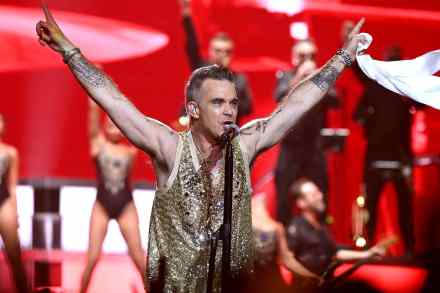
We should take Robbie Williams more seriously

From our UK edition

Oh, nostalgia – so much better than it used to be! You’d never have guessed pop music was once the preserve of teenagers had you been visiting the Greenwich peninsula last week – not from the crowds, or from the artists. Here were Roxy Music, whose four core members boast a combined age of 295, playing what might be their last ever show. Here were the Tops and the Temps, bands each with just one original member left – 86-year-old Duke Fakir of the Tops, 80-year-old Otis Williams of the Temps. And here was the absolute youngster of the lot, Robbie Williams, a stripling of 48, but 32 years into his pop career. Blimey, I know we keep being told retirement at 65 is a thing of the past, but this was ridiculous.

The death of the pop star

From our UK edition

The definition of ‘pop star’ in the Collins English Dictionary is unambiguous: ‘A famous singer or musician who performs pop music.’ Well, that seems fairly self-explanatory, doesn’t it? It also seems way wide of the mark, because being a pop star (or a rock star, its longer-haired cousin) encompasses a great deal more than being famous for singing pop songs. As Nik Cohn wrote, describing the first flush of idols of the rock’n’roll age, they were ‘maniacs, wild men with pianos and guitars who would have been laughing stocks in any earlier generation… They were energetic, basic, outrageous. They were huge personalities and they used music like a battering ram.

Incredibly his new songs were the best songs: Lindsey Buckingham, at the London Palladium, reviewed

From our UK edition

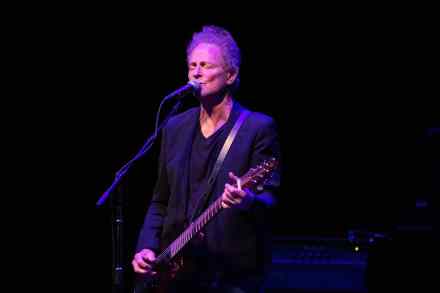
Lindsey Buckingham, at 72, still has cheekbones that cast shadows. He has the upright shock of hair, too, though now it makes him look less like the kohl-eyed pop god of 1980 and more like Malcolm Gladwell’s cooler, angrier brother. He still has fire, too. A couple of solo renditions of Fleetwood Mac songs won the crowd over, but it was the following run of three numbers from his newest album, played with his three-piece band, that put the spark to the show. It proved he’s not yet a heritage act. He had no choice, really, but to forge ahead. In 2018, he was booted out of Fleetwood Mac, for various reasons, chief among them appearing to be that Stevie Nicks couldn’t stand the sight of him any longer, and it was her or him.

Joyous and sexy: Nathy Peluso, at O2 Shepherd’s Bush Empire, reviewed

From our UK edition

Few forms of music have colonised the world like metal and hip-hop. Wherever you go you will find these two alchemising with local genres. A few years back, I took a trip to Kathmandu to visit a Nepali festival, where I saw bands from all over south Asia blasting through the beats, and in the streets outside the cabs threaded past with hip-hop blaring out of open windows. Both still represent youth in a way that lots of pop and rock no longer does. Hip-hop is simply the lingua franca of popular culture for anyone under 40; metal is still the most potent symbol of rebellion music has to offer – no matter that the rebellion is usually carefully packaged into a set of signifiers designed to tick adolescent boxes. But they are also omnipresent because both are malleable.

Confounding and fantastic: 100 Gecs, at O2 Forum Kentish Town, reviewed

From our UK edition

Let me introduce you to the two poles in pop and rock. One is marked by authenticity, musicianship, a certain traditionalism. This is the pole that in critics’ discourse is called ‘rockism’ – the assumption that rock (or, at least, real people playing real instruments) is the normative state of music. The other is artificiality, brashness, a disdain for heritage – a celebration of everything that is inauthentic, where a good idea is worth 100 guitar lessons. And that pole is known as ‘poptimism’. Poptimism is why you end up with learned essays in the New Yorker analysing the singer Ariana Grande nicking a doughnut from a shop with reference to the work of John Ruskin. (Yes, that really happened.

Full of unexpected delights: Green Man Festival reviewed

From our UK edition

One learns the strangest things at festivals. That, for instance, this summer has been a bit of a blackcurrant disaster in the UK because the extreme heat caused all the different varieties to ripen at the same time and fall from the bushes before they could be properly harvested. That fact came from a retired Kentish farmer called Ian, next to whom we were sitting at a £65-a-head dinner at this year’s Green Man, just outside Crickhowell in Wales. That alone should spell the difference between Green Man and the scene depicted in the Netflix series Trainwreck: Woodstock ’99. No one here was getting mouth ulcers because the drinking water was running with sewage, or rioting, or burning the catering tents down (what a waste of slow-cooked Welsh lamb that would have been).

A magnificent farewell: Stornoway, at Womad Festival, reviewed

From our UK edition

The greatest pleasure of writing about pop music – even more than the free tickets and records, nice as they are – is seeing some tiny, as yet unnoticed act and being dazzled by them, then taking every chance you can to wang on about them until other people start to feel the same. Music writers tend not to have many opportunities to do something good – alas, Nick Kent did not expose the thalidomide scandal; it wasn’t Greil Marcus and Lester Bangs who got to the bottom of Watergate – but it’s truly gratifying when a band you have championed rises from the toilet circuit, even if they never make it to the stadiums. I first saw Stornoway, a folk-pop group from Oxford, bottom of the bill in a pub basement in 2009.

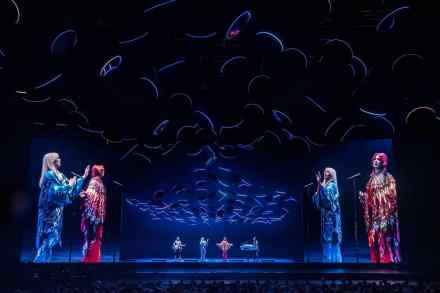
They have the weakest catalogue of any major act: Abba: Voyage reviewed

From our UK edition

One of the biggest talking points in pop these past couple of years has been how successful old musicians have become at making money. Swathes of stars have simply auctioned off their past: rather than collecting the royalties on their publishing and their recordings year by year, they have just sold the whole lot. Last year Bruce Springsteen collected half a billion dollars for selling the rights to his recordings and publishing to Sony. Bob Dylan got a similar amount for selling his recorded catalogue to Sony and his publishing to Universal. Abba have been in on the act, too. But not selling: a company founded by Bjorn Ulvaeus of Abba has been buying up other artists’ catalogues.

Harry Styles has entered his imperial phase – but his music still has no distinct identity

From our UK edition

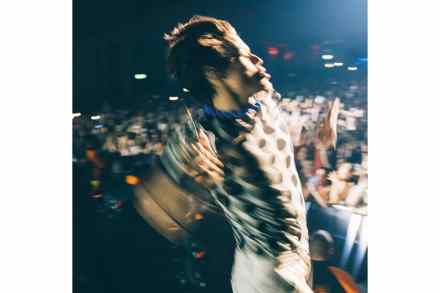
At the turn of this century, looking back on the late 1980s when the Pet Shop Boys could do no wrong and everything they touched turned to platinum, Neil Tennant coined the concept of a musician’s ‘imperial phase’. You can be hugely popular at other times in your career – you can sell just as many records – but the imperial phase is something different. The imperial phase is when an artist isn’t just selling records; it’s when approval of them has reached such a pitch that they can do no wrong. It’s when every magazine and newspaper uses any excuse to run photos of them, when their peers garland them with approval, and they seem to have a golden key that unlocks every day.

I’m not sure they ever reached a fourth chord: Spiritualized, at the Roundhouse, reviewed

From our UK edition

Every so often, Jason Pierce drifts into focus. It happened at the end of the 1980s, when his then group Spacemen 3 (motto: ‘Taking drugs to make music to take drugs to’) suddenly and briefly went from being those weirdos from Rugby to one of the defining groups of English alternative rock thanks to their album Sound of Confusion (there’s a whole strain of American psychedelia that is explicitly indebted to their two-chord drone). It happened again a decade or so later, when Spiritualized’s album Ladies and Gentlemen We Are Floating in Space became a big hit, and a staple of Greatest Albums lists. He’s in one of his partial-focus phases at the moment: he’s not going to be popping up on The One Show, but people are taking notice.

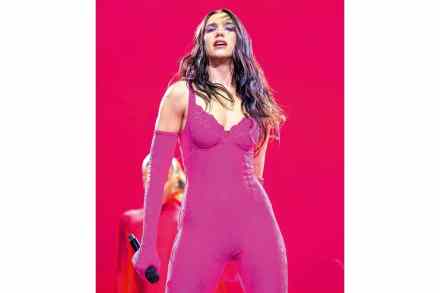
The perfect pop star: Dua Lipa at the O2 Arena reviewed

From our UK edition

Dua Lipa’s second album, Future Nostalgia, was released at the least promising moment possible: 27 March 2020, the day after the first lockdown came into force in the UK. Just as a pandemic swept the world, she was releasing a maximalist pop album that, surely, was designed for the communal experiences no one was having. But something about it connected: Future Nostalgia was a worldwide hit, the first British album released in 2020 to go platinum, the tenth bestselling record in the world that year. It turned out to be the right album for a wretched year. No wonder her show at the O2 was centred on it – every track was heard, which would normally be overegging the promotional pudding, but, given its consistent excellence, was entirely justifiable.

I would be surprised if his next tour included arenas: Louis Tomlinson at Wembley reviewed

From our UK edition

You don’t need to be a historian of pop to realise that having been part of a huge manufactured group is no guarantee of subsequent success. Most boy and girl band stars, after a brief flurry of passion, are forced to descend into the netherworld of panto, reality TV, and ever-diminishing returns from the actual music. The problem seems to be that the wider world doesn’t have the mental space to accept three, four or five people competing for attention. In almost every case, the wider world can only be bothered to embrace one person after the split, and it’s not always the one you expect. Gary Barlow – the talent! – was meant to be the solo star from Take That; it turned out to be Robbie Williams.

He is now a family entertainer: Stormzy at the O2 Arena reviewed

From our UK edition

Stormzy occupies a curious place in British pop culture right now. He’s the darling of liberals for all his good deeds – setting up an imprint for black writers within Penguin, and a charity to put black kids through Cambridge. He’s also the figurehead of UK hip hop, which at times has made him a lightning rod for the particular worldview of certain people. ‘Is it asking too much that he show a scintilla of gratitude to the country that offered his mother and him so much? Instead of trashing it,’ wrote, inevitably, Amanda Platell in, inevitably, the Daily Mail, after Stormzy had attacked Theresa May’s government over the Grenfell fire. You don’t see so much of that sort of coverage these days, and a glance around the O2 showed why.

Felt like being caught on the moors in a storm: Keeley Forsyth, at the Barbican, reviewed

From our UK edition

It took a moment to realise Keeley Forsyth was there. There were already three musicians, faint figures on a dark stage, wreathed in dry ice. And then, to their side, one became aware of a patch of darkness that was a little darker than the rest, and which seemed to be moving. Even when she moved into the slightly less gloomy part of the stage, Forsyth remained hidden: this was a show of startling unease and intensity. ‘Well, she’s spectacular,’ one chap ahead of me said to his friend as they filed down the stairs at the end. ‘Not sure I could manage more than an hour of it, though.

The buzz band of 2022 sound like they’re from 1982: Yard Act, at Village Underground reviewed

From our UK edition

One of the curiosities of modern pop’s landscape is that no one knows any longer how to measure success. An artist can be a huge live draw, but make no impact on the charts; they can be consistent chart-toppers but minnows among the streamers; they can stream by the bazillion, but have no live following to speak of. The metrics of success are so unrelated to each other that anyone can prove anything these days: any band can be the biggest young band in Britain right now. Yard Act are one of those biggest young bands in Britain. Their debut album was a No. 2 hit at the start of this month. Properly big, right? Well, no, perhaps not. For one, it stayed in the chart for only two weeks.

One of the most exciting hours I’ve spent in ages: Turnstile at O2 Forum Kentish Town

From our UK edition

Even leaving aside its origins as prison slang, punk has always meant different things on either side of the Atlantic. Forty-five years ago, in New York, no punk band sounded like the next one: the only thing that linked Ramones, Talking Heads, Patti Smith, Suicide, Blondie and Television was that they played the same club, CBGB. Over here, by contrast, punk was rapidly codified into people shouting angrily over buzzsaw guitars. These days, it can seem as though the opposite applies. It’s the American punks who stick to a formula, while in the British Isles, the punk label seems to apply to any band with a guitar and a modicum of attitude. Both Turnstile (from Baltimore) and Fontaines D.C. (Dublin) have been called punk.

Triumphant: Idles at the O2 Academy Brixton reviewed

From our UK edition

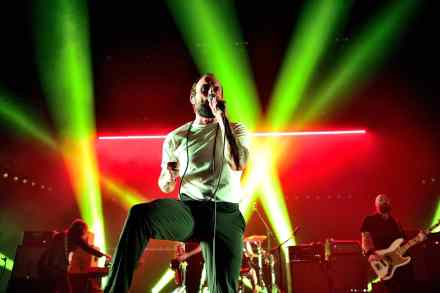
The single thing you don’t want when you are beginning a run of four shows in a prestige venue, with reviewers out in force, is for it all to go tits up at the start. Which is precisely what happened to Idles as they opened their Brixton run. On came the band, up started the throb of the opening song, ‘MTT 420 RR’, and off stalked singer Joe Talbot. Back he came. Off he went. Back he came. Off he went, clearly dealing with some technical issue. The rest of the band carried on, but given that until Talbot starts singing, ‘MTT 420 RR’ is nothing but a monotone drone, this was not the dramatic start one might have hoped for. Next to me, Idles’ booking agent started laughing, a little despairingly.

A soulful man with a blistering voice: Sipho, at Studio 9294, reviewed

From our UK edition

When I were a lad — back when you could buy the entire back catalogue of the Fall for thruppence and still have change to get into a New Order show on the way home — record labels mattered. Well, a cohort of independent labels mattered, because their imprints stood for something. There was Creation, with its dedication to a twin axis of 1977 and 1967 as the only years that counted; 4AD, with its arty sleeves and its wafty, diaphanous music; there was Factory, somewhere between an elaborate practical joke and home to the most forward-thinking musicians in the country. You don’t get many labels like that any longer. The new economics of the music industry militate against the model of the record label as an aesthetic statement, rather than purveyor of vulgar commerce.

One of many soul acts looking back 50 years and doing very good business: Black Pumas, at the Roundhouse, reviewed

From our UK edition

No musician ever went bust overestimating the public desire to hear classic soul. Slapping on a Motown backbeat has revived many a career and made many a star. At the simplest level, what wedding band are you going to hire: the one playing note-for-note recreations of acid-rock wig-outs from 1968, or the one playing note-for-note recreations of the Motown, Stax and Atlantic catalogues from the same year? It’s hardly evidence of the appalling taste of the music-buying public. If we’re going to play that silly ‘What pop era was best?