Michael Hann

They have the weakest catalogue of any major act: Abba: Voyage reviewed

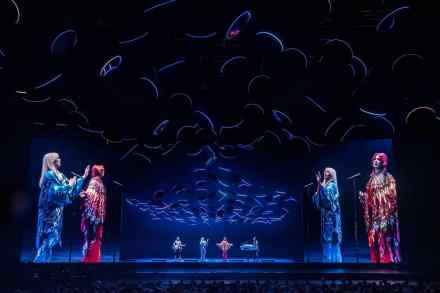
One of the biggest talking points in pop these past couple of years has been how successful old musicians have become at making money. Swathes of stars have simply auctioned off their past: rather than collecting the royalties on their publishing and their recordings year by year, they have just sold the whole lot. Last year Bruce Springsteen collected half a billion dollars for selling the rights to his recordings and publishing to Sony. Bob Dylan got a similar amount for selling his recorded catalogue to Sony and his publishing to Universal. Abba have been in on the act, too. But not selling: a company founded by Bjorn Ulvaeus of Abba has been buying up other artists’ catalogues.

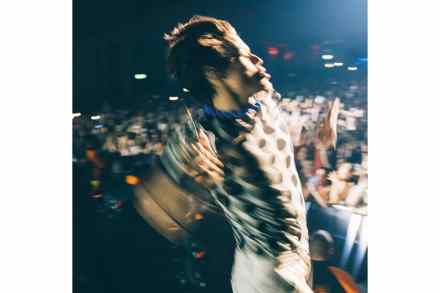
Harry Styles has entered his imperial phase – but his music still has no distinct identity

At the turn of this century, looking back on the late 1980s when the Pet Shop Boys could do no wrong and everything they touched turned to platinum, Neil Tennant coined the concept of a musician’s ‘imperial phase’. You can be hugely popular at other times in your career – you can sell just as many records – but the imperial phase is something different. The imperial phase is when an artist isn’t just selling records; it’s when approval of them has reached such a pitch that they can do no wrong. It’s when every magazine and newspaper uses any excuse to run photos of them, when their peers garland them with approval, and they seem to have a golden key that unlocks every day.

I’m not sure they ever reached a fourth chord: Spiritualized, at the Roundhouse, reviewed

Every so often, Jason Pierce drifts into focus. It happened at the end of the 1980s, when his then group Spacemen 3 (motto: ‘Taking drugs to make music to take drugs to’) suddenly and briefly went from being those weirdos from Rugby to one of the defining groups of English alternative rock thanks to their album Sound of Confusion (there’s a whole strain of American psychedelia that is explicitly indebted to their two-chord drone). It happened again a decade or so later, when Spiritualized’s album Ladies and Gentlemen We Are Floating in Space became a big hit, and a staple of Greatest Albums lists. He’s in one of his partial-focus phases at the moment: he’s not going to be popping up on The One Show, but people are taking notice.

The perfect pop star: Dua Lipa at the O2 Arena reviewed

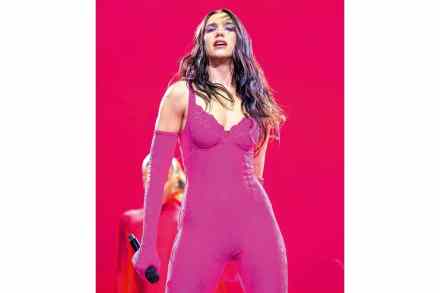
Dua Lipa’s second album, Future Nostalgia, was released at the least promising moment possible: 27 March 2020, the day after the first lockdown came into force in the UK. Just as a pandemic swept the world, she was releasing a maximalist pop album that, surely, was designed for the communal experiences no one was having. But something about it connected: Future Nostalgia was a worldwide hit, the first British album released in 2020 to go platinum, the tenth bestselling record in the world that year. It turned out to be the right album for a wretched year. No wonder her show at the O2 was centred on it – every track was heard, which would normally be overegging the promotional pudding, but, given its consistent excellence, was entirely justifiable.

I would be surprised if his next tour included arenas: Louis Tomlinson at Wembley reviewed

You don’t need to be a historian of pop to realise that having been part of a huge manufactured group is no guarantee of subsequent success. Most boy and girl band stars, after a brief flurry of passion, are forced to descend into the netherworld of panto, reality TV, and ever-diminishing returns from the actual music. The problem seems to be that the wider world doesn’t have the mental space to accept three, four or five people competing for attention. In almost every case, the wider world can only be bothered to embrace one person after the split, and it’s not always the one you expect. Gary Barlow – the talent! – was meant to be the solo star from Take That; it turned out to be Robbie Williams.

He is now a family entertainer: Stormzy at the O2 Arena reviewed

Stormzy occupies a curious place in British pop culture right now. He’s the darling of liberals for all his good deeds – setting up an imprint for black writers within Penguin, and a charity to put black kids through Cambridge. He’s also the figurehead of UK hip hop, which at times has made him a lightning rod for the particular worldview of certain people. ‘Is it asking too much that he show a scintilla of gratitude to the country that offered his mother and him so much? Instead of trashing it,’ wrote, inevitably, Amanda Platell in, inevitably, the Daily Mail, after Stormzy had attacked Theresa May’s government over the Grenfell fire. You don’t see so much of that sort of coverage these days, and a glance around the O2 showed why.

Felt like being caught on the moors in a storm: Keeley Forsyth, at the Barbican, reviewed

It took a moment to realise Keeley Forsyth was there. There were already three musicians, faint figures on a dark stage, wreathed in dry ice. And then, to their side, one became aware of a patch of darkness that was a little darker than the rest, and which seemed to be moving. Even when she moved into the slightly less gloomy part of the stage, Forsyth remained hidden: this was a show of startling unease and intensity. ‘Well, she’s spectacular,’ one chap ahead of me said to his friend as they filed down the stairs at the end. ‘Not sure I could manage more than an hour of it, though.

The buzz band of 2022 sound like they’re from 1982: Yard Act, at Village Underground reviewed

One of the curiosities of modern pop’s landscape is that no one knows any longer how to measure success. An artist can be a huge live draw, but make no impact on the charts; they can be consistent chart-toppers but minnows among the streamers; they can stream by the bazillion, but have no live following to speak of. The metrics of success are so unrelated to each other that anyone can prove anything these days: any band can be the biggest young band in Britain right now. Yard Act are one of those biggest young bands in Britain. Their debut album was a No. 2 hit at the start of this month. Properly big, right? Well, no, perhaps not. For one, it stayed in the chart for only two weeks.

One of the most exciting hours I’ve spent in ages: Turnstile at O2 Forum Kentish Town

Even leaving aside its origins as prison slang, punk has always meant different things on either side of the Atlantic. Forty-five years ago, in New York, no punk band sounded like the next one: the only thing that linked Ramones, Talking Heads, Patti Smith, Suicide, Blondie and Television was that they played the same club, CBGB. Over here, by contrast, punk was rapidly codified into people shouting angrily over buzzsaw guitars. These days, it can seem as though the opposite applies. It’s the American punks who stick to a formula, while in the British Isles, the punk label seems to apply to any band with a guitar and a modicum of attitude. Both Turnstile (from Baltimore) and Fontaines D.C. (Dublin) have been called punk.

Triumphant: Idles at the O2 Academy Brixton reviewed

The single thing you don’t want when you are beginning a run of four shows in a prestige venue, with reviewers out in force, is for it all to go tits up at the start. Which is precisely what happened to Idles as they opened their Brixton run. On came the band, up started the throb of the opening song, ‘MTT 420 RR’, and off stalked singer Joe Talbot. Back he came. Off he went. Back he came. Off he went, clearly dealing with some technical issue. The rest of the band carried on, but given that until Talbot starts singing, ‘MTT 420 RR’ is nothing but a monotone drone, this was not the dramatic start one might have hoped for. Next to me, Idles’ booking agent started laughing, a little despairingly.

A soulful man with a blistering voice: Sipho, at Studio 9294, reviewed

When I were a lad — back when you could buy the entire back catalogue of the Fall for thruppence and still have change to get into a New Order show on the way home — record labels mattered. Well, a cohort of independent labels mattered, because their imprints stood for something. There was Creation, with its dedication to a twin axis of 1977 and 1967 as the only years that counted; 4AD, with its arty sleeves and its wafty, diaphanous music; there was Factory, somewhere between an elaborate practical joke and home to the most forward-thinking musicians in the country. You don’t get many labels like that any longer. The new economics of the music industry militate against the model of the record label as an aesthetic statement, rather than purveyor of vulgar commerce.

One of many soul acts looking back 50 years and doing very good business: Black Pumas, at the Roundhouse, reviewed

No musician ever went bust overestimating the public desire to hear classic soul. Slapping on a Motown backbeat has revived many a career and made many a star. At the simplest level, what wedding band are you going to hire: the one playing note-for-note recreations of acid-rock wig-outs from 1968, or the one playing note-for-note recreations of the Motown, Stax and Atlantic catalogues from the same year? It’s hardly evidence of the appalling taste of the music-buying public. If we’re going to play that silly ‘What pop era was best?

Joyous perfection from a band that’s sure to go far: Gabriels at The Social reviewed

The bigger the next big thing, the smaller the room you want them playing in. You want the people who got inside to be thankful they made it in (not least because the more exclusive the show, the more hysterical the tweets afterwards: ‘You plebs couldn’t get a ticket, but I saw the very future of the planet!’). You want the air so thick with heat and chatter before the band comes on that there is a sense of event before a note has been played. You want everyone there — band and audience alike — to feel they are at the only place that matters, regardless of it being a nondescript Thursday evening.

A terrible joke gone wonderfully right: Rick Astley and Blossoms Perform the Smiths reviewed

Many of us who grew up loving the Smiths have rather shelved that affection in recent years. Many of us, being lily-livered liberals, have rather taken against Morrissey’s politics and his public support for the far-right For Britain party. Even those inclined to agree with him might have tired of his unrelenting self-pity and his inability to say anything nice about anyone, ever. Yes, we’ve still got lovely Johnny Marr playing the songs in his solo shows, but with the greatest goodwill in the world — and Marr gets granted the greatest goodwill in the world by being such an obviously decent fella — he’s no one’s idea of a great singer.

Two gigs that prove that rock and pop is never just about the music

The single most boring and pointless thing that is ever said about rock and pop — and it always comes from the Campaign For Real Rock brigade, with their alphabetised vinyl and back copies of Mojo — is that it should be ‘all about the music’. It is never, of course, all about the music, even among the Real Rockers’ heroes. An ugly Elvis would never have become Elvis; if the Stones had been clean-cut, helpful young men, they might as well have been Herman’s Hermits. Had the Clash made exactly the same records but looked and dressed like the Wurzels, elderly men would not still be banging on interminably about how Joe Strummer changed their lives. It is, in fact, never all about the music. You can see that most clearly at shows.

Teenage Fanclub are not a dramatic group, but they are lovely

They may no longer get many teenagers at their shows spending all their money on merchandise, then throwing up on the way home, though that certainly happened at the end of the 1980s, when they began, but people do love Teenage Fanclub. Their teenage fans are now middle-aged, and have spent the intervening years growing up with the band. They’ve listened as the group started singing about parenthood, long-term relationships, ageing, and they’ve stayed with a group who reflected their own lives back at them. The music, too, has changed. Where the early Fanclub records were sparky, messy alt-rock, they have spent the decades refining themselves so their songs are now polished miniatures, undramatic at first sight, but filigreed and burnished like tiny masterpieces.

What a genuine delight to be among people: Gorillaz, at the O2, reviewed

The new music economy relies on cross-promotion and artists reaching out to different scenes. And the rise of streaming means everyone can hop between audiences with ease, hence those singles apparently by one person but with a cricket team’s worth of other names credited. As the Beach Boys once sang, ‘you need a mess of help to stand alone’. Alongside the featured artist sausage factory there are musical patrons. Take Damon Albarn, who has spent much of the past 20 years elevating the work of other artists, using the strength of his own name — made, of course, as the frontman of Blur — to promote music that might otherwise slip past his core audience.

The real death of rock

What would a rock band have to do now to be seen as heralding the future? Twenty years ago, it was enough to be in possession of sharp cheekbones, tight jeans and 11 fantastic songs. The first album by the Strokes, Is This It, was released 20 years ago this month. It spread around the world in a way that would be impossible now. Only Australia got the album in July 2001. The UK release was not for another month, to tie in with the Reading and Leeds festivals. The US vinyl version was released on 11 September, but the CD edition was held back, so they could remove the song ‘New York City Cops’, whose refrain of ‘they ain’t too smart’ didn’t itself seem too smart in the wake of 9/11.

The joys of musical comfort food

I’ve given up comfort food. I’m trying to shift lockdown pounds that have left me with the physique of the kind of ageing second-string wrestler you used to see on World of Sport early on a Saturday afternoon in the 1980s. It’s all eschewing oils and measuring portions round these parts, and so I have been seeking my comforts in music. Enough with your Lithuanian drone and your polyrhythmic technical metal from Indonesia! Bring me verses and choruses and melodies and vocal harmonies! Katy J. Pearson — a young woman from the West Country who perhaps wishes she were, instead, from the American west coast — was true comfort food. The whole thing also felt unnervingly like a real gig, the kind one used to go to Before All This.