Michael Hann

One of the most tuneless, vapid, dismaying things I’ve ever seen: Mötley Crüe, at Bramall Lane, reviewed

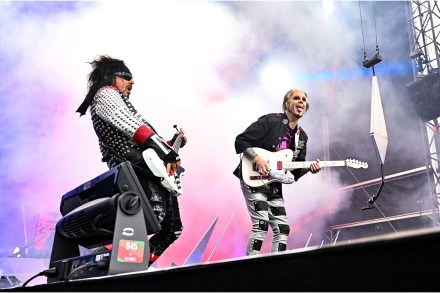
I’m not sure I’ve ever seen anything worse than Mötley Crüe in Sheffield. Nothing more tuneless, empty, vapid and dismaying. The Los Angeles glam-metal band became superstars in the 1980s, largely by wearing lots of make-up and doing terrible things, but I’ve never understood why. Even those who weren’t repulsed by the band members’ behaviour and personalities surely couldn’t have detected any actual tunes in there. At Bramall Lane, with a viciously loud PA, the few melodies that were there were largely undetectable. And the band – now in their sixties – still gloried in their obnoxious infantilism.

In praise of goths – the most enduring of pop subcultures

More than 40 years on, every town still has them, wandering the streets with pale skin, more make-up than you can find in Superdrug, swathed in acres of black fabric. Goths, rather unexpectedly, have turned out to be the great survivors among pop subcultures. Others have risen and faded, but the goths – laughed at, ignored, dismissed – have endured, seeing their style and their musical tastes slowly incorporated by everyone else (there’s even a goth version of hip-hop, known as ‘horrorcore’). Goth was a fitting name for the music: overbearing and foreboding; delivering ecstasy through the building and releasing of tension rather than through major chords and primary colours; drawing on punk, Bowie, the Doors and the Stooges.

The new Pogues: The Mary Wallopers, at O2 Forum Kentish Town, reviewed

I was listening the other week to a solo album by an ageing rock guitarist, once terrifically famous. It was really very good, but I couldn’t bring myself to care about it because it clearly didn’t matter: this man’s career is static and it is likely to remain so. The album will make no impact on the wider world and, despite liking it, I felt no need to listen again. Had it been the debut by a band of 21-year-olds, on the other hand, I would have been all over it. Rock and pop musicians are most interesting in the transitions; that is, on the way up or on the way down. The journey up always – but always – accounts for the most interesting bit of any musician’s memoir, because they’re remembering when life was exciting.

A phenomenally exciting new band: The Last Dinner Party, at Camden Assembly, reviewed

A user’s guide to how pop music works in the 21st century. Step one: you see a great new band. Step two: you tweet about them being very good. Step three: you get told by people that they are clearly nepo babies, denying crucial exposure to other bands. Step four: you discover that newspaper articles are using these Twitter conversations as evidence of a backlash about said new band. That’s what happened after I went to see the Last Dinner Party. For reference, the Last Dinner Party have released precisely one song: their debut single ‘Nothing Matters’, which had come out a few days before. On YouTube you can find complete recordings of some of the few shows they have played, filmed by zealous young fans.

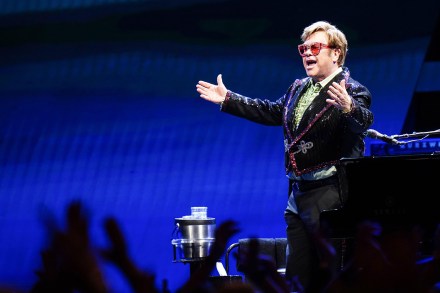
Glorious: Elton John’s farewell tour, at the O2 Arena, reviewed

Elton John has now been retiring for nearly five years. The Farewell Yellow Brick Road tour began in Allentown, Pennsylvania, in September 2018. Why there? Because it’s a hop and a skip from the small town of Lititz in Amish country, where scores of the big arena shows are built – it’s the real rock’n’roll capital of the world. Since then, with breaks for Covid and other health worries, he has played roughly 300 shows, grossing north of $800 million as of January this year – this is the most commercially successful tour ever. Retirement, or the threat of retirement, has always been a canny career move: Frank Sinatra played more than 1,000 concerts and recorded ‘Theme From New York, New York’ after he quit the business in 1971.

Pretty, charming and largely unremarkable: Devonte Hynes & the LSO reviewed

Think of pop music as being like the parable of the sower. These days the seed falling on stony ground comes from the young rock bands, while the stuff that’s finding fertile earth is on the edges of R&B where it shades into other styles, especially psychedelia. It works from both ends: the Australian group Tame Impala went from being a workaday psychedelic rock band to being festival headliners by bringing dance music into their sound. Meanwhile within black music, Janelle Monae – perhaps better known as an actor – and Solange Knowles are regarded by critics as something not far short of deities for their Afrofuturist, trippy takes on R&B. In the UK, Devonte Hynes has become our leading representative of the unlimited possibilities of combining genres.

Full of love: Butler, Blake and Grant, at the Union Chapel, reviewed

Years ago, I asked Robert Plant what he felt about the world’s love of ‘Stairway to Heaven’. He said he no longer really knew what the song was about, and it didn’t mean an awful lot to him. But, he added, that didn’t really matter because the people who loved the song had given it their own meaning. Songs don’t have to be as ubiquitous as ‘Stairway to Heaven’, however, to work their way into your soul. It’s perhaps even easier to develop a personal connection with a song that one doesn’t have to share with the entire world. Lots of people just wanted to feel 21 all over again Last weekend I went to two shows that were very specifically about the past.

Widescreen pop-rock that deserves to be better known: Metric, at the Roundhouse, reviewed

Why aren’t Metric stars? In their native Canada, several of their albums have gone platinum, but the rest of the world? Not so much. Twenty-five years after Emily Haines and James Shaw formed the band, here they still are, playing to a not-quite-full Roundhouse to promote their eighth album, Formentera. It was a pretty good turnout – about 3,000 people on a Wednesday night in January – but I doubt anyone ever formed a band thinking: ‘In a quarter of a century, we might be able to not quite fill one of London’s mid-sized venues!’ Writing very good songs isn’t enough to take a band to the top, but Metric do write very good songs All of which is a shame because they were flatly brilliant.

A brilliant show : The 1975, at the O2, reviewed

The great country singer George Jones was famed not just for his voice, but also for his drinking. Once, deprived of the car keys, he drove his lawnmower to the nearest bar. In the very good Paramount+ drama about Jones and Tammy Wynette – entitled George and Tammy, so there’s no excuse for forgetting – Michael Shannon, playing Jones, is asked time and time again why he keeps on making such a mess of his life and his career. ‘That’s what the people want from me,’ he shrugs in reply. That came to mind watching the 1975’s return to British arenas, in a tour grandiosely and amusingly billed as ‘In Show and In Concert – The 1975 At Their Very Best’.

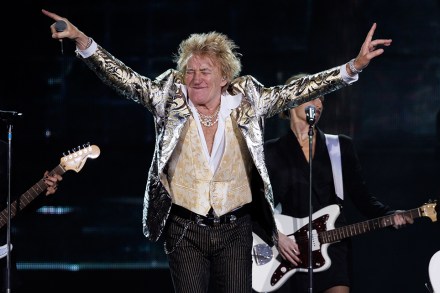
Why I love Rod Stewart

Reader, I let you down. But I did so for the right reason: for love. On a night when all of London’s music critics were at the Royal Festival Hall for Christine and the Queens, I deserted my duty. But, honestly, I don’t regret it. The reports back from the RFH suggested some baffling melange of performance art, am dram, experimental pop and gender identity, wrapped up in a concept piece about red cars. Not me. I’ll stick with Rod, a man so comfortable with his gender identity that he’s a byword for male libido. Rod is a man so comfortable with his gender identity that he’s a byword for male libido My love for Rod Stewart is pure and noble.

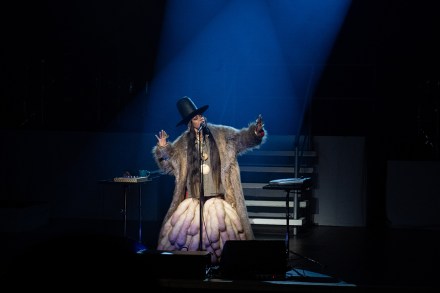
Odd, rich and adventurous: Erykah Badu, at the Royal Festival Hall, reviewed

You couldn’t call Erykah Badu one of the world’s most productive artists: it’s 12 years since her last album, and she’s released just five of them in 25 years, plus a couple of mixtapes. You’re more likely to see her name in the papers for something stupid she’s said – that she can see the good in everybody, even Hitler, because he was ‘a wonderful painter’, for example – than because she’s done something musical. Which is a shame because like her equally unproductive neo-soul contemporaries (Maxwell – five albums in 26 years; D’Angelo – three in 27 years), the music still sounds extraordinary.

A generational pop talent: Rina Sawayama, at the O2 Academy Brixton, reviewed

The first time I saw Franz Ferdinand was at the sadly lost Astoria, just after the release of their first album. I’d liked but not loved the record, but that night I experienced the single most exciting thing in live music: artist and audience absolutely united in the conviction that this – the biggest gig of their career so far and by far – was the last time this band would be playing a place this small. Both band and audience – and even the VIP enclosure of the balcony, in front of where I stood – radiated excitement about all of us being in this together: prepare for lift-off, next stop the stars! Rina Sawayama’s Brixton show was the same febrile, euphoric, shared experience.

We should take Robbie Williams more seriously

Oh, nostalgia – so much better than it used to be! You’d never have guessed pop music was once the preserve of teenagers had you been visiting the Greenwich peninsula last week – not from the crowds, or from the artists. Here were Roxy Music, whose four core members boast a combined age of 295, playing what might be their last ever show. Here were the Tops and the Temps, bands each with just one original member left – 86-year-old Duke Fakir of the Tops, 80-year-old Otis Williams of the Temps. And here was the absolute youngster of the lot, Robbie Williams, a stripling of 48, but 32 years into his pop career. Blimey, I know we keep being told retirement at 65 is a thing of the past, but this was ridiculous.

The death of the pop star

The definition of ‘pop star’ in the Collins English Dictionary is unambiguous: ‘A famous singer or musician who performs pop music.’ Well, that seems fairly self-explanatory, doesn’t it? It also seems way wide of the mark, because being a pop star (or a rock star, its longer-haired cousin) encompasses a great deal more than being famous for singing pop songs. As Nik Cohn wrote, describing the first flush of idols of the rock’n’roll age, they were ‘maniacs, wild men with pianos and guitars who would have been laughing stocks in any earlier generation… They were energetic, basic, outrageous. They were huge personalities and they used music like a battering ram.

Incredibly his new songs were the best songs: Lindsey Buckingham, at the London Palladium, reviewed

Lindsey Buckingham, at 72, still has cheekbones that cast shadows. He has the upright shock of hair, too, though now it makes him look less like the kohl-eyed pop god of 1980 and more like Malcolm Gladwell’s cooler, angrier brother. He still has fire, too. A couple of solo renditions of Fleetwood Mac songs won the crowd over, but it was the following run of three numbers from his newest album, played with his three-piece band, that put the spark to the show. It proved he’s not yet a heritage act. He had no choice, really, but to forge ahead. In 2018, he was booted out of Fleetwood Mac, for various reasons, chief among them appearing to be that Stevie Nicks couldn’t stand the sight of him any longer, and it was her or him.

Joyous and sexy: Nathy Peluso, at O2 Shepherd’s Bush Empire, reviewed

Few forms of music have colonised the world like metal and hip-hop. Wherever you go you will find these two alchemising with local genres. A few years back, I took a trip to Kathmandu to visit a Nepali festival, where I saw bands from all over south Asia blasting through the beats, and in the streets outside the cabs threaded past with hip-hop blaring out of open windows. Both still represent youth in a way that lots of pop and rock no longer does. Hip-hop is simply the lingua franca of popular culture for anyone under 40; metal is still the most potent symbol of rebellion music has to offer – no matter that the rebellion is usually carefully packaged into a set of signifiers designed to tick adolescent boxes. But they are also omnipresent because both are malleable.

Confounding and fantastic: 100 Gecs, at O2 Forum Kentish Town, reviewed

Let me introduce you to the two poles in pop and rock. One is marked by authenticity, musicianship, a certain traditionalism. This is the pole that in critics’ discourse is called ‘rockism’ – the assumption that rock (or, at least, real people playing real instruments) is the normative state of music. The other is artificiality, brashness, a disdain for heritage – a celebration of everything that is inauthentic, where a good idea is worth 100 guitar lessons. And that pole is known as ‘poptimism’. Poptimism is why you end up with learned essays in the New Yorker analysing the singer Ariana Grande nicking a doughnut from a shop with reference to the work of John Ruskin. (Yes, that really happened.

Full of unexpected delights: Green Man Festival reviewed

One learns the strangest things at festivals. That, for instance, this summer has been a bit of a blackcurrant disaster in the UK because the extreme heat caused all the different varieties to ripen at the same time and fall from the bushes before they could be properly harvested. That fact came from a retired Kentish farmer called Ian, next to whom we were sitting at a £65-a-head dinner at this year’s Green Man, just outside Crickhowell in Wales. That alone should spell the difference between Green Man and the scene depicted in the Netflix series Trainwreck: Woodstock ’99. No one here was getting mouth ulcers because the drinking water was running with sewage, or rioting, or burning the catering tents down (what a waste of slow-cooked Welsh lamb that would have been).

A magnificent farewell: Stornoway, at Womad Festival, reviewed

The greatest pleasure of writing about pop music – even more than the free tickets and records, nice as they are – is seeing some tiny, as yet unnoticed act and being dazzled by them, then taking every chance you can to wang on about them until other people start to feel the same. Music writers tend not to have many opportunities to do something good – alas, Nick Kent did not expose the thalidomide scandal; it wasn’t Greil Marcus and Lester Bangs who got to the bottom of Watergate – but it’s truly gratifying when a band you have championed rises from the toilet circuit, even if they never make it to the stadiums. I first saw Stornoway, a folk-pop group from Oxford, bottom of the bill in a pub basement in 2009.