Michael Hall

Michael Hall is the author of Art, Passion & Power: The Story of the Royal Collection.

Queen Elizabeth II: 1926-2022

33 min listen

On this week’s podcast: We reflect on the life and the reign of Queen Elizabeth II. For The Spectator, A.N. Wilson writes that Queen Elizabeth was a constant in a country that has changed so much, and he is joined on the Edition podcast by Graham Viney author of Last Hurrah: The 1947 Tour of Southern Africa and the End of Empire (00:59). Also this week:  Michael Hall takes us inside the Royal Collection and discusses the Queen’s relationship with art. He is joined by Susan Ryder, who was commissioned to paint her portrait in 1997 (13:28). And finally: Scott Methven recalls his time as piper to the sovereign with Anne Denholm, a former personal harpist to the now King Charles III (22:58). Hosted by Lara Prendergast and William Moore.

The art of the monarchy

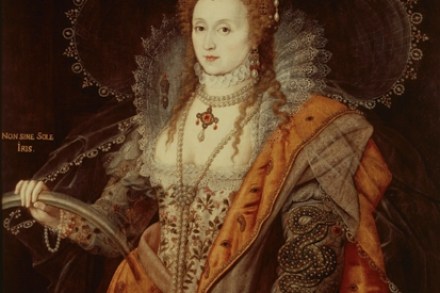
Elizabeth II spent virtually all her life surrounded by one of the world’s greatest art collections. Even when she was a child, and the likelihood of her inheriting the throne still seemed remote, visits to her grandparents at Buckingham Palace involved looking at pictures, since George V enjoyed showing her the Victorian narrative paintings that hung there, such as William Powell Frith’s ‘Ramsgate Sands’. Nobody knows exactly how many works of art there are in the Royal Collection, but at the end of Elizabeth II’s reign nearly 300,000 objects had been catalogued online, probably just under a third of the whole.

The great art of country houses is still getting better

Last year 114,000 people flocked to Houghton Hall in north Norfolk for a once-in-a lifetime opportunity. Part of the great collection of paintings sold by the Walpole family in 1779 to Catherine the Great of Russia was back, thanks to a generous loan from the Hermitage. It was an un-usual triumph — a blockbuster exhibition in a private house rather than an art gallery. Most art before that last century was made to be seen in houses or churches. ‘Houghton Revisited’ was a compelling reminder that it looks best in those settings. Since art in our country houses hits the headlines only when it’s sold or stolen, it’s often assumed that most of the best works have long gone to museums.

At home with the English

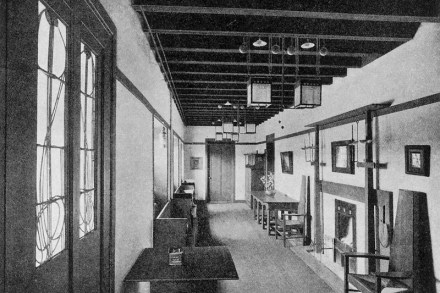
The English House by Hermann Muthesius In 1896 Hermann Muthesius, a Prussian architect and civil servant in his mid-thirties, arrived in London to work as a cultural and technical attaché at the German embassy. His mission, apparently instigated by the Kaiser, was to study the domestic architecture of the United Kingdom, a subject that was attracting international interest. The result was Das englische Haus, first published in Berlin in three volumes in 1904–5. This remarkable book surveys not only the architecture but also the decoration, gardens and way of life associated with houses in England. Muthesius deeply admired the achievements of English architects and designers, and argued that Germany had much to learn from their example.