Michael Gove

Michael Gove

Michael Gove is editor of The Spectator.

Who would be a Conservative? – Kate Andrews vs Michael Gove

25 min listen

It’s a special (and emotional) edition of Coffee House Shots this Saturday because it is the last with Kate Andrews on this side of the Atlantic. She joins our editor Michael Gove and political correspondent James Heale for a debate on ideology. Kate – a liberal, in the classical British sense – explains exactly why she is not a Conservative and the various tenets that distinguish liberalism from conservatism, whilst Michael makes the case for being a 'pessimistic' conservative.  So, what makes a liberal? What makes a conservative? And was Hayek right in saying that while there isn’t much to choose between these two political creeds, ultimately, they need each other.  Produced by Cindy Yu and Oscar Edmondson.

Could spending cuts herald a ‘winter of discontent for Labour’s left’?

15 min listen

With reports of ‘billions’ of spending cuts earmarked for the Chancellor’s Spring Statement, taking place later this month, Michael Gove and Kate Andrews join Katy Balls to discuss what exactly Rachel Reeves could cut. With little fiscal headroom and sluggish forecasts of growth, Reeves doesn’t appear to have many options. It’s likely that welfare will be targeted, and there are reports that Labour’s opposition to new North Sea oil & gas licences may be relaxed to stimulate growth. One area that appears off the table is defence – following the Prime Minister’s pledge to cut international aid in order to fund new defence spending.  But if all these reports are true, where does that leave Labour ideologically?

Coffee House Shots Live with Robert Jenrick and Jonathan Ashworth

70 min listen

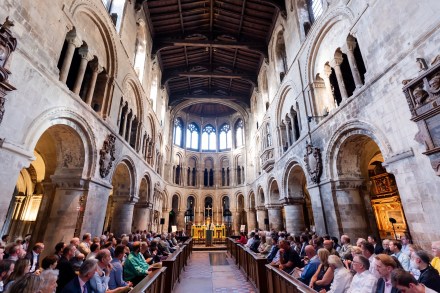
The Spectator’s Katy Balls, Michael Gove and Kate Andrews were joined by special guests Robert Jenrick and Jonathan Ashworth for a live podcast, recorded at the Emmanuel Centre in Westminster. The main topic of discussion was, of course, Donald Trump, whose inauguration has ushered in a new world disorder. His ‘shock and awe’ foreign policy has sent Europe scrambling as it tries to work out who will be responsible for ensuring its security in the future. We have seen a move away from the idealism that has defined foreign policy in the last decade and towards ‘realism’, with countries committing to boots on the ground and greater defence spending. Are Labour right to increase their defence pledge?

Is Kemi Badenoch a ‘realist’?

15 min listen

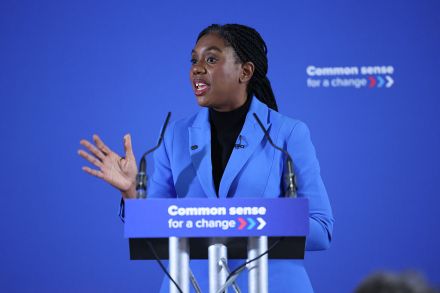
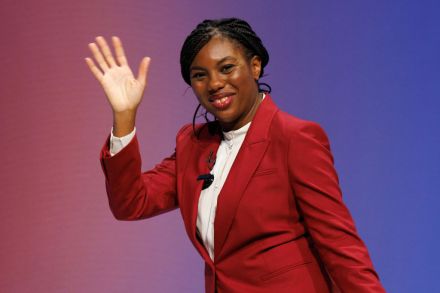
Kemi Badenoch has today given a major speech outlining the Conservatives’ commitment to ‘realism’ in their foreign policy. She said, ‘You cannot help others if you cannot help yourself’, and that the sovereignty and strength of Britain matters 'above all'. She also pressed Keir Starmer to push defence spending north of the 2.5 per cent target and – as if it was all choreographed – the prime minister dutifully has, announcing in the Commons that defence spending will reach 3 per cent of GDP by the end of the next parliament. This will come at the expense of the foreign aid budget, another suggestion that the leader of the opposition made in her speech today. What is realism? Is it right to forgo our commitment to overseas aid?

Starmer’s Scottish headache

11 min listen

'What does a party get after nearly two decades in office, collapsing public services, an internal civil war and a £2 million police investigation? Re-election again - perhaps with an even bigger majority', writes James Heale in The Spectator this week. He's talking about the SNP, whose change in fortunes has less to do with their leader John Swinney and more to do with the collapse of support for Scottish Labour and their leader Anas Sarwar. Who could benefit from the increased fragmentation of voters in Scotland? Will demands for more time, money and attention cause even more issues for Rachel Reeves? As Scottish Labour meets for its conference in Glasgow this weekend, James and editor Michael Gove join Katy Balls to discuss the dynamics between Holyrood and Westminster.

New world disorder, cholesterol pseudoscience vs scepticism & the magic of Dickens

48 min listen

This week: the world needs a realist resetDonald Trump’s presidency is the harbinger of many things, writes The Spectator’s editor Michael Gove, one of which is a return to a more pitiless world landscape. The ideal of a rules-based international order has proved to be a false hope. Britain must accept that if we are to earn the respect of others and the right to determine the future, we need a realist reset. What are the consequences of this new world order? And is the Trump administration reversing the tide of decline, or simply refusing to accept the inevitable? Michael Gove joined the podcast alongside the geopolitical theorist Robert Kaplan, author of the new book Waste Land: A World in Permanent Crisis.

Get real: the harsh lessons of our new world disorder

Sir Roger Scruton may not be the Prime Minister’s favourite author. Apparently Keir Starmer prefers Victoria Hislop. But as he prepares to travel to Washington next week, the PM could scarcely spend his time more wisely than burying his nose in The Uses of Pessimism – and the Dangers of False Hope, one of Scruton’s most powerful works. ‘Hope untempered by the evidence of history is a dangerous asset,’ says Scruton. ‘And one that threatens not only those who embrace it, but all those within range of their illusions.’ That is the correct, pessimistic, cast of mind with which to approach not just the war in Ukraine, and America’s ongoing commitment to Europe, but to international affairs overall.

Keir Starmer and the lost art of political oratory

31 min listen

From Churchill to Thatcher to Blair to Farage, Parliament has seen some truly fantastic rhetoricians over the years. But last week came the news that – in a bid to improve his own oratorical skill – Keir Starmer employed a voice coach: former actress Leonie Mellinger. Mellinger has been at the centre of a fresh COVID-19 row, as the Prime Minister considered her to be so important that she qualified as a ‘key worker’ in 2020, visiting Labour headquarters in a mask on Christmas Eve 2020 to advise Starmer. It is not an unusual practice to employ a voice coach to improve a politician’s public speaking, and on the podcast Michael Gove is joined by his own former coach Graham Davies, to recover the lost art of political rhetoric.

The inside story of Labour under Starmer

23 min listen

This week saw the publication of Patrick Maguire and Gabriel Pogrund’s new book Get In: The Inside Story of Labour Under Starmer. It’s the second in their tell-all series of books on the Labour Party’s ups and downs and has caused quite a stir in Westminster. From the revelations about Keir Starmer’s voice coach causing a fresh lockdown row to Michael Gove’s secret dinner with Morgan McSweeney, there is a high-density of scoops and disclosures. Can Labour blame the failures of their first 100 days on Sue Gray? And is there such a thing as ‘Starmerism’? Patrick and Gabriel sat down with Katy Balls and Michael Gove to discuss. Produced by Megan McElroy and Oscar Edmondson.

Labour’s Irish insurgent, Germany’s ‘firewall’ falls & finding joy in obituaries

48 min listen

As a man with the instincts of an insurgent, Morgan McSweeney, Keir Starmer’s chief of staff, has found Labour’s first six months in office a frustrating time, writes The Spectator’s editor Michael Gove. ‘Many of his insights – those that made Labour electable – appeared to have been overlooked by the very ministers he propelled into power.’ McSweeney is trying to wrench the government away from complacent incumbency: there is a new emphasis on growth, a tougher line on borders, an impatience with establishment excuses for inertia. Will McSweeney win his battle? And what does this mean for figures in Starmer’s government, like Richard Hermer and Ed Miliband? Michael joined the podcast alongside Starmer’s biographer Tom Baldwin. (1:04) Next: can the AfD be stopped?

Morgan McSweeney is urging Keir Starmer to go for the kill

Morgan McSweeney, the Prime Minister’s Chief of Staff, does not immediately display the demeanour of a disruptor. He speaks softly, picks his phrases with care, and cultivates an unassuming image. But underneath the sober blue suit are the scars of a streetfighter. As a young man, McSweeney came to political maturity fighting the hard left in Lambeth and the far right in Dagenham, winning back working-class voters to a Labour party that had forgotten its roots. He went on to secure last year’s landslide, gifting Keir Starmer a majority large enough to remake Britain. His style as an insurgent owes something to his background. He grew up in Ireland with parents who were activists in Fine Gael, the party that venerates the IRA mastermind Michael Collins as its founder.

Migration mystery, Ipso’s trans muddle & are you a ‘trad dad’?

46 min listen

This week: why don’t we know how many people are in Britain?How many people live in the UK? It’s a straightforward question, yet the answer eludes some of the nation’s brightest statistical minds, writes Sam Bidwell for the cover this week. Whenever official figures are tested against real-world data, the population is almost always undercounted. For example, in England alone, nearly 64 million patients are registered with GP practices – higher than the Office for National Statistics (ONS)'s estimated population of 58 million. Sam argues there are serious consequences for our society at large, including for tax, housing and our utilities. Who is to blame for this data deficiency? And why is Britain so bad at tackling illegal migration?

‘Props to Rachel’

12 min listen

Today was the day for Rachel Reeves, as she delivered her big growth speech in Oxfordshire. This was not this government’s first attempt to pivot towards a more business-friendly, growth-generating narrative, but it was its best effort. The headline announcement is, of course, a third runway at Heathrow, throwing her support behind the ‘badly needed’ expansion. However, a lot of what was announced will sound familiar to recently departed Tories, who laid the groundwork for Labour’s plans to properly connect the South East (or the ‘Oxford–Cambridge Arc’, as it has been repackaged). Will Rachel Reeves get her growth? Katy Balls speaks to Michael Gove and Kate Andrews. Produced by Oscar Edmondson.

Reeves vs Miliband

10 min listen

After last week’s bond market jitters, the Chancellor pledged to go ‘further and faster’ to improve the UK’s anaemic economic growth. It looks as though Rachel Reeves’ hunt for growth could come at the expense of Labour’s green agenda. Reeves is poised to make a series of announcements over the next month, starting with a softened stance on non-doms and approval for Heathrow’s third runway – as well as expansions at Gatwick and Luton airports. The move indicates a shift in priorities, with economic growth taking precedence over climate targets. Ed Miliband, the Energy Secretary, is believed to be privately opposed to the airport expansion scheme. What happened to the ‘green Chancellor’?

Could Trump 2.0 derail the Starmer project?

13 min listen

The parties - and protests - have already kicked off, as Trump's inauguration gets underway in Washington D.C. today. Katy Balls speaks to Michael Gove and Republicans Overseas UK's Sarah Elliott about what we can expect from the first week of Trump's second presidency, and how Keir Starmer will attempt to navigate the 'special relationship'. Sarah updates us on the mood in the US capital; which UK politicians have been spotted joining in on the fun? Produced by Patrick Gibbons.

Michael Gove, Mary Wakefield, Mitchell Reiss, Max Jeffery and Nicholas Farrell

32 min listen

On this week’s Spectator Out Loud: Michael Gove offers up some advice to Keir Starmer (1:33); Mary Wakefield examines the rise of the ‘divorce party’ (7:28); Mitchell Reiss looks at the promise and peril of AI as he reviews Genesis: Artificial Intelligence, Hope and the Human Spirit, a collaboration between the former CEO of Google Eric Schmidt, the former chief research and strategy officer at Microsoft Craig Mundie, and the late US Secretary of State Henry Kissinger (13:52); Max Jeffery listens to The Armie HammerTime Podcast as the actor attempts to reverse his spectacular downfall (20:45); and, Nicholas Farrell reveals the time he got drunk with the ghost of Mussolini (25:24).  Produced and presented by Patrick Gibbons.

The answers Starmer must give

It will probably only damn me further in the eyes of many, but when I was a government minister I often used to ask Labour predecessors for advice. Tony Blair especially. He may have felt it was a forlorn exercise ever offering me his wisdom, especially when I went on to back Brexit, support parliament’s prorogation under Boris and defend Dominic Cummings against all comers, but I always appreciated his insights, even when we disagreed. No position is so strong, no policy so perfect, that it cannot benefit from being tested by critics. If those critics have experience of office, know its powers and limitations, so much the better. And few know office better than Blair.

Why would the government pay Gerry Adams?

11 min listen

With rumours swirling around Westminster and after Keir Starmer’s less than convincing defence of his Chancellor earlier in the week, Rachel Reeves has found some brief respite. The Office for National Statistics (ONS) confirmed that inflation dipped to 2.5 per cent in the 12 months to December, down from 2.6 per cent the month before. It’s welcome news for a Chancellor who is under pressure, so is she safe? Elsewhere, there is a fresh row emerging concerning Gerry Adams. The government is proposing to repeal legislation, enacted in 2023, that prevents Gerry Adams and 400 others from claiming ‘compensation’ for having been detained in the 1970s for suspected involvement in terrorism.

Sturgeon-Murrell split & Scotland’s Reform challenger

13 min listen

Former Scotland First Minister Nicola Sturgeon has announced she is separating from her husband Peter Murrell, former chief executive of the SNP. The announcement comes as the police probe into the SNP’s funds and finances remains ongoing, with Sturgeon and ex-SNP treasurer Colin Beattie under investigation while Murrell was charged with embezzlement in April 2024.  Katy Balls is joined by The Spectator’s editor Michael Gove, and data editor Michael Simmons, to discuss the separation, why the investigation is still ongoing four years later, and what chances Scottish Labour or Reform have against the SNP in 2025.

Keir Starmer, school harmer

Twin studies are one of the most useful exercises in scientific inquiry. Take two biologically identical children who are brought up in different environments, and study their progress through life. Pioneered by Francis Galton in the late 19th century, they can demonstrate how much of our destiny is dictated by nature or nurture. This government is precise in seeking to destroy the policies that have given children the best education possible Over the past two decades we have been conducting a twin study on an epic scale across these islands. Children in England have been educated in accordance with one set of principles. Children in Wales and Scotland have been in schools following a very different route.