Michael Gove

Michael Gove

Michael Gove is editor of The Spectator.

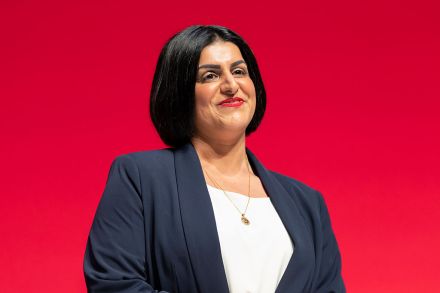
Shabana Mahmood: ‘There’s still a moment of reckoning to come’ on grooming gangs

Shabana Mahmood may be the only Labour politician to have persuaded Rishi Sunak to vote for her. The former prime minister was in the year above Mahmood when they both studied at Lincoln College, Oxford, in the 1990s. When she ran for JCR president, Sunak pledged his support. Meeting Mahmood in her ministerial office this week, I can understand why. There is a sense of quiet purpose about her that instils confidence. I’m predisposed to sympathise with her more than most because she occupies the post I held for 15 months – Lord Chancellor. It’s the most glamorous and least attractive job in the cabinet. You’re the only minister with your own personal gold-braided gown, wig, pumps and purse bearer – or at least the only one who has to be seen with all four publicly.

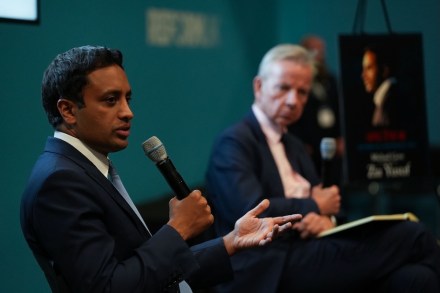
Coffee House Shots Live with Zia Yusuf and Jacob Rees-Mogg

The post-mortem has begun on a historic set of local elections – but where does each party go from here? Is Reform unstoppable? Is Kemi the one to lead the Conservative rebuild? Do Labour really ‘get it’? Michael Gove, James Heale and Lucy Dunn are joined by special guests Zia Yusuf and Jacob Rees-Mogg to unpack these questions – as well as the broader ramifications of the local elections on British politics. Listen for: Zia’s understanding of why Reform did so well; Jacob’s concession that a Tory/Reform pact of some description could be the only way for the Conservatives to avoid extinction; and Michael’s assessment of whether Labour will force us closer to the EU. This podcast was originally recorded live at the Emmanuel Centre in Westminster on Wednesday 7 May.

Michael Gove on how to spin a bad election

12 min listen

Voters have gone to the polls today for a historic set of local elections. The polling indicates a rough night for the two main parties and a good showing for Reform, the Lib Dems and the Greens. So be prepared for a lot of election-night spin from both Labour and the Tories. To talk through the various ways in which politicians can claim victory in the face of defeat, James Heale is joined by our editor, Michael Gove – no stranger to the media round himself. They discuss the best candidates to face up to the media from both the Tories and Labour, as well as some of the greatest examples of post-election spin from history.

Chambers of horrors, the ‘Dubai-ification’ of London & the enduring obsession with Diana

37 min listen

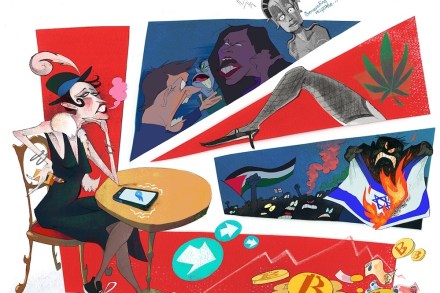
This week: the left-wing radicalism of Garden CourtGarden Court Chambers has a ‘reassuringly traditional’ facade befitting the historic Lincoln’s Inn Fields in the heart of London’s legal district. Yet, writes Ross Clark in the cover article this week, ‘the facade is just that. For behind the pedimented Georgian windows there operates the most radically effective cell of left-wing activists in Britain’. Ross argues that cases taken on by Garden Court lawyers raise questions of impartiality. Is this just another example of ‘law’s expanding empire’ over the domain of elected politicians, as former Supreme Court judge Jonathan Sumption has warned? The Spectator’s editor, and former Justice Secretary, Michael Gove joined the podcast to discuss.

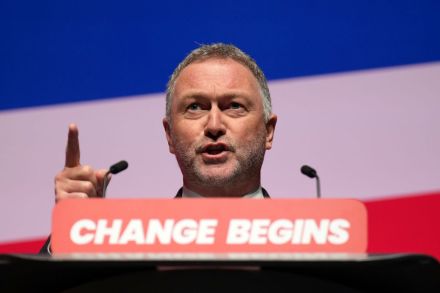
How Wes Streeting will make or break Starmer

15 min listen

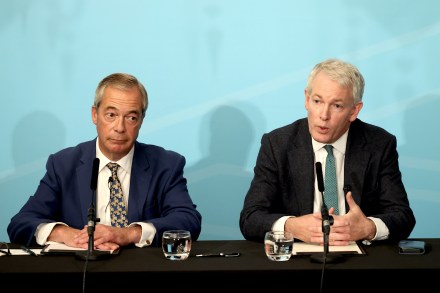
Michael Gove and Katy Balls join James Heale to discuss their interview with the Health Secretary Wes Streeting included in this week’s special Easter edition of The Spectator. Michael identifies three key reasons why Streeting’s fate is key to the success of the government: immigration, the cost-of-living crisis and faith in the NHS. Seen as the ‘golden child’ of Number 10, Streeting has as many supporters in the Labour party as he has detractors – but his Blairite-coded image could help him take the fight to Reform.  Also on the podcast, Michael, Katy and James discuss Nigel Farage’s progress in the local election campaign.

Cruel Labour, the decline of sacred spaces & Clandon Park’s controversial restoration

51 min listen

This week: Starmerism’s moral vacuum‘Governments need a mission, or they descend into reactive incoherence’ writes Michael Gove in this week’s cover piece. A Labour government, he argues, ‘cannot survive’ without a sense of purpose. The ‘failure of this government to make social justice its mission’ has led to a Spring Statement ‘that was at once hurried, incoherent and cruel – a fiscal drive-by shooting’.  Michael writes that Starmer wishes to emulate his hero – the post-war Prime Minister Clement Atlee, who founded the NHS and supported a fledgling NATO alliance. Yet, with policy driven by Treasury mandarins, the Labour project is in danger of drifting, as John Major’s premiership did.

Labour needs a sense of social justice

Clement Attlee, in the words of Winston Churchill, was a modest man with much to be modest about. Labour’s postwar premier has been invoked as a role model by Keir Starmer recently, in the context of Attlee’s support for Nato and robustness on defence. Starmer’s allies also argue that, like Attlee, he is an unshowy middle-England moderate who prefers quiet efficiency to ideological flamboyance. His biographer, the always perceptive Tom Baldwin, has declared: ‘There is no such thing as Starmerism.’ Nor, we are told, will there ever be. Which is exactly how, why and where this government is going wrong. A Tory government benefits from a sense of purpose; a Labour one cannot survive without one Movements – and Labour is nothing if not a movement – need direction.

Coffee House Shots Live with Maurice Glasman, David Frost and James Kanagasooriam

70 min listen

Join Katy Balls, Michael Gove, Lord Glasman, Lord Frost and pollster James Kanagasooriam as they unpack the highly anticipated Spring Statement and its implications for national policy and global security. Listen for: Michael’s plan for how to deal with the Donald, and why the Treasury is not fit for purpose; Maurice on his influence in the White House, and what's wrong with the current political class; David’s reflections on why Brexit was ahead of its time; and James’s explanation for Britain’s lost sense of community.

Is Simon Heffer a security threat?

Airport security was much on my mind last Friday afternoon. I had been due to fly from Heathrow to Zurich that morning, but the substation fire meant a switch to an afternoon departure from London City Airport. City is a business-oriented operation in every respect and one of its many efficient features is a baggage-checking regime that does not require you to separate your 100ml bottles of shampoo and shaving foam into a plastic ziplock bag. The X-ray machine and associated sensors are supposed to penetrate your luggage and identify anything dangerous with scientific precision. My heart sank when my carry-on bag was shunted off the conveyor belt and a security operative summoned me over to explain myself.

Labour’s ‘Sabrina Carpenter’ Budget

18 min listen

This afternoon, Rachel Reeves made good on her promise to deliver only one fiscal set piece per calendar year by announcing what is widely being considered a Budget... this precedes a spending review in the summer and an actual Budget in the autumn. The headline is that the Chancellor had to find £15 billion in spending cuts to restore her headroom and keep within her own ‘ironclad’ fiscal rules. This comes after the Office for Budget Responsibility (OBR) confirmed that the £9.9 billion margin she left herself in the autumn has disappeared. The OBR has also halved its growth projections – bleak news for the government.

Were we right to lock down? Michael Gove vs Toby Young

31 min listen

On 23 March 2020, then-Prime Minister Boris Johnson announced the unprecedented decision to put the UK into lockdown. To mark the 5th anniversary of that announcement this weekend, we have brought together our editor Michael Gove – then a cabinet minister under Boris – and our associate editor Toby Young – an ardent critic of the decision – to answer the question, was the government right to lockdown? Was the decision a necessary and reasonable health measure based on the available evidence at the time, or a significant and avoidable violation of civil liberties by a government that was meant to champion liberal freedoms? You decide. Produced and presented by Patrick Gibbons.

Can the Tories save their education legacy?

13 min listen

Bridget Phillipson's schools bill is back in the Commons today. The scope of the legislation is twofold: firstly, looking at the welfare of children in schools and secondly at fundamentally changing the landscape of secondary education by doing away with academies (and with it the legacy of the previous Conservative government on education). The plan has been read by many – including former head of Ofsted Amanda Spielman, who joins today's podcast – as Labour pandering to the unions and perhaps even prioritising the adults (union members) over the children. Amendments to the bill will be debated this afternoon, including a Tory amendment that would ban phones in schools, although it doesn't seem that Labour is in the mood to make any concessions. What is motivating Labour?

Is Keir Starmer a Tory?

19 min listen

Slashing the winter fuel allowance, maintaining the two child benefit cap, cutting international aid, cutting the civil service, axing NHS bureaucracy, possibly slashing welfare expenditure... you'd be forgiven for thinking the Conservatives were in power. But no, these are all policies pursued by the current Labour government. So on today's Saturday Shots Cindy Yu asks Michael Gove and James Heale, is Keir Starmer a Tory? While Michael admits to giving Starmer a 'painful' two cheers, he does say there is historic precedent for Labour governments enacting right-leaning measures: from Jim Callaghan's migration policies to the economic ones of Ramsay MacDonald. How has Starmer got away with it? And what does his premiership of pragmatism tell us about the future direction of Labour?

Colin Freeman, Harry Ritchie, Max Jeffery, Michael Gove and Catriona Olding

35 min listen

On this week’s Spectator Out Loud: Colin Freeman explains how Islamic State tightened its grip on the Congo (1:23); Harry Ritchie draws attention to the thousands of languages facing extinction this century, as he reviews Rare Tongues: The Secret Stories of Hidden Languages by Lorna Gibb (8:00); Max Jeffery highlights the boxing academy changing young lives (13:20); Michael Gove reflects on lessons learned during his time as education secretary (20:30); and, Catriona Olding introduces the characters from her new Provence-based memoir club (29:27).  Produced and presented by Patrick Gibbons.

Why Labour are abolishing NHS England

10 min listen

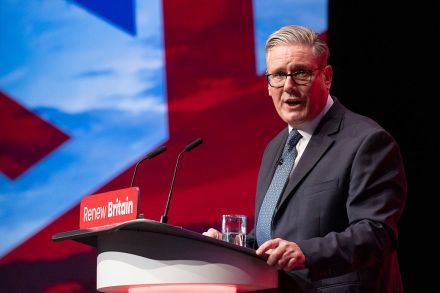
It was widely briefed that the main focus of Sir Keir Starmer’s speech in Yorkshire today was his plan to do away with Whitehall red tape. What was kept under wraps was the Prime Minister’s plans for the NHS – specifically to scrap NHS England. In a bid to tackle bureaucracy in the health service, the PM this morning told reporters that the ‘arms-length NHS’ needed to go – adding that the move will ‘shift money to the front line’ and free the health service to ‘focus on patients’. What's the point of abolishing NHS England? And are Labour 'doing the things that the Tories only dreamed of'?  Lucy Dunn speaks James Heale and Michael Gove.  Produced by Oscar Edmondson and Megan McElroy.

The lessons I learned as education secretary

Education secretary really is the best job in government, though sometimes it doesn’t feel that way. Lives can be transformed – hopefully for the better – as a direct consequence of the decisions you make. But you are also firmly in the firing line. There’s no other area of public policy in which everyone is an expert. Only a minority of us have fought in battle, studied the impact of nitrates on chalk streams or contemplated what the correct approach to sanitary and phyto-sanitary standards should be in a trade agreement. But we’ve all been to school. And we all have views – sometimes deeply entrenched and emotional – about what constitutes a good education and therefore sensible education policy.

Who would be a Conservative? – Kate Andrews vs Michael Gove

25 min listen

It’s a special (and emotional) edition of Coffee House Shots this Saturday because it is the last with Kate Andrews on this side of the Atlantic. She joins our editor Michael Gove and political correspondent James Heale for a debate on ideology. Kate – a liberal, in the classical British sense – explains exactly why she is not a Conservative and the various tenets that distinguish liberalism from conservatism, whilst Michael makes the case for being a 'pessimistic' conservative.  So, what makes a liberal? What makes a conservative? And was Hayek right in saying that while there isn’t much to choose between these two political creeds, ultimately, they need each other.  Produced by Cindy Yu and Oscar Edmondson.

Could spending cuts herald a ‘winter of discontent for Labour’s left’?

15 min listen

With reports of ‘billions’ of spending cuts earmarked for the Chancellor’s Spring Statement, taking place later this month, Michael Gove and Kate Andrews join Katy Balls to discuss what exactly Rachel Reeves could cut. With little fiscal headroom and sluggish forecasts of growth, Reeves doesn’t appear to have many options. It’s likely that welfare will be targeted, and there are reports that Labour’s opposition to new North Sea oil & gas licences may be relaxed to stimulate growth. One area that appears off the table is defence – following the Prime Minister’s pledge to cut international aid in order to fund new defence spending.  But if all these reports are true, where does that leave Labour ideologically?

Coffee House Shots Live with Robert Jenrick and Jonathan Ashworth

70 min listen

The Spectator’s Katy Balls, Michael Gove and Kate Andrews were joined by special guests Robert Jenrick and Jonathan Ashworth for a live podcast, recorded at the Emmanuel Centre in Westminster. The main topic of discussion was, of course, Donald Trump, whose inauguration has ushered in a new world disorder. His ‘shock and awe’ foreign policy has sent Europe scrambling as it tries to work out who will be responsible for ensuring its security in the future. We have seen a move away from the idealism that has defined foreign policy in the last decade and towards ‘realism’, with countries committing to boots on the ground and greater defence spending. Are Labour right to increase their defence pledge?

Is Kemi Badenoch a ‘realist’?

15 min listen

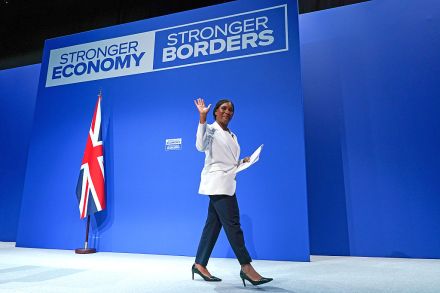
Kemi Badenoch has today given a major speech outlining the Conservatives’ commitment to ‘realism’ in their foreign policy. She said, ‘You cannot help others if you cannot help yourself’, and that the sovereignty and strength of Britain matters 'above all'. She also pressed Keir Starmer to push defence spending north of the 2.5 per cent target and – as if it was all choreographed – the prime minister dutifully has, announcing in the Commons that defence spending will reach 3 per cent of GDP by the end of the next parliament. This will come at the expense of the foreign aid budget, another suggestion that the leader of the opposition made in her speech today. What is realism? Is it right to forgo our commitment to overseas aid?