Micah Mattix

Micah Mattix is a senior editor of The Spectator’s World edition and the author of the Prufrock newsletter. He has written for the Wall Street Journal, the New Criterion, the Atlantic and many other publications.

The limits of civic education

Knowledge acquisition has long been understood as key to creating a more just society. The more one learns about the ugliness of racism, for example, the less likely one is to be racist, the reasoning goes. In National Affairs, Albert Cheng and Jay P. Greene argue that that is not the case: By filling in knowledge gaps, the argument goes, education can inoculate individuals against prejudice. This view of the relationship between education and prejudice is reinforced by a large body of research about civic education. University of Notre Dame professor David Campbell recently reviewed this scholarship, concluding that the preponderance of the evidence suggests that civic education improves the civic knowledge and engagement of school-aged children.

Against Hope

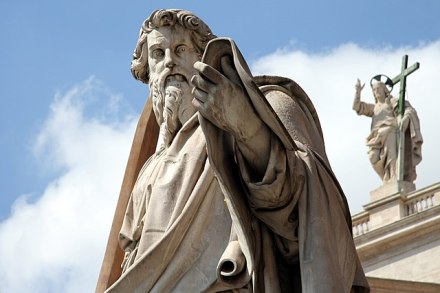
Hope is seen as “an unqualified good” today, Adam Potkay writes in his excellent history of the idea. We hope that things will get better in the world — that peace will come to Ukraine, that religious violence will stop in Burkina Faso, that fat-cat sexual predators in Hollywood will be brought to justice. For members of the world’s three monotheistic religions, it is a virtue to hope in life after death. This hasn’t always been the case. For ancient Greeks and Romans, Potkay observes, hope was mostly a vice.

hope adam potkay

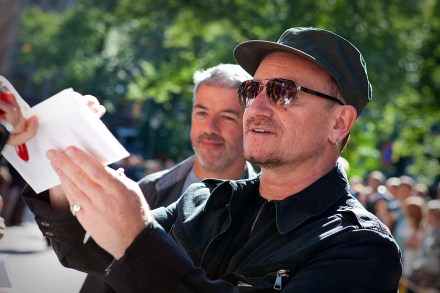
Nancy Pelosi reads Bono

Thursday was Saint Patrick’s Day and Nancy Pelosi got into the spirit by reading an earnest but — how to say this — less than polished poem by Bono (out of charity, I’m gonna assume he was drunk) calling Volodymyr Zelensky a saint.

The identity cult

Nearly every institution in the United States — from large corporation to rural libraries, universities to sports teams — has embraced the cult of identity, “a ramshackle creed that maintains, for example, that the term 'Latinx' signifies an actual human group,” Martin Gurri writes in City Journal. “Once the province of pretentious professors and their captive students, the cult has leaked out of the cannabis-scented halls of academia to infect an astonishing number of people in power.

Jack Kerouac at 100

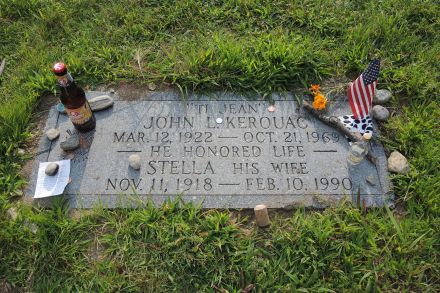
Jack Kerouac was born a hundred years ago on Saturday. In The Spectator World, Francesca Peacock argues that On the Road should hit the road: Everyone knows the Beats: from Jack Kerouac to William Burroughs to Allen Ginsberg, their influence has been undeniable, if not always delightful. And on March 12, their lodestar, Jack Kerouac would have been 100 years old. Kerouac became famous after the initial success of On the Road (1957), but his position as the apostle of beatnikery was not an easy one. He died aged forty-seven in 1969, after a lifetime of heavy drinking and a later-life of rebelling against his early countercultural fame.

Against ‘moral clarity’

When I lived in Texas from 2010 to 2013, I used to listen to NPR every morning on my drive to work. The reporting had a leftist bias, but NPR was good about hiding it. They were good at seeming to be objective. They would invite conservative commentators on shows, interview Republican politicians, and generally attempt to reach out “to the other side” for comment. Of course, the time they gave to the other side was always brief, the right-leaning guests were never the most eloquent spokespersons available on the topic at hand, and the last word was always reserved for either a left-leaning guest or the host. Still, I appreciated the pretense. I haven’t listened to NPR in nearly ten years, but the pretense has apparently been dropped.

On receiving books in the mail

I receive a lot of books in the mail. Perhaps you do, too. Some of these I order. Most come from publishers or authors hoping for a review. A few are gifts. I prefer to buy books at used bookstores. You never know what they might have on hand, and there’s nothing better than discovering a gem of a book by a writer you’ve never heard of. Plus, the price is always right. Independent bookstores are great, too. I’m no snob. I bought a book just the other day at the gamified Barnes and Noble in town — the atrociously overrated Call Us What We Carry by Amanda Gorman, who read at Joe Biden’s inauguration (more on that at some point, perhaps). But I prefer independent bookstores because, like at used bookstores, there’s an element of surprise in the store’s stock.

mail

Shackleton’s ‘Endurance’ found

The big news this week is that Ernest Shackleton’s ship Endurance has been found. It was nearly 10,000 feet below the surface off the coast of Antarctica. Harriet Sherwood reports: The Endurance22 expedition, which set off from Cape Town a month ago, had "reached its goal", said Dr John Shears, the veteran geographer who led the expedition. "We have made polar history with the discovery of Endurance, and successfully completed the world’s most challenging shipwreck search." He hoped people would be inspired by "what human beings can achieve and the obstacles they can overcome when they work together". Arcing across the submerged ship’s wooden stern is its famous name, preserved by the freezing waters and the absence of wood-eating organisms. Check out these photos of the ship.

What’s wrong with higher ed — and how to fix it

Scott Newstok, who is a professor of English at Rhodes College and the author of this excellent book, sent me a couple of interesting articles on higher education. In the London Review of Books, William Davies examines how online education, though it might work for “forms of learning that involve information-processing and problem-solving,” does a poor job of teaching students how to think and write: A first principle of any online teaching (arguably of any online interaction) is that it shouldn’t attempt some perfect simulacrum of a face to face encounter. The mediation of teaching by screens, cameras and keyboards changes things, and these differences have to be accommodated.

How Arvo Pärt can help us through Lent

This year marks the forty-fifth anniversary of Arvo Pärt’s Fratres — one of a series of groundbreaking compositions that Pärt wrote between 1976 and 1978 using his tintinnabuli style. Most of Pärt’s works in this compositional style, which means “little bells,” are in two voices — usually one a triad and the other a melody — which are played in such a way as to create an underlying drone. This creates a piece of music that is both concrete (single notes ring out clearly) and ephemeral. We see this in pieces like Für Alina (1976), Fratres (1977) and Spiegel im Spiegel (1978). Pärt was born in Estonia and grew up in the Soviet Union, but was influenced by twelve-tone serialists like Pierre Boulez and Karlheinz Stockhausen.

arvo part

Accessible art

Over at Patrick Kurp’s excellent blog, Anecdotal Evidence, he pushes back against readers who complain about difficult art (in this case, the poetry of Geoffrey Hill): A reader complains that he doesn’t understand the poetry of Geoffrey Hill. So far, so good. Hill can be difficult, though I find his poems worth the effort they sometimes demand — repeated readings, a bit of research (which can pay unexpected dividends), an overall familiarity with his work, contemplation. My reader’s reaction is different: "He’s an elitist. He has contempt for readers. He thinks we should know everything he knows. He’s impossible to understand." The idea that every work of art we encounter should be instantly accessible, free of difficulty and ambiguity, is a strange one.

The kids are not alright

In the Atlantic, Helen Lewis reports on a strange phenomenon: A larger percentage of Tourette patients around the world have been experiencing “acute-onset tic-like behaviors.” How is this happening at the same time? Social media: The global community of Tourette’s researchers is tight-knit, and as they talked it became clear that a shift in patients and symptoms was happening all over the world, at the same time. Before the pandemic, 2 to 3 percent of pediatric patients at the Johns Hopkins University Tourette’s Center, in Baltimore, had acute-onset tic-like behaviors, but that rose last year to 10 to 20 percent, according to the Wall Street Journal.

Pop music isn’t getting better — and that’s okay

In last weekend’s Wall Street Journal, James R. Hagerty and Anne Steele argue that pop artists are using more imperfect — that is, half or slant — rhymes than before because of the pressure to be original in the age of Spotify. This, plus the influence of rap, which “requires verbal virtuosity,” they argue, “has upped the ante on originality in rhyming.” Color me unconvinced. Olivia Rodrigo rhymes “smart” with “car” in “Brutal.” Dua Lipa’s “Don’t Start Now” rhymes “full 180” with “crazy.” For Hagerty and Steele, these are examples of stunning creativity. But lyricists have been using slant rhymes for a long time. Why? Mainly because they are easier than perfect rhymes, at least in English.

olivia rodrigo pop music

Saving the racist ‘Music Man’

At Slate, Sam Adams criticizes the Broadway production of The Music Man starring Hugh Jackman for changing a race-baiting line in “Ya Got Trouble.” Why? Because for Adams if you don’t have racism in The Music Man, you don’t have anything: Audiences seeing The Music Man on Broadway in 1957, at the height of the moral panic over white children’s exposure to the corrupting force of Black rock ‘n’ roll, wouldn’t have needed the subtext of Harold Hill’s homily spelled out for them. But in the new production, the offending phrases have simply been wiped away, part of a wave of changes aimed at adapting the sixty-five-year-old show for contemporary viewers, some of whom have paid upward of $700 for their seats at the Winter Garden Theatre.

The Recording Academy riles classical musicians

Jon Batiste and Curtis J. Stewart have been nominated for best contemporary classical composition and best classical instrumental solo for “Movement 11’” and Of Power respectively. Some people are upset: Composer Marc Neikrug, a former Grammy nominee, told the Observer that Batiste is a pop musician and that nominating his recording for a classical music award is baffling. "How much sense do you think it makes to a serious novelist when Bob Dylan gets a Nobel prize for literature?", he said. "It’s not that what Bob Dylan does isn’t magnificent in what it is. But it’s not Nobel literature." Apostolos Paraskevas, who teaches at the Berklee College of Music in Boston, also complained: "I’m not going to say that classical music is better than jazz.

Fiasco at Imperial College

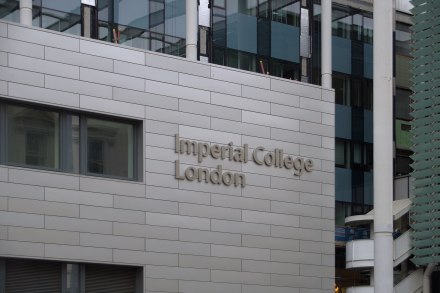
Alice Gast is a textbook author. The sixth and apparently final edition of her Physical Chemistry of Surfaces was published 25 years ago. She is also the president of Imperial College London, where she is simultaneously considering removing any reference to the college’s founder, T.H. Huxley, and fighting charges of bullying and harassment. Stephen Warren reports on the T.H. Huxley fiasco: Earlier this month the President’s Board at Imperial College convened to decide what to do with the recommendations of their History Group, which was commissioned by the President Alice Gast and Provost Ian Walmsley, to examine the university’s history "through its links to the British Empire".

Imagining Rimbaud

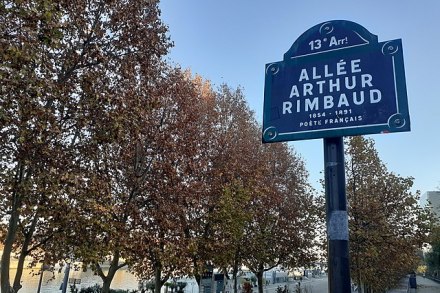
The life of poète maudit and gunrunner Arthur Rimbaud is a puzzle to nearly everyone who knows it. A precocious student who won a regional concours académique for a poem in Latin, Rimbaud left school at fifteen, shortly after the start of the Franco-German War. After two attempts to escape home for Paris, he finally moved in with the poet Paul Verlaine in the fall of 1871, where he succeeded in insulting all the literary lights of Paris in three months. The two men began an affair, which ruined what was left of Verlaine’s marriage to Mathilde Mauté (whom Verlaine regularly beat). They made two debauched trips to London and eventually fell out in Belgium, where Verlaine shot Rimbaud in the wrist.

rimbaud noguez

Killing with music and rhyme

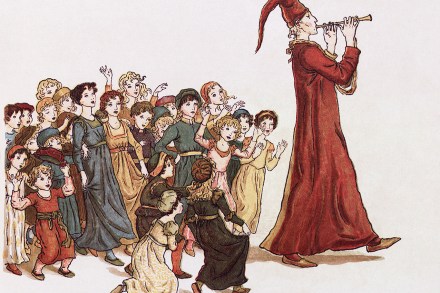
In Ted Gioia’s latest at his excellent newsletter The Honest Broker, he remembers when “poets and musicians were sought out by witches and wizards for guidance.” Why? Because they could “rhyme either man or beast to death.” More: As the Pied Piper tale makes clear, not just rodents, but people were also at risk. In Reginald Scot’s Discovery of Witchcraft (1584), we are told that the Irish feared those who "can rhyme either man or beast to death." In his An Apology of Poesy (1595), Philip Sidney draws on this legend in warning those who criticize the poet’s craft, but again notes that murder by rhyming was practiced solely in Ireland.

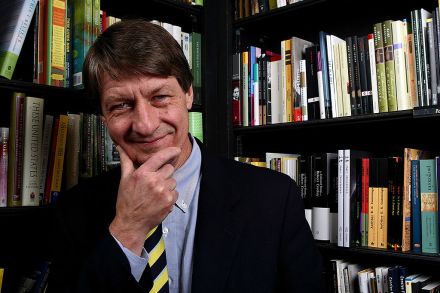
Remembering P.J. O’Rourke

The satirist and journalist P.J. O’Rourke has died of complications from lung cancer. He was seventy-four. We all know he was a talented writer, but he was also apparently unfailingly kind and generous. In the New York Post, John Podhoretz writes: P.J. O’Rourke . . . once hosted a small New Year’s party at his apartment in Washington. The year was 1990. He’d just returned from Germany, where he had covered the fall of the Berlin Wall. I expressed my sorrow that I hadn’t been there to see it. He went into his bedroom and returned with a small tin of mints. He’d emptied it — and he’d put a shard of the wall he’d pickaxed himself with his own hands inside it. "Happy New Year," he said. That was P.J. Though he and I liked each other, we weren’t intimates.

p.j. o’rourke

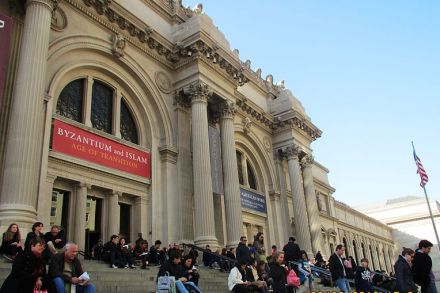
The decline of the Met

The Metropolitan Museum of Art has struggled recently. In 2016, it was facing an $8 million deficit. In 2018, it gave up on its plan to renovate the Breuer building and instead agreed to turn its lease over to the Frick to save money. The Breuer was supposed to be the Met’s big play to rebrand itself as a museum of contemporary art, not just Old Masters, but the shows it organized at the Breuer were overspent and underattended. Despite “critical successes,” ARTnews reported at the time, “attendance remained relatively low.” In 2020, it drew on its endowment to cover expenses (and laid off over eighty employees), and last year, it sold some of its art to help cover its $150 million shortfall.