Micah Mattix

Micah Mattix is a senior editor of The Spectator’s World edition and the author of the Prufrock newsletter. He has written for the Wall Street Journal, the New Criterion, the Atlantic and many other publications.

Policing the Pulitzers

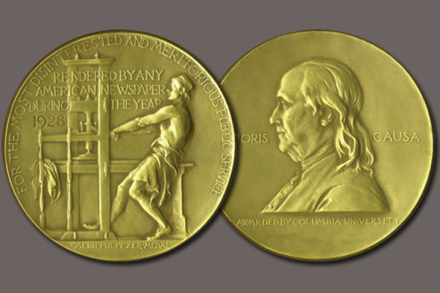
Several journalism organizations, news guilds, associations and publications have sent an open letter to the Pulitzer Prize asking that any newsroom that does not participate in the annual News Leaders Association “diversity survey” be excluded from consideration for the various awards in journalism: Our country is reckoning with racial inequity and many in the journalism industry can’t or won’t provide essential newsroom transparency on staff diversity. If we can’t collect crucial data, how do we expect to improve newsroom diversity and represent our communities?

Enjoy fishing, but don’t overthink it

Spring fishing season has finally arrived in southeastern Virginia. I went out a few weeks ago to see if the crappie were biting. They weren’t. I went out last weekend after I borrowed a kayak from a friend — someone had stolen my run-down Jon boat (may they never catch anything again but disease) — and caught three. I am a recreational — not an avid — angler, and will probably only fish a dozen or two times over the next months. I don’t mind if I don’t catch anything. There are moments, even, when I think I would almost prefer not to catch anything because it would interrupt the experience of floating on the lake and looking.

fishing

The credibility of the humanities

In an odd piece in the Washington Post, Aaron Hanlon tries to diagnose the humanities’ “credibility problem.” The problem, he writes, is two-fold: first, “the public doesn’t seem to trust that we are engaging in real, methodical scholarly inquiry — or, at least, that such inquiries amount to much more than informed or pretentious opinion-making.”And second, “people often assume that humanities scholars start with political commitments and backfill the evidence rather than starting with questions to answer through some relatively transparent process of inquiry. The idea that humanities scholars are activists first and only then scholars leaves much of the public skeptical of the work we do.” Are these concerns valid? Hanlon doesn’t say.

Auden in America

When W.H. Auden was in his twenties, Alan Jacobs writes in a review of the poet’s two-volume Complete Works at Harper’s, he was worshiped by Britain’s intellectual class: One evening in August 1933, after hearing some new poetry read aloud, the British diplomat and politician Harold Nicolson opened his diary and made a confession: "A man like Auden with his fierce repudiation of half-way houses and his gentle integrity makes one feel terribly discontented with one’s own smug successfulness. I go to bed feeling terribly Edwardian and back-number, and yet, thank God, delighted that people like Wystan Auden should actually exist." The poet whose reading excited this envy and admiration was twenty-six years old.

The politics of unhappiness

In the latest issue of First Things, the physician and political scientist Ronald W. Dworkin takes a closer look at the politics of unhappiness. Negative feelings, he writes, have come to be attributed to specific causes, even if it is impossible to treat them as the result of such: An unpleasant sensation gets the mind churning, and we reach for something in our lives to blame. A man feels an unpleasant sensation. In a flash he ponders a thought he has had before: Maybe he should have started his own business, or married later in life, or traveled more — something. He blames his unpleasant sensation on one of these causes and declares himself ‘"unhappy.

Robert B. Shaw sees things as they are

What Remains to Be Said: New and Selected Poems by Robert B. Shaw, Pinyon, 2022, 312 pages Robert B. Shaw is one of those quietly accomplished poets who publishes a slim volume of exacting and beautiful poems every eight years or so. One thinks of his teacher at Harvard, Robert Fitzgerald, as a model in this regard, or the late Amy Clampitt, or Shaw’s more prolific contemporary Frederick Turner. Shaw’s observational verse progresses by accumulation of detail or plot and aims to unify meaning and music. His most recent volume, What Remains to Be Said: New and Selected Poems, collects poems from all of his seven previous books and includes 28 new poems.

Margaret Atwood: feelings are not ‘justifications’

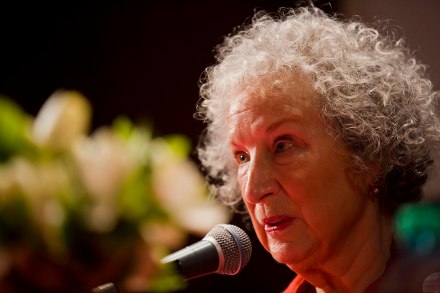
Margaret Atwood has won the sixth annual Hitchens Prize, which is awarded every year to a writer who, “in the spirit of the late Christopher Hitchens, demonstrates a commitment to free expression and to the pursuit of truth without regard to personal or professional consequence.” No prize was awarded in 2021. Previous winners include Masha Gessen and George Packer. In her lecture, which accompanies the award, Atwood remembered her relationship with Hitchens. The two rarely agreed regarding “content, but we were in accord about process,” she says. Facts were what mattered to both, not feelings: Having feelings was not a thing back then.

The other Winslow Homer

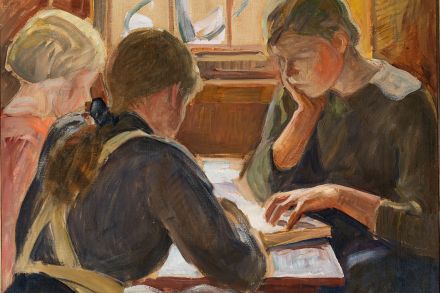
A new show on the work of Winslow Homer at New York’s Metropolitan Museum of Art makes the case that he is a painter of national importance: Winslow Homer’s depictions of blustery, bucolic New England made him America’s 19th-century regional painter par excellence. But decisive visits to the tropics, a turn in the American South, and an intuitive sense of what the future might hold for America itself combined to make Homer (1836-1910) into an artist of national—even transnational—concern. This larger, lesser-known Homer is the subject of a new exhibition opening this month at New York’s Metropolitan Museum of Art.

Is the white male novelist disappearing?

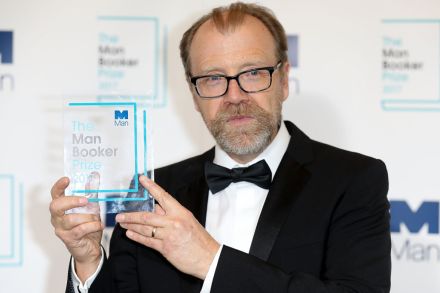
“Women Dominate Shortlist for International Booker Prize,” reads the headline of Alex Marshall’s Thursday article for the New York Times. He notes that five of the six books on the shortlist this year were written by women. The novels do look interesting — I haven’t read Tokarczuk’s The Books of Jacob or Jon Fosse’s latest in his New Name series and want to pick up both — but it’s hardly news that women “dominate” the International Booker. They have dominated every major literary prize in the last few years. Four of the last six winners of the International Booker have been women. While winners of the Booker (not the International Booker) over the last six years are split right down the middle, women outnumber men twenty-two to fourteen on the shortlist.

Surrealism and freedom

In Art in America, Rachel Wetzler takes stock of surrealism a hundred years after its appearance on the art scene (the first use of the word that I am aware of was in Guillaume Apollinaire’s review of the 1917 performance of Parade (which was written by Jean Cocteau, scored by Erik Satie, and designed by Picasso).

Charles Isherwood replaces Terry Teachout

Of course, no one can replace Terry Teachout, as I’m sure Charles Isherwood would agree, but Isherwood is the new theater critic at the Wall Street Journal. His first review is of the much-anticipated revival of Neil Simon’s Plaza Suite starring Matthew Broderick and Sarah Jessica Parker, which he pans: Although Mr. Broderick and Ms. Parker labor mightily to reanimate Simon’s 1968 comedy, their staunch but sometimes strained efforts, and the play’s undeniable fustiness — especially with regard to the relationships between men and women at its center — result in a production that tends to sag between the volleys of wisecracks that suffuse early Simon plays.

The possibilities of travel

The first road trips I remember were between Seattle and Spokane in a yellow Chevy station wagon (maybe it was a Caprice?). This was when the speed limit was fifty-five and the trip would take six hours. I liked to ride in the “way back,” as we called it, stretched out on my back (before seatbelts were mandatory), looking up at the sky through the back window. When we traveled to Spokane — well, past Spokane — we were usually headed to my grandparents' lake cabin across the border in Idaho for a week of skiing, boating, swimming and exploring. We would tire of being in the car by the end of the trip, but there was always an air of excitement starting out, imagining all the things lying ahead.

Is Andy Warhol really an artist?

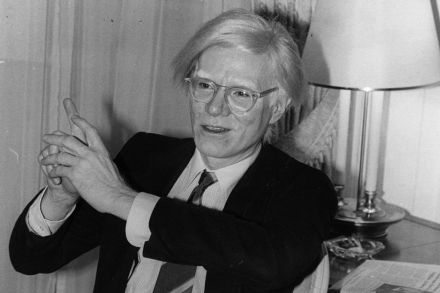
A lawsuit on the work of Andy Warhol is going to the Supreme Court. In 1984, Vanity Fair commissioned Warhol to alter a photograph Lynn Goldsmith took of Prince in 1981 for Newsweek. Warhol cropped the original photo, overlaid it with purple and orange, outlined parts of Prince’s face, and added shading to accompany an article by Tristan Fox titled “Purple Fame.” Goldsmith apparently only learned in 2016 that Warhol had altered her photograph when Vanity Fair republished Warhol’s work in a story on Prince’s death along with the other 15 pieces Warhol created from the photo for his private collection called “Prince Series.

What kids are reading

In Bookriot, Danika Ellis reports on a new function that Follett Learning has been developing to add to their library management system, Destiny. It will allow parents to see and restrict what books their children check out from the library. Ellis, of course, sees this as a terrible development. What could be worse than allowing parents to be involved in their child’s education?: Systems like this are most harmful for the students who need access to books and other library resources the most: queer kids and teens whose parents are unsupportive, students looking for safer sex information, children with abusive parents looking for resources to keep themselves safe, and more. For these students, the library could be the safest place they can go, and this would cut off that lifeline.

Can AI write real poems?

In the New Criterion, Carmine Starnino writes about the newest AI tool, GPT-3, and its uncanny ability to imitate human expression. What does this mean for poetry and the other literary arts? Dozens of websites, with names like Poetry Ninja or Bored Human, can now generate poems with a click of a key. One tool is able to free-associate images and ideas from any word "donated" to it. Another uses GPS to learn your whereabouts and returns with a haiku incorporating local details and weather conditions (Montreal on December 8, 2021, at 9:32 a.m.: "Thinking of you/ Cold remains/ On Rue Cardinal").

Wallace Stevens and the magic of stuff

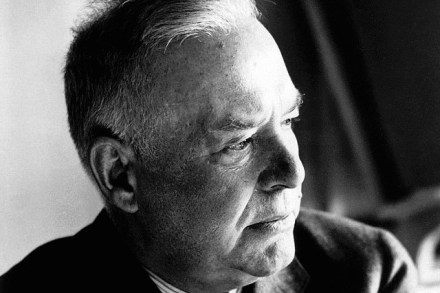
Writers have all sorts of hobbies. Tolstoy liked to play chess. Dostoevsky, as everyone knows, loved to gamble. Nabokov collected butterflies; Hemingway, wives. Eugene O’Neill’s favorite pastime was drinking. Flannery O’Connor, of course, loved birds. Emily Dickinson loved to bake. T.S. Eliot was an avid sailor. As a young man he regularly sailed along the shore of Cape Ann. One summer, Eliot and some friends sailed from Marblehead, Massachusetts to Mt. Desert Rock in a 19-foot knockabout in the fog and rough seas. It was a journey of well over 150 nautical miles and could have easily ended in disaster. The sea, of course, appears again and again in Eliot’s poetry.

The future of highbrow culture

In the Lamp, Matthew Walther wonders what has happened to genuine interest in highbrow culture in America. It used to be, he argues, unremarkable that certain young people might develop strong feelings about Joyce or A.E. Housman or George Eliot. Now, all that everyone cares about is pop culture: Young people who set themselves apart from their peers with a real or (even an affected) interest in literature and classical music and a disdain for television, celebrity gossip, and what we now quaintly refer to as "Top Forty" seem to have gone the way of Rockefeller Republicans.

The end of the MLA

In the Washington Post, Jacob Brogan writes about attending the annual Modern Language Association convention a few months ago. Normally, thousands of professors and newly minted PhDs would attend. Last year, it was virtual. This year it was both in-person and virtual. Hardly anyone came: At 12:55 p.m. on a Thursday in early January, the double doors of Salon K at the Marriott Marquis in downtown Washington hung open like an unwanted hug. The space within had been optimistically set up for an audience of maybe three dozen: six rows of chairs in neat ranks with an aisle down the middle, facing a black-draped table with space for four participants.

A new magazine on the right

As you may already know, Matthew Schmitz (formerly of First Things) and Sohrab Ahmari (formerly of the New York Post) have joined up with Edwin Aponte to launch a new online publication called Compact. They describe it this way: Every new magazine should be an intimation of a possible future, a glimpse of how the world might be. Our editorial choices are shaped by our desire for a strong social-democratic state that defends community — local and national, familial and religious — against a libertine left and a libertarian right. Our name evokes our aspiration, and defines its limits. A compact is a political union drawing together different people for a common end. It is neither a contract nor a covenant, neither a market relation nor a religious sodality.

wittgenstein

A private life

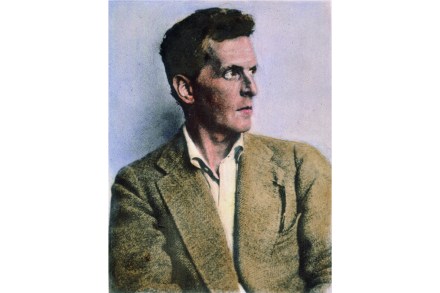
When Ludwig Wittgenstein died in 1951, he had only published one book — the Tractatus Logico-Philosophicus, which was first translated into English in 1922 (with an introduction by Wittgenstein’s former professor and mentor Bertrand Russell, to which Wittgenstein strongly objected). Philosophical Investigations, which Wittgenstein was working on at the time of his death, was published in 1953. His wartime notebooks, which he kept between 1914 and 1916, appeared in 1961. These are important. The Tractatus is famously dense, being composed of a series of statements on the relationship between words and objects and the nature of knowledge. The notebooks provide a clearer sense of the problem Wittgenstein was trying to solve and the progression of his thought.