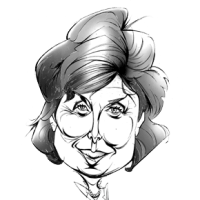
Melanie McDonagh

Melanie McDonagh

Melanie McDonagh is an Irish journalist working in London.

Life is hard for Bethlehem’s Christians

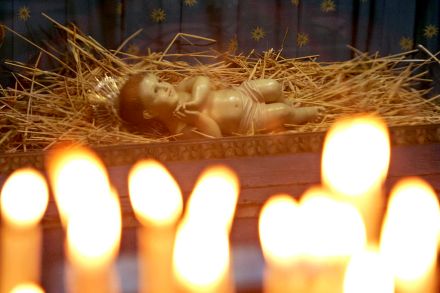
O Little Town of Bethlehem, how still we see thee lie: except the place is, in fact, buzzing in the run-up to Christmas. I had to squeeze between groups of American tourists to get into the little Church of the Nativity, built on the site where Christ was born. When I made it in, I created an impediment to the flow of pilgrims by kissing the ground near the star marking the place of his birth. Everyone who followed me did the same, with some effort on the part of the chunkier pilgrims.   It’s good news that Bethlehem is getting back to business. The shops selling nativity figures, Christmas decorations, pilgrim tat and olivewood rosary beads are hopping – the Nativity store where I got my souvenirs was stuffed with Polish pilgrims.

Should it be a crime to pray outside an abortion clinic?

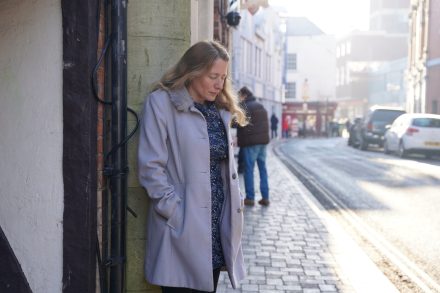
When MPs backed the enforcement of 'buffer zones' around abortion clinics, there were warnings that the measure might backfire. Two months on from that vote, those consequences are now clear for all to see. The director of an anti-abortion group is facing prosecution after praying in front of an abortion clinic in Birmingham. Isabel Vaughan-Spruce of UK March for Life is accused of breaching a public space protection order – but she insists she was only exercising her freedom of religion 'inside the privacy of my own mind'.  Vaughan-Spruce is not accused of harassing anyone. The 45-year-old simply said a prayer inside an exclusion zone. It’s come to something, hasn't it, when you can be prosecuted after praying, silently or otherwise, under English law?

Quentin Blake’s long history with The Spectator

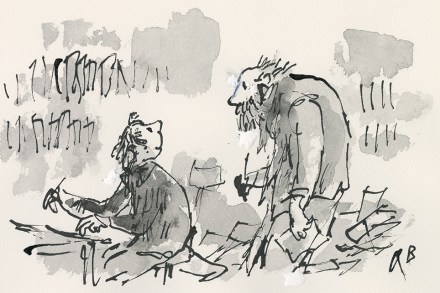
The Christmas present that comes with this article is an original artwork by Britain’s greatest living illustrator, Quentin Blake. By happy chance, this Friday – 16 December – is also his 90th birthday. Hip hip hooray! It is not the first illustration he has drawn for this magazine, which is why it’s very apt that he depicts an old Quentin speaking to a younger version of himself. From 1959, when he created one of the first illustrated Spectator front pages, through the 1960s, and occasionally after that, he has produced enticing Spectator covers to illustrate either the content or the season, including eight Christmas issues. His first Spectator cover was the issue of 29 May 1959.

Turkey isn’t the only option for a Christmas feast

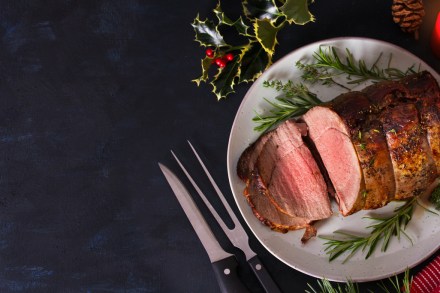
Christmas is coming – but if the geese are getting fat, the turkeys aren’t terribly happy, cooped up indoors on account of avian flu. Around half of the free-range birds produced for Christmas in the UK have been culled or died due to the illness, according to the British Poultry Council – and for those that remain, the government’s anti-infection measures mean they aren’t ranging anything like as freely as before. Some butchers, including the Ginger Pig chain, have announced they aren't selling turkey at all. So if we can’t get a happy turkey, what should we be eating on Christmas Day? Turkeys might seem like the stalwarts of the Christmas feast but they are, after all, New World birds, so latecomers to the festive table in these islands.

The year’s best children’s books, featuring animals real and imaginary

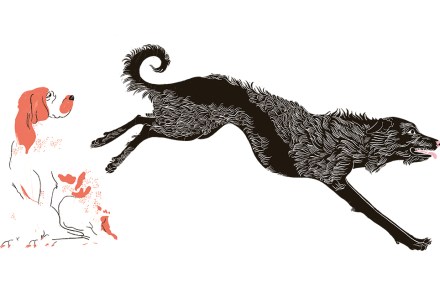
It’s not often that my tastes are validated by Netflix, but Jonathan Stroud’s brilliant series about teenage ghost hunters, Lockwood & Co., is being turned into a series. If you haven’t read it, give it a go. The mordant talking skull alone is worth it. Stroud has already embarked on another series about a tough nut sharp-shooter, Scarlett, and her amiable sidekick, Albert Browne, who, handily, can read or sieve minds.   The Notorious Scarlett & Browne: Being an Account of the Fearless Outlaws and their Infamous Deeds (Walker Books, £7.99) is the second in the series, and the subtitle gives the gist. Here they carry out an impossible heist, complicated by ghouls.

Mesmerising and eye-opening: Courtauld Gallery’s Fuseli and the Modern Woman reviewed

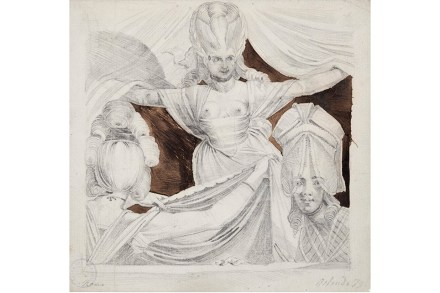
It’s not until you see this exhibition of drawings by Henry Fuseli that you realise that most artists have really not done anything like justice to women’s hair. Fuseli was obsessed with it, particularly that of his wife Sophia, a former artists’ model 20-plus years his junior. Hers was wildly extravagant even by the standards of the time – late 18th, early 19th century. For most art buffs, Fuseli, one of the most idiosyncratic artists of his age, is best known for ‘The Nightmare’, his lurid Gothic painting of a curvaceous sleeping woman with a demon squatting on her belly, shown in the Royal Academy exhibition of 1782; the drawings in this Courtauld exhibition show another side.

The strange chair appointment of Oxford’s Vice Chancellor

To enormous fanfare last week, the Dame Louise Richardson Chair of Global Security was established at the Blavatnik Business School in honour of the soon-departing Vice Chancellor. It was a remarkable event in a couple of respects – first, global security is frankly a dud subject for a chair at Oxford. More to the point, the Dame was appointed to this vanity project when she was still in office, which was an extraordinary departure from usual custom and protocol. Normally an honour of this sort would be proposed after the departure of the scholar it’s named after – normally an individual of exceptional distinction in an established field – and left to their successors to promote.

Imprisoned on the whim of Enver Hoxha

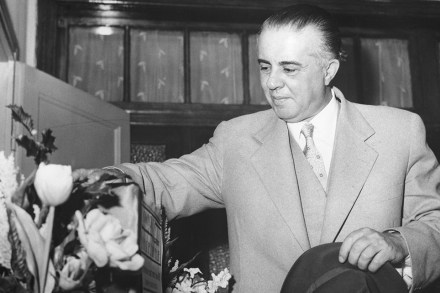
Nowhere in this extraordinary prison memoir do we find out why Fatos Lubonja was sentenced to imprisonment in Spaç, the Albanian jail where some inmates worked the copper mines. He’s written about it elsewhere. His first seven years there were for ‘agitation and propaganda’, after police found his diaries, with criticisms of the Albanian tyrant Enver Hoxha, in his uncle’s attic. While he was in prison he was re-sentenced to a further 25 years for involvement in a counter-revolutionary organisation. The dictator didn’t last as long as that. Fatos served 17 years, partly in Spaç, partly in other camps.  It wasn’t difficult to get on the wrong side of the paranoid Hoxha.

Why Albanians come to Britain

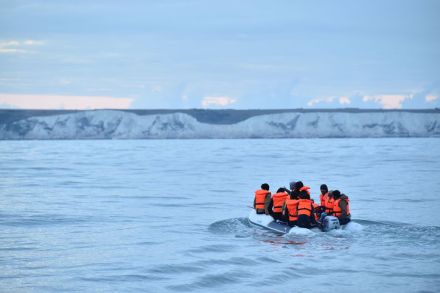
A friend of mine works in a surgery in London where lots of asylum seekers go for treatment. The caseload is a snapshot of current trends in illegal immigration, and at present that means lots of Albanians.  Yep, that’s the migrant influx across the Channel we’ve been hearing so much about, and which the Albanian PM, Edi Rama, has been blaming on the British government: 'It's not about Albanians or aliens or gangsters, but it's about failed policies on borders and on crime,' he said this week.  Three cases give an idea of what’s going on. One patient was a nurse from Tirana, Albania's capital, but had found it impossible on a nurse’s wage to buy somewhere to live.

How to make your candles last longer

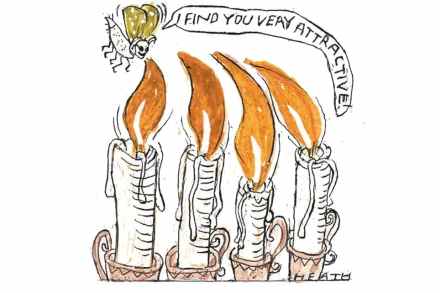
Under the sink. That’s where most of us will be keeping a stash of candles in case the lights go out this winter on account of an erratic electricity supply. There’s nothing worse than finding yourself in darkness and not remembering where you’ve left the candles and the matches. Be prepared. We’ve got out of the habit of using candles except for dinner parties, so we’ve lost touch with our inner chandler. Not many children go to sleep looking at night (tea) lights because they’re afraid of the dark. So I sought out the founder of Candle Maker Supplies off the Shepherd’s Bush Road in London, David Constable, who remembers the 1970s when blackouts meant everyone using candles. His tip: chill your candles before using them; that way, they last longer.

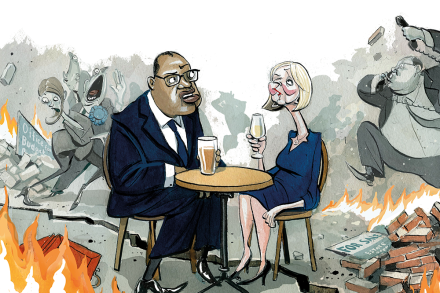
What crisis?

41 min listen

On this week's podcast: For the cover of the magazine Kate Andrews assesses the politics of panic, and the fallout of last week's so-called fiscal event. She is joined by Robert Colvile, director of the Centre for Policy Studies think tank to discuss where the Conservatives go from here (00:57).Also this week:Does the future belong to Sinn Fein in Northern Ireland?This is the claim that Jenny McCartney makes in this week's Spectator. We speak with journalist Melanie McDonagh and politician Mairia Cahill about what this could mean for Irish reunification (15:58).And finally:Are red kites magnificent or a menace?Paul Sargeanton says in his article for The Spectator that red kites should have never been reintroduced back into the UK.

Melanie McDonagh, Katy Balls and Nigel Richardson

15 min listen

This week on Spectator Out Loud: after the sad passing of our longest reigning monarch, the great Queen Elizabeth II, Melanie McDonagh reads her poignant piece on how Britain, as a nation, will be lesser without her (01:09). Then, turning to politics, Katy Balls gives us an update on how Liz Truss is shaking up Number 10 (05:18) before Nigel Richardson, author of the new book The Accidental Detectorist, tells us about his new hobby, metal detecting (10:55).

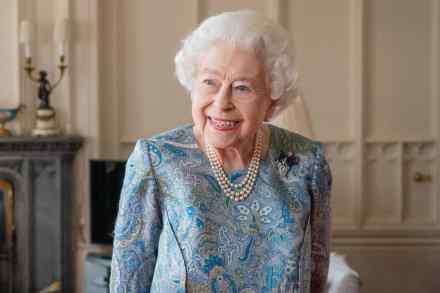
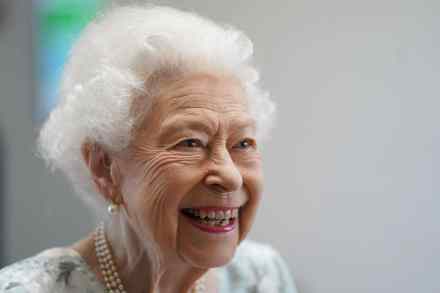
Britain will be a lesser nation without the Queen

The loneliest thing about being as long-lived as the Queen, at 96, is that you have few or no contemporaries. Few people reach her age; indeed, not that many people remember the time before she became Queen in 1952, 70 years ago. She has been, simply by living for as long as she did, the one element of continuity in the life of the nation.  In the 70 years of her reign everything changed – Britain just isn’t the country it was then, for better and worse – but the Queen was a constant. Her presence in parliament, at great events, on the BBC on Christmas Day – even on our stamps and currency – gave Britain an extraordinary psychological stability during a period of upheaval.

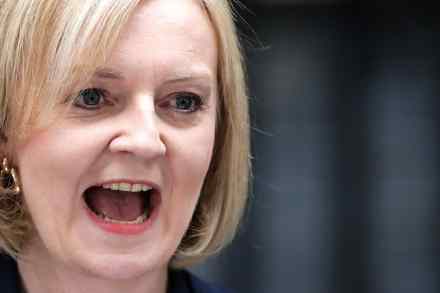
The problem with Liz Truss

Was it just me or was Liz Truss actually smirking during her statement outside Downing Street, the one littered with cliches about spades in the ground and wince-making turns of phrase like ‘aspiration nation’? Another two years of this PM talking about being ‘determined to deliver’ (deliver what, Liz?) is going to be really hard going.  Just listen to her. Look at her. Is this really the best that we can get from a country of 67 million people? Liz Truss?

Jeremy Clarkson should be the next host of University Challenge

The bad news of the week is that Jeremy Paxman is retiring from University Challenge. The worse is that most of those lined up to succeed him are nothing like as good. University Challenge is a quiz show that JP has very much made his own: the curled lip, the incredulity at culpable ignorance, the reluctant admiration when a team really does know its stuff... it’s all part of the Paxman persona. At least on air it is: I do know one acquaintance of his who declares that for Jeremy Paxman to sparkle in private life, he really needs a camera permanently trained on him, to give the illusion that he’s actually on air.

Children are the big losers from the decline of marriage

Funny, isn’t it, the way people bandy the word 'bastard' nowadays, without any notion that it pertains to the condition of being born outside marriage? It says lots about how illegitimacy was once regarded that its descriptive noun is now simply a bad word. And yet most children who were born last year are what we’d once have called illegitimate; the Office for National Statistics finds that 51.3 per cent were born to mothers who were neither married nor in a civil partnership. It’s the first time this has happened since records began, in 1845. The most troubling aspect about it is that we’re really not troubled. Time was, this situation would have raised uproar in the press. Politicians would have sounded off.

Could Russia stoke conflict between Serbia and Kosovo?

The prime minister of Kosovo has been talking about a possible war in the country, with Russia as the instigator. In an interview with La Repubblica, Albin Kurti said: 'The risk of a new conflict between Kosovo and Serbia is high. I would be irresponsible to say otherwise, especially since the world has seen what Russia has done to Ukraine. We are a democracy bordering on an autocracy, after all. Before the invasion of Ukraine, the opportunities were few, now the situation has changed. 'The first episode, a consequence of the Kremlin’s fascist idea of ​​Pan-Slavism, was Ukraine. If we have a second episode, for example in Transnistria, then the chances that a third war will take place in the Western Balkans, in particular in Kosovo, will be very high.

What’s the matter with Disney?

If there’s one thing that gives a bad name to gender stereotyping it’s the Disney princess: a combination of hideous synthetic fabric and a noisomely winsome concept. And yet the Bibbidi Bobbidi Boutiques at Disney Parks are popular with families as a place where their offspring can get dressed and styled as their favourite Disney characters, i.e. princesses or, in the case of a smaller number, knights. Now, the Streaming the Magic blog – which posts on Disney Parks – reports that: Disney Parks’s website itself now refers to ‘Godmother's Apprentices’.

The lost art of letterheads

One of the pleasures of the letters from unhappy ministers to the Prime Minister last week (though not, presumably, for the recipient) was the assortment of letterheads from Whitehall departments we saw in the papers. One was from Nadhim Zahawi, on HM Treasury writing paper. It’s a fair bet that most of Mr Z’s communication these days is by email or text or WhatsApp. Yet when it came to calling for Boris Johnson to resign, nothing would do but a letter with the Treasury insignia to indicate that the writer was staying where he was. There are so few opportunities nowadays to show off a letterhead that they have become a special medium.