Melanie McDonagh

Melanie McDonagh

Melanie McDonagh is an Irish journalist working in London.

In search of the perfect chocolate cake

What Victoria is to a jam sponge, so is Sacher to chocolate cake. It’s a man, a hotel and a cake and, indeed, shorthand for a city. The lines of people outside the Sacher Hotel café in Vienna for chocolate cake with whipped cream on the side are looking for a Viennese experience, like schnitzel, Strauss waltzes or pictures by Klimt. Sacher cake is something you find everywhere, but this one is grounded in a particular place, the Café Sacher. The 360,000 Sacher tortes of varying sizes that are made yearly in its manufactory and dispatched in classy wooden boxes are the exemplars of a formula that has taken over the world. It’s not every hotel where you get chocolate cake for breakfast The cake predates the hotel.

Just Say No to abstinence this January

Today’s a day for waltzes from Vienna and loafing around on one of the three days of the year when people actually stop work. But tomorrow, it’s going to be business as usual – only worse. The retail sector goes all glum on 2 January. It’s out with the party food, the charcuterie platters, port and anything featuring mincemeat, and in with smoothies, salads and plant-based ready meals, plus a focus on fitness gear in the clothing department. Oh and alcohol free everything for the teetotal binge that is Dry January.  January never was a time for abstinence; it was a time for sociability and eating well Can we not see how bizarre, how unnatural all this is?

When will the BBC’s Julia Donaldson obsession end?

The BBC thinks it wouldn't be Christmas without an adaptation of a Julia Donaldson book. This is another dispiriting example of the invention of a faux Christmas tradition. This year, it's the turn of Tabby McTat, a story about a musical cat and a busker, which will be broadcast this afternoon. This isn't the first time a Donaldson book has been adapted for the BBC's Christmas line up; it was The Smegs and the Smoos last year. And Superworm, Zog And The Flying Doctors and The Gruffalo have all received the animation treatment over the last decade, and are on BBC iPlayer in case you didn't catch them the first time. Isn't it time the BBC looked elsewhere for kiddy uplift? Isn't it time the BBC looked elsewhere for kiddy uplift?

Stella Creasy is wrong about the ‘motherhood penalty’

If you find yourself frazzled by the Christmas rush, spare a thought for Stella Creasy, MP for Walthamstow, who is struggling to balance motherhood and her hectic social schedule. The other day she tweeted: ‘As I walk past everyone going to Christmas parties and drinks on my way to get the kids from nursery, yet again acutely aware the motherhood penalty is just a gift that keeps giving…. Not just flexible working we need but flexible networking too.’ It’s tough, no? Having to put the drinks parties (and remember, half of political life is conducted on the social front) on hold to do the active parenting of two children is a trade-off.

The slow death of Christmas cake

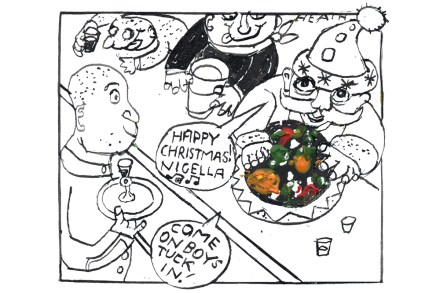
Wouldn’t you just know it? Christmas cake, as in dense fruitcake covered with marzipan and usually tooth-destroying royal icing, is being displaced by chocolate cake. Almost half of a sample of 2,000 people surveyed by Ocado said they’d prefer chocolate to fruitcake. The trend is represented by Nigella Lawson, who is making something called a Winter Wonderland chocolate and raspberry cake instead. ‘Much as I happen to love a slice of dense, damp Christmas cake, especially when eaten with a crumbly slice of good, strong, sharp cheese, I am surrounded by those who abominate dried fruit in all its seasonal manifestations,’ she writes. ‘If no one in your family likes dried fruit, there’s no point having a Christmas cake gathering dust.

So long to the landline

So Debrett’s has really got behind the latest technology by issuing a guide to the appropriate use of the mobile phone, or rather, ten commandments. The oldies are warned that young people take fright at an unexpected call – text first to see if it’s convenient – and the young are told that they should give a caller their undivided attention on the basis that it’s perfectly obvious if you’re doing something else and ‘This can be very alienating for the recipient, who feels marginalised and deprioritised’.   The thing about the demise of landlines is that it’s pretty well impossible to get hold of anyone easily without it That’s all very well and bears out the weird ways communication is going.

Do we really need more diversity on Gardener’s World?

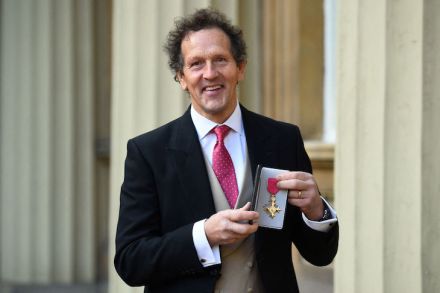
Boo. Monty Don is retiring in a couple of years as presenter of Gardener’s World, because it’s getting to be a slog and a treadmill. But he’s already doing his bit to influence the BBC's choice of his successor. He told Times Radio that he thought the show needed more diversity – and that the BBC should think 'ten times' before picking an Oxbridge-educated middle-aged man again as its lead presenter: 'In a truly just and fair society, we wouldn’t care what someone’s colour or race or creed or sex was. But the truth is that it’s much more delicate. And I think that I’m absolutely persuaded that in order to include everybody, you have to open doors that either are or seem to be shut.

Should Kyiv really ban the Ukrainian Orthodox Church?

The war in Ukraine, which was until 7 October the only foreign news we could think about, is no longer centre stage but is continuing in an increasingly attritional way. And Ukrainian politics continue, inevitably, to be dominated by the war with the result that fundamental freedoms are now a casualty of the conflict. Specifically, there is a bill before the Ukrainian parliament, which has already passed its first reading, that would ban the Ukrainian Orthodox Church. This historically has been located within the Russian Orthodox Church, whose leader, Patriarch Kirill, is notoriously invested in the war, on the Russian side. He is, moreover, close to Vladimir Putin.

The best of this year’s children’s books

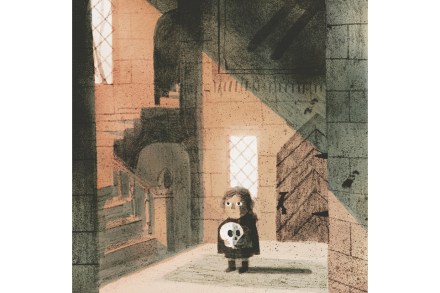
In some children’s books, nothing much happens. In Roberto Piumini’s Glowrushes (Pushkin Press, £9.99), it’s like this: a father, a great Turkish lord, hires an artist to paint his sick son’s rooms for his 11th birthday, and together the boy and the painter create walls of wondrous imaginary landscapes. It turns out that you don’t have to travel outside your own room to inhabit new worlds. One wall is for the meadows of a goatherd, with tiny red goats, a lame dog and a distant minaret and a muezzin with a big nose. Another is for a besieged castle with a lovely princess atop a tower. And one room has glowrushes, wheat grasses which shine in the dark. It’s hard to say what age this story is meant for, but it reminds me of The Little Prince, where everything has its own logic.

How to make Irish barm brack

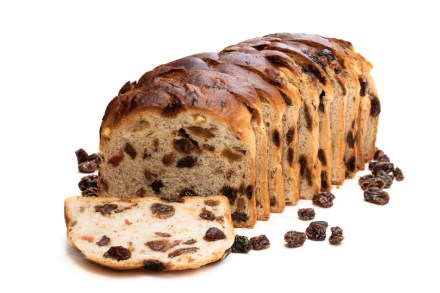
Those of us who grew up with a traditional Halloween, that is to say, in Ireland, don’t have much truck with the contemporary version. The pumpkin-coloured, gore and chocolate fest that has come to Britain via the US is gross by comparison; we had a simple version. We dressed up, but in masks and any old clothes we could lay our hands on. We had nuts and apples for bobbing, not chocolate in the shape of severed fingers. We went from house to house looking for a penny for the bobbin’, not trick or treating. And the thing you really looked forward to was barm brack. Halloween was a time for ghosts, not chainsaw massacres It’s actually a fruited, not too sweet yeast loaf, which is really good buttered, and if a bit stale, toasted and buttered.

Why did this brilliant Irish artist fall off the radar? 

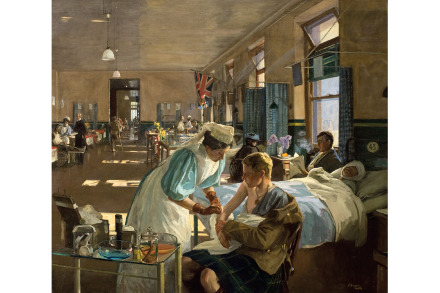
Sir John Lavery has always had a place in Irish affections. His depiction of his wife, Hazel, as the mythical figure of Cathleen ni Houlihan, which appeared on the old ten shilling and subsequently on the watermark of the Irish pound notes, meant, as the joke went, that every Irishman kept her close to his heart. He was indeed Irish – born in Belfast – but was at home in Scotland, and was the best known of the spirited group of painters called the Glasgow Boys. Yet he lived most of his life in London, was friends with Winston Churchill (they took a painting trip together) and also with Michael Collins, the Irish Nationalist, with whom Hazel was, ahem, close. If ever there were a man who embodied the interconnectedness of Britain and Ireland, it was Lavery.

Sir Ranulph Fiennes: a living Lawrence of Arabia

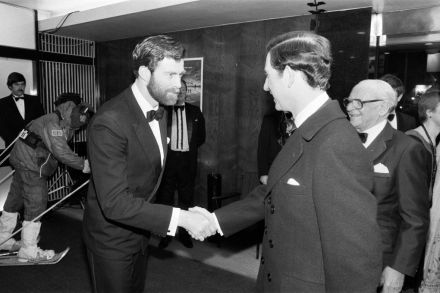
Sir Ranulph Fiennes (a third cousin of Ralph, since you ask) has written a book about Lawrence of Arabia. He feels an affinity with him: he too has led Arabs in fighting, in Sir Ranulph’s case, for the Sultan of Oman. ‘I’d been in Arabia, leading Arabs against the Marxist rebels. In Lawrence’s day, the British were fighting the Germans and the Turks’.   ‘It’s my DNA. My ancestors did lots of travel in new places’ The circumstances differed. ‘Lawrence had camels and was dealing with a huge body of men; I had six open-topped Land Rovers with two machine guns and I led 30 men; a mixture of Belushis and Oman Arabs and Zanzibars. I felt about the men as a family.’ What does he make of Lawrence’s extraordinary career? ‘It mystified me’, he says.

The sad decline of Disney

Happy Birthday, Disney. A hundred years ago today, Walt and his brother Roy formed the Disney Brothers’ Studio to produce a series of short films based on Alice in Wonderland, a successor to Walt’s original Laugh-O-Gram studio. It helped shape the American imagination and transformed the art of animation. If you meet anyone who actually saw the original Snow White in the cinema – as the late Stewart Steven told me – you’ll find they recall being scared out of their wits by the scene where Snow White runs through the forest with eyes and groping hands following her. Actually, there’s an awful lot to scare the viewer in Snow White. And no one has ever bettered ‘Hi Ho, Hi Ho’, as an animation melody.

There’s nothing conservative about Sunak’s smoking ban

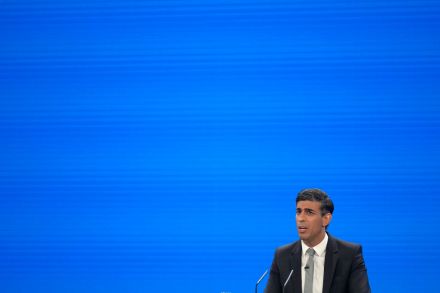
Is Rishi Sunak the least Tory Tory PM ever? He’s fundamentally Californian at heart: witness his terrible policy to ban cigarettes to anyone born from 2009 which was announced to great fanfare at conference.  That’s what contemporary Conservatism has come to: compulsory clean living Fortunately, I belong to the lucky generation that can still kill itself with tobacco, though I write as a failed smoker. Try as I might, I can’t get the hang of it, and the times I tried left me with little doubt that it’s not good for you. I gave up the effort some time ago. But the thing about being grown up is that you can do things that are legal but not particularly healthy, like drinking to excess or smoking.

Parent trap: the relentless rise of children’s speaker Yoto

If you want a handy metaphor for contemporary childrearing, it’s a colourful plastic box with big red buttons on it. Yoto is the name, and before long, you’ll be seeing it where you already see children using screens – so pretty much everywhere. One in 50 British homes with a child under 12 is said to have one. It’s like a CD player-cum-iPad with ambitions to run your child’s life. The essential bits of it are plastic cards that you or the child – the idea is that the child has agency here – slot into the player to listen to a story, but there’s a whole range of other options – radio, podcasts, night lights, sound effects.

Teaching children mindfulness is a waste of time

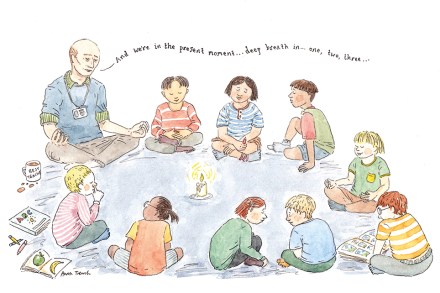
A friend from Lewisham, south London, reports occasionally on her children’s state school, which has a reputation for being strife- and strike-prone. However, the children themselves – nursery and reception – are engaged in more calming activities. They are doing mindfulness. ‘My son loves it,’ she says. They sit down cross-legged at least once a week to take in the sounds around them (‘listen to the birds!’), concentrate on their breathing and focus on the present moment. My friend did ask the teachers whether it was possible to get five-year-olds to sit still for that long. ‘Yes,’ she was told. ‘In fact, some fall asleep.

James Heale, Svitlana Morenets, Melanie McDonagh and Richard Madeley

28 min listen

This week James Heale describes the mess the Conservative Party has got itself into when selecting its parliamentary candidates (01.17), Svitlana Morenets is in Ukraine witnessing first hand the tragedy of how troops are dying for want of proper medical supplies and training (06.59), Melanie McDonagh discusses the art of kissing and when a kiss is not just a kiss (18.22) and Richard Madeley shares with us his diary in which he ponders Queen songs and cancel culture and the shocking case of Lucy Letby (22.07).

Luis Rubiales and the weirdness of a kiss

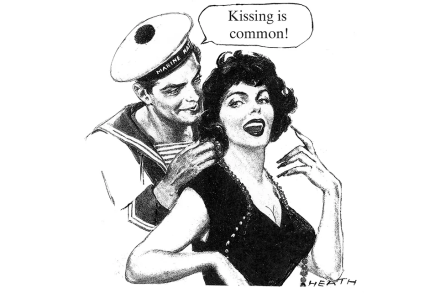
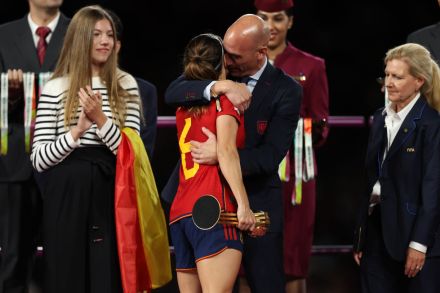
A kiss is just a kiss, no? But when it’s Jenni Hermoso, the forward of the victorious Spanish women’s football team, on the receiving end, and the president of the Spanish football federation, Luis Rubiales, doing the kissing, and it’s during the official post-match ceremony in front of an interested global audience… it’s different.  Immediately afterwards, Miss Hermoso declared that she ‘didn’t like it’. Rubiales was defiant. ‘It was a kiss between two friends celebrating something,’ he declared, calling his critics ‘idiots and stupid people’. He may have had in mind the minister of equality in Spain’s caretaker government, Irene Montero, who described the kiss as ‘a form of sexual violence’. Yes, well, it just shows you how fraught kissing is.

Manchester United failed Mason Greenwood

So, the Manchester United footballer Mason Greenwood has not been found guilty of the offences of attempted rape and coercive behaviour that he was accused of, but he’s still very sorry for unspecified behaviour that he did engage in.  Have you ever read anything more confusing than the following?  ‘In a statement, Greenwood accepted he had "made mistakes" and took his "share of responsibility", but added: "I did not do the things I was accused of”.’ ‘Today's decision has been part of a collaborative process between Manchester United, my family and me. The best decision for us all is for me to continue my football career away from Old Trafford, where my presence will not be a distraction for the club.

Mason Greenwood

I’m bored of Disney feminism

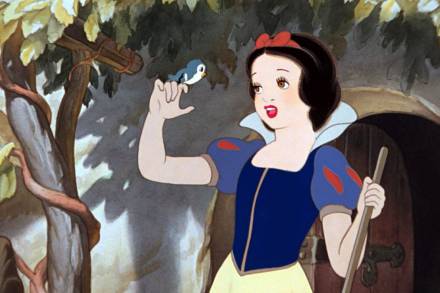
It is, I know, a bit early to be thinking about 2024, but to help with the forward planning, here’s a film to avoid next year: the Disney release of its new, non-animated, musical version of Snow White. The original animated version of 1937 was a classic if ever there were one. Stewart Steven, the late editor of the Evening Standard, remembered seeing it as a boy when it was released: ‘I was completely terrified’, he told me, speaking for a generation of children. It was a triumph of animation; the songs were terrific – the seven dwarves’ ‘Hi Ho, Hi Ho’ is immortal; and the episode where the princess, fleeing the huntsman through the trees, is tormented by clinging branches and malevolent eyes is fearful. It’s just a pity that most of us now see it on a small screen.