Melanie McDonagh

Melanie McDonagh

Melanie McDonagh is an Irish journalist working in London.

Francis reveals himself to be a pope of two halves

From our UK edition

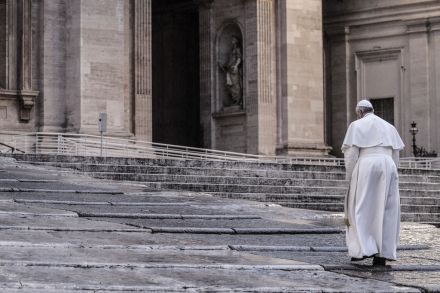
The Pope's autobiography is out and it's still not entirely clear why. Carlo Musso, the 'co-author' of Hope: The Autobiography, says that it was originally intended to be published after his death, but on account of 'the new Jubilee of Hope' (the Jubilee Year), and the 'circumstances of this moment' (i.e. him not dying), it's been brought forward. Truth to tell it reads a bit scrappily, more like a series of interviews, with occasional errors – the Arian heresy, for instance, is not the 'Aryan' heresy, presumably a Hitlerian thing. The book is up to date, taking on board his encounter with clerical sex abuse survivors in Belgium last year (he doesn't mention his brutal going-over by his horrible Belgian hosts) and his meeting a few months ago with transexuals.

The case for ‘long Christmas’

From our UK edition

There comes a time right after the new year when the retail sector decides it’s done with fairy lights and sparkles. Out goes the party food, the bao buns with Santa hats, the mixed platters of prosciutto and cheese, the gift sets of flavoured olive oil and the festive cheeseboards. On the discount rails there are scarlet jumpers with diamante and slinky party frocks, looking less and less inviting by the day. Back comes the sleek minimalism of the retail sector in its most pared down aspect as it flogs low-carb, low-calorie ready meals and fitness gear in time for the great 'new year, new you' personal transformation.

When will the BBC stop adapting Julia Donaldson books?

From our UK edition

Another Christmas, another BBC adaptation of a Julia Donaldson story. This time it's an animated version of Tiddler, the story of a little fish who is always late for school and who makes up tall stories to explain why. The tall stories get around the ocean and when Tiddler gets caught by a fishing boat and tossed back in the sea, he is able to find his way home to Miss Skate and her lesson by following his own stories. Aww. As the CBeebies storyteller observed, 'What make us powerful is not how big we are but by what's inside.' A perfect parable for our day then.

What Ed Miliband got right on Syria

From our UK edition

It’s not every day I spring to the defence of Ed Miliband, Secretary for Environment, Net Zero and all the rest of it. But for him to be taken to task for not backing the bombing of Syria back in 2013, as Wes Streeting cautiously does today, is actually to criticise him for his most statesmanlike act during his entire period as Leader of the Opposition. Miliband was given a rough ride by Nick Robinson on the BBC Today programme about it: would he be able to look the relatives of the unfortunate people murdered in the dictator’s prison in the eye and say that he does not regret not bombing Assad’s forces? To which he stoutly, and honourably, replied that he doesn’t. And good for him.

Stuff the turkey: try capon or partridge for Christmas

From our UK edition

‘It was a Turkey! He never could have stood upon his legs, that bird. He would have snapped ’em short off in a minute, like sticks of sealing-wax.’ (A Christmas Carol.) And there is exactly the problem with festive fowl. In most cases, we get turkey. And usually we get it far too big, which leads to all the problems of using the thing up over the course of a week. It may have been fine for Bob Cratchit’s large family but for most people, the mammoth turkey isn’t the way to go. A turkey is a fine bird (one of the trinity of actually useful things, with potatoes and tomatoes, to come out of the European discovery of America) – but it’s not the only option.

Assisted dying won’t work

From our UK edition

Well, the pro-choicers have got their way. In two years’ time, if Kim Leadbeater’s reassurances hold good, we’ll have the option, if we tick the boxes, of ending our lives with a handful of ground-up barbiturates or some other undisclosed cocktail of painkillers at the expense of the NHS. We now know what is the guiding principle that animates the MPs that voted this through. It’s not solidarity; it’s not the principle that Danny Kruger articulated, that ‘no man is an island’ and what affects one affects us all. No. Austin Mitchell put it concisely: ‘this is about choice’. Or as Kim Leadbeater said obligingly, if we have the choice to die we have the choice not to die; there is no compulsion. Very obliging, I’m sure.

Bring back suet!

From our UK edition

Stir-up Sunday may be behind us, but it’s not too late to make your Christmas pudding – and do you know what that means? Yep, sourcing decent beef suet. Suet is the king of fats. It adds to the pudding’s keeping quality, texture and flavour. My recipe calls for half a pound of suet (see below for the recipe in full – it was my great-aunt’s) but the good stuff is hard to find. You can get pellets of suet in a packet from supermarkets, but the real thing, grated into light flakes, is another story: much nicer and lighter. Some inferior recipes suggest butter instead, but good as butter is, it just doesn’t cut it for a Christmas pudding. Suet is the hard creamy fat around the beef kidney.

The Taoiseach will get more than he bargained for in Ireland’s snap election

From our UK edition

The Irish general election happens on Friday. In times past, observers would be marking the rise of Sinn Fein; now the interest has shifted to the parties that are challenging the political consensus. Irish politics can seem weirdly homogenous – with the main parties, in terms of culture, roughly equivalent to the Lib Dems and the wetter end of the Tory party, though in some respects (when it comes to wokery) similarities with the SNP spring to mind. Sinn Fein is on the progressive end of the spectrum on social issues The two big legacy parties from the Civil War, Fine Gael and Fianna Fáil’, manifestly have more in common than not.

The Lion’s Mane, the Firework and terrible jellyfish jokes: the year’s best children’s books

From our UK edition

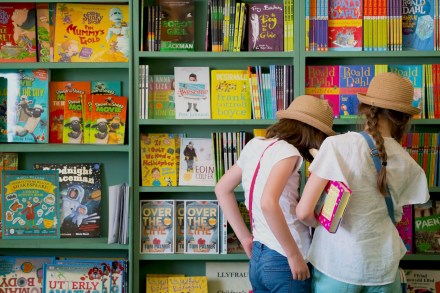
Philip Reeve roams across realms of his own making with effortless brio. If I say that Thunder City (Scholastic, £8.99) is based on the premise that the world’s great cities have detached themselves from their terrestrial foundations and are floating across the sky like so many urban space ships, swallowing up smaller fry, you’d probably think this is asking a bit much of the reader, but somehow you take it all on board. In this futuristic scenario the characters and their modes of thinking are in fact rather quaint – like Miss Torpenhow, a governess whose floating town of Thorbury has been captured by a diabolical former protégé. The assurance of the storytelling carries you along. Rick Riordan has invented an entire genre: Greek myth crossed with American teenage comedy.

The Wizard of Oz sequel that’s perfect for our gender-obsessed age

From our UK edition

To not wholly rapturous reviews, the movie Wicked, the prequel to The Wizard of Oz, is released this week. Tragically, it’s too late for Halloween, so we can expect alienated witches of colour (green) based on Cynthia Erivo to be absolutely everywhere by Christmas. For anyone who loved the Wizard of Oz, 1939 version, this is one to miss. Could there be any narrative more forward looking, more of our time, than this little story of gender transition? But, in a spirit of goodwill, let me put a better idea to Universal, the studio behind the film. They have missed a trick. L.

Stimulating little exhibition: Scent and the Art of the pre-Raphaelites reviewed

From our UK edition

Scent and the Art of the pre-Raphaelites… there’s an obvious problem here: how do you represent one sense by another? Synesthesia is a neurological condition whereby some people do just that: they experience colour when they hear music, or taste words – think of the Revd Sydney Smith describing heaven as eating foie gras to the sound of trumpets. There may come a time when we get all-enveloping sensory effects when we look at paintings – an exhibition on medieval women at the British Library uses the stink of sulphur to suggest Julian of Norwich’s vision of hell and strawberry and honey for Margery Kempe’s scent of angels – but still the most obvious way of representing scent visually is by painting things that smell.

The great flaw in Labour’s assisted dying bill

From our UK edition

Believe it or not, the most compelling argument against assisted dying today came from Sir Ed Davey, the Lib Dem leader, usually reliably on message with every socially progressive cause. But in a BBC radio interview, he almost diffidently put forward his reservations about the Labour MP Kim Leadbeater’s assisted dying bill, arguing that it would make vulnerable people feel like a burden. The mere existence of the choice changes everything Davey, who cared for his elderly mother through her final days and has a disabled son, said, in paraphrase, that if the bill became law, it could have a subtly negative effect on the elderly and disabled.

The slippery slope of assisted dying

From our UK edition

Critics of the Assisted Dying Bill have been warning for a while that it would lead to a 'slippery slope'. Their fears are looking increasingly legitimate. The bill, introduced by Labour MP Kim Leadbeater, had its first reading in the Commons yesterday. In the last few days, some of those with conditions that might not qualify under the proposed legislation are voicing their concern about not being included. Is there already a danger that the scope of the bill will be expanded to include them? The relationship between doctors and patients would change forever Sir Nicholas Mostyn, a retired judge, set up a feisty group of Parkinson’s sufferers who produce a podcast called, rather brilliantly, Movers and Shakers.

Make pirates scary again

From our UK edition

If there’s one thing to bring out your inner Herod, it’s the twee tendency in younger children’s books. It’s at its worst in the depiction of pirates. Ten Little Pirates shows them cute; The Pirates Next Door as rambunctious; Never Mess with a Pirate Princess as egalitarian; Pirates Love Underpants as… oh stop it. It is the latest aspect of our long-standing obsession with pirates, though it’s never been so commodified or so anodyne. Well, there’s going to be a bracing corrective when the National Maritime Museum launches its Pirates exhibition next year. It’s not aimed at rehabilitation.

The Christian view of sex contains multitudes

From our UK edition

Lower Than the Angels (that is the condition of man, according to the psalmist and St Paul) is a book that combines the two most fascinating subjects, religion and sex – but you do have to take both bits of the agenda. This is Christian history with an eye to marriage, sexual acts, sexuality, celibacy, feminism and gender. Diarmaid MacCulloch is primarily a historian of the Reformation but, as his A History of Christianity (2009) demonstrates, he’s up for the bigger picture. This history takes us from early Jewish concepts of God and sex (I was startled to find the God of Abraham was once assigned a spouse, Asherah) right up to current Anglican rows about homosexuality.

Dawn Butler’s bonkers black history poem

From our UK edition

Oh. My. Lord. I’ve been looking at Dawn Butler’s spoken verse as presented by her on X and it's difficult to know what to say. It is, it seems, Dawn’s contribution to Black History Month.  The lyrics are at the bottom of the page, though for the full effect you really need to hear her delivery, with the accompanying shots, made up mostly of fetching images of Dawn, but with some material illustrative of her point, if I've discerned it correctly: https://www.youtube.com/watch?v=hHVs4XyKx1E&feature=youtu.be What she seems to be doing is addressing a racist troll, though it might be helpful if she made that clearer at the outset, because at present her unseen interlocutor would seem to be any random white person.

The sham of an assisted dying ‘citizen’s jury’

From our UK edition

It is remarkable that the BBC decided to give the latest PR exercise in favour of assisted suicide a big push by running it as news today that the Nuffield Council on Bioethics’ citizen’s jury of 28 people has decided that euthanasia should be legalised. In a kind of broadcasting imprimatur it declared that the jury was ‘representative’ of the population as a whole and should therefore be regarded as indicative of the way sentiment is going. Now that’s power: to frame dubious propaganda exercises organised by people already committed to change as the state of the nation. What wouldn’t I give to have the job of writing headlines for BBC Radio 4; authority without accountability.

The rise of the state-private pupil

From our UK edition

When is a state school pupil not a state school pupil? When he has a private tutor. That’s when he becomes a state-private hybrid. So, when parents pore over the university admissions and the A-level grades of state secondary schools, they should ask themselves whether all those results are attributable to the school or whether there may have been outside help. Not that anyone’s going to tell you. In a fee-paying school you don’t normally need to go outside; that’s why you pay those whopping fees. Granted, exams are overrated but the world being what it is – obsessed with top universities – lots of parents will do whatever it takes to get their child into one. And so they hire a private tutor.

Keep fun out of funerals

From our UK edition

There are two untraditional ways to take your leave of this world in Britain. The bleaker is the ‘direct cremation’ method whereby, with no prayers and no mourners, a funeral director will take your remains from mortuary to crematorium to be burnt without troubling your friends and relations. The other is the ‘celebration’. According to Co-op Funeralcare in its new report, called ‘Go Your Own Way’, no fewer than 68 per cent of people it polled regard funerals as a celebration of life, up from 58 per cent five years ago. Out go prayers, black funeral dress and solemnity; in come Doctor Who themes, glittery coffins and guests dressed in football shirts. Or as the report puts it: ‘Personalisation is key.’ The venues are quirky too.

The desecration of Canterbury cathedral

From our UK edition

According to canon 1220 of the Catholic church's code of canon law, 'all those responsible are to take care that in churches such cleanliness and beauty are preserved as befit a house of God and that whatever is inappropriate to the holiness of the place is excluded'. So, if Canterbury cathedral were still Catholic, as it was for 900 years before the discordant event of the Reformation, it is fair to say that the ghost of Thomas Becket would not have been disturbed by the rave in the nave which took place last night and is repeated tonight.