Melanie McDonagh

Melanie McDonagh

Melanie McDonagh is an Irish journalist working in London.

Paris

No city really multitasks like Paris, shorthand for romance, culture, fashion, gastronomy and the kind of street life you find on Robert Doisneau calendars. The £69 Eurostar return opens up a vista of civilised pleasures: the best cheese shops (Androuet), the loveliest perfumeries (Serge Lutens, Palais Royal), the best markets (Marché des Enfants Rouge), the prettiest dolls’ house shop (Pain d’Epices), the most engaging museum (Jacquemart-André). Armed only with Patricia Wells’s unsurpassed Food Lover’s Guide to Paris, Inès de la Fresange’s style guide, Parisian Chic, and the Penguin Map Guide or the little brown Paris version of the A-to-Z, you’re on a roll.

Melanie McDonagh: What I’d like to see in the Budget

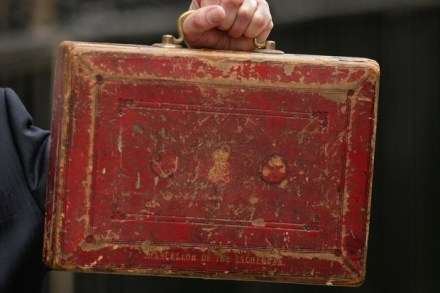
Every year, I sit through the Budget, and every year there are great chunks of it that pass right over my and everyone’s head because they’re arcane and fiddly. Fabulous for accountants, obviously, because it justifies their existence. What I’d like to see in the Budget but won’t, is radical simplification of the system. Not perhaps a flat system, but much, much simpler. It used to be something George Osborne talked about, but it never happened. Anthony Hilton, the Evening Standard columnist, put the case in a piece in January last year: ‘Britain’s tax regime is as much a part of the economic infrastructure as our roads, ports and airports, but at least with them the need for improvement is accepted, even if progress is slow.

Nigel Farage keeps on about EU migration, but non-EU migration is the greater problem

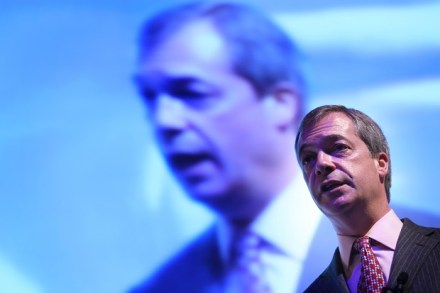
Last week, I spoke alongside Nigel Farage in a debate about immigration organised by the Evening Standard. It was good fun, as you’d expect, with David Lammy, Tessa Jowell and Simon Walker of the IoD on the other side, and David Goodhart alongside me and Mr Farage. You’d be startled, mind you, at the way Nigel Farage gets mobbed by an audience, and in a good way. I did get the chance to get to talk briefly to him myself and ask the question I’d wanted to put to him for ages: why it is that he keeps on about EU migration, when it’s non-EU migration that’s the greater problem. He was unfazed, of course, and said, look, when we meet again in the future to talk about all this, it’ll be EU immigration that’ll be the problem.

Secrets of Candleford: the real Flora Thompson

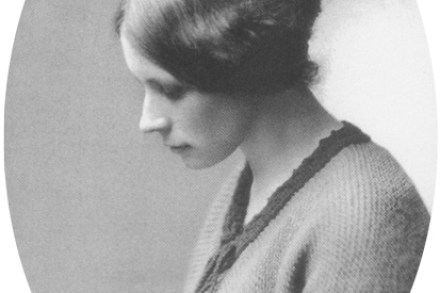
When Richard Mabey was researching this biography of Flora Thompson, author of Lark Rise to Candleford, he happened to stay at a farmhouse B&B near Bath. Ambling around, he found something very curious ... There were two rows of cottages facing each other, with a dusty track between them ...There were clean curtains in the windows. The gardens were in good order, with sweet peas in flower and rows of fat cabbages. It was a vision of an English village as idyllic as a Helen Allingham painting ... I edged round the back and realised they were two dimensional ... a façade but nothing behind.

A prenup undermines a marriage before it has even begun

A friend of mine, quite a distinguished lawyer, takes the view that marriage ceased to make sense after no-fault divorces came in. What, he says sternly, is the point of a contract when there’s no sanction if you break it? Well, quite. But if no-fault divorce pretty well invalidates marriage after the event, prenups do quite a good job of undermining it beforehand. The point of marriage is that it’s meant to be a lifetime affair – the hint being in the ‘til death do us part’ bit – and the point of prenups is that they make provision for the thing ending before it even gets underway.

Russia’s restraint over Ukraine thus far has been remarkable

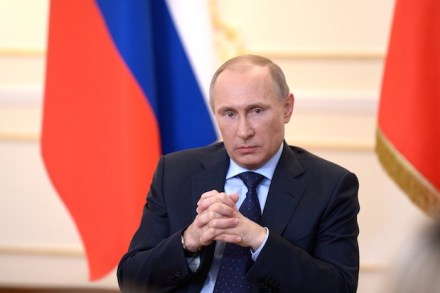
Perhaps it's premature to say this now that the Russian prime minister, Dmitry Medvedev, has sounded off about Russian citizens in Ukraine being in danger, but it strikes me that Russia has behaved in the current crisis with a certain commendable restraint. Judging from most pundits in most British papers, there is no redeeming element to the Putin regime – soup to nuts, gay rights to corruption - and if it hasn’t actually sent the tanks in, well, it probably wants to. Yet, reading the statement from its foreign ministry that ‘a forced change of power is underway’, it’s hard to say that it’s not strictly correct.

Did an archbishop really call for more public spending in response to food bank usage?

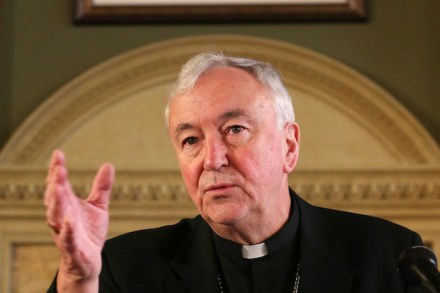
Vincent Nichols, Archbishop of Westminster, has spent an awful lot of time since his recent interview with the Telegraph clarifying just what he meant when he said that the way welfare reforms have been implemented has left people destitute and relying on food banks. When I saw him earlier today, he wasn't exactly tetchy about the coverage so much as tired explaining what he actually wanted to get across. ‘People should take the trouble to read what I said’, he said (a familiar refrain, that, from non-politicians who deal with journalists).

A Valentine Day special – Britain’s cheapest ever divorce

You know, when the pope went on in his recent encyclical about how the family ‘is experiencing a profound cultural crisis’ he wasn't half right. His reflection that ‘the individualism of our postmodern and globalized era favours a lifestyle which … distorts family bonds’ came to mind when I got this very special Valentine's press release from a money saving website. It's offering your cheapest ever divorce for £36, so long as you apply today. I always thought, myself, that no fault divorce was a really bad idea in undermining the contractual character of marriage, but I never thought that the commodification of the end of marriage - cheapening the bond in every sense - would follow it quite so quickly.

Forgive me, Father

For non-Catholics, the most luridly fascinating aspect of Catholicism is confession. Telling your inmost sins — and we know what they are — to a male cleric, eh? In a darkened booth. How medieval is that? Well, the fantasies that people who never go to confession nurse about it are about to be shored up by a new book on the subject by the Catholic author John Cornwell. It’s called The Dark Box: A Secret History of Confession. On the cover is a scary-looking picture of a confessional — not somewhere you’d take the children, frankly, but right at home in a Hitchcock movie. John Cornwell is a friend, and moreover an intelligent and thoughtful man, but if ever there were a book that played to its gallery, it’s this one.

I’m no friend of fags. But this proposed ban on smoking in cars is perilous

As a child, I was not a good traveller. The mere scent of a car interior – possibly the plastic seats, maybe the closed atmosphere, probably the whiff of petrol – would be enough to bring on the tell-tale flow of odd saliva that heralded a really impressive bout of vomiting. If the smell of fag smoke had been added to the mix it would have happened even sooner. So when I say that the that Labour peers’ attempt today (supporters of the amendment include Tony Blair’s old friend, Charlie Faulkner) to introduce a ban on smoking in cars with children is bossy, oppressive and expressive of the demeanour of Yvette Cooper (who has, in fact, nothing to do with it), it’s not from any childish nostalgia for passive smoking so much as a sense of unease.

Liberals must rally round Maajid Nawaz

Interesting, isn't it, this rather worrying statement from the Muslim body, MQI UK on the Mohammed cartoon affair. That, you recall, began when a member of a BBC TV audience showed  a cartoon image from a series called Jesus and Mo on his T-shirt depicting, er, Mohammed and Jesus. Nothing remotely offensive but a full-face depiction of Mohammed nonetheless. The image was duly tweeted by a participant on the programme,  Maajid Nawaz, former Islamist, one of the founders of the Quilliam Foundation and now a LibDem candidate for Kilburn, just to show why it was he wasn't offended by it and to stimulate debate about what is and isn't acceptable to Muslims.

The messy Hollande triangle reinforces the case for marriage

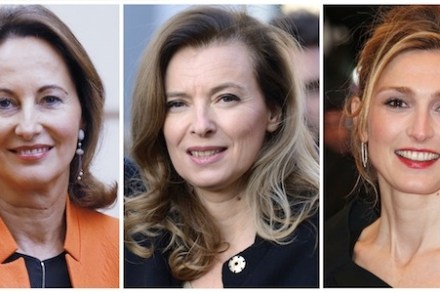
Well, whatever about the French press, for British papers, the Hollande affair is the gift that keeps on giving. Apparently shored up in the presidential residence in Versailles, Valerie Trierweiler was, it seems, visited by the president on Thursday night, though the visit does not seem to have clarified her situation. It is said that the pair will meet again today. In the blizzard of briefing and counter-briefing that both sides are engaged in, you can either take it that Francois Hollande needs more time to decide what to do about his relationships or that it’s curtains for Valerie. Meanwhile, her uncle Florent Massonneau has said: ‘I think the fact my niece is being cuckolded is disgraceful. Her situation gives us a lot of pain.

François Hollande – all the president’s women

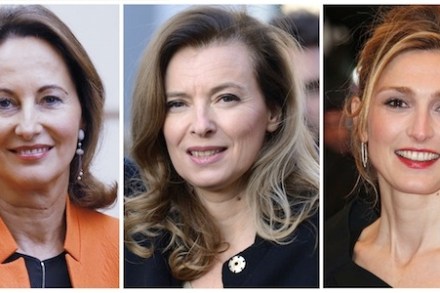
Obviously, the whole Hollande business is utterly compelling from a prurient point of view, though journalists did brilliantly in coming up with spurious public interest reasons for talking about it (Corsican mafia! Presidential security! Lying!). The most riveting aspect, for me, is the heroic restraint of his former partner Ségolène Royale when she was asked about it on telly — given that she was ditched by Mr Hollande after 30 years of respectable concubinage and four children in favour of the woman now being humiliated by this affair. ‘Time to turn the page,’ she said. Each woman is younger than her predecessor — naturally. But what’s more interesting is the widespread assumption that this is a situation that has to be clarified.

Gendercide, abortion and hypocrisy of the pro-choicers

There was a lovely little ultrasound picture of a foetus to illustrate the Independent’s splash today about the incidence of sex-selective abortions in Britain. According to the paper’s analysis of ONS statistics, the incidence of second daughters among immigrants from Pakistan and Bangladesh and possibly those from other countries such as India isn’t quite the same as in the population at large. Either immigrants from these groups are, more than the rest of us, having child after child until they have a boy or they are simply aborting second pregnancies where the foetus is a girl in order to ensure their next child is a boy: most probably, according to a statistician used by the Indie, the latter. The cull of pre-natal girls could have cost between 1,400 and 4,700 lives.

Have your say on the EU

The EU commission office in London was kind enough to send me this, a warmup for a ‘town-hall style meeting’ on the part of the Vice-President of the Commission, Viviane Reding, though I'm not entirely sure that the Royal Institution is quite your normal town hall. Anyway, something of the spirit of the open primary has entered the EU so I think Coffee Housers should enthusiastically take up the invitation to get involved in the online discussion. Quite what will happen to the contributions afterwards is anyone's guess; but let's not be churlish - it's the blight of every consultation exercise. Anyway, let us hope that the discussion does actually represent popular sentiment in some form; over to you folks. Be nice.

How we lost the seasons

So, what are you doing with your Christmas decorations? Still up? Did the tree get put out on 2 January? Maybe you’re holding out until the Twelfth Day, on the basis that it’s bad luck to have the decorations up after that? Or are you going out on a limb and keeping your holly, bay and ivy up until 2 February, Candlemas? This last is in fact the correct answer for traditionalists; prior to Victorian times, people kept the Christmas season going, along with the greenery, right up until Candlemas. Mind you, given that Christmas trees only caught on with Prince Albert, pre-Victorians didn’t have the problem of pine needles dripping all over the carpet.

Exodus by Paul Collier – my political book of the year

Paul Collier is an Oxford economist specialising in the poorest African economies, and the striking thing about his important book on migration, Exodus, is that his focus is largely on the effects on the countries the migrants leave behind. We're so self-obsessed when it comes to the issue that we forget that emigration may not be in the interests of immigrants' countries of origin - and no, remittances don't really compensate. The critical thing is that it is the ablest and most prosperous who manage to bail out of poor countries - and our confused notion that we should take as many immigrants as possible in order to be nice to impoverished states is, he makes clear, pretty well the opposite of reality.

Nigel Farage is right about Syrian refugees, but asylum should not be permanent

There has been a stagey sort of surprise at the news that Nigel Farage has called for refugees from the conflict in Syria to be given asylum in Britain. He's anti-immigration, see, so his call for generous provision for refugees of war has, at least for our major broadcasters, a paradoxical element. But it doesn't quite follow that if you are in favour of curbing immigration that you are therefore Scroogish on asylum. Paul Collier, the Oxford academic whom I interviewed for the Speccie after the publication of Exodus, his interesting book on the effects of migration on poor countries, was emphatic that countries had a moral duty to be generous in the provision of asylum.

The ugly, cynical EU immigration debate

Tristram Hunt, Shadow Education Secretary, is an intelligent and articulate individual but like everyone in politics, has the handicap of having to square his views with the record and policies of his own party. His interesting interview with the Fabian Review is a case in point. He attributes some of the education failures of white boys -- the new educational underclass -- in British schools to the influx of large numbers of East European immigrants in areas like Kent and East Anglia. His remedy for the problem is benign, namely, to educate indigenous youth to the standards needed by employers, so as to outflank the competition, and to focus on vocational skills in a way that Labour didn't do in power. So far, so dandy.