Melanie McDonagh

Melanie McDonagh

Melanie McDonagh is an Irish journalist working in London.

Positively Trumpian

This being the time of year for it, you’re probably thinking what form your New Year New You will take. You know — the reinvention that we’re all encouraged to go in for from 1 January. Well, I have a corker. It’s huge. It is nothing less than the programme created by Donald Trump’s spiritual mentor, and look where that got him. Before reading this formula for success, I did wonder how it was that Mr Trump got as far as the presidency; now the only wonder is that it took him this long. The self-help book I have in mind is written by Mr Trump’s favourite pastor, Norman Vincent Peale: his well-known work The Power of Positive Thinking. Like so many self-help books, the key is in the title: you could save yourself nine quid by just taking it to heart.

By focusing on Assad’s grim regime, MPs are ignoring a greater evil

Well, is it our fault? George Osborne has repeated his claim, which he has made already, that the situation in Aleppo did not 'come out of a vacuum' but was due to a 'vacuum of Western and British leadership'. Specifically he was taking issue with the Commons’ vote three years ago not to back airstrikes on the Assad regime on account of its use of chemical weapons – you know, Barack Obama’s red line issue. There’s a lot of this kind of thing around. The Commons yesterday was in full blown tearful mode yesterday in the debate on Aleppo called by Andrew Mitchell in the course of which George emerged to take the moral high ground.

Boris Johnson is right about Saudi Arabia

In what sense does anyone actually disagree with what Boris Johnson said about Saudi Arabia and Iran? Does anyone actually think that his observation that they are both engaged in 'puppeteering' in Syria and Yemen is not only true, but understates the seriousness of the problem? Does anyone believe the Foreign Office when it says that Mr Johnson’s remarks do not reflect the position of the Government? Now I know the argument, viz, that Saudi Arabia is an important and very sensitive ally and the way to deal with its sensitivities is to make criticism in private, which is what, we are invited to believe, Theresa May did when she visited the Kingdom.

Children’s books for Christmas | 1 December 2016

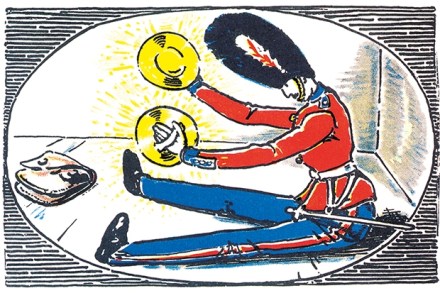
Maurice Sendak, no mean judge, observed that William Nicholson’s Clever Bill was ‘among the few perfect picture books for children’. I’d go along with that if I didn’t think Nicholson’s other picture book, The Pirate Twins, even better, with its lovely opening, ‘One evening, on the sands, Mary found the pirate twins.’ Now Clever Bill (Egmont, £9.99) is back in print, 90 years after it was first published, so you can see for yourself what a genius little book it is. Nicholson (better known as the illustrator of The Velveteen Rabbit) wrote very few words, but what a tremendous narrative it is. Mary is invited to visit her aunt, and in the rush leaves behind her friend, the toy soldier clever Bill Davis. He sets off in pursuit.

The Syria debate has become dangerously partisan

The collective hysteria about the impending fall of eastern Aleppo to government forces strikes me as understandable and laudable only up to a point. If the advance of Assad’s forces on the rebel-held part of Aleppo means, as the French government suggested, the biggest massacre of civilians since the Second World War, then obviously it would be a very bad thing. But the spectacle of MPs and the BBC presenting the conflict as Assad and Putin’s lot trying to kill or starve little girls (there’s an eight-year-old whose tweets from Aleppo are widely circulated) and their mums without mentioning the overall nature of the conflict, strikes me as partial at best, stupid at least.

Insulting people who think differently from you isn’t the way to engage people

There were two items on BBC radio this morning which rather summed up the Corporation thinking about the State of the World. One was a brief but telling discussion on the Broadcasting House programme as to whether our political discussion now is getting to the point where we can’t actually air differences at all;  that, after Brexit and the Trump election, we are so utterly divided ideologically that common ground is impossible to find. It was an interesting conversation between Catherine Mayer, the co-founder of the Women’s Equality Party, and Iain Martin, who, while a Brexiteer, is also opposed to Trump.

Serious concerns

It’s funny, isn’t it, how a dust jacket on a book can draw you to it from the other end of a room — always supposing the illustration is by Edward Ardizzone. In fact, is there anything more suggestive of delight than a book illustrated by him? It’s the Midas touch even for unprepossessing authors. The exhibition of his work at the House of Illustration finishes off with a wall lined with them: The Little Grey Men, Jim at the Corner, Italian Peepshow, Johnny’s Bad Day, Eleanor Farjeon’s Book... you’ll recognise lots.

Cheer up! Donald Trump’s victory isn’t all doom and gloom

Well, it's just like Brexit, isn’t it? The appalled tone of the BBC six o’clock news, my daughter’s refusal – she’s nine – even to get out of bed, my nice colleagues declaring that they cried, simply cried, at the result. It was everyone’s opening gambit: Can you believe it? Yes, personally, I could. After the last election, after Brexit, I wasn’t surprised that the pollsters called it wrong and I’m looking forward to hearing them wriggle out of this one, like they tried to last time.

Social workers have become the new moral arbiters

You’d never think the country’s short of foster parents, would you, though we’re 9,000-odd short at the last count.  I wouldn’t qualify myself, even if I were solvent. Because if you open your trap in the presence of a social worker to say that a child is best off with a father and a mother, viz, probably the view of most actual parents, you can kiss goodbye to your chances of looking after a child unless it’s one you have given birth to.

The troubling logic at the heart of the ‘Gay cake’ ruling

My late father was a pottery maker, and very good at it. Question is, if a Northern Protestant had come to his studio to request that he produce a teaset decorated with the legend: 'Taigs Out of Ulster!' or 'Kick the Pope!' perhaps with decoration to match, would my daddy have been obliged to oblige him on the basis that he was offering to make ceramics for all comers, regardless of their religious persuasion? Would the production of Protestant ceramics have been part of his offer to the teaset-buying community? Or could he have declined on the basis that this was offensive to his beliefs as a non-practising Roman Catholic?

Ghosts of the seasons

Forget killer clowns. Halloween was once a very different affair from the Americanised gorefest it is now. In its-original Irish form, as when I was growing up, it was an opportunity for children to dress up in their parents’ clothes, wear a mask and a hat and go begging from door to door for nuts, apples or money for bobbing — viz, sticking your head in a basin of water to dive after coins and apples. There was barmbrack — a sort of yeasted fruitbread you ate on the night — which contained a ring to predict who would be the next to marry (that dates it) and, in old-fashioned houses, a matchstick to predict poverty. It was quite a big thing, but over in a day or two.

Why isn’t Shami Chakrabarti campaigning for Lord Shinkwin’s Abortion Bill?

Lord Shinkwin’s Abortion (Disability Equality) Bill has its second reading in the Lord next Friday. I hadn’t heard of it either, and the campaign behind it, 'We’re All Equal', had passed me by, until a friend with an interest in disability issues told me about it. The gist is that it would remove the following bits of the 1967 Abortion Act – section 1 (1) (d) and section 5 (2)(d). Which means what? Why, that the most egregious piece of discrimination in law against disabled people would be done away with, viz, that there’s one cutoff point for normal foetuses to be aborted, none at all for disabled ones. Right now, abortion is legal in Britain until 24 weeks’ gestation. Unless the foetus is disabled.

Let’s not forget that Russia is still the lesser evil in Syria

It’s a funny feeling, I have to say, to find myself, again, on the same side as the Stop the War Coalition. But you know what? Looks like neither of us is going to be turning up for a demo outside the Russian embassy to protest about its actions in Syria, as the Foreign Secretary was recommending in yesterday’s Commons debate on Syria. 'Where is Stop the War Coalition at the moment?' Boris Johnson demanded, in an apparent attempt to outdo the anti-war lot in humanitarian outrage. He did, however, seem a bit more reserved about one suggestion raised in the debate, that the UK should actually police a no-fly zone in Syria, which Andrew Mitchell, who initiated yesterday’s debate, seems to favour. So…Britain shooting down Russian planes in Syria…mmm.

Shami Chakrabarti isn’t alone in her selective stance on schooling

The only thing to be said for Shami Chakrabarti’s stance on selective education - she’s against the reintroduction of grammar schools because it’s tantamount to 'segregation in schooling' but her own son is going to Dulwich College - is that she’s not alone. Emily Thornberry, shadow foreign secretary, sent two children way outside her constituency to a selective school; Harriet Harman ditto; Diane Abbott’s son went to private school. Yet they’re all against grammars. Frankly it would take less time to point out the Labour bigwig who isn’t hypocritical on this one, viz, Jeremy Corbyn, whose first marriage is said to have foundered, inter alia, on the grammar school question, which makes him seem less, not more, human.

All things bright and beautiful | 6 October 2016

For much of the Middle Ages, especially from 1250–1350, ‘English work’ was enormously prized around Europe from Spain to Iceland. Popes took pains to acquire it; bishops coveted it; the quality was such that the remnants have ended up in the treasuries of Europe. London, especially the area around St Paul’s, was famous for its production. And what was English work? Embroidery, that’s what. Beautiful, costly, high-quality embroidered pieces, much of it using gold or silver thread, sometimes embellished with pearls and precious stones. Matthew Paris tells a story about Pope Innocent IV spotting some English bishops wearing lovely vestments and badgering them to find some of it for him, preferably for the lowest possible cost.

Jeremy Corbyn’s biscuit choice made me like the man

Personally, I should have no hesitation in identifying my favourite biscuit. It would be Bahlsen’s Choco Leibniz, which is as much chocolate as biscuit, the milk version for preference, though the dark is just fine too. It’s probably made in Germany, so it would, accordingly, be quite impossible for a British politician to identify with. I also like my own biscuits, which are way better than the shop bought sort (may I recommend Bee’s Brilliant Biscuits, a new biscuit book, for beginners?) but again you couldn’t say so if you were a party leader, because it would be too non-populist.

Are motherless babies really a step forward?

You can, I maintain, get the Brits to agree to almost any biomedical advance – I use the word in its neutral sense – no matter how repellent, on the basis that it helps sick kiddies or the infertile. So we now have a situation whereby you can actually create human embryos for the purpose of experimentation – thereby instrumentalising the human being in unprecedented fashion. We have also allowed for the creation of three-parent embryos (on the odd basis that mitochondrial DNA is somehow unimportant). And if we don’t have cross-species zygotes yet, it’s only because the process has proved scientifically unfruitful, rather than because David Cameron didn’t give his backing to it.

Before anyone sounds off about grammar schools, ask first where their children go to school

There’s a good reason and a bad reason why David Cameron hasn’t added his mite to the argument about the reintroduction of grammars, which his Education Secretary, Nicky Morgan, sounded off about yesterday. The good reason is that it would be the worst of form for the former Tory PM to diss his successor, even if he disagrees with her. The bad reason is that he’s got a dog in this fight; his son Elwen. You remember all the fuss about the rumour that little Elwen might be going to a feeder prep to St Paul’s, the private school? The Camerons invoked media privacy to see off discussion of that topic. Well, if true, and I haven’t checked since, it gives Mr Cameron a very particular take on the matter of academic selection.

Why is Mother Theresa criticised for not doing things that weren’t her job?

Mother Theresa has been canonised today; cue for contained rapture on the part of her Missionaries of Charity and supporters in Rome and a rather different kind of satisfaction on the part of her critics, who now have a useful opportunity to air their objections to her work and cult. It’s hard to think of two groups not so much at odds but at cross purposes. The BBC news reports on the canonisation by the excellent Caroline Wyatt rehearse some of the more familiar criticisms: her hospices lack the best medical equipment and good hygiene; moreover, she took money from dictators. And according to representatives of Hindu nationalist groups, she also unhelpfully projected an image of Calcutta (to use the old designation) as being poverty-ridden and somewhere people die on the streets.

The Sunday roast is dying – and the Tories are to blame

It is fair to say that I am never one to take the Polly Toynbee approach to things - or indeed, that of this magazine’s cover article this week - that in the sunlit uplands of secular liberalism, Things Have Never Been Better. But some news strikes me with greater force than most as being proof that we’ve arrived at the end of the world as we knew it. So it was when I found out today that the tradition of families eating a Sunday roast dinner – well, if not antique, it has been around for a century or so – is in freefall. There have been fifteen million fewer roast dinners – or lunch, if you prefer – in the last year, while the number of weekday and Saturday roasts has gone up. So what, you may say.