Melanie McDonagh

Melanie McDonagh

Melanie McDonagh is an Irish journalist working in London.

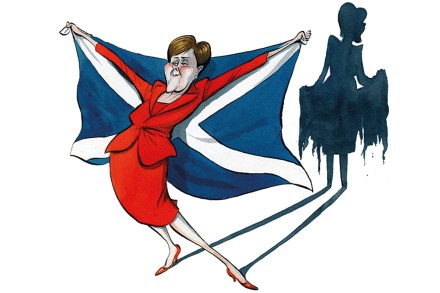
The Sturgeon paradox: how is she so popular?

37 min listen

Despite her government’s underperformance on education, health and Covid-19, Nicola Sturgeon’s popularity continues to climb – why? (01:10) Does spending more on overseas aid mean we care more? (14:05) And finally, are we all followers of the cult of casualness? (26:25)With The Spectator’s Scotland editor Alex Massie, former SNP finance spokesperson Andrew Wilson, development adviser Gilbert Greenall, former international development secretary Andrew Mitchell, journalist Melanie McDonagh and editor of The Oldie, Harry Mount. Presented by Lara Prendergast.Produced by Max Jeffery, Cindy Yu and Matt Taylor.

Save me from the cult of instant intimacy

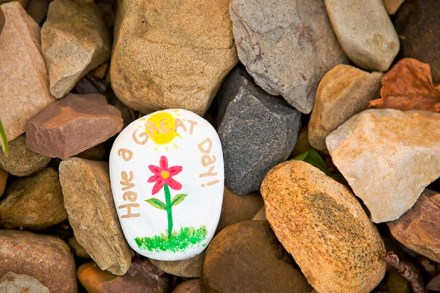
The other day I made a couple of calls to a bank about a loan. After the usual jumping over hoops to get to talk to a human being — the failure of voice-activated systems to understand a word I say, even when it’s the word ‘loan’, is particularly wounding — I got through to a young man who passed me on to a young woman. In both cases the answer to my actual query was no; they ended the call with ‘Have a good one’ and ‘You take care now’. To which all you can say, a bit lamely, is: ‘You too!’ Whenever someone tells me to have a good day, I recall the gag about the man who invariably stiffened slightly and replied: ‘Thank you — I have other plans.

Animal magic: children’s books for Christmas

J.K. Rowling has written a book for children — and you know what? It’s a charmer. The Ickabod (Hachette, £20) was created for her own children between the Harry Potter books (how does she do it?) and was stashed away until the arrival of Covid, when she found that children were stuck indoors without much to do. So she published it online initially and invited illustrations from her young readers. Now it’s a proper book, with some of those pictures. It’s not a bit like HP. It has some of the elements, including fabulous eatables, but it’s more of a fairy story. Think A.A. Milne’s Once Upon a Time crossed with Eva Ibbotson’s The Abominables with a bit of Fattipuffs and Thinnifers and you’re there.

Carrie Symonds and the rise of petticoat government

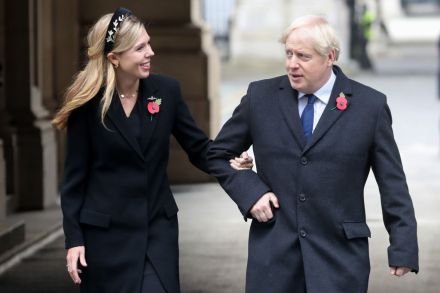
The phrase ‘petticoat government’ has, for reasons that escape me, gone out of currency lately. But it came to mind this morning when the BBC reported that the Prime Minister’s communications chief, Lee Cain, had resigned, even though he’d only just reportedly been appointed as Downing Street Chief of Staff. One reason, the BBC explained matter-of-factly, was that the PM’s fiancée, Carrie Symonds, was opposed to his appointment. I can’t have been alone in thinking: what? Come again? Carrie Symonds running the show in Downing Street? I thought we’d moved on a bit since the days when you had the king's ear because you were close to him; back then the personal really was the political.

So long to Guy Fawkes night

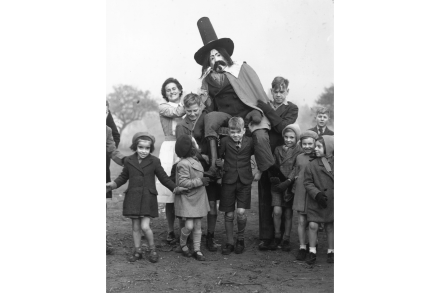
Remember, remember the fifth of November. Except it’s not really possible this year, is it? Given that we’re not even allowed to meet up in our gardens, the chances of anyone watching an effigy of an unfortunate 17th-century gentleman go up in flames today are zero. In one way, I can’t say I am sorry. Guy Fawkes night is a very Protestant feast; when I was growing up in Ireland we’d never have celebrated the execution, following torture, of a man whose chief objective in seeking to blow up parliament was to secure greater freedom for Catholic worship. See Alice Hogge’s cracking book God’s Secret Agents about the sense of thwarted expectation following the accession of James I that led to the plot. But that’s beside the point.

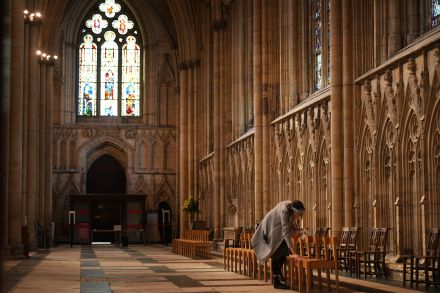
Why has Boris closed the churches?

This morning, my son, who’s 17, was turned away from our local church. The designated spaces for people attending mass were full. He tried to book online at the church down the road - they were full too (and last week they turned my daughter away). It was too late to make an online booking for the lunchtime mass at the London Oratory, but the reservations system for the tea-time mass was still open, so he’s booked that, on a system that hilariously resembles the booking system for a commercial theatre, except that it concludes, which they don’t, with God Bless You.

The next president: what would a Joe Biden premiership look like?

38 min listen

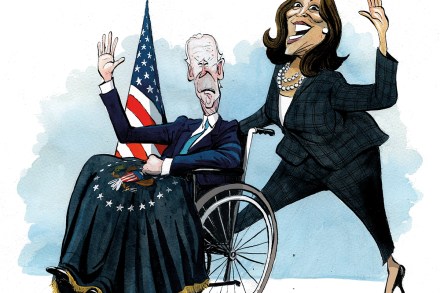
Americans look like they're going to put Joe Biden in the White House - so what would his premiership look like? (00:45) Plus, Boris Johnson's impossible bind on coronavirus (13:55) and how should you sign off an email? (28:35)With editor of the Spectator's American edition Freddy Gray; Biden biographer Evan Osnos; political editor James Forsyth; editor of Conservative Home Paul Goodman; Evening Standard columnist Melanie McDonagh; and etiquette expert William Hanson.Presented by Cindy Yu.Produced by Cindy Yu, Max Jeffery and Sam Russell.

The terror of choosing the wrong email sign off

Just now, I wrote an email and I couldn’t for the life of me think how to sign it off. ‘Kind regards’, the default setting for most messages, felt a bit too formal, given I am on friendly terms with the recipient; he’s older than me and a priest. ‘Yours ever’ seems forward. ‘Best wishes’ is fine for strangers but may be stilted for someone you know quite well. ‘M’, my most frequent sign-off, would look downright rude. An ‘X’ was out of the question. So plain ‘Melanie’ it was. But I was left wondering which of the range of options I should have gone for, each suggestive of a slight difference on the register from intimacy to formality.

Who cares what Harry and Meghan think about Trump?

Well, who can the Duke and Duchess of Sussex have in mind in their video message to Time 100 – for the magazine’s issue on influential people – when they talked about the need to reject 'hate speech, misinformation and online negativity' in the context of the US election?  There are precisely two possibilities. Do you reckon these things might, just possibly, be code for the president, Donald Trump? In which case – I may of course be wrong here – it looks as if they’re urging people to vote Democrat. As for lovely Meghan’s observation that this is 'the most important election of our lifetime' it does seem to be channelling Michelle Obama’s call to arms: vote as if your life depended on it.

Who’s afraid of Amy Coney Barrett?

From our US edition

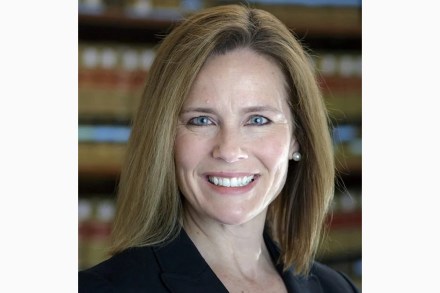
Oooff! If you’re to go by Twitter — not always a good idea — there’s one thing not to like about Amy Coney Barrett, Donald Trump’s potential nominee to replace Ruth Bader Ginsburg and that’s her religion: Catholicism. The Washington Post’s Ron Charles quoted her saying that ‘a legal career is but a means to an end...and that end is building the kingdom of God’. Cue for others to pile in to the effect that there’s meant to be a separation of church and state in the US, and others witheringly observing that it’s not far to go from here to overturning Roe v. Wade. You can expect the quote to be widely circulated in the next few days.

amy coney barrett

President Trump’s big Balkan deal

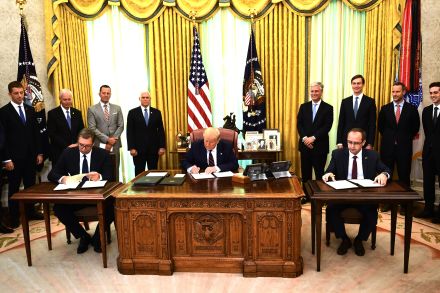
President Trump has presided over a notable deal between Kosovo and Serbia. It’s interesting in more ways than one. For starters, the deal is very, very Trump. It’s about the economy, stupid. The deal-maker-in-chief, Richard Grenell, former acting director of National Intelligence, has, as he said, flipped the script. The deal has put economic development ahead of political issues in Kosovo and Serbia. That, you may recall, was more or less the late John Hume’s prescription for peacemaking in Northern Ireland… if you focus on developing the economy and creating jobs, it makes the political issues an awful lot more manageable. And in the case of the dysfunctional economies of Kosovo and Serbia, it’s the right way round.

Ditching Rule Britannia’s lyrics from the Proms is a step too far

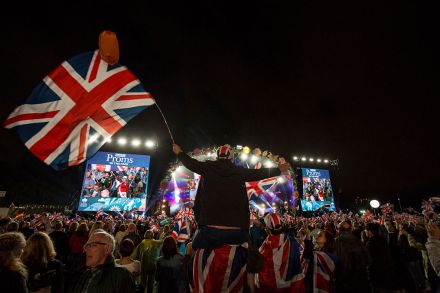
If the Proms director, David Pickard, thought he’d get away with fiddling with Land of Hope and Glory at the Last Night of the Proms, boy, he knows better now. Yesterday, the Proms publicity people put out a statement deploring social media commentary about its plans and explaining: 'The Proms will reinvent the Last Night in this extraordinary year so that it respects the traditions and spirit of the event whilst adapting to very different circumstances at this moment in time.

Rejoice for the return of the church choir

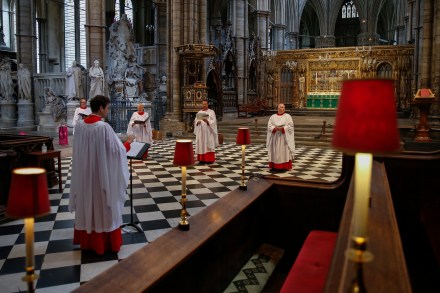
Not all coronavirus research sounds like fun, but wouldn’t you just loved to have been at the session where 25 choristers were asked to sing Happy Birthday at varying volumes to determine whether or not it would be safe for choirs to get back to business. The exercise was carried out by academics collaborating with Public Health England (while it lasted) and the Department for Culture. And you know what? It turns out that the quieter the singing, the lower the risk of transmitting droplets. The researchers found that singing did not produce much more aerosol than speaking at a similar volume, but singing or speaking loudly increased the production of droplets by a factor of between 20 and 30 compared with lower volumes.

Why the exams debacle was so predictable – and predicted

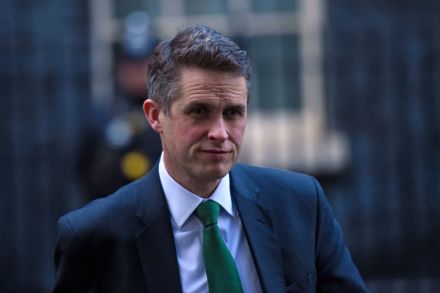
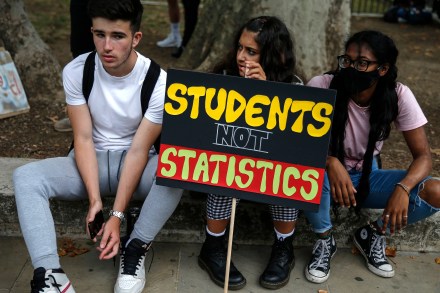
Bit late now, isn’t it, to complain about the exams debacle? Where were they, Angela Rayner, Keir Starmer, the teaching unions, Nicola Sturgeon and the BBC on 18 March when Gavin Williamson fatally decided to scrap this year’s A-levels and GCSEs? If they were throwing their rattles out of the pram, it wasn’t loud enough to be heard.  The grounds for that idiot move was ‘to give, pupils, parents and teachers certainty, and enable schools and colleges to focus on supporting vulnerable children and the children of critical workers'. That, you note, was before the start of lockdown. Yet if ever there was a problem that could be seen a mile off, it was the consequences of this disastrous decision.

Dropping poetry from GCSEs is a crying shame

Just when you think it’s not actually possible for the Government to get things worse when it comes to schools and Covid, along comes Ofqual to make a fool of you by proving that yes, it is indeed possible for them to make an even bigger mess of things. Today we found out that it will be possible for GCSE students next year to do English literature without any poetry. Ofqual, under its head, Sally Collier, consulted schools about whether they felt able to offer the same subjects as normal; not wholly surprisingly they said they didn’t…apparently they expressed 'significant concern' about their ability to cover all the subject areas. Well, knock me down with a girder. So teachers can drop either poetry or the nineteenth century novel or fiction and drama after 1914.

How priests were kept out of hospitals

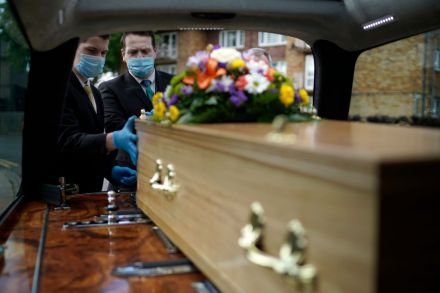
Mary Wakefield’s piece in today’s magazine – How the Catholic Church betrayed the dying – is right and eloquent in pointing out that there were Catholics dying in hospital from Covid who weren’t given the last rites for the absolution of their sins and the viaticum, the eucharist or food for the last journey. It is the least the Church can do for the faithful: to give them absolution of their sins at the last. However, in giving the bishops a very needful rebuke, she perhaps didn’t have space to do justice to the work of priests on the ground and in hospitals.

The growing educational apartheid

This week would normally be the time when state and private schools go their separate ways, when privately educated children go off on their holidays while the state school lot carry on for another couple of weeks of term. Except this time, the divergence happened in March, when lockdown started and the educational apartheid began, between rich and poor – or at least, between those who can afford fees and the not so well off. At that point, private school pupils went online for their education with school days running pretty well as normal; state school pupils ceased to have any education at all apart from homework set online, which might be marked, or might not, depending on whether the teachers felt like it.

Meet Micheál Martin, Ireland’s new Taoiseach

Four months after the election, Ireland finally has a government and a prime minister, Taoiseach Micheál Martin. The country has since independence been governed by the two old Civil War parties – a conflict without any resonance whatever in contemporary Ireland – and, surprise surprise, it still is. The difference now is that whereas previously, Tweedledum and Tweedledee took it in turns to govern, now they’re doing it together, with indispensable help from the Greens. The remarkable performance of Sinn Féin under Mary Lou McDonald in the February elections when the party won more votes than any other was traumatic for the Irish political establishment.

Why is the Conservative party backing ‘no fault divorces’?

One of the umpteen things people don’t elect a Tory government for is to make marriage more easily dissoluble. In the last year for which figures were available, 2017, the number of opposite-sex marriages was the lowest on record – just shy of 243,000 – and I’m not sure that’ll be boosted by making marriage even easier to get out of, which is what Boris Johnson’s government has just done. The Divorce, Dissolution and Separation bill which has just received royal assent means that a spouse can now start divorce proceedings by stating simply that the marriage has broken down – currently, one spouse has to allege that adultery, unreasonable behaviour or desertion has taken place.

Our unseen Queen is more important than ever

Andrew Morton is being a bit previous, isn’t he, in suggesting to the Telegraph that the Covid crisis means that the Queen has more or less abdicated? Or as he puts it: ‘The brutal truth is that her reign is effectively over. Covid-19 has done more damage to the monarchy than Oliver Cromwell. Corona has practically put Charles on the throne.' And there was the rest of the country thinking the Queen has actually been rather brilliant during the crisis, giving that televised pep talk to the nation and presiding – at a distance – over the VE day celebrations with her very own service hat on the desk beside her, a living link between past and present. The psychological importance of the Queen to the equilibrium of the nation is, I’d say, very considerable.