Max Jeffery

Max Jeffery

Max Jeffery is The Spectator’s writer-at-large.

Michael Gove, Max Jeffery, Christopher Howse, Robert Jackman and Mark Mason

31 min listen

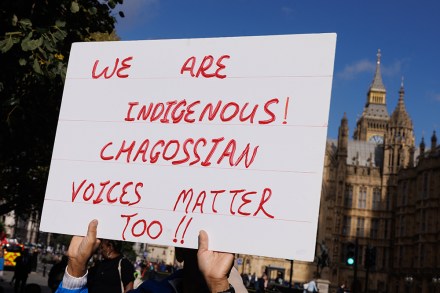
On this week’s Spectator Out Loud: new Editor Michael Gove discusses his plans for The Spectator (1:08); Max Jeffery heads to Crawley to meet some of the Chagossians based there (5:44); Christopher Howse reads his ode to lamp lighting (12:35); Robert Jackman declares the Las Vegas Sphere to be the future of live arts (19:10); and Mark Mason provides his notes on the joy of swearing (26:50).  Produced and presented by Patrick Gibbons.

Meeting the Chagos islanders of Crawley

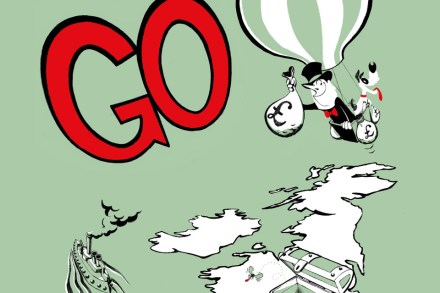
Departing Gatwick train station, with nine minutes till Crawley, I tried to get in the head of a Chagossian. In 2002, Tony Blair gave everyone from the Chagos Islands British citizenship, permitting 10,000 Chagossians to live wherever they liked in the UK. About 3,500 have chosen Crawley. And what a weird thing to do. They took a 6,000-mile Air Mauritius flight to Gatwick airport to start a new life, then settled just a mile from the runway. Why so close? I was visiting Crawley to meet these people I didn’t understand, to find out what they made of our government handing over their islands to Mauritius. On the train I clicked through a few Facebook groups and found a man named Maxwell Evenor who said he was around to talk.

Trump’s debate woes, how to catch a paedo & the politics of the hotel breakfast buffet

39 min listen

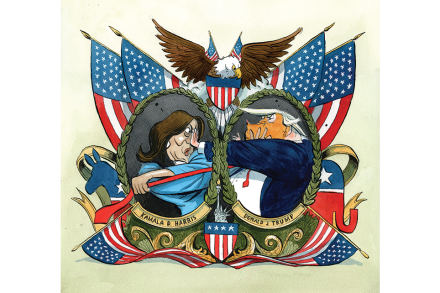
This week:  The US election is back on a knife-edge. Republicans hoped this week’s debate would expose Kamala Harris’s weaknesses. ‘They forgot that, when it comes to one-on-one intellectual sparring matches with candidates who aren’t senile, Donald Trump is very bad indeed,’ writes Freddy Gray. ‘A skilled politician would have been able to unpick Harris’s act, but Trump could not.’ Harris is enigmatic to the point of absurdity, but Trump failed to pin her down and may well have squandered his narrow lead. To discuss further, Freddy joined the podcast alongside Amber Duke, Washington editor at Spectator World.

My night with the paedo hunters

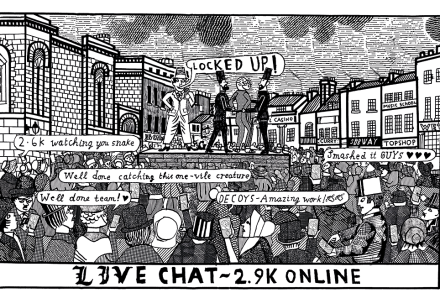
It’s a Wednesday evening, and I’m getting psyched up to go catch a paedophile with the boys. Playlist on, rocking down the A12 and chatting to my new mate, Nick, in his van. There’s a man not far from here who thinks he’s going to meet an underage girl tonight. He doesn’t know that we’ll be pulling up instead and that his sick fantasy – and his life as he knows it – will be over. Nick is a guy I met on Facebook who runs a team of paedophile hunters called London Overwatch. He says that he’s caught 300 paedophiles, and that tonight’s is one of the worst. This man believes he has been talking to a 14-year-old girl and has apparently been sending her obscene videos while he’s on holiday with his family. The ‘girl’ is really a woman on Nick’s team.

No one wants to lead these riots

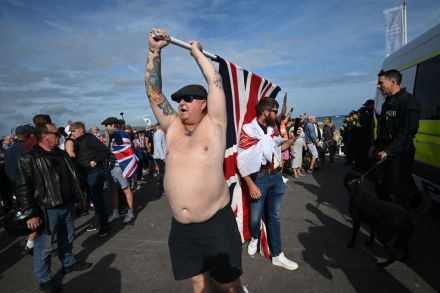
Joe/Jeff Marsh wants to make it clear that he did not, like people keep saying, start the riots in Southport. He wasn’t at the riots. He doesn’t like riots. He’s a white nationalist, fine, but he’s also a busy, self-employed builder from Swansea. And Swansea is nowhere near Southport. All he did was share a picture of a poster about a protest to 2,000 people who subscribe to his channel on Telegram, an encrypted messaging app. A few people reposted the poster, shared his share elsewhere, then the protest just… became a riot. Joe’s trying to explain this on the phone, and I’m getting him up on Google Images while he talks. (Joe is his real name. Jeff is a decoy to give him anonymity.) In the pictures he has a big bald head and wears a camouflage cagoule.

Olympics on steroids: the millionaire behind the Enhanced Games

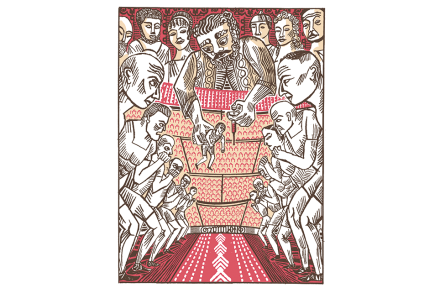
Aron D’Souza likes to celebrate the new year with Peter Thiel, the venture capitalist billionaire who is good friends with Donald Trump and J.D. Vance. ‘Before Peter had kids, we’d go on these holidays around the world. Small group of us. Gay, tech, venture capital, founder-types,’ says D’Souza, an Australian businessman. ‘It’s quite a close-knit little community.’ Lately, because of the kids, they’ve partied at Thiel’s place, an $18 million compound on a man-made island off Miami’s turquoise coast. In December 2022, days before Thiel’s annual party, D’Souza came up with the idea of an ‘Enhanced Games’. The Olympics – but all the athletes dope. ‘That’s what I do over Christmas, when no one else is working,’ D’Souza says.

Why is theft so high?

Figures out today show a country with levels of surveyed crime still at historic lows (just a quarter of the 1995 peak) but with two big exceptions. Personal theft rose by 40 per cent compared with the year before, and shoplifting is at its highest level since records began in 2003. What’s going on? ‘These figures show the disgraceful dereliction of the last Tory government on law and order,’ said Yvette Cooper, the Home Secretary. Is this fair? Today’s figures show total crime at roughly half the level the Conservatives inherited from Labour in 2010. Incidents of theft from the person peaked at 708,000 in 2009 – and hit a low of 248,000 last year, according to today’s official survey. They rebounded to 347,000 last year, lower than any year that Cooper was in power.

Good luck fixing the CrowdStrike glitch

Worldwide, computers are saying no. GPs can’t access appointments and medical records, banking apps have been knocked offline, flights are grounded, laptops won’t work. Technology across Europe and America has been toppled by what appears to be a glitch in a software update for some popular anti-virus software from a company called CrowdStrike. ‘Biggest IT fail ever,’ tweeted Elon Musk. ‘CrowdStrike is actively working with customers impacted by a defect found in a single content update for Windows hosts,’ George Kurtz, CrowdStrike’s CEO, said in a statement this morning. ‘Mac and Linux hosts are not impacted. This is not a security incident or cyberattack. The issue has been identified, isolated and a fix has been deployed.

Is Donald Trump now unstoppable?

37 min listen

This week: bulletproof Trump. The failed assassination attempt on Donald Trump means that his supporters, more than ever, view him as America’s Chosen One. Joe Biden’s candidacy has been falling apart since his disastrous performance in the first presidential debate last month. Trump is now ahead in the polls in all the battleground states. The whispers in Washington are that the Democrats are already giving up on stopping a second Trump term – and eyeing up the presidential election of 2028 instead. Freddy Gray, deputy editor at The Spectator, and Amber Duke, Washington editor at Spectator World, join the podcast to discuss. (02:45) Next: meeting the mega MAGA fans.

Meet the techno-optimists hoping to save the world

Future House is a weird private members’ club. There’s a mattress on the floor for napping, a bathtub designed to hold ice and bottled beers, a robot dog imported from China and a purple neon sign that reads: ‘Just F***ing Build Something.’ Around 9 p.m. on a Wednesday, the place is rammed. ‘I missed the dotcom era, I’m not missing this one,’ someone says. ‘People need to stop moaning about artificial intelligence,’ says another. Future House, in an old coaching house in Hackney, is described on its website as ‘London’s techno-optimist members’ club’. Techno-optimism? Adherents believe that technological progress is the best way to fix the world’s problems.

Can independent candidates pose a threat to Labour?

Nigel Farage says that Britain is ready for a ‘revolt’, and he’s not the only candidate in this election committed to an uprising. The biggest threat to Keir Starmer is coming not from the Tories or the Lib Dems… but from left-wing insurgents. In Bristol Central, Thangam Debbonaire, the shadow culture secretary, could lose to the Greens. In Ashton-under-Lyne, Angela Rayner’s seat, George Galloway’s Workers party is trying to cause trouble. In the last election, Rayner had the lowest vote share of any Labour candidate there since 1931, but was still re-elected with a majority of more than 4,000. Galloway wants this apathetic town to finally unseat Labour’s deputy leader.

Max Jeffery, Melanie McDonagh, Matthew Parris, Iain MacGregor and Petronella Wyatt

28 min listen

On this week’s Spectator Out Loud: Max Jeffery reports on the rise of luxury watch thefts in London (1:18); Melanie McDonagh discusses the collapse of religion in Scotland (5:51); reflecting on the longevity of Diane Abbott and what her selection row means for Labour, Matthew Parris argues that shrewd plans need faultless execution (10:44); Iain MacGregor reviews Giles Milton’s book ‘The Stalin Affair’ (17:30); and, Petronella Wyatt ponders her lack of luck with love (21:49). Presented and produced by Patrick Gibbons.

Would you dare to wear a Rolex?

‘London has become a jungle, right? Anyone with anything nice risks having it taken.’ Bobby, the manager of one of Hatton Garden’s watch shops, does business in a windowless room as far from the street as possible, watched over by a thickset guard and a couple security cameras. ‘I’m a paranoid person,’ he says, and he’s right to be. While the level of general theft in London is going down, more and more luxury watches are stolen every year – tens of millions of pounds’ worth. There’s no sophistication to stealing a watch. Gangs smash into shops with machetes or rip them from wearers’ wrists. Last week, Oliver White, a watch broker in south-west London, had £3 million worth of watches stolen.

Max Jeffery, David Shipley, Patrick Kidd, Cindy Yu, and Hugh Thomson

33 min listen

On this week’s Spectator Out Loud: Max Jeffery interviews Afghan resistance leader Ahmad Massoud (1:13); former prisoner David Shipley ponders the power of restorative justice (8:23); Patrick Kidd argues that the Church should do more to encourage volunteers (14:15); Cindy Yu asks if the tiger mother is an endangered species (21:06); and, Hugh Thomson reviews Mick Conefrey’s book Fallen, examining George Mallory’s tragic Everest expedition (26:20). Produced and presented by Patrick Gibbons.

Ahmad Massoud: ‘I’m 100% sure I can topple the Taliban’

It’s fighting season in Afghanistan again. When the Americans were in charge, after the poppy fields had been harvested in late spring, and the madrassas in Pakistan that supplied the Taliban with fanatical soldiers had finished for the term, the Islamists kicked off the fighting. Between 2001 and 2021, around 200,000 people died, including 453 Britons. Now an insurgent group called the National Resistance Front (NRF) are starting the annual springtime assaults, this time against the Taliban government. ‘The Taliban do not possess the support of the mass of the people. We do’ ‘In the past 31 days, we have staged 31 attacks on Taliban, only in Kabul,’ Ahmad Massoud, the NRF leader, cheerily tells me from Tajikistan, where he directs his troops in exile.

Monty Panesar doesn’t want to be an MP

Is that Monty Panesar? The old England spin bowler is stood in a crowd in Parliament Square, with a vacant, million-mile smile. George Galloway is standing in front, talking to the press. Galloway is meant to be revealing the 200 candidates that his new ‘Workers Party’ is putting up at the next election (Panesar is one of them) but instead he’s just laying into Angela Rayner, the House of Lords and the North Atlantic Treaty Organisation. ‘…Angela Runner, as you might come to call her! ...Two cheeks of the same backside! ...The largest war machine in the world today!’ Galloway likes talking to the media; these days he is more celebrity than politician.

Svitlana Morenets, Mary Wakefield, Max Jeffery, Sam Leith and Richard Bratby

35 min listen

On this week’s Spectator Out Loud: In light of the help Israel received, Svitlana Morenets issues a challenge to the West to help Ukraine (1:15); Mary Wakefield questions the slow response to the Ministry of Defence being daubed in paint (7:33);  Max Jeffery discusses the aims and tactics of the group responsible for the protest, Youth Demand (13:25); Sam Leith reviews Salman Rushdie's new book (18:59); and Richard Bratby pays tribute to Michael Tanner, The Spectator critic who died earlier this month (27:34). Produced and presented by Patrick Gibbons.

The dangers of political prosecution

31 min listen

This week: the usual targets First: Trump is on trial again – and America is bored rather than scandalised. This is his 91st criminal charge and his supporters see this as politicised prosecution. As an American, Kate Andrews has seen how the law can be used as a political weapon – so why, she asks, is Britain importing the same system? In less than 18 months, the police have been sent to investigate Rishi Sunak for his seat-belt, Nicola Sturgeon for campaign funds, and Angela Rayner over her electoral registry: each time, the complainant is political and the process is the punishment. Kate joins the podcast alongside The Spectator’s editor Fraser Nelson to discuss. (01:34) Then: Confessions of a defecting Starmtrooper.

The fair-weather ‘revolutionaries’ of Youth Demand

‘Won’t you take me to… Funkytown!’ At around 10 p.m., in a bar under a railway arch in south London, members of a group called Youth Demand are doing the conga to 1970s disco music. They are celebrating a week of good protesting. ‘I’m sooo ketty!’ shouts a girl on the dance floor. (‘I’ve taken a drug called ketamine,’ is what she means.) Youth Demand want Britain to stop selling weapons to Israel. Earlier this month they put toddlers’ shoes outside Keir Starmer’s house, and a day later threw red paint on the Ministry of Defence. Their actions got lots of press coverage, so they’re having a party. Many protestors are only helping out for the week.

Unhappy? What a luxury

Rob Stephenson is trying to produce a sonic representation of joy. He’s DJing on stage at the World Happiness Summit in London, pumping out a kick drum at 124bpm. The sound represents the subliminal satisfaction you get from a walk round the park, Rob says. He adds bongos and the dinging noise of a triangle to the track – acoustic equivalents of proper sleep and good nutrition. ‘Can you feel it?’ Rob asks. ‘Can you feel it?’ More inexplicable sound is layered – the melody from ‘Clocks’ by Coldplay, the riff from ‘Seven Nation Army’ by the White Stripes – and Rob starts gyrating at his decks in aural ecstasy. The crowd dance and raise their hands to the roof. They close their eyes and smile.