
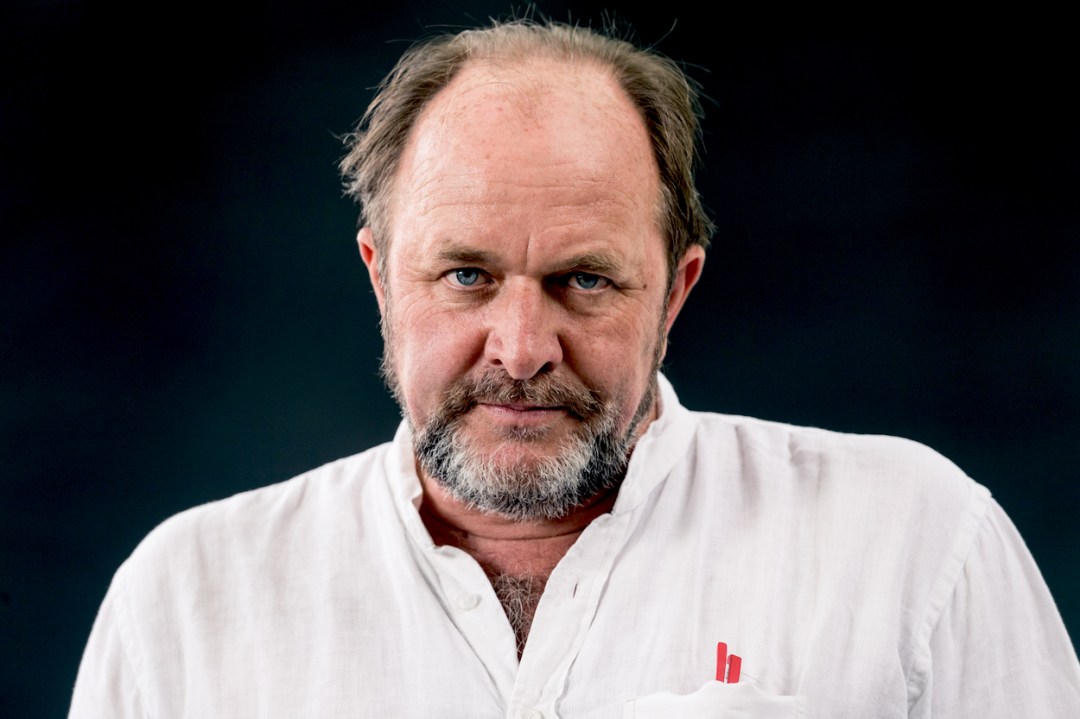
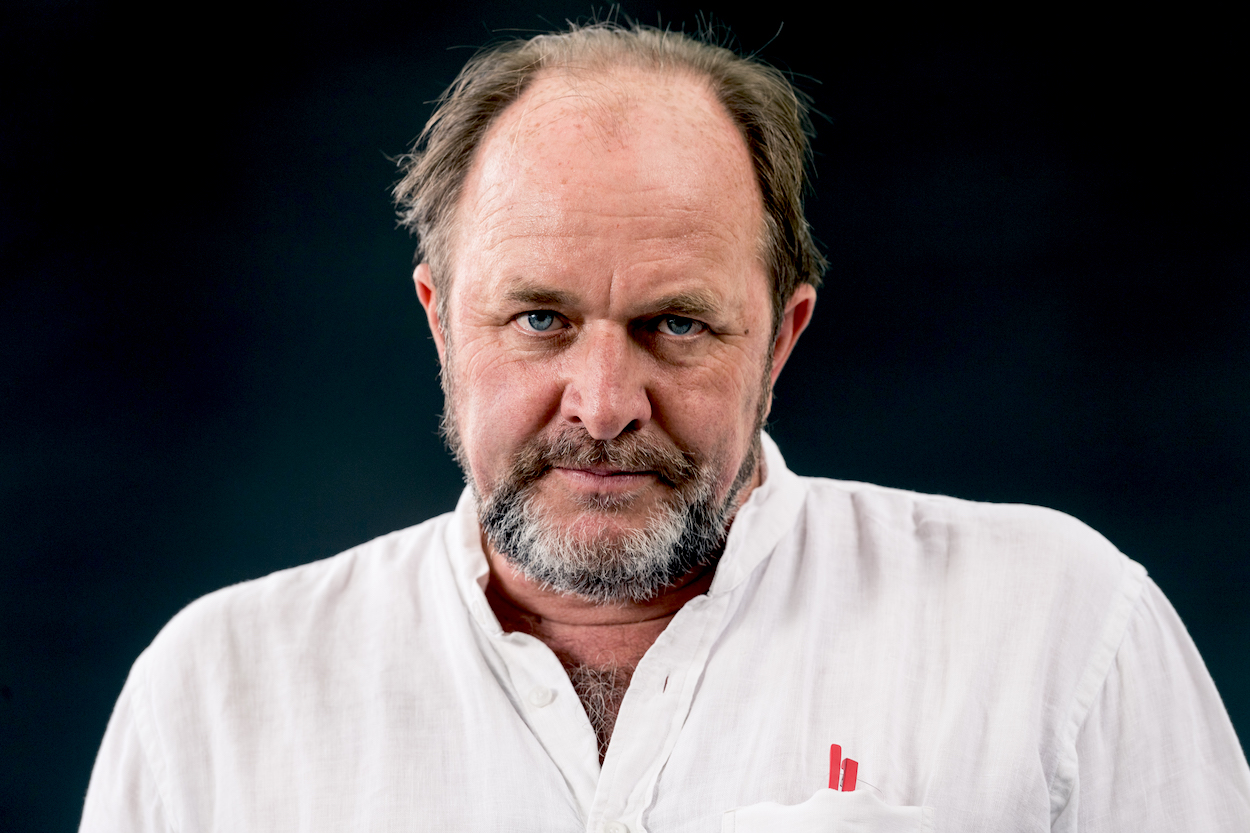
‘In Xanadu records the impressions, prejudices and enthusiasms of a very young, naive and deeply Anglocentric undergraduate,’ William Dalrymple confesses in the Folio Society’s 25-year anniversary edition of his 1989 debut. Xanadu retraces Marco Polo’s journey from Jerusalem to China. The author, an Ampleforth and Cambridge educated 21-year-old, pretends he is Robert Byron. In 2015, books like this needed apologetic preambles. Dalrymple couldn’t let anyone think he sympathised with this younger, lesser man.
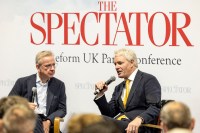
No, modern Willie is an enlightened guy. Yesterday, he was in a London Bridge theatre addressing a conference of the Britain Palestine Project. He is its new patron. Dalrymple is a latecomer to the Palestinian cause, but is now going for it with fervour. He teased the audience with a bit of his new book, a history of Palestine, said not teaching about the Nakba in schools is ‘the most culpable act of historical amnesia in modern British public life’, and told attendees that ‘Britain’s moral responsibility for the plight of Palestine… is considerably greater than its moral responsibility for Ukraine.’
Dalrymple has taken it upon himself to be Britain’s human reparation to the world. A garrulous, quintessential Edwardian, who in a previous era would’ve been a model man of the Raj, he has packed himself off to India for a lifetime of apologies. From the shame of his great New Delhi compound with gardeners and cooks and attendant boys, he records Empire, which he hosts with broadcaster Anita Anand, a show for unpacking and redressing imperial history. He stopped writing travel books such as Xanadu in 2002, and started doing histories of the East India Company, Britain’s loss in the first Anglo-Afghan war, and Koh-i-Noor, the Indian-origin diamond in the Queen Mother’s Crown.
What an amusing shtick! Read one interview with Dalrymple. He doesn’t even try to hide the falseness of it all. ‘As opposed to going to do the shopping, picking up kids from school,’ he told the Indian Telegraph in 2017, ‘Indian middle-class life allows you to send the driver to do one, the cook to do the other… and that means you can get a lot more done, frankly!’ In India, he said, he can lead ‘a bigger life’. It’s like being taught about the history of racism by a man dressed as a golliwog.
It’s like being taught about the history of racism by a man dressed as a golliwog
For a certain audience, such inconsistencies don’t matter. The crowd at the Palestine Project conference was full of other enlighteneds – not only men who had the right opinion about Israel/Palestine, but about Brexit too. Dominic Grieve, the former attorney general who led the campaign for a second Brexit referendum, was in the theatre listening to Dalrymple, and so was Tom Brake, a former Liberal Democrat MP who was another ‘People’s Vote’ backer. Dalrymple, naturally, is also anti-Brexit. In 2019, he wrote a ‘love letter to Europe’ for the Scotsman (‘we gaze towards you, longingly…’) and moaned to the Evening Standard, presciently, to be fair, about the potential for long airport queues: ‘I’m going to be with the Pakistanis, the Bangladeshis and the Afghans trying to fight their way into Europe.’
What joins the two, not obviously linked opinions of anti-Brexitism and anti-Israelism in Dalrymple’s head seems to be that people who don’t hold them are idiots. ‘I don’t think it’s through outright malice [that Britain still deals with Netanyahu’s government]’, Dalrymple said yesterday. ‘I believe that this profound moral failure is more a failure of education, a failure of knowledge’. In his Scotsman letter about Brexit, he said that ‘Little Britain Brexiteers’ did not ‘know’ what they were doing.
These idiots, of course, are meant to be shouted at, and Dalrymple’s favourite place to do this is on Twitter, the natural home of well-intentioned discussion (where he just happens to have 1.2 million followers watching). Earlier this week, Dalrymple went for Adam Parsons, Sky News’ Middle East correspondent. Adam’s crime was not using the word ‘ethnic cleansing’ in a report about Israel’s invasion of Lebanon. On Israel’s orders, people have evacuated large areas of southern Lebanon, and villages have been destroyed.
It’s usually for governments, academics and NGOs who determine whether a certain military action meets the definition of ethnic cleansing, and for Adam, presumably, to then report this news. This is not enough for Willie: ‘I can’t see you how you [sic] can possibly avoid using the term ethnic cleansing, without losing your last remaining shreds of integrity as a journalist, Adam.’ In Britain, broadcast journalists do not typically decree that war crimes have been committed. And neither should historians who live in sprawling compounds with staff.


Comments