Matthew Parris

Matthew Parris

Matthew Parris is a columnist for The Spectator and The Times.

Freddy Gray, Angus Colwell, Matthew Parris, Flora Watkins and Rory Sutherland

30 min listen

On this week’s Spectator Out Loud: after President Biden’s debate disaster, Freddy Gray profiles the one woman who could persuade him to step down, his wife Jill (1:05); Angus Colwell reports from Israel, where escalation of war seems a very real possibility (9:02); Matthew Parris attempts to reappraise the past 14 years of Conservative government (14:16); Flora Watkins reveals the reasons why canned gin and tonics are so popular (21:24); and, Rory Sutherland asks who could possibly make a better Bond villain than Elon Musk? (25:00).  Presented by Patrick Gibbons.

History will judge Rishi Sunak kindly

Memorably sweeping statements tripping easily from the tongue have a habit of worming their way into assumptions we make and ending up as the judgment of history. The word ‘appeasement’ rather than the decisions Neville Chamberlain actually took have consigned the name of a defensible statesman to something approaching a term of abuse. ‘Milk snatcher’ did Margaret Thatcher immense damage. The ‘winter of discontent’ has become too easy a shorthand for the coinciding of deep-seated problems which Thatcher herself approached with great caution.

Would you want Nigel Farage to marry your daughter?

The opposite of attraction is repulsion. Political commentary gives too little attention to a party’s (or leader’s) capacity to repel. Attractiveness to some may itself inspire disgust in others, simultaneously lifting support yet imposing a ceiling upon how high. Here’s a quiz. Our last five elections have seen Labour and the Conservatives slugging it out for primacy, each election leaving one of them the loser. It is upon the losers that I wish to focus. Here, from those five results, are the raw (rounded) totals of votes cast, nationwide, for the loser in each case. I want you to guess which party leader lost which election, so I’ve ranked the totals in decreasing order of magnitude so you can’t tell which loser garnered which of the following five harvests: 12.

Max Jeffery, Melanie McDonagh, Matthew Parris, Iain MacGregor and Petronella Wyatt

28 min listen

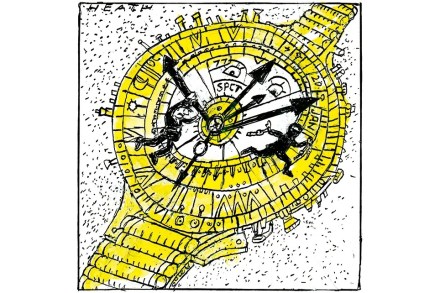
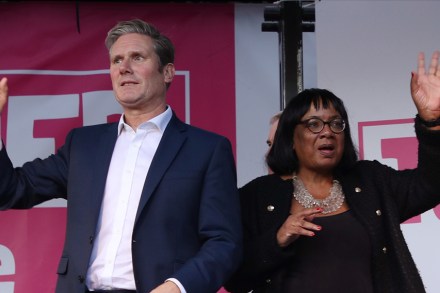
On this week’s Spectator Out Loud: Max Jeffery reports on the rise of luxury watch thefts in London (1:18); Melanie McDonagh discusses the collapse of religion in Scotland (5:51); reflecting on the longevity of Diane Abbott and what her selection row means for Labour, Matthew Parris argues that shrewd plans need faultless execution (10:44); Iain MacGregor reviews Giles Milton’s book ‘The Stalin Affair’ (17:30); and, Petronella Wyatt ponders her lack of luck with love (21:49). Presented and produced by Patrick Gibbons.

The moment Starmer lost control of the Labour left

‘Tony Blair walks on water.’ Decades ago this statement led a Times photographer and me to the front door of the dismal Hackney North & Stoke Newington Labour party offices. It was 23 April 1997, and a fateful general election loomed. I was my newspaper’s 46-year-old political sketchwriter, and Labour’s local candidate was a 43-year-old MP called Diane Abbott. She had hit the headlines with her withering response to New Labour demands that she cease her unhelpful noises-off from stage-left and toe the line. There were Labour colleagues who could have attested without sarcasm to their leader’s amphibian powers. She was not one of them. ‘MPs are pack animals.

The deluge: Rishi Sunak’s election gamble

53 min listen

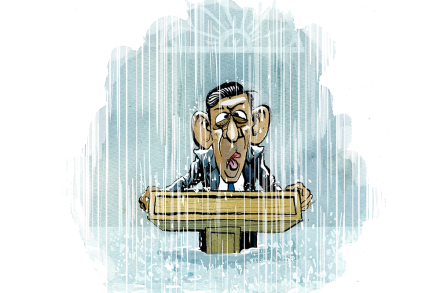
It’s a bumper edition of The Edition this week. After Rishi Sunak called a surprise – and perhaps misguided – snap election just a couple of hours after our press deadline, we had to frantically come up with a new digital cover. To take us through a breathless day in Westminster and the fallout of Rishi’s botched announcement, The Spectator’s political editor Katy Balls joins the podcast. (01:35) Next: Our print magazine leads on the electric car bust. Ross Clark runs through all the issues facing electric cars today – from China flooding the market with discounted EVs to Rishi Sunak dropping the unrealistic target of banning new petrol car sales by 2030. ‘Could the outlook suddenly improve for British EVs?’ asks Ross. ‘It’s hard to see how.

Are ultra-processed foods really so bad?

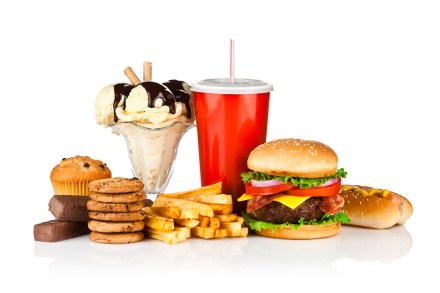
Last week saw a flurry of media reports, of whose headlines one of the worst preceded one of the best reports. ‘Eating too many ultra-processed foods has been linked to a higher risk of early death,’ barked the Telegraph – but went on to explain carefully and fairly a ground-breaking report. Other broadsheets opted for the easy option: big report, ultra-processed food, death. Food-type blaming can be a comforting evasion of a simple truth: overeating makes you fat The report caught my eye because I’ve been consistently sceptical about sensationalist books and statements demonising in wholesale terms the consumption of foods categorised, in pseudo-scientific language, as ‘ultra-processed’. I question the usefulness of the category.

Save us from the plague of plastic tree protectors

Can nothing protect us from a plague of plastic tree protectors? They’ve descended on us like locusts, covering our hills, dales and roadsides with a nasty green and black petrochemical swarm. They are not for the most part biodegradable, and those that claim to be will still disintegrate into microplastic debris lodged into our soil. Tree protectors have descended on us like locusts, covering our hills with a nasty petrochemical swarm I should know. Five years ago I planted 3,000 tree saplings on the fields below our house; and there to this day the pale green square or tubular guards remain, the young trees having outgrown any need for protection and the guards, or remnants of guards, littering the grassy slope. I know we’ll have to remove and collect them.

Donating to charity is too easy

It’s been a torrid few weeks for anyone who knows anyone who was running in the London Marathon. In have come the emails sent by the sender to himself or herself, and BCC’d no doubt to a very long list of the sender’s friends: ‘I’m running the London Marathon on 21 April, for [insert name of charity]. I’d be so pleased if you could sponsor me for this worthy cause. You’ll find my page on [JustGiving, or other similar websites]’ and a link is supplied. There’s no way of getting yourmoney back if your friend wobbles out of the marathon after five miles I’ve received a few of these and in fact been pleased to help. I know what runners go through, and I wholeheartedly approve of charitable giving. So, you may ask, what’s not to like about this growing practice?

Matthew Parris, Laurie Graham, Rachel Johnson, Laura Gascoigne and Angus Colwell

32 min listen

This week: Matthew Parris questions what's left to say about the Tories (00:57), Laurie Graham discusses her struggle to see a GP (07:35), Rachel Johnson makes the case against women only clubs (13:38), Laura Gascoigne tells us the truth about Caravaggio's last painting (19:21) and Angus Colwell reads his notes on wild garlic (28:58).  Produced by Oscar Edmondson, Margaret Mitchell and Patrick Gibbons.  Presented by Oscar Edmondson.

What is there left to say about the Tories?

Spare a thought for us political commentators. We stare into the void between now and a (presumed) decisive Labour victory in a (presumed) autumn general election, haunted by the need to say something significant on a weekly basis at least. Yet there seems so little left to say. Readers don’t need to be told that the Tories are in an unholy mess, or that nobody likes them Until recently we could perhaps speculate that the election might be next month but it’s surely too late now even for that surprise. So ‘autumn’, we say: no surprise there. We think we know the winner too: Labour, easily. I struggle with betting terminology but a glance at online odds suggests to me that if you bet £5 there’ll be an election in October-December 2024 and win, you’ll get £6 back.

Euthanasia is coming – like it or not

Throughout the short life of the Assisted Dying Bill which failed in the Commons, the ‘faith community’ (a quaint term for that category of human beings who throughout history have been more assiduous than any other in trying to kill each other) have with skill and persistence deployed an argument of great potency. Such is the argument’s intuitive appeal that the pro-assisted-dying brigade never found a way of countering it. They have resorted simply to denying that what the faith squad say would happen, could happen. But it could. The argument is that licensing assisted dying is to smile upon the practice. The legal change would act as a cultural signal that society now approves.

Britain’s prisons shame us all

Many years ago, for my Great Lives BBC radio programme, we recorded Jeremy Paxman’s championing of the life of Anthony Ashley Cooper, 7th Earl of Shaftesbury. It was an excellent choice and Mr Paxman persuasively laid out that great campaigner’s achievements in the reform of child-labour legislation and the lunacy laws. ‘As we look back baffled,’ I asked him, ‘by how civilised Victorians could even contemplate chaining the mentally ill to walls, or sending small boys up chimneys, what do you think future ages will lay, with comparable perplexity and horror, to our own age’s account?’ Paxman said he’d need notice of the question. I don’t. With no shadow of doubt it will be our prisons.

How to claim mental illness benefits

For my newspaper I wrote last week about the rocketing numbers (now more than nine million) of our fellow citizens who are ‘economically inactive’ (aged 16-64, unemployed but not seeking work). Within that category, a fast-growing number (nearly three million) are claiming a range of disability or sickness-related benefits, usually a PIP (personal independence payment). Of these, something between half and three quarters are founding their claims partly or wholly on mental health problems. That number has been growing fast since lockdown, particularly among the young. And it was on the mental health component of this growing burden on our economy that I focused. I explained how a PIP can more than double the standard universal credit benefit.

This gay history is a work of genius

Columnists get unsolicited free copies of new books, it often seems by almost every post. They frequently come as publishers’ ‘uncorrected proofs’, before publication day. Publicists are of course hoping we might mention the book in something we write, and often there’s a friendly note inviting us to provide a quote for the book-cover’s inside sleeve – ‘Profound, moving and richly funny: best thing I’ve read all year’, that kind of thing. As attitudes to homosexuality became more accepting, the British public were always one step ahead You might think these offerings a boon: after all, nobody’s forcing us to respond or even keep the book, meanwhile we have a free book where others would have to pay £20 or more.

Lionel Shriver, Angus Colwell and Toby Young

32 min listen

On this week’s episode, Lionel Shriver asks if Donald Trump can get a fair trial in America (00:39), Angus Colwell speaks to the Gen-Zers who would fight for Britain (08:25), Matthew Parris makes the case for assisted dying (13:15), Toby Young tells the story of the time he almost died on his gap year (20:43), and Harry Mount tells us about the grim life of a Roman legionary (25:38).

Ignore the reactionaries who oppose assisted dying

‘If I’d known where it would take me I might never have started.’ This need not be an expression of regret. There are journeys where the final destination is best hidden from the traveller, due to the psychological difficulty he may have in embracing the future until we’re nearly there. This column will move on to assisted dying, but I start with a look back at the fight for equal rights for same-sex couples. I played a minor part in this. We played down the idea of noisily assertive gay pride, knowing it would hinder our campaign Ever since the 1950s, brave souls – at first just a few – fought for the repeal of 19th-century laws criminalising male homosexual behaviour. They were joined by others, finally even politicians.

The one question the Covid Inquiry must ask

The Covid Inquiry grinds on. The process is ‘too focused on office tittle-tattle’ says one former minister in my newspaper this morning. Possibly – though it may also be that the warped focus consists in the media reports filtering out the worthier but more boring stuff. The inquiry (say others) is too focused on the speed or otherwise with which Britain locked down, rather than whether we should ever have locked down as we did in the first place. Others too complain that the inquisition is overly focused on ‘gotcha’ headlines when better results would flow from a sober review that accepted that everyone was doing their best. There’s truth in each of these complaints but I don’t think they get to the heart of it. I have a different view.

Algeria has proved a revelation

‘Please accept coffee without payment. You are visitors.’ So said the manager of the retro-chic little Café Auber in downtown Algiers, where we’d paused on a stroll down to the harbour after Christmas. We’d considered the city just a stop on our way into the Sahara. Instead it proved a revelation. Were you to arrive at Algiers on one of the regular overnight ferries from Marseille, you would be greeted by a waterfront of magnificent, ornate, turn-of-the-19th-centurymansion blocks: Parisian-style, cream and white, embroidered with palm trees.

Is it your fault if you’re fat?

Sorry Santa, but there’s no sugar-coating this: you’re eating too much. And it’s nobody’s fault but your own. Human beings have agency. You have it within your power to cut down. An excellent book written by restaurateur and policy adviser Henry Dimbleby, with his wife Jemima Lewis, sets out the figures. They’re shocking. In Ravenous: How to Get Ourselves and Our Planet into Shape, Dimbleby shows that in some 70 years we’ve regressed from being a nation where almost nobody was obese and less than 4 per cent of people were overweight, to today’s Britain, where some two-thirds are either overweight or obese. The UK is shamefully high on the list of fatties, but the rest of the West faces similar problems. The consequences are dire.