Matthew Parris

Matthew Parris

Matthew Parris is a columnist for The Spectator and The Times.

My middle-aged llama Knapp turned into a sex pest. Something had to be done

An event has occurred which is not necessarily to my llama, Knapp’s, advantage. The tale, though it falls short of tragedy, is melancholy to relate. Knapp, now approaching what are, from a camelid time-perspective, his middle years (he’s about 11) has always done what he’s supposed to do well. Almost too well. He’s a stud. He comes from a fashionable llama ranch in the home counties. His uncle has featured in a fashion advertisement in The Spectator, being led through the streets of Notting Hill. His own portrait, standing proudly beside his rather crumpled-looking owner, has appeared in Country Life. He’s big, for a llama: strongly built, with a coat that is long, thick and creamy-white, touched with the occasional caramel streak.

The Blanket Repeal Bill

How can a new government undo Labour’s mistakes? It should simply repeal everything, says Matthew Parris And finally, we shall in our first Queen’s Speech be introducing a measure whose like has never been seen among the manifesto commitments of an incoming government. It will be known as the Blanket Repeal of Legislation (Failure of New Labour, 1997-2010) Bill. The effect of the Act will be to repeal en masse and at a stroke all new legislation brought in since the fall of the Conservative government in 1997. The only exceptions will be those measures which, by affirmative resolution of both Houses, parliament votes to rescue.

It’s time we bank customers started talking to each other in the queue

I’ve been interested in informal banking ever since, frustrated in a long Lloyds bank queue in the West End, I persuaded some American tourists queuing with me to exchange their dollars for my pounds at the rate of interest marked on the notice board. No customer is an island, as John Donne did not quite remark. But today, when it comes to depositing funds and borrowing funds, our financial institutions are acting as though we customers were indeed islands. It’s time we started talking to each other in the queue. Banks and building societies assume that they alone can make the link between those with money and those in need of money, taking their cut. But if they are too averse to risk, and take too big a cut, they should beware.

Not your ordinary, everyday Tory selection contest in Stratford-on-Avon

Last Friday (as I write) I chaired the meeting to select a prospective Conservative parliamentary candidate for the constituency of Stratford-on-Avon. I say ‘chaired’ but the modern term is (I learned) ‘mediated’. My preference for the more old-fashioned verb will have been shared by almost all the assembled ranks of the Stratford-on-Avon Conservative Association: we were — very few of us, they or I — in the first flush of youth. We don’t do ‘mediated’. But around 300 of them came (the selection was open only to party members) on a freezing Warwickshire night, for a meeting that would last from seven until around midnight.

On our shoulders

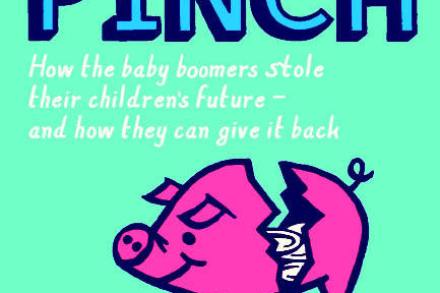
Our politics is such a shallow game that any senior British politician who has read a book is apt to be considered cerebral, and if he has read two, feted as an original thinker. So I had never quite dispelled the suspicion that the nickname ‘Two-Brains’ might have been awarded to David Willetts for no better reason than that he knew his stuff, could talk like an academic, had a lively sense of the complexities of things, and sounded a little vague. I had wondered whether he might be one of those men to whom the learned footnote meant more than the useful conclusion. This book goes a long way towards dispelling such suspicions. The Pinch is a powerful personal credo, a mine of information, and a solid and remorseless argument.

The Australian bush says: ‘Come in’ — and then it breaks your heart

We are driving in inland New South Wales. We could be driving across grassy English lowland. Wide green hills roll towards a dove-grey horizon, and wisps of white curl down from wet clouds to touch the higher ground. Here and there a stand of trees dots a meadow, and small woods fringe pasture; but there is no forest, nothing dense or dark. Green here is not so much a colour in the artist’s palette as the canvas on which he paints. The whole aspect is damp, mild, open; and though wire fence strings the roadside and sometimes a lonely track is lined in wooden post-and-rail, the impression is of parkland: of a vast ducal estate, loosely maintained, from which His Grace is unaccountably absent.

The purpose of being unable to remember what’s on the tip of your tongue

The phenomenon I’m about to describe will be infuriatingly familiar to older readers, but will have been encountered by people of any age. Even in childhood we meet it, and as we grow old it happens more and more often. So common is the experience that it would surprise me if there was any language and culture that lacked an idiomatic expression to describe it. Spanish certainly has one: ‘En la punta de la lengua.’ So does French: ‘Sur le bout de la langue.’ The Poles, I’m told, say ‘Na koncu jezyka.’ In Wales they say ‘Blewyn tasod.’ All these idioms refer to the same thing. In English the curious phrase finds more than a million references in Google. The phrase is: ‘On the tip of my tongue.

In Africa, where there are dreadlocks, there are white tourists being preyed upon

Guides, maps and tourist fact-boxes often adopt little pictorial symbols: shorthand icons that signal key facts or recommendations. A tiny canoe, and parasol, for example, indicate boating facilities, plus a beach. But less common have been warning shorthands designed positively to identify an unpleasantness or something to avoid. How about (for instance) an overflowing dustbin with wavy lines above it, for instance, indicating ‘smelly’; earmuffs against a hotel’s name, as a ‘noisy’ warning; or a trouser pocket with a wad of notes sticking out: ‘pickpockets operate here’?

My claim to fame this year: I stopped a lot of people from squirting each other with milk

Every columnist, broadcaster or writer should, as each year closes, review his or her net contribution to the sum total of national good. It isn’t vain — or, if vain, it’s the vanity demanded by self-respect — that we should ask what we’ve done to change the world for the better. One hundred and ten years ago this New Year’s eve, Emile Zola will have reflected with pride on the total exoneration of Alfred Dreyfus, whose cruel traduction by the French authorities the brave writer did so much to expose. Charles Dickens deserved to spend his Christmases proudly contemplating how his stories, serialised in the daily newspapers, had awakened the Victorian conscience to the sufferings of the poor.

It’s time for journalists to be honest about their corrupting involvement with PR

I was due this week to interview a person I much admire, for a publication I respect, and for a fee I could more or less live with. My putative interviewee was my undoubted superior in terms both of intellect and genius: someone who has for many years managed a career with skill and flair. The parameters of the interview were benign: given the surrounding circumstances and the nature of the publication there could be no question of my wanting to embarrass or trap my interviewee. In short, this was to be a friendly interview with a capable adult conducted for the mutual advantage of both parties and (in this case) the public good. There were no imaginable elephant traps for anyone involved.

Religion is like a jigsaw: it makes a picture out of puzzling chaos

It hardly struck me, as I set out for a couple of days in Somerset, that they would lead me to Bridport in Dorset, thence to Dame Margaret Drabble, to the history of the jigsaw puzzle, and finally to some melancholy reflections on the meaning of life. But of such apparently random pieces are jigsaws made, and sometimes they do make a picture. We’d seen a day of hurricane-force gales along the south coast last Saturday, when our Somerset hosts remarked that they’d bought tickets for a talk by Margaret Drabble at the Bridport Literary Festival early that evening, and were planning to drive over to the town before supper — and would anyone care to come? Gales notwithstanding, Margaret Drabble was there on time, in a scarlet silk tunic and red shoes.

Alan Johnson is right: the boss should make the decisions; the experts should advise

I have an independent financial adviser. I can recommend him. He gives me expert advice. But I decide, and sometimes I disagree. Nobody would question either the propriety or the commonplace nature of this arrangement. Recently we were discussing what to do with my maturing pension fund. His suggestions looked shrewd but were predicated on a measure of resumed economic growth and the persistence for some years of low interest rates. His assessment was well-informed and would be widely shared.

Another Voice | 24 October 2009

If you’re me, one of the ways you know that broadcasters are getting desperate for a ‘balancing’ voice to counter a popular point of view is that large numbers of them start telephoning you. You realise they must be scraping the barrel. Never more so, of course, than when what’s sought is that elusive beast, an articulate right-winger who isn’t totally Neanderthal. I generally tell them (always good advice in a tight corner) to try Peter Hitchens or Janet Daley.

Another Voice | 10 October 2009

I will only ‘Think Bike’ if the bikers can be persuaded to ‘Think Motorist’ ‘29 BIKERS KILLED OR INJURED IN THE LAST 5 YEARS’, says the big yellow roadside sign as I drive along the A515 between Ashbourne and Buxton, on my way to this week’s Tory conference in Manchester. The sign is repeated many times along the old Roman road. It is rather shocking. ‘THINK BIKE’, says another sign, presumably directed at motorists. ‘50’ says the speed limit sign, endlessly repeated, both painted onto the road and displayed on steel poles by the side of it. ‘IT’S 50 FOR A REASON’, say yet another series of signs. And then ‘ACCIDENT ZONE’.

Another Voice | 26 September 2009

I’m thrilled to the core by the magnificent tribe whose talents shine the world over There’s something about a flesh-and-blood entertainer doing his nut in front of a flesh-and-blood audience that thrills me to the core. I’ve no idea why. Maybe because my great-grandfather was a pantomime dame. Maybe because I’m a far-flung twig on the Littler family tree — the dynasty that includes Emile and Prince Littler, impresarios who dominated music hall and pantomime in the first half of the last century. Whatever the reason, and despite (perhaps because of?

A woman apart

Anticipate the demise of Gordon Brown. Imagine Labour’s search for a leader with voter-appeal. Picture a younger Shirley Williams, but with the experience and affection she already commands. Wouldn’t she be a powerful contender? Couldn’t a new Shirley Williams, updated for the 21st century and reinserted into the Labour Party, give the rest a run for their money? Lady Williams’s style of politics has weathered better than that of any of her erstwhile Labour contemporaries. She’s just the sort of thing they need. Climbing the Bookshelves is the story of the woman who forsook all that, and what made her. The story of what made her is much the more interesting half.

Another Voice | 12 September 2009

‘Good afternoon to you,’ says the email I recently received from Mr Dowling of Berry Bros & Rudd, ‘and thank you for your recent order no. 884095, placed through our website, for delivery to Spain. ‘There will be a shipping charge of £66.00 for the case of Wickham Vineyards Vintage Selection Dry White, Hampshire, England, which will bring the total order value to £162.60.’ A triumph. After many hours on consecutive days spent on the internet, I’ve succeeded at last in my mad plan for the equivalent of shipping coals to Newcastle, coconuts to Fiji, or herring to Reykjavik. My plan has been to send English wine to Spain.

Another Voice | 29 August 2009

Why at a Ryanair check-in is there always somebody weeping? In this case, at Girona airport in Catalonia last week, she was a respectable, grandma-aged German lady in a white cotton-and-lace blouse. She was standing by the counter where you have to pay extra (only cash accepted) if you didn’t tick the right box for a checked-in suitcase when completing your online ticket purchase; or buy another flight at maximum price if you turned up one minute late for the flight you were supposed to be on. I was in the first category: I had hold luggage, and was stung for E20 extra, which was bearable. Whatever the weeping lady had been stung for, however, was not. She was sobbing uncontrollably while other passengers (including me) shuffled past, helpless and embarrassed.

I don’t want to ‘get over’ my father’s death

It is five years since my father died. I thought I would get over it, but I haven’t. This is not a plea for sympathy — I’m fine, all’s well — but simply an observation, a report. Unusually for a man of 54 I had never, before Dad’s death, lost anyone close; and I had no idea what to expect. I guessed, though, that the experience would not differ from other violent emotional traumas: first the shock, then a blank aftershock; then busy-ness — displacement activity; then perhaps a relapsing into grief. And after that and over many years a slow but steady process of what sensitive people might call ‘healing’ and the rest of us would call getting over it. The shock, it turned out, though expected, was the phone-call.

Another Voice | 1 August 2009

I was lucky last Saturday at 10.30 to become a West Country pioneer. For some years the Conservative party has been experimenting with open primaries for the selection of their prospective parliamentary candidates. I’ve acted as ringmaster for a few of these, supplementing questions from the floor with my own: a sub-Dimbleby figure, putting them through their political paces. Whatever the theoretical objections, the idea has in practice worked well — tending to discourage candidates from pandering only to the solid Tory core. But these meetings, typically attended by no more than a few hundred people, could in theory easily be ‘packed’. They still feel a narrow base for so important a selection.