Matthew Parris

Matthew Parris

Matthew Parris is a columnist for The Spectator and The Times.

The idea that the Fraser Brown story should have been suppressed is extraordinary

In the week past, Gordon Brown has been involved in a sad dispute with the Sun about whether that newspaper did or did not have his and his wife’s approval for publishing news of the then prime minister’s baby son Fraser’s cystic fibrosis.  The Sun (in the form of Rebekah Brooks) has claimed the couple consented to publication. The Browns claim they did not but, believing nothing could stop the report, tried to negotiate with the Sun about the manner in which the story came out, in order ‘to minimise the damage’, as Mr Brown put it.  Those two accounts are reconcilable. There is much in life to which we’re obliged to ‘consent’: the word can be used in different ways. But this argument is a mirage.

I hope our Jubilee Queen, unlike the last, outlives a hopeless foreign war

War in South Africa — the second Boer war — was already brewing by Queen Victoria’s Diamond Jubilee in 1897. Two years later it began. By the end of the century Britain was bogged down and struggling. On the Queen’s death in 1901 the unholy mess continued. In 1902 we were finally able to declare victory; but bloodied, shocked, shamed and considerably cut down to size. The whole campaign had been an ill-conceived, over-confident and grisly blunder. Even Kipling hated it. How could the numerical superiority and technical might of Britain’s armed forces be fought to cruel draw by a smaller band of ill-equipped zealots, as light on their feet as the modern-day terrorist? It was humiliating.

The football fan theory of nationalism

Observing the fealties of football supporters, I’ve been struck by a contradiction that troubles any non-sporting mind. To a fan, which team you support is often a matter of chance. But once you’ve attached yourself to a team, the loyalty can be ferocious, and run deep. It can become part of who you are. So do we say that because your support becomes unshakeable your association with your team is a profound thing? Or do we say that, because you could quite easily have developed the same loyalties to a different team, the association is shallow? The apparent contradiction can best be explained in terms of the instinct for the pack by which the human hunter and warrior is driven.

Derbyshire is about to plunge into darkness. Hurrah

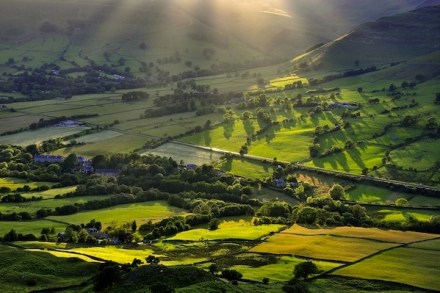
I’ve much respect for the Matlock ­Mercury: our part of the Derbyshire dales would be the poorer without this lively and conscientious local paper. And were it not for the Mercury’s useful report I’d never even have learned about the county council’s plan. But I do take issue with the headline. ‘Big switch-off to hit Dales villages’ turns good news into bad; and most of us won’t see this as bad news. The idea is to switch off street lighting in the county, where appropriate, first in villages and then in parts of towns, between the hours of midnight and 5.30 a.m. For most people this will be no inconvenience, and for many it will be a blessed relief.

George Eliot’s dialects live on in my corner of Derbyshire

A slow reader but someone who has to plough through stuff for work, I skim and flick uneasily, and by middle age had almost completely lost my teenage habit of unhurried reading for pleasure. But in the last decade I’ve started again in a gentle way to read fiction and biography for amusement alone. It was George Eliot who tempted me back. Middlemarch fair blew me away. The Mill on the Floss followed, then Silas Marner. And while in Africa last month I decided to tackle her first novel, Adam Bede. Eliot’s reputation has no need of my support. Suffice it to say she’s the reason I’ve never attempted a novel: after George Eliot, what would be the point? The chord she strikes in my soul resonates on every page.

The troubling truth about Zimbabwe

I’m not the first columnist and will not be the last to shrink from finding out too much. For this there are subtler reasons than laziness: a half-acknowledged fear that one’s argument will lose shape; that complexity may overwhelm understanding; that counterfactuals and shades of grey spoil a simple picture, and resolution sink beneath a mass of on-the-other-hands. If that’s always true, then I should never have revisited Zimbabwe. I last crossed the border in 1968, heading north for Cambridge at the age of 18. Salisbury (now Harare) had been my home from the age of eight.

14th January 2006: What makes George Galloway strut and fret his stuff?

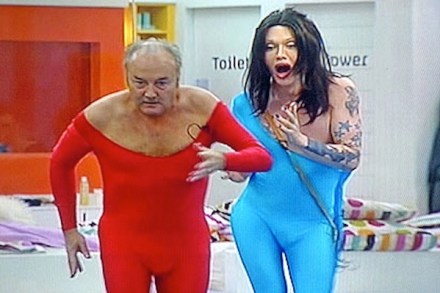
In light of George Galloway returning to Parliament as the member for Bradford West, we've dug out Matthew Parris's account of his infamous appearance on Celebrity Big Brother. And if you can't remember his feline hijinks, the video's above for your pleasure. We each of us remember where we were when news reached us that George Galloway MP was to enter the Celebrity Big Brother house. I was on BBC Radio 5 Live. The time was 10.25 on the evening of Thursday 5 January 2006 and I was part of a panel discussing the shipwreck of Charles Kennedy, when all at once the interviewer astonished us with the Galloway bombshell. There was no time to reach a considered judgment. We all floundered.

A moderate case for animal rights fanatics

My reaction last week, I suppose, will not be dissimilar from those of the majority of my readers. I growled. From my radio came a report about problems that British researchers were encountering with supplies of mice for medical experiments. Apparently anti-vivisectionists have been targeting the transport companies that bring supplies of mice from the Continent; and, having frightened the airlines off, were turning their attention to ferry companies, one of which had just decided to stop accepting lorries loaded with this living freight.

The writing is on the wall for restrictions on free speech

Is The Spectator like the owner of ‘a wall which has been festooned, overnight, with defamatory graffiti’? At its most thrilling this magazine does sometimes feel like that; but, in truth, the editorial hand here (though it may seem marvellously light to us contributors) is a quiet background presence protecting us and our potential victims from the publication of defamatory remarks. Not only would our editor do his best to chase away spray-painting hooligans before they did their work on his wall, but, should offending graffiti appear, he would come out fast with a brush, a bucket of whitewash and if necessary scaffolding: the equivalent of a published correction and apology. Or the law would do it for him: we could be sued.

Beware – I would say to believers – the patronage of unbelievers

This goes to print on Ash Wednesday, the first day of Lent. So allow me to pitch in to February’s religion-versus-secularism debate from a new direction. As an unbeliever I wish to complain on behalf of serious religious belief. Faith is being defended by the wrong people, in the wrong way. ‘Faith’ means faith. Doubt is not faith. Faith is not seeking but finding. Real Christians, Muslims, Sikhs, Hindus and Jewish believers are being patronised by kindly agnostics who privately believe that the convictions of those they patronise are delusions. A lazy mish-mash of covert agnosticism is being advanced in defence of religion as a social institution. But ‘whatever floats your boat’ is not the wellspring of Judaic belief.

How a saintly airline representative at Luton made us all feel better about the world

I think her first name was Denise. It was hard to discern on her small easyjet name badge; but the surname was certainly Williams. So let’s call her Denise Williams. The name matters less than the circumstance. It was Luton Airport departures corridor (gates 1 to 8 to the best of my recollection); the time was Sunday 5 February, from before dawn until at least lunchtime. This (you may remember) was the morning after snow had blanketed most of England; and south-eastern airports including Luton were in the near-ritual state of mayhem we all but demand of our transport infrastructure when there’s snow. It gives us something to talk about. ‘My airport hell’ stories are uninteresting. Airports are not hell. Honestly, try hell, and you’ll prefer Luton.

We all take risks. Only some of us are punished

James Moriarty, Hannibal Lecter, Silas Lynch, Simon Legree, Iago, Iscariot, Schettino… pity Francesco Schettino:  all but doomed by his name alone. What a great name for an alleged villain. The skipper of the Costa Concordia, the cruise liner now wrecked off a Tuscan island whose name sounds like a typographical tweaking of ‘gigolo’, presents an Anglo-Saxon media in search of cliché with an embarrassment of riches. The disaster happened because (it’s claimed) Schettino was ‘attempting a “sail-by” salute to impress the islanders and passengers’. Tut tut. He fled his ship ahead of 100 passengers and crew. Boo hiss.

No one regrets a railway once it’s built

Infrastructure. Still reading this? Well done, because the word alone will have lost half my readers at first sight. Infrastructure is a big idea dogged by a dreadful modern name. If Thomas Telford, John Rennie, Joseph Paxton, Isambard Kingdom Brunel or Joseph Bazalgette had been informed as little boys that they were to dedicate their lives’ work to something called infrastructure, they’d probably have become tinkers or tailors instead. No, in their minds it was the great glories of 18th- and 19th-century Britain that they were to build and have the honour of being forever associated with their names: roads, canals, bridges, fountains, gardens, towns, tunnels and railways.

What is this longing for the apocalypse?

Sometimes it is by catching ourselves unawares that we see ourselves best. That unprepossessing fellow with a dull, crumpled, peasant face and a faintly disobliged expression that you caught a glimpse of in the shop window while Christmas shopping on Oxford Street — oh crikey, that was you. Our looks, however, are not our fault. Our attitudes are surely under our control. Or are they? the other day I caught myself, as if in a shop window, in an attitude I’d never acknowledged, do not like, and do not seem to be able to do anything about. And now I’ve spotted it, and the more I think about it and look out for it in others, the more prevalent it seems to be. It may even be at the root of those global economic problems with which 2011 ends and 2012 begins.

How a friend bought a flat in Berlin and became custodian to a dead Russian

My friend Stephen (let us call him Stephen) is an unsentimental sort of man. In his thirties, he has a sharper mind than his job as a middle-ranking civil servant really demands, but he has more or less settled down. Stylish (and one for the girls) in his twenties, he keeps his neat good looks and slight, alluring stammer, but seems content now in a steady relationship with a good woman in comfortable lodgings he’s able to afford, a long way from the centre of London. His intellect, though, still roves. He has an edge, a critical, sceptical outlook; and has avoided that benign, mellow fuzziness that can settle on people as they grow older. Though Stephen has maybe had to lower his sights a bit, he stays interested in things. He keeps his bite. That’s why I like him.

At the end of the day, we can’t do without verbal padding

I had last week the pleasure of lunch with Mark Mason. Between or perhaps while walking (overground) the route of the London Underground for his latest book, Walking the Lines, he has been writing occasionally for The Spectator. I had wanted to discuss with Mark his piece (‘It’s so annoying,’ 5 November) about the viral spread of the word ‘so’ as a pointless means of starting a sentence or conversation. Dot Wordsworth, too, has been confounded by the fashion, and I reported the phenomenon many months ago in the Times; though on this magazine’s letters page a weary reader has reviewed the great debate and concluded ‘So what?’ So – well, what? Our lunch led me to a whole new speculation about language.

Thanks to the financial crisis, we’re all economists now

I was standing with a cheerful huddle at a farm near Monyash in the Peak District, seeing off the Four Shires Bloodhounds on a foggy November Sunday. The hounds bayed and the horses stamped, and I wished I could still run well enough to be the quarry. In the same huddle was a friend who farms not far from where we live; he and I used to train together when we were younger and he was a fine middle-distance (and I a hopeful long-distance) runner. ‘What’s going to happen with this Europe job?’ he said to me. ‘It doesn’t look good,’ I said, wondering if it was the Common Agricultural Policy, or perhaps milk prices, he was talking about.

Why, as the Great War recedes further into the past, does it loom larger?

Another Remembrance Day app­roaches as I write. Another autumnal Sunday; another Last Post; those poppies again; in Derbyshire the church parades; another nationwide two-minute silence. The occasion always sets me thinking about what people call ‘perspective’ in history. Sir Percy Cradock, leaving Peking as ambassador nearly 30 years ago, said something about history’s rear-view mirror in his valedictory despatch: ‘In the socialist state,’ he wrote, ‘it is the past that is unpredictable.’ And not just in the socialist state. The longer one lives the more the past appears as a landscape in perpetual, usually gradual, sometimes radical upheaval.

What is the point of the storytelling bore?

Do you remember that classic 1980s American TV series about a group of elderly American women, The Golden Girls? You could call the sitcom the geriatric equivalent of Friends: equally sharp, and every bit as addictive. One of the central characters (she was called Rose) was forever lapsing into interminable accounts of uninteresting events. Her companions would try different means of cutting her short, doing so with a brutality born of desperation. One such intervention became almost a catch-phrase among her circle: ‘Where is this story going, Rose?’ I’ve always remembered it. And the more time I spend in the company of those now my age or older — men and women in their sixties, seventies or eighties — the more am I struck by that candid remark.

Did The Spectator prompt the new consultation on gay marriage?

It isn’t often that a piece in the Spectator makes its way straight into a Prime Minister’s party conference speech but, as this magazine’s online Coffee House hinted last week, Douglas Murray’s ‘Why conservatives should welcome gay marriage’ (1 October) looks like an example. I’ve often disagreed and occasionally crossed swords with Mr Murray but always admired him as a writer; this article, though, was to my mind not only framed with clarity and grace, but came close to constructing the definitive case in moral logic for ending inequalities between civil partnership and marriage. I can’t add to it. For years after being elected to parliament I tried to explain the Conservative case for giving social status to same-sex relationships.