Matthew Parris

Matthew Parris

Matthew Parris is a columnist for The Spectator and The Times.

Gay civil partners should resist pressure to ‘upgrade’ to marriage

Apparently I’ve proposed to my civil partner. He claims that on BBC Radio 2, on the Jeremy Vine show (he thinks it was the JV show) I expressed myself in terms which presumed his prior acceptance. I can’t remember a thing about it — on live radio one does tend to throw these thoughts out heedlessly — but my partner swears I said, ‘Oh yes, well I suppose we’ll have to get an upgrade.’ He found this a graceless way of popping the question, and has forbidden me from using the term ‘upgrade’ again. Ah well. But in that case, if not ‘upgrade’, what shall we call it?

When party leaders depart from the script, all hell breaks loose

It is within the experience of even the humblest of MPs that those who oppose what you do will berate you with a great deal more passion than you will ever attract from those who support your plans. Any help you can give may be treated by its beneficiaries as no more than your duty; but the people on the other side will treat your unhelpfulness as a massive personal injury. And if this is true of minor political players, how much more is it true of serious policymakers. As the second Lord Falkland remarked on losing a bill in the upper chamber because not all his supporters had bothered to turn up at an evening sitting, ‘Those who hated it hated it worse than the Devil; while those who loved it loved it not more than their -dinner.

Why partisan columnists (like me) are doomed

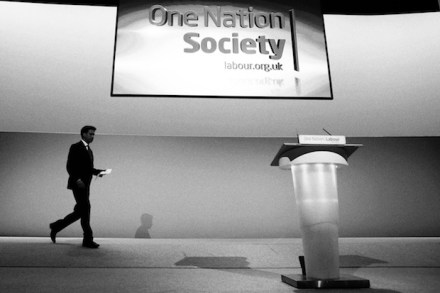
An email exchange with a Conservative-leaning friend this week left me feeling sheepish. But if shameful my behaviour be, I’m not alone in the shame. I thought it worth sharing the conversation. We were corresponding about Ed Miliband’s stand-off with the Unite trade union. In a message to my friend, I remarked: ‘It’s reaching the point where (paradoxically) EM’s tendency to take the line of least resistance may actually push him into confronting Unite.’ And that’s true: worms turn and it’s not always good politics to corner people. But it is the next part of the message that I’m hard-put to defend.

Why no guidance from the Good Book on how to prioritise?

Why is Christianity so unhelpful on the very ethical dilemma that most concerns ordinary people in our everyday lives? Why does Jesus have nothing helpful to say about the ranking of obligations? Last weekend, digging a huge hole in the ground to receive a gargantuan granite trough I’ve just bought, I was about four feet below ground level and wielding a pickaxe when, with a panic-stricken tweet, a fledgling coal tit fluttered down into a puddle in the depression. There were high winds on Saturday and I suppose the bird had been blown from its nest somewhere. This one managed to half-fly, half-hop to the water’s edge where it stood tweeting desperately and trying to fluff out its wings to dry them. It could nearly fly, but not well enough for the required vertical take-off.

The day I awoke my inner predator

Gweru on the central Highveld of Zimbabwe used to be called Gwelo when I was there as a boy but seemed otherwise largely unchanged when we passed through a couple of weeks ago. Sleepy, laid-back: a petrol station, a few stores and a scattering of offices and little townships of bungalows on the main tarred road between Harare and Bulawayo. Less in Zimbabwe has changed than people think. We were on our way, though, to a place that was certainly new to me: Antelope Park, a lush, green riverside encampment at the end of a long dusty road out of Gweru. At Antelope Park you can walk with lions. I will not enter upon a debate I know exists about the viability of the park’s overall project.

Why Ukip is a party of extremists

Last Saturday I wrote for my newspaper a column whose drift was that it was time for the sane majority of the Conservative party to repel those elements on the Tory right who plainly wish the Prime Minister and the coalition ill, and who would never be satisfied with his stance on Europe, however much he tried to adjust it to please them. I dealt at some length with Ukip, explaining why I and many like me would never support a Conservative candidate who made any kind of a deal with these people. The same went (I said) for the party nationally: ‘I will never support a Conservative party that has made any kind of national agreement with Ukip. Blackmailed by extremists, it could be blackmailed again.

Why is there such guff in the online comments below my articles?

What’s to be done about the online comments sections in daily newspapers? These (for those estimable Spectator readers who have yet to succumb to tablets, iPhones and computer screens) are the spaces that the online versions of newspapers and magazines provide beneath the articles they publish, for readers to offer (or ‘post’) thoughts of their own. Typically there is no limit to the number of responses that can be made, and a generous limit to the length of each response. Contributors may make multiple incursions onto the site, and answer or comment on each other’s posts. Quite often a kind of conversation gets going. Contributors’ email addresses are available to the newspaper but not on the site. Some use real names, others post under pseudonyms.

Beyond the Malachite Hills, by Jonathan Lawley; Last Man In, by John Hare – review

In post when the curtain came down on Britain’s African empire, there survives today a generation of colonial officers whose numbers are dwindling fast. Many were fired by an idealism already out of fashion when they chose their career. Most came to love their adopted continent. Some can write. Two of these are Jonathan Lawley and John Hare. Each has an incredible tale to tell. Here is a pair of books that, placed with a decanter of whisky on the bedside table of any Spectator reader’s guest bedroom, will have the reading-light burning late into the night. Yet they are very different stories, quite differently written.

Who’s afraid of a snooper’s charter? Ask Google

Forgive me, but let’s go straight in. Readers of a sensitive disposition look away, but there’s a serious reason for the exercise I suggest that those with access to Google might like to attempt. There’s a thing called the AdWords Keyword Tool. You can find it at adwords.google.co.uk/-keywordtool. It is provided by Google for the benefit of online advertisers keen to select words or phrases they can use in order to catch as many Google searchers as possible in their net. So it will tell you how many people in the last month included in their search terms (say) ‘anti-wrinkle cream’: 22,200. But it is invaluable, too, to anyone curious to know what our fellow Britons are Googling.

Why I won’t be selling my gold or silver

It must be a couple of years since, spooked by the banking crisis and walking past the Savoy hotel on the Strand, I remembered a clever but impetuous Polish friend’s advice to buy bullion — silver or gold — and his mention that there was a respectable dealer in the Savoy arcade. And as I walked I had found my feet all but drawn by some mysterious, irrational force into the arcade. I had struggled home with an implausibly heavy briefcase. The bullion-buying phase of my life, phase one, had begun. I made arrangements for secure storage with a bank, and cancelled further payments into my pension plan. I wrote about that day for the Times. I have not written about it since.

Frontline Tories to Cameron: ‘We don’t want to look nasty and we don’t want to look mad.’

Just before Easter, writing for the Times, I talked to 30 of the 40 Conservative MPs with the most marginal constituencies. My aim was to get a sense of how they think their party should position itself. I explored their opinions on a range of vexed policy areas. Finally I asked whether David Cameron’s leadership was a help or hindrance. The broad conclusion was that most marginal MPs took a decidedly and sometimes passionately ‘softline’ position on most controversial issues, European ‘interference’ in domestic human rights questions offering the nearest thing to a hardline consensus. And all considered Mr Cameron a plus, though more weakly in the Midlands and North. I wrote up my results in some detail, my focus being to make a factual report.

Why do amateur performers still flourish?

Chesterfield is a medium-sized town just off the M1, near what were once the coalfields of north-eastern Derbyshire. Not without history (and a lovely old market square) and not without character (a church with a splendidly warped spire, positively Van Goghian, is its most famous feature), the town is nevertheless an unassuming, formerly industrial north Midlands community which earned its living until recently from a steelmaking and coal-mining regional economy.

Gay sympathy for Cardinal Keith O’Brien

Were you to try to identify the sort of journalist least likely to feel sympathy for Keith O’Brien, I suppose you’d place near the top of your list a columnist who was (a) an atheist, (b) especially allergic to the totalitarian mumbo-jumbo of the Roman Catholic church, (c) gay, and (d) a strong supporter of the coalition government’s plans for same-sex marriage. If so, this columnist regrets to disappoint. The downfall of the former Archbishop of St Andrew’s and Edinburgh has come to pass at least in part because he did not mince his words. I admire such people. As to O’Brien’s homosexual behaviour and the charge of hypocrisy… well, to that in a moment. Keith O’Brien’s career has been distinguished by simplicity of expression.

What’s in a brand name? From Beechams to Brasso

Showering the other day, I noticed a visitor had left his shampoo behind. Going through the familiar ablutions I stared glassily, half-focused on the immediate foreground, in the way you do when your activity requires some but not all of your attention. Vosene. The trade name started running through my mind. I repeated it to myself out loud. ‘Vosene’. What an odd title for a shampoo. It sounded cold, clinical, antiseptic, perhaps a little harsh: a nod more in the direction of hygiene than of the soft, caring, nurturing image that more recently branded hair products aim to convey. I bet (I thought, remembering my 1950s bedroom wall poster of nuclear power stations) that Vosene is a mid-20th-century brand name.

A snapshot moment in Old Havana

The Parque Mátires ’71 is pleasant, nothing special, hardly distinguishable from dozens of other little parks in Old Havana. Fairly safe, reasonably clean, shabby, some tatty greenery and a few trees, a bird-limed bronze statue to a forgotten hero, and rickety park benches around a stone-paved terrace. I was perched on the more stable slats of one of these in the late afternoon sunshine, and reading Romola. This was not as incongruous as it sounds, for the massive novel is George Eliot’s attempt to recreate a world far from her native English Midlands: the smells and colours, the jostle and noise of the street in 16th-century Florence. Old Havana is closer to Renaissance Florence than to Nuneaton, Warks.

How Graham Greene spoilt my tropical rapture

On the patio of my hotel in Havana... No, begin again. It isn’t really a hotel, it’s a Casa Particular — someone’s home. Delia’s home: a modest ground-floor apartment in an externally shabby old stone tenement on a neglected side street near the waterfront of Old Havana. Casas Particulares are a tropical adaptation of the B&B: a result of the partial liberalisation of the island’s economy, allowing ordinary Cuban families with a spare room to take a paying tourist or two into their homes.

The ineffable sadness of Franco’s ruins

The end of an old year cast me into a portentous frame of mind as I descended a couple of thousand feet down an ancient path through forest, brush and briar to the Pantà de Susqueda: an immense, deep lake created by a dam, 400 feet high, across the gorge of the River Ter in -Catalonia. You will spot the long, winding, inundated gorge on any map of north-east Spain. Seeing the teeming Costa Brava into which this valley spills through the Ter’s last gorge, you may wonder at how empty is the country behind the portals of that gorge. The map shows no roads or settlements. At night, flying above on your descent towards Barcelona, you will see hardly a light. All is black.

Gay marriage the easy way

‘The next time we want to import a horse to Russia,’ wrote Laura Brady, Second Secretary in our Moscow embassy, ‘it will be a doddle.’ I quote her story in an anthology of diplomatic writing, The Spanish Ambassador’s Suitcase, that the BBC’s Andrew Bryson and I have collected for the new book. Miss Brady was giving the Foreign Office an account of her efforts to collect a horse from Moscow’s station. The horse was a present to the Prime Minister, John Major, from the President of Turkmenistan, who had despatched the fierce Akhal-Teke warhorse by train accompanied by a wagon-load of melons to pay the Russian Railways.

A Christmas Carol for the Chancellor

‘“You will be haunted,” resumed the Ghost, “by Three Spirits, without their visits you cannot hope to shun the path I tread…”’ ‘“I am the Ghost of Christmas Past,” said the Apparition. “Come with me,” and Scrooge followed.’ The scene was as familiar to Ebenezer Scrooge as to any Spectator reader. Returning to the past, the now-reformed former miser saw himself as Charles Dickens had described him in the last chapter of his famous short story… ‘“I don’t know what to do!” cried Scrooge, laughing and crying in the same breath; and making a perfect Laocoon of himself with his stockings. “I am as light as a feather, I am as happy as an angel, I am as merry as a schoolboy.

Can anyone defeat the town-hall zombies?

Others have already swelled a chorus of rage against Rotherham -council for removing three foster children from the couple caring for them, on the grounds that the couple were members of Ukip; and the rage is justified. But few sane people will need persuading that the -council’s judgment was wrong, and I don’t intend to bang on about it. Within that statement — ‘few sane people’, etc — lies the puzzle I want to -examine. And a puzzle it is; because those who took the decision were not insane.