Matthew Parris

Matthew Parris

Matthew Parris is a columnist for The Spectator and The Times.

Listening out for the silent minorities

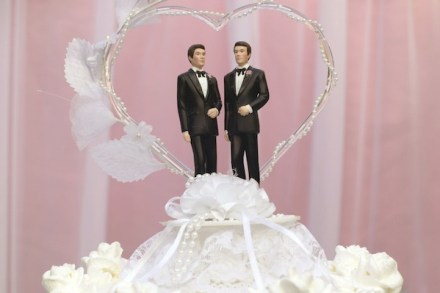
A day or so after writing a column, when the horse has certainly bolted, you read it in print. Now you are hit by l’esprit d’escalier. Ideas you left out stare you in the face. Friends call with arguments you never thought to include — obvious, once mentioned — and again you kick yourself. My Times column last Saturday is a case in point. I wrote after David Cameron had warned Phillip Schofield (on a TV programme called This Morning) against giving a stir to the unfounded belief that there’s a link between homosexuality and paedophilia. I suggested this was one of three great subterranean public prejudices that campaigners for homosexual equality have had to combat over the past half-century.

Why a visit to a school persuaded me that young people aged 16 to 18 should have the vote

Let me guess most readers’ reaction to news that Alex Salmond has arm-twisted Westminster into allowing 16- to 18-year-olds in Scotland to vote in the 2014 Scottish referendum on independence. I bet the reaction resembled mine. Annoyance. The very thought! As to the assurance that this concession will be temporary, and pressure will not build to make the change permanent, I’d reply (with many of you): ‘Nonsense!’ So, being on my way to speak at a well-regarded state secondary school in Wells, the Blue School, and hearing the news about Scotland, I decided to test the water. I was there to speak to 16- to 18-year-olds: some 200 of them. I could explore not just their opinions, but their reasoning.

Which way is right: the centre holds

Few put a political argument better than Tim Montgomerie, the editor of ConservativeHome, and his latest column in the Times is no exception. Policies portrayed as priorities of the Tory right, he said, are also shared by the majority of the public. Some 70 per cent of Britons want a referendum on Europe and 80 per cent support a tougher approach to crime. He reprised Sir Keith Joseph’s argument about the ‘common ground’ which politicians ought to share with the public. You really can be Eurosceptic and cherish the NHS. It’s possible to favour less immigration and a more generous state pension.

A pity that’s afraid to speak its name

On the Sunday just passed I sat alongside Polly Toynbee in Manchester as one of Andrew Marr’s two newspaper reviewers on his morning programme on BBC television. Arriving at dawn, we skimmed the weekend papers for stories we might discuss. Polly chose, among others, the latest reports in the Megan Stammers saga; the schoolgirl and the teacher she had run away with, Jeremy Forrest, had been located in Bordeaux; he was in a French jail pending extradition, and Megan had just returned to her parents. I wondered whether to say what I honestly felt. I sensed it would upset or annoy some viewers.

A lost illusion at the Last Night of the Proms

It was the last night of the Proms and the first I’ve ever attended. I’ve watched it on TV, of course, and even been to a Last Night of the Proms party, where we all watched the television, swigging sparkling wine and singing along to Rule Britannia. But to be there, actually among the audience at the Royal Albert Hall, would be something special, I thought. And it was. Ever since receiving an invitation to join a friend whose party were occupying a whole box I’d felt excited about it, and I was not disappointed. There’s something about real events — a thrill that has perhaps sharpened in an era when, thanks to information technology, ‘virtual’ attendance gets cheaper all the time.

Meditation on a Spanish church clock

The despoilation of the Mediterranean coast from Barcelona to the French border in north-eastern Spain is well known. To meet the demand for package holiday resorts in the late 1960s and the 1970s, the Catalan tourist and construction industries deployed untold quantities of reinforced concrete to dispiriting effect. Vast swaths of the Costa Brava and Costa Barcelona Maresme should be wiped from the discerning traveller’s map. Wherever there is a long, open, sandy beach which is good for swimming (and there are miles upon miles of these), a line of brutal resort hotels, apartments, bars, clubs and restaurants marches in parallel, usually behind a congested promenade.

How a nice little rabbit can win the political rat race

‘Nice people, with nice habits/ they keep rabbits/ but got no money at all,’ sang the popular duo Flanagan and Allen in my father’s day. I can still remember Dad playing it on our gramophone in the early 1950s. My family liked these sentiments; secretly we rather hoped they applied to us. But I write now not as a nice person, but on behalf of nice people. I think that song is self-oppressive. The early appearance of rabbits in the lyric gives the game away: fluffy and harmless creatures whom we may love but are unlikely to admire. Rats are more successful. A recent study in Scientific American, however, has challenged the supposed link between being nice and being a loser.

Quit Afghanistan, yes – but don’t declare victory

Military commanders, announced last weekend’s Sunday Telegraph, ‘have warned the Prime Minister that Afghanistan’s future could be jeopardised with al-Qa’eda returning to the country if foreign troops are withdrawn too quickly’. What the newspaper calls ‘senior sources’ have been singing and I don’t doubt the burden of their song is as reported. The same briefing process is under way in the United States, where the Pentagon is letting it be known that President Obama’s promised troop withdrawal after the American ‘surge’ is premature; that the Taleban are by no means beaten; and that the Afghan security forces whom Nato-Isaf are training are not yet ready to take the insurgency on unaided.

An eye-opening day with a busy GP

I have just spent a day in a GP’s surgery. I was not detaining her with any complicated medical complaint of my own. I was shadowing her as a journalist. Some weeks ago I wrote a column for the Times whose headline (though not my choice) brutally summarised my argument: that general practitioners were becoming glorified receptionists for the specialist medical services offered by the NHS; that patients should be able to save time and money by going straight to a specialist if they were sure of their problem; and that GPs, though hard-working, were often busy with counselling that a less expensively trained and less well paid nurse practitioner or medical assistant could provide.

Sorry, but landscapes are better without barriers

From the moment I arrived in Bakewell, Derbyshire, as a carpet-bagger politician nearly a quarter of a century ago, I knew I’d never leave. The attractions of the county and its sweet green hills and dales only grew. And in the end, though I had meant the Peaks to be just rungs on my ladder to the peaks of politics, politics turned out to be just a rung on my ladder to the Peaks. Here I stayed and here, I hope, I always will. So what comes next is difficult to write: so difficult that I’ve never written it before. But here goes… I don’t like dry-stone walls. There. I’ve said it. I don’t actually like the very thing so many tourists and residents love best and associate most with our glorious Peak District National Park.

Two iron ladies in the Andes

A long-exposure photograph of the night sky will show you something that you never see, however often you look at the stars: thousands of perfect curves, concentrically arranged around an invisible pinhead. Everything is wheeling slowly about a single point. A good book or a great adventure, fictional or real, often does the same. There is a fulcrum: a still, quiet centre to the tale. For me, for instance, in Orwell’s Burmese Days, the moment when, walking alone in the forest, John Flory sees a green pigeon, is that centre.

A blackmail plot. A smear. Or was it both.

Like many of the best thrillers the Heath Caper affair involves sex, spies and blackmail, and an array of possible resolutions that are all eminently plausible yet cannot all be true. Or can they? I have something of a personal window into the worlds this story touches. It is an old story, that has just resurfaced — with a new twist — in a radio documentary and Sunday Times article by the BBC’s security correspondent, Gordon Corera. The allegation at its centre was first published in a 1970s book by Josef Frolik, a defector from the Czech secret service.

The idea that the Fraser Brown story should have been suppressed is extraordinary

In the week past, Gordon Brown has been involved in a sad dispute with the Sun about whether that newspaper did or did not have his and his wife’s approval for publishing news of the then prime minister’s baby son Fraser’s cystic fibrosis.  The Sun (in the form of Rebekah Brooks) has claimed the couple consented to publication. The Browns claim they did not but, believing nothing could stop the report, tried to negotiate with the Sun about the manner in which the story came out, in order ‘to minimise the damage’, as Mr Brown put it.  Those two accounts are reconcilable. There is much in life to which we’re obliged to ‘consent’: the word can be used in different ways. But this argument is a mirage.

I hope our Jubilee Queen, unlike the last, outlives a hopeless foreign war

War in South Africa — the second Boer war — was already brewing by Queen Victoria’s Diamond Jubilee in 1897. Two years later it began. By the end of the century Britain was bogged down and struggling. On the Queen’s death in 1901 the unholy mess continued. In 1902 we were finally able to declare victory; but bloodied, shocked, shamed and considerably cut down to size. The whole campaign had been an ill-conceived, over-confident and grisly blunder. Even Kipling hated it. How could the numerical superiority and technical might of Britain’s armed forces be fought to cruel draw by a smaller band of ill-equipped zealots, as light on their feet as the modern-day terrorist? It was humiliating.

The football fan theory of nationalism

Observing the fealties of football supporters, I’ve been struck by a contradiction that troubles any non-sporting mind. To a fan, which team you support is often a matter of chance. But once you’ve attached yourself to a team, the loyalty can be ferocious, and run deep. It can become part of who you are. So do we say that because your support becomes unshakeable your association with your team is a profound thing? Or do we say that, because you could quite easily have developed the same loyalties to a different team, the association is shallow? The apparent contradiction can best be explained in terms of the instinct for the pack by which the human hunter and warrior is driven.

Derbyshire is about to plunge into darkness. Hurrah

I’ve much respect for the Matlock ­Mercury: our part of the Derbyshire dales would be the poorer without this lively and conscientious local paper. And were it not for the Mercury’s useful report I’d never even have learned about the county council’s plan. But I do take issue with the headline. ‘Big switch-off to hit Dales villages’ turns good news into bad; and most of us won’t see this as bad news. The idea is to switch off street lighting in the county, where appropriate, first in villages and then in parts of towns, between the hours of midnight and 5.30 a.m. For most people this will be no inconvenience, and for many it will be a blessed relief.

George Eliot’s dialects live on in my corner of Derbyshire

A slow reader but someone who has to plough through stuff for work, I skim and flick uneasily, and by middle age had almost completely lost my teenage habit of unhurried reading for pleasure. But in the last decade I’ve started again in a gentle way to read fiction and biography for amusement alone. It was George Eliot who tempted me back. Middlemarch fair blew me away. The Mill on the Floss followed, then Silas Marner. And while in Africa last month I decided to tackle her first novel, Adam Bede. Eliot’s reputation has no need of my support. Suffice it to say she’s the reason I’ve never attempted a novel: after George Eliot, what would be the point? The chord she strikes in my soul resonates on every page.

The troubling truth about Zimbabwe

I’m not the first columnist and will not be the last to shrink from finding out too much. For this there are subtler reasons than laziness: a half-acknowledged fear that one’s argument will lose shape; that complexity may overwhelm understanding; that counterfactuals and shades of grey spoil a simple picture, and resolution sink beneath a mass of on-the-other-hands. If that’s always true, then I should never have revisited Zimbabwe. I last crossed the border in 1968, heading north for Cambridge at the age of 18. Salisbury (now Harare) had been my home from the age of eight.

14th January 2006: What makes George Galloway strut and fret his stuff?

In light of George Galloway returning to Parliament as the member for Bradford West, we've dug out Matthew Parris's account of his infamous appearance on Celebrity Big Brother. And if you can't remember his feline hijinks, the video's above for your pleasure. We each of us remember where we were when news reached us that George Galloway MP was to enter the Celebrity Big Brother house. I was on BBC Radio 5 Live. The time was 10.25 on the evening of Thursday 5 January 2006 and I was part of a panel discussing the shipwreck of Charles Kennedy, when all at once the interviewer astonished us with the Galloway bombshell. There was no time to reach a considered judgment. We all floundered.

A moderate case for animal rights fanatics

My reaction last week, I suppose, will not be dissimilar from those of the majority of my readers. I growled. From my radio came a report about problems that British researchers were encountering with supplies of mice for medical experiments. Apparently anti-vivisectionists have been targeting the transport companies that bring supplies of mice from the Continent; and, having frightened the airlines off, were turning their attention to ferry companies, one of which had just decided to stop accepting lorries loaded with this living freight.