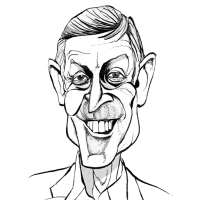
Matthew Parris

Matthew Parris

Matthew Parris is a columnist for The Spectator and The Times.

Gay sympathy for Cardinal Keith O’Brien

From our UK edition

Were you to try to identify the sort of journalist least likely to feel sympathy for Keith O’Brien, I suppose you’d place near the top of your list a columnist who was (a) an atheist, (b) especially allergic to the totalitarian mumbo-jumbo of the Roman Catholic church, (c) gay, and (d) a strong supporter of the coalition government’s plans for same-sex marriage. If so, this columnist regrets to disappoint. The downfall of the former Archbishop of St Andrew’s and Edinburgh has come to pass at least in part because he did not mince his words. I admire such people. As to O’Brien’s homosexual behaviour and the charge of hypocrisy… well, to that in a moment. Keith O’Brien’s career has been distinguished by simplicity of expression.

What’s in a brand name? From Beechams to Brasso

From our UK edition

Showering the other day, I noticed a visitor had left his shampoo behind. Going through the familiar ablutions I stared glassily, half-focused on the immediate foreground, in the way you do when your activity requires some but not all of your attention. Vosene. The trade name started running through my mind. I repeated it to myself out loud. ‘Vosene’. What an odd title for a shampoo. It sounded cold, clinical, antiseptic, perhaps a little harsh: a nod more in the direction of hygiene than of the soft, caring, nurturing image that more recently branded hair products aim to convey. I bet (I thought, remembering my 1950s bedroom wall poster of nuclear power stations) that Vosene is a mid-20th-century brand name.

A snapshot moment in Old Havana

From our UK edition

The Parque Mátires ’71 is pleasant, nothing special, hardly distinguishable from dozens of other little parks in Old Havana. Fairly safe, reasonably clean, shabby, some tatty greenery and a few trees, a bird-limed bronze statue to a forgotten hero, and rickety park benches around a stone-paved terrace. I was perched on the more stable slats of one of these in the late afternoon sunshine, and reading Romola. This was not as incongruous as it sounds, for the massive novel is George Eliot’s attempt to recreate a world far from her native English Midlands: the smells and colours, the jostle and noise of the street in 16th-century Florence. Old Havana is closer to Renaissance Florence than to Nuneaton, Warks.

How Graham Greene spoilt my tropical rapture

From our UK edition

On the patio of my hotel in Havana... No, begin again. It isn’t really a hotel, it’s a Casa Particular — someone’s home. Delia’s home: a modest ground-floor apartment in an externally shabby old stone tenement on a neglected side street near the waterfront of Old Havana. Casas Particulares are a tropical adaptation of the B&B: a result of the partial liberalisation of the island’s economy, allowing ordinary Cuban families with a spare room to take a paying tourist or two into their homes.

The ineffable sadness of Franco’s ruins

From our UK edition

The end of an old year cast me into a portentous frame of mind as I descended a couple of thousand feet down an ancient path through forest, brush and briar to the Pantà de Susqueda: an immense, deep lake created by a dam, 400 feet high, across the gorge of the River Ter in -Catalonia. You will spot the long, winding, inundated gorge on any map of north-east Spain. Seeing the teeming Costa Brava into which this valley spills through the Ter’s last gorge, you may wonder at how empty is the country behind the portals of that gorge. The map shows no roads or settlements. At night, flying above on your descent towards Barcelona, you will see hardly a light. All is black.

Gay marriage the easy way

From our UK edition

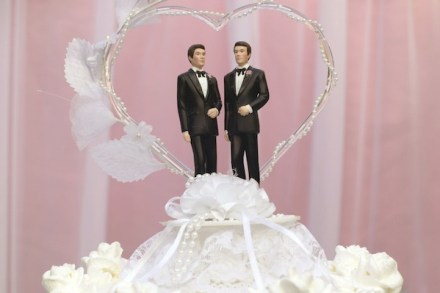
‘The next time we want to import a horse to Russia,’ wrote Laura Brady, Second Secretary in our Moscow embassy, ‘it will be a doddle.’ I quote her story in an anthology of diplomatic writing, The Spanish Ambassador’s Suitcase, that the BBC’s Andrew Bryson and I have collected for the new book. Miss Brady was giving the Foreign Office an account of her efforts to collect a horse from Moscow’s station. The horse was a present to the Prime Minister, John Major, from the President of Turkmenistan, who had despatched the fierce Akhal-Teke warhorse by train accompanied by a wagon-load of melons to pay the Russian Railways.

A Christmas Carol for the Chancellor

From our UK edition

‘“You will be haunted,” resumed the Ghost, “by Three Spirits, without their visits you cannot hope to shun the path I tread…”’ ‘“I am the Ghost of Christmas Past,” said the Apparition. “Come with me,” and Scrooge followed.’ The scene was as familiar to Ebenezer Scrooge as to any Spectator reader. Returning to the past, the now-reformed former miser saw himself as Charles Dickens had described him in the last chapter of his famous short story… ‘“I don’t know what to do!” cried Scrooge, laughing and crying in the same breath; and making a perfect Laocoon of himself with his stockings. “I am as light as a feather, I am as happy as an angel, I am as merry as a schoolboy.

Can anyone defeat the town-hall zombies?

From our UK edition

Others have already swelled a chorus of rage against Rotherham -council for removing three foster children from the couple caring for them, on the grounds that the couple were members of Ukip; and the rage is justified. But few sane people will need persuading that the -council’s judgment was wrong, and I don’t intend to bang on about it. Within that statement — ‘few sane people’, etc — lies the puzzle I want to -examine. And a puzzle it is; because those who took the decision were not insane.

Listening out for the silent minorities

From our UK edition

A day or so after writing a column, when the horse has certainly bolted, you read it in print. Now you are hit by l’esprit d’escalier. Ideas you left out stare you in the face. Friends call with arguments you never thought to include — obvious, once mentioned — and again you kick yourself. My Times column last Saturday is a case in point. I wrote after David Cameron had warned Phillip Schofield (on a TV programme called This Morning) against giving a stir to the unfounded belief that there’s a link between homosexuality and paedophilia. I suggested this was one of three great subterranean public prejudices that campaigners for homosexual equality have had to combat over the past half-century.

Why a visit to a school persuaded me that young people aged 16 to 18 should have the vote

From our UK edition

Let me guess most readers’ reaction to news that Alex Salmond has arm-twisted Westminster into allowing 16- to 18-year-olds in Scotland to vote in the 2014 Scottish referendum on independence. I bet the reaction resembled mine. Annoyance. The very thought! As to the assurance that this concession will be temporary, and pressure will not build to make the change permanent, I’d reply (with many of you): ‘Nonsense!’ So, being on my way to speak at a well-regarded state secondary school in Wells, the Blue School, and hearing the news about Scotland, I decided to test the water. I was there to speak to 16- to 18-year-olds: some 200 of them. I could explore not just their opinions, but their reasoning.

Which way is right: the centre holds

From our UK edition

Few put a political argument better than Tim Montgomerie, the editor of ConservativeHome, and his latest column in the Times is no exception. Policies portrayed as priorities of the Tory right, he said, are also shared by the majority of the public. Some 70 per cent of Britons want a referendum on Europe and 80 per cent support a tougher approach to crime. He reprised Sir Keith Joseph’s argument about the ‘common ground’ which politicians ought to share with the public. You really can be Eurosceptic and cherish the NHS. It’s possible to favour less immigration and a more generous state pension.

A pity that’s afraid to speak its name

From our UK edition

On the Sunday just passed I sat alongside Polly Toynbee in Manchester as one of Andrew Marr’s two newspaper reviewers on his morning programme on BBC television. Arriving at dawn, we skimmed the weekend papers for stories we might discuss. Polly chose, among others, the latest reports in the Megan Stammers saga; the schoolgirl and the teacher she had run away with, Jeremy Forrest, had been located in Bordeaux; he was in a French jail pending extradition, and Megan had just returned to her parents. I wondered whether to say what I honestly felt. I sensed it would upset or annoy some viewers.

A lost illusion at the Last Night of the Proms

From our UK edition

It was the last night of the Proms and the first I’ve ever attended. I’ve watched it on TV, of course, and even been to a Last Night of the Proms party, where we all watched the television, swigging sparkling wine and singing along to Rule Britannia. But to be there, actually among the audience at the Royal Albert Hall, would be something special, I thought. And it was. Ever since receiving an invitation to join a friend whose party were occupying a whole box I’d felt excited about it, and I was not disappointed. There’s something about real events — a thrill that has perhaps sharpened in an era when, thanks to information technology, ‘virtual’ attendance gets cheaper all the time.

Meditation on a Spanish church clock

From our UK edition

The despoilation of the Mediterranean coast from Barcelona to the French border in north-eastern Spain is well known. To meet the demand for package holiday resorts in the late 1960s and the 1970s, the Catalan tourist and construction industries deployed untold quantities of reinforced concrete to dispiriting effect. Vast swaths of the Costa Brava and Costa Barcelona Maresme should be wiped from the discerning traveller’s map. Wherever there is a long, open, sandy beach which is good for swimming (and there are miles upon miles of these), a line of brutal resort hotels, apartments, bars, clubs and restaurants marches in parallel, usually behind a congested promenade.

How a nice little rabbit can win the political rat race

From our UK edition

‘Nice people, with nice habits/ they keep rabbits/ but got no money at all,’ sang the popular duo Flanagan and Allen in my father’s day. I can still remember Dad playing it on our gramophone in the early 1950s. My family liked these sentiments; secretly we rather hoped they applied to us. But I write now not as a nice person, but on behalf of nice people. I think that song is self-oppressive. The early appearance of rabbits in the lyric gives the game away: fluffy and harmless creatures whom we may love but are unlikely to admire. Rats are more successful. A recent study in Scientific American, however, has challenged the supposed link between being nice and being a loser.

Quit Afghanistan, yes – but don’t declare victory

From our UK edition

Military commanders, announced last weekend’s Sunday Telegraph, ‘have warned the Prime Minister that Afghanistan’s future could be jeopardised with al-Qa’eda returning to the country if foreign troops are withdrawn too quickly’. What the newspaper calls ‘senior sources’ have been singing and I don’t doubt the burden of their song is as reported. The same briefing process is under way in the United States, where the Pentagon is letting it be known that President Obama’s promised troop withdrawal after the American ‘surge’ is premature; that the Taleban are by no means beaten; and that the Afghan security forces whom Nato-Isaf are training are not yet ready to take the insurgency on unaided.

An eye-opening day with a busy GP

From our UK edition

I have just spent a day in a GP’s surgery. I was not detaining her with any complicated medical complaint of my own. I was shadowing her as a journalist. Some weeks ago I wrote a column for the Times whose headline (though not my choice) brutally summarised my argument: that general practitioners were becoming glorified receptionists for the specialist medical services offered by the NHS; that patients should be able to save time and money by going straight to a specialist if they were sure of their problem; and that GPs, though hard-working, were often busy with counselling that a less expensively trained and less well paid nurse practitioner or medical assistant could provide.

Sorry, but landscapes are better without barriers

From our UK edition

From the moment I arrived in Bakewell, Derbyshire, as a carpet-bagger politician nearly a quarter of a century ago, I knew I’d never leave. The attractions of the county and its sweet green hills and dales only grew. And in the end, though I had meant the Peaks to be just rungs on my ladder to the peaks of politics, politics turned out to be just a rung on my ladder to the Peaks. Here I stayed and here, I hope, I always will. So what comes next is difficult to write: so difficult that I’ve never written it before. But here goes… I don’t like dry-stone walls. There. I’ve said it. I don’t actually like the very thing so many tourists and residents love best and associate most with our glorious Peak District National Park.

Two iron ladies in the Andes

From our UK edition

A long-exposure photograph of the night sky will show you something that you never see, however often you look at the stars: thousands of perfect curves, concentrically arranged around an invisible pinhead. Everything is wheeling slowly about a single point. A good book or a great adventure, fictional or real, often does the same. There is a fulcrum: a still, quiet centre to the tale. For me, for instance, in Orwell’s Burmese Days, the moment when, walking alone in the forest, John Flory sees a green pigeon, is that centre.

A blackmail plot. A smear. Or was it both.

From our UK edition

Like many of the best thrillers the Heath Caper affair involves sex, spies and blackmail, and an array of possible resolutions that are all eminently plausible yet cannot all be true. Or can they? I have something of a personal window into the worlds this story touches. It is an old story, that has just resurfaced — with a new twist — in a radio documentary and Sunday Times article by the BBC’s security correspondent, Gordon Corera. The allegation at its centre was first published in a 1970s book by Josef Frolik, a defector from the Czech secret service.