Matthew Parris

Matthew Parris

Matthew Parris is a columnist for The Spectator and The Times.

Elliot Rodger and the Hollywood ending

I’ve found myself strangely drawn to the videos made by the 22-year-old assassin Elliot Rodger just before he went on his killing spree in his university town of Santa Barbara, California, last week. In a series of stabbings and drive-by shootings Rodger killed seven people, including finally himself, and wounded 13 more. The son of a film director, he had spent the first few years of his life in England, moving to America at the age of four. Rodger had been preparing for his murderous spree and made a series of videos, many of which are accessible on the internet as I write. The last was recorded by himself the day before his attack. He sits parked in his car, arranged so that the sun, low in the sky, spotlights his face in an orange glow.

Why Gary Barlow should hang on to his OBE

‘Strip him of his knighthood!’ Or life peerage, or CBE, OBE — or whatever. The cry goes up with a kind of automaticity these days, and with increasing shrillness. As I write, elements in Fleet Street are hyperventilating about Gary Barlow’s OBE. Barlow and two other members of the band Take That are reported to have avoided paying tens of millions of pounds in tax by investing in the Icebreaker Management scheme, deemed by HMRC to be a vehicle for tax avoidance. Note ‘avoidance’. Steer clear of the word ‘evasion’ because there has been no suggestion of criminality: Mr Barlow and others in his band are threatened only with a hefty bill for unpaid tax. And a fat lot it will do my own media profile to defend him.

Ukip isn’t a national party. It’s a Tory sickness

It can happen that something ought to feel wrong yet somehow doesn’t; and you wonder whether this means that in some deep way it could be right. Take for example a discussion on BBC Radio 4’s Today programme on Saturday last week. The subject was the rise of the ‘Teflon’ United Kingdom Independence Party. I ought to have found the programme’s handling of this to be inappropriate; yet it felt both appropriate and natural. In this column I shall discuss why. Radio presenters do not give explanatory headlines to political interviews. At about 8.20 a.m.

I’m fascinated by our censorious fascination with other people’s sex lives. And I sense something shifting

I liked the generic title ‘Another Voice’ that The Spectator used to give this column, because it seemed to loosen the shackles imposed by more rigorous classification. The sort of journalism I tend to go in for is usually classified as ‘comment’ or ‘opinion’; but all too often these days my strong interest in what’s going on is not matched by any strong opinion about it, while my commentary amounts more to curiosity than comment. For a few years now I’ve felt like this about our era’s weirdly censorious fascination with other people’s — and especially famous people’s — sexual behaviour.

Time for the King of Spain to save his country again

Might there ever be in this century, anywhere in Europe, a case for serious political interference by an hereditary monarch? Spaniards can surely imagine it. In 1981 the (then) recently crowned King Juan Carlos II decisively rebuffed an attempted right-wing coup and in doing so secured the country’s newly instituted post-Franco democracy: a transition in which he had been deeply personally involved. The king did more than decline to support those who would overthrow democratic government; he took a lead in demanding that they be stopped.

We have to tell the truth about Tony Benn now. Who will hear it later?

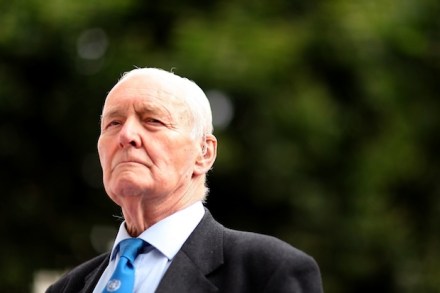
I could start by remarking that we should not speak ill of the dead, quoting the pertinent Latin phrase: de mortuis nil nisi bonum (‘of the dead, only good’). But this would be to miss a key qualification because the whole quote (from Diogenes Laertius, circa ad 300) adds ‘dicendum est’: ‘is to be said’. And that puts a different complexion on things. Commentators have preferred to describe the advice as an established social convention rather than necessarily their own opinion. Indeed it is often used as a sly way of indicating (without stating) the speaker’s disapproval of the deceased. But if the phrase has been thrown once at my head by my newspaper readers this week, it has been thrown a score of times.

Leave Ukraine to the Russians

[audioplayer src="http://traffic.libsyn.com/spectator/Untitled_2_AAC_audio.mp3" title="Matthew Parris and Anne Applebaum debate the Ukraine situation"] Listen [/audioplayer]‘You can’t always get what you want,’ chorused Mick Jagger, ‘but if you try some time/You just might find/You get what you need.’ The danger with Ukraine is that the western powers will get what they want, not what we need. I write this as one who has travelled in Ukraine, loved the country and seen that its people (though poor) are talented and energetic. Any reference I make to basket cases refers to the Ukrainian state, not the country’s human resources.

A secret from my African childhood has become a deeper mystery

About 55 years ago, when I was about ten, my younger brother Roger and I discovered a slave pit in Africa. Actually it probably wasn’t a slave pit and we probably didn’t discover it, but ‘Arab’ ‘slave pits’ were what Southern Rhodesian schools offered as an explanation for the circular, room-sized, stone-lined pits sunk about five feet below ground but open to the sky. And if Roger’s and mine were not the first modern eyes to behold this antiquity, then we were able at least to persuade ourselves of the claim, as there was no path trodden into the small patch of dark, dense primary forest in whose midst we found the pit; and nobody else seemed to know about it. This felt like a discovery.

How Alex Salmond could lose his referendum and still wreck the United Kingdom

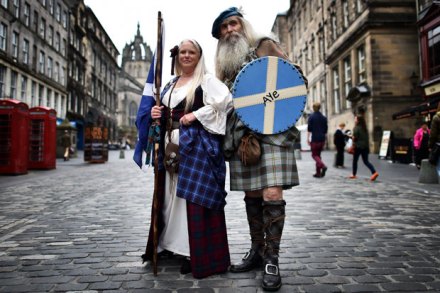
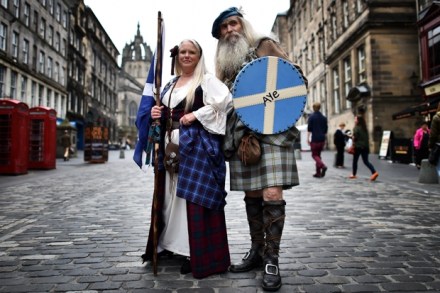
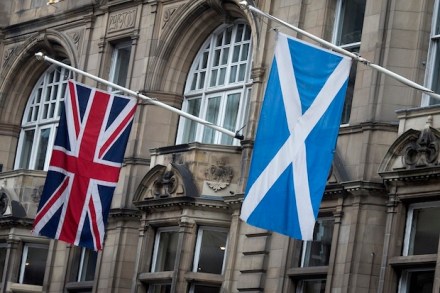
[audioplayer src='http://traffic.libsyn.com/spectator/TheViewFrom22_6_February_2014_v4.mp3' title='Matthew Parris and Alex Massie discuss how Alex Salmond could wreck the Union even if he loses' startat=55] Listen [/audioplayer]From a kind of torpor about this year’s Scottish referendum, Lord Lang of Monkton has roused me. You may remember Lord Lang as Ian Lang, a Scot who as MP for Galloway served Margaret Thatcher and John Major as a minister, under the latter both as Scottish Secretary and then President of the Board of Trade. A pleasant, steady and notably capable man, it was possible to imagine him as a potential Tory leader, but he stuck with John Major throughout.

Is a new art form being born on Woman’s Hour?

In a comic-strip cartoon, beads of water apparently radiating outward from the head of one of the characters indicate embarrassment. Lines flying horizontally from a character, all in one direction and tailing off with distance, indicate rapid movement in the opposing direction. Every western child knows this; but were you to show the cartoon to a Tuareg nomad in the Sahara, these ciphers — which are really more a form of hieroglyph than a depiction of any recognisable object — would be meaningless. Likewise in a film, cutting between scenes  would totally confuse our Tuareg, who would wonder why we had apparently left one place and gone suddenly to another.

Hedonistic? No, today’s gay men are civic-minded – and conservative

A gay friend phones over the New Year break. A lovely chap (let us call him Richard) and long retired, he has done well and made money over the years. Richard has called to tell me how he is spending it. I know that in the past he had helped the gay lobbying organisation Stonewall; and that in memory of his late civil partner he had helped endow a local state school in need of funds. Now, he tells me, he has bought a house for a young friend and his partner: someone who helped Richard during the low time after his bereavement. ‘There was no way they could find the savings to get their feet on the ladder,’ he tells me, ‘and I just thought “What’s all my money for if not to do some good?

Matthew Parris: Logically, bitcoin fans should love the euro. Why don’t they?

Bitcoins have been in the news, after a story about an unfortunate fellow who jettisoned his computer’s hard drive that contained (apparently) the code he needed to access his stash of this electronic currency — its value more than £4 million. I don’t even pretend to have an opinion on bitcoins. I only just, and most imperfectly, understand what this electronically traded currency is and why it appeals to people. But it has got me thinking. A bitcoin is a single currency, a global currency, a currency beyond the reach or control of national governments around the world. In theory (unless governments try to ban the bitcoin) it would be politician-proof.

Matthew Parris: The secret Australia – and why I love it

Nations seek their souls in the strangest places. We English, for instance, have illustrated ourselves to the world and to ourselves with a stark choice between Cool Britannia and Ye Olde Tea Shoppe. When not hawking to tourists in London those T-shirts scrawled with obscenities, we picture ourselves in country lanes and rose-covered thatched cottages. A few of us actually seek out the vestiges of that countryside world and live a pretend-rural life there; but most Spectator readers would be bored to tears after ten minutes of Morris dancing; and a fortnight of hobnobbing over a honeysuckled garden fence with a rosy-cheeked jam-maker who had never heard of the Today programme would have us screaming for release, almost as horrified as we’d be in a Soho nightclub.

Matthew Parris: I’ve been living with a miracle for 60 years

This is probably the most self-indulgent column I’ve written. I hope not to make a habit of it. It’s an ode to — and something of a lament for — my own right arm. I was six when I fell off a small cliff above a disused railway embankment in Nicosia, Cyprus. The blue bicycle I was wheeling was new: a birthday present and my first bike. A novice, I let the back wheel slip over the edge — and if you’re holding the handlebars and the back wheel slides, a bicycle moves in counter-intuitive ways. Mine pulled me with it. I refused to let go. I came to in a heap, in the dust, bicycle beside me and blood everywhere. Two small Greek boys were staring at me in horror. I struggled to my feet.

You’re not as special as you think

My preferred route from the Times’s offices in Wapping on to the main road takes me across a precinct then down a short flight of concrete steps to the pavement below. Across the top step (for reasons unclear to me) a yellow line has been painted behind the step’s edge, like those lines you’re supposed to stand behind on railway platforms. Crossing this, and turning right when I reach the pavement, takes me straight to the right-hand side of the steps. A rational pedestrian seeking to shorten his journey would choose such a route, but not with any precision: one could plot a range of courses down the steps, all about the same length, the very shortest taking one right up against the border of the steps.

Matthew Parris: Atheists deserve better opposition

I wish I were a religious conservative: the field’s wide open. It must be dispiriting for believers to encounter so little intelligent support for belief. It’s certainly infuriating for us non-believers, because there’s hardly anyone left who seems capable of giving us a good argument. In search of a stimulating conversation about religion, we are reduced to arguing with ourselves. Which, still seething at a Spectator article purporting to be a serious examination of the case for miracles, I shall now do. I cannot argue with Piers Paul Read because he never produces an argument to answer. The magazine tagged his piece ‘I believe in miracles’, which was accurate because the essay was not a reasoned case; it was simply an attestation.

Matthew Parris: The Tories mustn’t cuddle up to Ukip — just imagine if it happened on the left

Such is my respect for Spectator readers that I offer you a column whose subtext is in Latin. Ours is one of the last mainstream magazines among whose readership the phrase mutatis mutandis will be very widely understood. But the little test you and I are going to try concerns a live issue, not a dead language. For the purposes of this test I am going to paint you a scenario, and you’re going to give me the broad thrust of the advice you’d give in such circumstances. Imagine that the Labour party has been trying for some time to position itself firmly on the centre ground.

Coalition with Labour would suffocate the Liberal Democrats

I write this in Glasgow, at the Lib Dem conference. Nick Clegg has invented a constitutional doctrine. The doctrine teaches that after a general election, the party that comes third (should it have cohabitation in mind) must first approach the party that won the most seats. But there is no such rule. Our unwritten constitution is clear, minimal and simple. Any two parties jointly capable of commanding a Commons majority have an effective right to form a government together whenever they wish. That right is born of their joint ability to bring down any other government on the instant. So after the general election in 2015, unguided by the rule book, Mr Clegg and his party may have to make a primitive choice.

You can’t demand democracy in Syria but ignore it at home

After David Cameron’s decision to seek parliamentary approval for air strikes against Syria, two lobbies came charging in, banners aloft. Now their attention has moved to Barack Obama’s decision to seek approval from the US Congress. Though on opposite sides of the argument, these two groups have something in common, and it depresses me. Both see democracy as capable of securing a right decision. Neither sees democracy as capable of making a decision right. Let me explain. The anti-interventionists are of course delighted (as was I) that our Prime Minister sought a Commons mandate for military action. They’re even more delighted now that Parliament has said no.

I don’t think it’s over in the Balkans

I returned last week from a short break in the Balkans; travelling by train in Serbia, walking from village to village over the mountains of northern Albania, an evening in a big Albanian town, a couple of journeys in Montenegro and a very short time in Croatia… so only a taste; nothing that makes me a Balkan expert; just a sniff of how things are. On that flimsy evidence, here’s a guess. I don’t think it’s over in the Balkans. Things don’t feel settled, don’t feel real. There’s an amazing railway from the Serbian capital of Belgrade to Podgorica, formerly Titograd and now the capital of Montenegro. In nearly 12 hours you pass through wildly beautiful country: lush farmland, little towns, high hills and forests, and finally magnificent mountains.