Matthew Lynn

Matthew Lynn is a financial columnist and author of ‘Bust: Greece, The Euro and The Sovereign Debt Crisis’ and ‘The Long Depression: The Slump of 2008 to 2031’

Credit card debt: the crunch yet to come

We’ve been bingeing on plastic for the past decade, says Matthew Lynn, and the £54 billion we owe as a result is about to knock another hole in the banking system One year on from the period of panic that followed the collapse of Lehman Brothers, you might be forgiven for thinking the worst of the credit crunch was over. The banking system has steadied. The stock market looks perky. The housing market is limping out of the convalescent ward. The trouble is, you’d be wrong. The credit crunch has a nasty little sibling, with whom we are yet to be fully acquainted. Call it the credit card crunch — except it’s not so much a crunch as the financial equivalent of a full-scale pile-up on the M1.

A fatal crash for Porsche and Volkswagen?

Gary Lineker once observed that football was a simple game in which 22 men ran around the pitch, and then the Germans won. Much the same could be said of the car industry. It’s a simple enough business, in which everyone spends billions on big factories and flashy dealerships. And then the Germans make all the money. Until now, that is. In the last year, through a spectacular mixture of family pride, in-fighting and historical resentment, two of the mightiest names in German industrial history, the car-makers Porsche and Volkswagen, have steered themselves to the edge of cata-strophe. It’s a story of hubris on an epic scale.

Brown’s nemesis awaits — and his name is Brian

Who will finally sit Gordon Brown down with a bottle of whisky, a loaded revolver and a copy of his own book on courage, and tell him the game is up? You might imagine the task would fall to Jack Straw, flanked by a couple of union bosses. In fact, it’s more likely to be three men you’ve never heard of: Frank Gill, Arnaud Mares and Brian Coulton. Working respectively for the ratings agencies Standard & Poor’s, Moody’s and Fitch, this trio have the job of deciding whether the UK can pay back the hundreds of millions of pounds Brown’s government is borrowing every day through the gilts market in order to keep afloat. One day soon, it may be their job to declare that it can’t.

Can mercenaries defeat the Somali pirates?

Jim Cowling has chosen the right moment to launch his new business. An experienced security consultant, he has just set up a company called Shipguard, with a small office in Clerkenwell. The product: providing the men, the know-how, and if necessary the weapons, to defeat the pirates that are the scourge of Somali waters. ‘We’re one of the groups throwing our hats into the ring,’ says Cowling. ‘This is going to be the next Iraq in terms of where mercenaries are going. Iraq is being wound down, and guys are looking around and latching onto piracy.’ He is far from alone. In the past year, as pirates have menaced the Gulf and the Indian Ocean demanding bigger and bigger ransoms, so dozens of companies have sprung up to fight them.

Green shoots are out there somewhere

Recessions end. Even the Great Depression of the 1930s, about which we have heard so much recently, eventually ran its course, though it took a world war to get business booming again. ‘Thatcher’s wasteland’ of dole queues, urban riots and closed steel mills in the early 1980s gave way swiftly to a world of rampant yuppies and triumphant admen. But when both the British and the world economy finally emerge, dazed and blinking, from the savage recession now upon us, it will look very different.

The men who called the markets right

It has been a terrible 12 months for investors. It didn’t make much difference whether you invested in stocks, commodities or corporate bonds, the chances were you took a hammering. Even gold failed to sparkle as the credit crunch cut a swath through every kind of asset class. And yet there were a few individuals who managed to make fortunes as the markets tumbled. In the US, John Paulson cleaned up by betting big against the subprime mortgage market. Over here, amid the general gloom along Mayfair’s Hedge Fund Alley, there were a couple of money managers who could still afford somewhere better than Pret a Manger for lunch. BlueGold rode commodity markets to perfection, making money on the way up and on the way down again.

City death: why so many moneymen kill themselves

Among the many overused clichés that have been dusted off to describe the chaos in financial markets over the past few months is the observation that this is ‘a crisis like no other’. Yet in one rather dark respect, it is following convention to the letter. As losses pile up and billions evaporate, an increasing number of financiers have decided to take their own lives rather than face up to the scale of the catastrophe. In Germany, the billionaire Adolf Merckle threw himself under a train as one of Europe’s greatest family fortunes unravelled. In this country, Kirk Stephenson took the same way out after his private equity firm ran into trouble.

Private bankers run into very public trouble

Matthew Lynn says banks that prospered by offering exclusive ‘wealth management’ services during the boom years are about to encounter some very angry customers Of all the phrases in the financial lexicon, ‘private banker’ is one of the most evocative. It summons up images of discreet addresses in the more remote Swiss cantons, of luxuriously furnished townhouses in Mayfair, of chequebooks printed in florid script, of pinstriped executives who never stint on the second bottle of claret. Thriller writers find them as handy a plot device as a fully loaded Beretta. Nothing else manages to wrap up tradition, snobbery and timeless financial solidity quite so completely in one institution. Until now, that is.

Is gold still a safe haven?

It would be hard to imagine a worse run of events for paper money. Investment banks such as Lehman Brothers have drowned in a sea of subprime debt. Building societies such as Bradford & Bingley, once so dull and safe they made fun of it in their ads, have had to be nationalised. In the case of Iceland, a whole country suddenly went pop. So you might think it would have been a great year for the world’s oldest form of money: gold. Fleeing a bankrupt monetary system, investors would seek the security of ingots and krugerrands. Except, as it happens, they didn’t. Among the many fascinating sub-plots to the credit crunch has been the way the ‘gold bugs’ — as die-hard enthusiasts for the metal are known in the City — have finally been nailed.

General Motors must be allowed to crash

There is probably no company in the world as iconic as General Motors. As the manufacturer of Cadillacs, Buicks and Chevrolets, as well as Opels in Europe and Vauxhalls in Britain, it would be no exaggeration to describe GM as the corporation that perfected 20th-century industrial capitalism. Henry Ford created the first mass-production car 100 years ago but it was GM, under the leadership of Alfred Sloan in the 1920s, that completed the package. Easy credit, brand segmentation, mass advertising, conspicuous consumption, built-in obsolescence: the tools of the modern multinational were hammered into shape by Sloan, then deployed to crush all opposition as the first truly global manufacturer.

Safe as houses: why Nationwide survived

Matthew Lynn says Britain’s largest building society prospered by refusing to follow fashion — while its bolder, greedier rivals have all gone bust or been taken over Over the last 25 years, Aesop’s fable of the tortoise and the hare has been a poor guide to financial markets. As the swashbuckling investment banks rose in power and influence, every- one had their money on the fast, fluffy creature with the big ears. In markets that favoured speed, innovation and boldness, there wasn’t much space left for slow, solid creatures with shells on their backs. Until now, that is. In the wake of the credit crunch, financial tortoises may be having their moment. And tortoises don’t come much more solid than the Nationwide Building Society.

The decline of the empire of Starbucks

Matthew Lynn says coffee is the pure brew of capitalism — as the credit crunch bites, no wonder the world’s most ubiquitous coffee-house chain is heading for trouble In Christopher Guest’s witty canine mockumentary Best In Show, there is a line of dialogue that tells you everything you need to know about the world’s biggest coffee chain. ‘We met at Starbucks,’ says a woman character of her current romance. ‘Not the same Starbucks, but we saw each other at different Starbucks across the street from each other.’ Not many companies are so instantly recognisable that their brand names can be dropped straight into a movie without introduction. Nor are there many whose ubiquity could be the punchline for a gag.

Pound sold to highest bidder

Matthew Lynn on domain name sales In Amsterdam, on the afternoon of 26 June, the pound is finally being sold off. No, Gordon Brown hasn’t decided to repeat his famous trick of dumping a chunk of the nation’s gold reserves at the nadir of the bullion market. Nor has Mervyn King decided the outlook for the British economy is now so grim he might as well sell what he can before taking himself off to Grand Cayman. Instead, ‘£.com’ is up for sale. The winner of the auction for what its owners, with a lively sense of hyperbole describe as the ‘World’s Most Exclusive Financial Domain’, will be able to use the £ sign for anything they like.

Will the wisdom of Warren Buffett translate into German?

Matthew Lynn wonders whether the world’s greatest investor will be able to pick winners in continental Europe the way he has for more than four decades in the US If Warren Buffett had not become famous as the world’s richest man — a career choice that trumps most alternatives — he could still have carved out a niche for himself as a writer of homely lessons in economics and business. The Sage of Omaha, as Buffett is known for his uncanny knack of calling the markets right, has always been able to explain his decisions in simple language. Buffettisms such as ‘Rule No. 1: Never lose money. Rule No. 2: Never forget rule No.

Emperor Soros’s new clothes

Matthew Lynn says hedge-fund pioneer and currency speculator George Soros is still a brilliant player of markets — but as a philosopher, frankly, he’s incomprehensible If nothing else, three decades as one of the world’s most successful speculators has taught George Soros how to pitch a book. While the main title of his latest work, The New Paradigm for Financial Markets, might not be the kind of thing to get Waterstone’s managers clearing their shelves, its subtitle — The Credit Crisis of 2008 and What It Means — makes it bang up to date. Even better, Soros rushed it out as a digital download within days of the final words being penned.

Has the Celtic tiger lost its roar?

A collapsing property market, slowing consumer spending, rising unemployment and an economy that is fast deflating: that might sound all too much like a forecast for the British economy. But actually it’s a description of the Irish economy right now. For the last decade, Ireland has been the most dynamic economy in Europe, with growth rates that far outstripped any of its rivals. This republic of not much more than 4 million citizens has turned itself into one of the most prosperous nations in the Western world. Fuelled by a long boom, a swaggering generation of Irish tycoons has emerged, buying up businesses around the world. Yet in the space of a few months all that has swiftly turned around, amid collapsing property prices and fears of a subprime financial meltdown.

Was ABN Amro a deal too far for Fred the Shred?

The title of the worst deal in British corporate history is hotly contested. Glaxo and SmithKline were worth £107 billion on the day they announced their merger: eight years later, they’re worth £57 billion, and they’re not quite the ‘kings of science’ their chief executive Jean-Pierre Garnier said they would be. Getting on for a decade after it paid £75 billion for Mannesmann of Germany in Europe’s largest hostile bid, Vodafone still hasn’t recovered. Capping both of those, Lord Simpson’s foray into the American telecoms industry after he took over at GEC and renamed it Marconi is always going to take some beating for the speed and thoroughness with which he destroyed one of Britain’s largest companies.

A paragon of Britishness reinvented by Germans

Matthew Lynn visits the Bentley factory in Crewe — where Spitfires were once built — and discovers how Volkswagen’s engineers and marketing men have revived the classic marque Turn right as you step into the plush foyer of Bentley’s Crewe headquarters and you find yourself in the company’s museum — a display of gorgeously preserved vehicles from Bentley’s prewar heyday, all gleaming brass and steel, all with their tax discs up to date so they can be taken out on the road at any time. For most companies, the museum might be tucked away somewhere. Not at Bentley. Since the almost-forgotten brand was bought by Volkswagen of Germany a decade ago, its history has been woven into everything it does.

The last Victorian bastion besieged

Matthew Lynn says London’s last 19th-century merchant bank, Close Brothers, is under threat of takeover by one of the modern breed of aggressive City traders, Andy Stewart Anyone approaching the headquarters of Close Brothers just off Broadgate in the heart of the City may be reminded of the words that open the Asterix books, about how one small village of indomitable Gauls held out against the invading Romans. In the last two decades, almost all the great names of what was once the Square Mile — the Flemings, the Kleinworts, the Schroders — have either been erased from the record books or reduced to nothing more than a couple of oil paintings and a brass plate inside a giant American, German or Swiss investment bank.

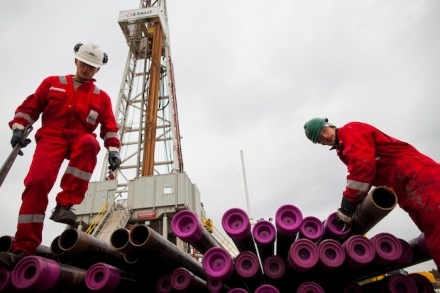
Shock and ore: the fight for the world’s mineral riches

Marius Kloppers is a man who has clearly learnt that business is like warfare in at least one respect: if you’re planning an attack, it might as well be done quickly. On 1 October this year, the 45-year-old South African was installed as chief executive of the Australian mining conglomerate BHP Billiton. Within less than a month, he’d pressed the button on an audacious £67 billion bid for BHP’s mighty British-based rival Rio Tinto. The prize: a £170 billion conglomerate that would be far and away the world leader in its sector, with mines everywhere from Brazil to Australia and control of vast reserves of mineral riches.