Matthew Lynn

Matthew Lynn is a financial columnist and author of ‘Bust: Greece, The Euro and The Sovereign Debt Crisis’ and ‘The Long Depression: The Slump of 2008 to 2031’

The problem with a ‘no deal’ Brexit

There have probably been worse branding campaigns in history. Cadbury’s apparent attempt to drop the word ‘Easter’ from its egg hunts was a clunker of cosmic proportions. The launch of New Coke has found its way into the textbooks as a masterclass in how to trash one of the greatest brands in the world, and Nivea's 'White Is Purity’ campaign for its skin creams last year had to be dropped very quickly after the inevitable backlash. The attempt to sell a ‘No Deal’ Brexit is not quite up there with those disasters. But it is getting close. In truth, there is nothing terribly wrong with leaving the European Union without an agreement, and it might well be better than the alternative we are being bullied into.

Has Mark Carney just ended the campaign for a ‘People’s Vote’?

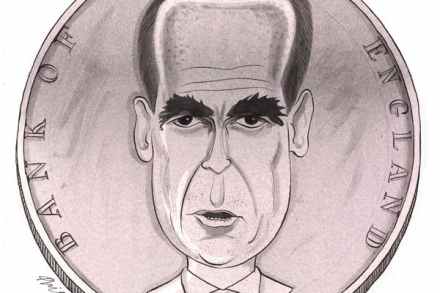
The headlines will inevitably write themselves. The Bank of England backs Theresa May. The Prime Minister's beleaguered and precarious deal is the best of all the options available and the economy may well get through the next few months largely unscathed. Following the testimony this morning from the Bank’s governor Mark Carney, most people will pick up on the support he has given to the Prime Minister and his reassurance that the economy will survive our departure. And yet there were two more significant points that emerged from his testimony. The Bank is finally willing to concede that leaving without a deal wouldn’t be so bad after all. And just at the moment when not leaving at all has become a real possibility, the Bank has given up on it.

Has Mark Carney just ended the campaign for a ‘People’s Vote’? | 20 November 2018

The headlines will inevitably write themselves. The Bank of England backs Theresa May. The Prime Minister's beleaguered and precarious deal is the best of all the options available and the economy may well get through the next few months largely unscathed. Following the testimony this morning from the Bank’s governor Mark Carney, most people will pick up on the support he has given to the Prime Minister and his reassurance that the economy will survive our departure. And yet there were two more significant points that emerged from his testimony. The Bank is finally willing to concede that leaving without a deal wouldn’t be so bad after all. And just at the moment when not leaving at all has become a real possibility, the Bank has given up on it.

All change: is the bitcoin revolution coming?

An elaborate scam for ripping off gullible investors. A black-market currency for gun-runners, drug dealers, pimps and terrorists. A bubble that makes a 17th-century Dutch tulip look like a solid investment, and a drain on global energy. There are so many different ways the digital currency bitcoin is going to destroy the world it’s sometimes hard to keep track of them all. Everyone from Warren Buffett to Mark Carney has told us bitcoin is a serious threat to financial stability and any sane person should stay away. True, there are plenty of reasons to be suspicious of bitcoin. It’s volatile, complicated and largely unregulated. But given the appetite that clearly exists for it (market capitalisation at the time of writing was £85.

Could the UK out-grow the EU after Brexit?

Collapsing retailers. A looming far-left government threatening nationalisation. And perhaps most significantly of all, our potentially chaotic rupture with our largest, closest and most significant trade partner. It doesn’t seem to matter what you throw at it, the British economy continues to be surprisingly resilient. Figures out today showed it expanded at 0.6 per cent in the third quarter, its fastest rate for a couple of years, and a rate which should keep annual growth at a more than respectable 2 per cent plus. That will come with all the usual caveats of course. It was helped by all the money we spent in the pub watching our boys do so well in the World Cup this summer, the pound was weak yet again, and much of it was financed by hammering our credit cards as usual.

Why the IFS is wrong about a ‘no deal’ Brexit

The growth forecasts might be too optimistic. The economy may yet turn down, the pressure on public services will only continue to rise, and, most of all, leaving the European Union may yet turn into a catastrophe. The Institute for Fiscal Studies did not waste much time in branding yesterday’s Budget ‘a bit of a gamble’, with plenty of risks attached to it. In saying so, the IFS no doubt reflects the mainstream view in the economics profession and probably among the professional scribblers of the City as well. And yet the truth is that Philip Hammond didn’t take enough of a gamble.

The real problem with the Saudis’ ‘Davos in the Desert’

At this rate, there's going to be a very empty hospitality tent, and a heck of a lot of canapés left over in Saudi Arabia. One by one, the bigwigs of the business and financial worlds have been pulling out of the Saudi investment conference, dubbed ‘Davos in the Desert’, which opened today. The reason? They are protesting against the killing of the journalist Jamal Khashoggi in Turkey. Of the 150 high-profile speakers lined up for the event, more than 40 have dropped out, and media partners such as Bloomberg, the FT and CNN have withdrawn their support. Those that are still making the trip have come under a lot of pressure to cancel.

The euro is the source of Macron’s troubles

A new interior minister. A new agriculture and culture minister. There wasn’t, despite some speculation, a new prime minister, but there will be lots of new fresh faces around the cabinet table. France’s dynamic young president Emmanuel Macron has finally re-launched his government after a wave of resignations in a bid to kick-start phase two of his term of office, restore some order to an increasingly chaotic administration, and, probably not co-incidentally, to rescue his tumbling poll ratings. The trouble is, his real problem is not the team around him. Nor is it his style, or resistance to his reforms, although both might cause controversy. In fact, it is becoming painfully obvious that France’s real problem is the euro.

The flaws in Labour’s plan for a four day week

Free university for students. Free shares in your company. And now plenty of free time, with one day less in the office or the factory every week. The shadow chancellor John McDonnell hasn’t quite gotten around to promising free Krispy Kreme doughnuts in every shopping mall, abolishing fees for Sky Sports, or handing out Uber vouchers for everyone. But heck, there are still at least three years to go until the next election. It may only be a matter of time. McDonnell’s latest wheeze for buying more votes is a half-promise to reduce the.standard working week from five days to four. Apparently, with the rise of artificial intelligence, and the onwards march of robotics, we won’t need to spend so much time at work.

The Tories are wrong to ditch austerity

Schools will finally get a bit more money. Nurses and policemen may at last get a proper pay rise. Local councils can stop scratching around to see if there are any services left they can still cut and the Chancellor may even be able to lighten up budget day with a minor tax cut or two. As Theresa May used her speech at the Conservative party conference to announce the ‘end of austerity’, departments all over Whitehall were no doubt busy thinking of new ways they could spend the money that is about to be released. The politics of that decision might well be fine. A decade after the financial crash, and the huge deficits that came with it, the process of relentlessly cutting public spending has become exhausting. The economics are okay as well.

Greece’s economic misery is far from over

A couple of years ago, I was driving from Athens airport to the Peloponnese along the sparkling new highway that connects the two. I had never driven in Greece before, and was slightly nervous of how the Greeks might be on the road. As it turned out, there was nothing to worry about. Not only are they courteous behind the wheel, and far more so than most of their Mediterranean neighbours, but more importantly the road was completely empty. The reason? There is a toll. It is only about six euros to drive the length of the country, but hardly anyone, even the truckers, can afford that. They take the old roads instead. There are lots of different ways of illustrating the scale of the economic catastrophe that has unfolded in Greece over the last decade.

The City’s resilience after Brexit could be bad news for the EU

The Gherkin would be re-zoned as social housing. The Walkie Talkie would be turned into a massive TK Maxx with a couple of fried chicken shacks at ground level. Canary Wharf would be paved over and turned into a giant trampoline park, while houses in the better parts of Chelsea and Notting Hill would fall in price so much that just about anyone could buy them again. When the UK voted to leave the EU, it was confidently predicted that the City of London would be wiped out, with the loss of tens of thousands of jobs and billions in tax revenues. And what happened? According a report by the City of London Corporation, due to be released in September, the number of jobs lost might be as low as 5,000, and will probably be no higher than 10,000. Five thousand.

Business should now get behind ‘no deal’ with the EU

Both the Brexit and and Foreign Secretaries have resigned. The Chequers agreement, if that is the right word, looks about as enduring as the latest relationship on Love Island. The Prime Minister is staggering so uncertainly from one option to another that even Donald Trump’s advice over the weekend seemed almost sane. The UK’s strategy for leaving the European Union, insofar as we ever really had one, is in tatters. Big Business will no doubt respond to that with calls for a softer and softer Brexit simply in the hope of getting something in place before March next year. We will hear a lot about cliff edges, and the dangers of a collapse in the economy.

Businesses should try and shape Brexit – not fight it

Airbus will abandon the UK. The car factories will all be closed down. Trade will grind to a halt, we will run out of food and medicines, and Harry Kane will be sold to Real Madrid and made captain of Spain instead of England. Okay, I made that last one up, but all the others are among the dire warnings that big business have issued over Brexit in the last few weeks. Project Fear III, or IV, or possibly XXVII by now, keeps coming back. Right now, it seems to have as many sequels as Jurassic World, and with plot-lines that are about as original. That, however, is a mistake, and potentially a serious one. Sure, industry has plenty of legitimate concerns about our departure from the EU. But it should be trying to shape Brexit, not just re-run a failed referendum strategy.

Businesses should try and shape Brexit – not fight it | 26 June 2018

Airbus will abandon the UK. The car factories will all be closed down. Trade will grind to a halt, we will run out of food and medicines, and Harry Kane will be sold to Real Madrid and made captain of Spain instead of England. Okay, I made that last one up, but all the others are among the dire warnings that big business have issued over Brexit in the last few weeks. Project Fear III, or IV, or possibly XXVII by now, keeps coming back. Right now, it seems to have as many sequels as Jurassic World, and with plot-lines that are about as original. That, however, is a mistake, and potentially a serious one. Sure, industry has plenty of legitimate concerns about our departure from the EU. But it should be trying to shape Brexit, not just re-run a failed referendum strategy.

Italy isn’t the next Greece. Here’s why

Everyone thinks they know the script of how Italy's saga will play out. As the populists take power in Rome, they will rail against Brussels, try to fight austerity, come up with some bold plans for reforming the euro, and hold a referendum or two. And then they will meekly cave in as Angela Merkel and the European Central Bank, the euro-zone’s equivalent of Gordon Brown’s ‘big clunking fist’ from a decade ago, bring them to heel. After all, that's what happened in Greece when Syriza took power. A lot of fighting talk was followed by a dismal surrender, and five years of budget cuts, tax rises, and unending recession. But there is a chance that Italy will be different. Why? Because it is a far bigger economy? Because it has a trade surplus?

Italy isn’t the next Greece. Here’s why | 6 June 2018

Everyone thinks they know the script of how Italy's saga will play out. As the populists take power in Rome, they will rail against Brussels, try to fight austerity, come up with some bold plans for reforming the euro, and hold a referendum or two. And then they will meekly cave in as Angela Merkel and the European Central Bank, the euro-zone’s equivalent of Gordon Brown’s ‘big clunking fist’ from a decade ago, bring them to heel. After all, that's what happened in Greece when Syriza took power. A lot of fighting talk was followed by a dismal surrender, and five years of budget cuts, tax rises, and unending recession. But there is a chance that Italy will be different. Why? Because it is a far bigger economy? Because it has a trade surplus?

Don’t blame the populists for Italy’s chaos

Bond yields are soaring. Stock markets are tanking. The banks are looking wobbly, and money is starting to drain out of Italy. To listen to the mainstream commentary on the Italian crisis part 782, you’d imagine that a wild and irresponsible ‘populist’ government had just been tamed by the financial markets. And that once some sensible suits backed by the IMF and the EU take back control in Rome order would be restored and everything will be back to normal. The trouble is, that is not quite the whole story. In fact, the markets have already worked out that Italy is leaving the euro, at least in its present form. The debate is about when and how, and whether its departure is orderly or chaotic. And right now the ‘populists’ are winning.

Who is making the case for leaving the customs union?

Whole industries will be devastated. There will be thirty mile queues of lorries stretching back from Dover. The price of food will rocket, our farmers will be wiped out, and the IRA will be letting off bombs all over the UK as the Troubles return to Northern Ireland. With every day that passes, the scare stories about leaving the customs union are getting more and more hysterical – and the pressure is growing to stay inside. In fact, most of it is nonsense. The fifth largest economy in the world is perfectly capable of managing its own trade arrangements. But leaving needs a big sell. Why? Because there is a powerful alliance of industrial lobbyists and ultra remainers behind staying inside, and that means the case for getting out may easily be lost.

Britain should rise above Trump’s trade war

The stock market is reeling. The White House has already witnessed the resignation of the President’s most senior economic adviser. The EU is preparing retaliation, and other countries are checking the rule books to see what sort of tariffs and quotas they might be allowed to impose. In the wake of Donald Trump’s decision to whack hefty tariffs on steel imports into the United States a full-blown transatlantic trade war is brewing – and if China and Japan wade in, that may quickly turn global. That will, of course, be terrible for the global economy. But it might also be the perfect moment for a soon-to-be-out-of-the-EU Britain to reassert its historic role as a champion of free trade. In truth, the US and the EU are both being as bone-headed as each other.