Matthew Lynn

Matthew Lynn is a financial columnist and author of ‘Bust: Greece, The Euro and The Sovereign Debt Crisis’ and ‘The Long Depression: The Slump of 2008 to 2031’

Britain is right to play tit-for-tat with Brussels over the EU ambassador

From our UK edition

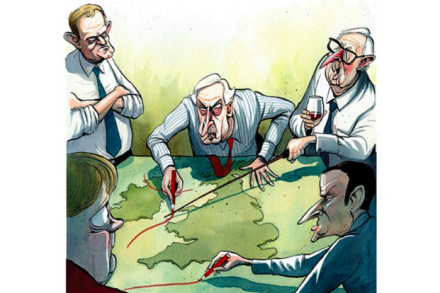
It is petty, small-minded, mean-spirited, and childish. It is certainly not difficult to think of a few adjectives to describe the UK’s decision to refuse diplomatic status to the European Union’s mission in London. Diplomats, and European ones in particular, take matters of status, protocol and etiquette very seriously, and the snub looks, on the surface at least, designed to diminish our closest neighbour. The ambassador for, say, Mozambique, or Honduras, has full diplomatic recognition, but not the person representing the 440 million strong trading bloc on the other side of the English channel. Wars have been started over lesser slights.  But hold on. Sure, you can argue that the UK is being silly. But so is the EU.

Isn’t it time Michel Barnier retired?

From our UK edition

He took the European Union to the edge of a no-deal Brexit, creating logistical chaos on both sides of the Channel. His high-handedness and patronising manner hardened positions on both sides. And his brinkmanship clearly failed, leading to a far more distant relationship with the UK than might otherwise have been possible. It would be hard to conclude from the wreckage of the last four years that Michel Barnier had been a great success as the man in charge of negotiating Britain’s departure from the EU. But heck, this is Brussels we are talking about, and you can’t let a little thing like success or failure derail the careers of its chief functionaries (after all, if you started down that track, you might want to start asking where the vaccines are).

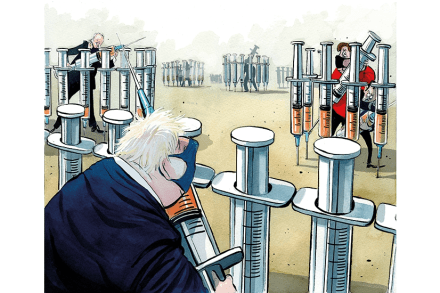
The EU’s vaccine shambles is turning into a re-run of the euro crisis

From our UK edition

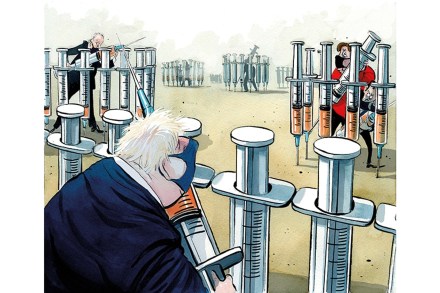
Rewind a few months, and it was all meant to be very different. With Covid-19 rampant across the world, the European Union would take charge of sourcing vaccines from the major drugs companies. Its massive buying and regulatory power, coupled with its finely-tuned administrative machine, would make sure its 440 million people were protected from the virus before anyone else. It would be a magnificent demonstration of the whole point of the organisation. The trouble is, not only has the project already started to come off the rails, it is getting worse with every day that passes. Europe’s vaccine alliance is crumbling with potentially far-reaching consequences. Europe’s vaccine alliance is crumbling with potentially far-reaching consequences.

Matthew Lynn, Will Knowland and Mary Wellesley

From our UK edition

18 min listen

On this week's episode, author and financial columnist Matthew Lynn begins by arguing that the EU has already botched its Covid vaccine rollout. (00:25) Then, Will Knowland, formerly an English teacher at Eton, explains why he was dismissed from the school and criticises its 'stifling monoculture'. (08:20) And finally, Mary Wellesley reflects on the lives of 13th-century hermits.

A race against time: can the vaccine outpace the virus?

From our UK edition

34 min listen

Coronavirus vaccines are now being distributed across the world, but what are the challenges posed by its delivery? (01:30) Is Boris Johnson the SNP's greatest weapon? (13:55) And is Prince Harry becoming more and more like his mother? (23:35)With financial columnist Matthew Lynn; former director at the McKinsey Global Institute Richard Dobbs; the UK's former director of immunisation David Salisbury; The Spectator's deputy political editor Katy Balls; The Spectator's Scotland editor Alex Massie; journalist Melanie McDonagh; and royal biographer Angela Levin.Presented by Lara Prendergast.Produced by Max Jeffery, Alexa Rendell, Sam Russell and Matt Taylor.

The FTSE is defying the Brexit doom mongers

From our UK edition

The banks would all flee. International investors would take fright. And the pound would turn into the Great British peso. We heard a lot over the last four years about how leaving the European Union would be catastrophic for the UK economy. But here is something odd. With the transitional arrangement coming to an end with the close of the old year, and with the UK now out of the Single Market and the Customs Union, and with just a loose trade arrangement with the rest of the continent that doesn’t even cover financial services, so far the FTSE is loving Brexit. True, it is only the first week of trading, and even that is not over yet, but so far the benchmark FTSE-100 index has risen from 6,500 on Monday to 6,850 on Thursday.

The EU has botched its vaccination programme

From our UK edition

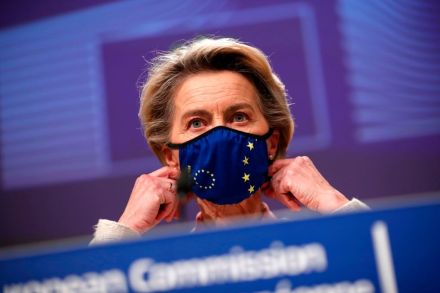
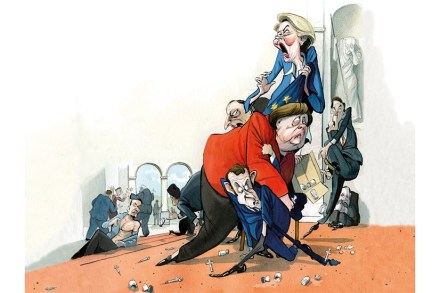
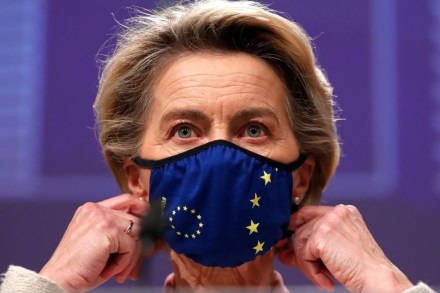
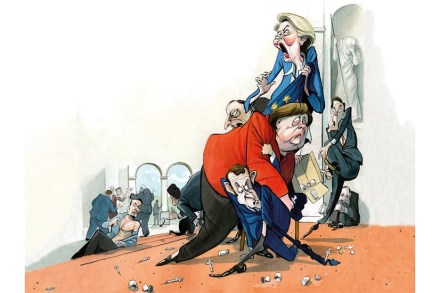
It was the most excruciating moment of Ursula von der Leyen’s short tenure as President of the European Commission. On Friday morning she hastily put together a press conference to counter the growing media storm across Europe over the EU’s handling of vaccine procurement. She doubled down on ‘solidarity’, announcing that the Commission had managed to secure more doses of the BioNTech/Pfizer vaccine, but also that the EU would stick absolutely to buying together. ‘We have all agreed, legally binding, that there will be no parallel negotiations, no parallel contracts,’ she insisted testily. ‘We’re all working together.’ At the same moment, however, her former colleagues in Berlin, where she was never popular, were busily undermining her.

Thatcher was completely right about the Euro

From our UK edition

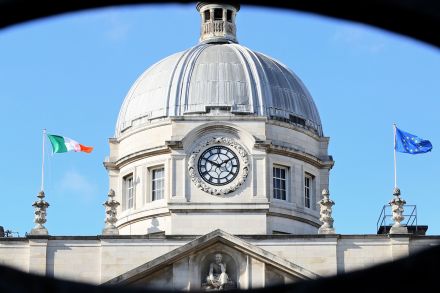
It was a ‘rush of blood to the head’. Its central bank would prove to be hopelessly ineffective. And cultural differences would remain too deeply ingrained for an internal market to ever work as it should. We learned this week from papers released in Dublin that Mrs Thatcher was completely damning about the idea of a single currency for the European Union. Looked at with the benefit of 30 years of hindsight, however, it is clear that the most remarkable point about her views is not just how intransigent she was but that she was completely right. The Euro has been a comprehensive failure, just as she said it would be. Rewind three decades to the fading months of the Thatcher premiership and she was facing what turned out to be terminal trouble over her views on Europe.

Britain has won the biggest Brexit prize of all

From our UK edition

In the end, the fish were only of symbolic importance. Neither does it matter that much what happens to Scottish seed potatoes, no matter how much of a fuss Nicola Sturgeon kicks up. Farming, tariffs and quotas are of relatively little importance given that the exchange rate will simply adjust to compensate for any changes that are made. As the UK and the EU finally agree a trade deal, there was one victory that really mattered: regulatory divergence. And on that the UK appears to have secured a victory.

No-deal Brexit planning has been a lifesaver

From our UK edition

The port of Dover has been closed down. The Eurotunnel isn’t carrying any freight for a couple of days. The lorries are already starting to back up in Kent, the supermarkets are working out where they can get fresh supplies from, and flights have been suspended, with the British likely to find they are turned away from most of our neighbouring countries. If you had blanked out all the other news you might think that after some terminal row about herring, Brexit had actually been brought forward by ten days, creating the kind of chaos that even the most swivel-eyed Remainer could scarcely have imagined possible. And yet, of course, it is the new strain of Covid-19 that means restrictions are being put in place. But, hey, one thing seems to have come good.

BMW is discovering the cost of a no-deal Brexit

From our UK edition

Factories will close. Prices will rise. Profits will suffer. Another day, another warning of disaster from one of the major car manufacturers about the catastrophic cost of a no-deal Brexit. But hold on. Before anyone’s eyes start to glaze over, there is a twist to this one. It is a German company that is starting to worry about the hit to its bottom line. And, in truth, it is hardly likely to be the last. Yesterday, BMW, which used to be the most formidable manufacturer of upmarket automobiles until Tesla came along, went public for the first time about the financial impact of Britain leaving the EU without a deal.

More Brexit talks are the worst possible outcome for the economy

From our UK edition

Currency speculators at some of the hedge funds in Mayfair may be feeling quietly pleased. Trade experts will be relieved that their lucrative consultancy gigs will keep on coming. Heck, even financial columnists can safely pontificate about the possible outcome for a while yet, while the FBPE mob on Twitter can carry on predicting the apocalypse every time Nissan adjusts its production schedules. There are a few people for whom today’s agreement between Boris Johnson and European Commission President Ursula von der Leyen to carry on discussing a trade deal will come as a relief. For the wider economy, however, it is little short of a disaster. It is hard to know exactly what there is still to discuss between Britain and the EU.

It’s time for Boris to walk away from Brexit talks

From our UK edition

Lorries will be backed up across Kent. The shops will run short of essential goods. Travel plans will be disrupted, and factories will start to close as British goods are shut out of their main export markets. As the UK comes to the end of its transitional deal with the EU, and as talks on a trade agreement appear to have reached an impasse, there will be plenty of high-stakes brinkmanship, and pressure on the government to give some ground on fishing and regulation to avoid the potential chaos of no deal. And yet in truth, if Boris Johnson caves into the EU’s demands at the last moment, the voters will punish him — and they will be right to do so. Right now, it is anyone’s guess whether a trade deal can be done at the last moment between the EU and the UK.

Philip Green gave capitalism a bad name

From our UK edition

The giant drug companies that are on brink of delivering a Covid vaccine in record time? Well, that’s easy. The technology companies that have relentlessly innovated to transform the way we communicate with one another? That’s not too hard. The power generators, food manufacturers and automobile conglomerates that supply most of our daily needs? That’s a breeze. Heck, even the banks can justify their existence, at least in theory. Most entrepreneurs and businesses are fairly easy to defend. But Sir Philip Green? Errrrr… The free market needs defending, perhaps more now than at any time in the last 50 years Of course it was just about possible to explain his vast wealth.

Italy is about to hijack the eurozone

From our UK edition

There is still some debate about who came up with the adage that ‘if you owe the bank $100 that is your problem. If you owe the bank $1 million dollars that is their problem’. It is usually attributed to the oil tycoon J. Paul Getty, which may help explain how he became the richest man of his era. Occasionally, and in a slightly modified form, it is attributed to John Maynard Keynes in his advice to the British cabinet after world war two. And yet in truth, it should probably have been coined by an Italian. Why? Because the country now owes so much money to the rest of the eurozone it looks about to hijack the whole system.

A public sector pay freeze is completely fair

From our UK edition

They’ve only received a fraction of their old salaries. Many have missed out on months of work. And their pension contributions and holidays have been completely scrapped. So it is perhaps understandable that teachers, town planners and tax officials are feeling a little aggrieved. Except, er, no, sorry I made a mistake there. That was a description of what happened to the self-employed over the last eight months, not the average public sector worker. Instead, it now looks likely that the government will impose a pay freeze on everyone who works for the government this year, and possibly next as well. The 5.5 million affected will reportedly include the police, armed forces, teachers and civil servants.

There’s nothing wrong with profiting from a vaccine

From our UK edition

A couple of shots to the arm and this will all be over. With today’s news from Moderna, last week’s from Pfizer, and with a potential update from AstraZeneca in the next few days, we may soon have three vaccines against Covid-19 (and if you add in candidates from Russia and China perhaps more). And yet, it turns out, that some people are already fretting about potential side effects from that. And they don’t just mean a mild fever or muscle ache. They mean something far, far nastier. Profits. While most of us have been feeling a lot better about the epidemic over the last week, Jeremy Corbyn seems most worried that — once a vaccine has been approved and the virus eliminated — a big company might make some money from it.

Brexit Britain will be the winner in the EU’s war on Joe Biden

From our UK edition

A new era of transatlantic cooperation will have begun. The United States will pivot towards Brussels. The trade wars will come to a swift end, and the American president will once again be a respected figure on this side of the Atlantic.  With Donald Trump finally defeated, if not quite yet evicted from the White House, most commentators are expecting a far closer relationship between Berlin, Paris, Brussels and Washington, with Boris’s Brexit Britain left out in the cold. But hold on. Something is not quite right with that narrative. Instead, the EU seems intent on going to war with Joe Biden. In the very same week that the veteran politician finally made it to the presidency, the European Union has, oddly, made two extraordinarily aggressive moves against the US.

Pfizer’s Covid vaccine is a victory for the free market

From our UK edition

There are still safety trials to be completed. Data has to be collected, checked, double-checked, and then peer-reviewed. And we still need to find out whether it is the most effective of the various candidates currently in development or whether there is something even better just around the corner. But the Pfizer vaccine has already proved something beyond any reasonable doubt. Free enterprise works. And for all its flaws, it remains the best system for solving complex problems. Amid all the justifiable excitement over the potential approval of the first safe and effective vaccine against Covid-19 it would be easy to overlook one point: the vaccine was developed with private money.

In praise of Big Pharma

From our UK edition

In the last decade, the mega corporation has taken a lot of stick from just about everyone. But hold on. It is just about to rescue us from the worst global crisis since world war two. Drugs giant Pfizer — part of the Big Pharma — has announced that its Covid-19 vaccine was effective in trials. It looks safe as well. It may well be approved before the end of 2020. With luck we should have a few million doses this year, and a billion by next year. AstraZeneca may not be far behind with the Oxford vaccine. And a few more are on the way. With a safe effective vaccine, a world that has been plunged into chaos can start getting back to normal. Lockdowns can be ended. Mass unemployment can be avoided. The threat of bankruptcy will be lifted from millions of business.