Matthew Lynn

Matthew Lynn is a financial columnist and author of ‘Bust: Greece, The Euro and The Sovereign Debt Crisis’ and ‘The Long Depression: The Slump of 2008 to 2031’

Covid doesn’t care about your political theories

From our UK edition

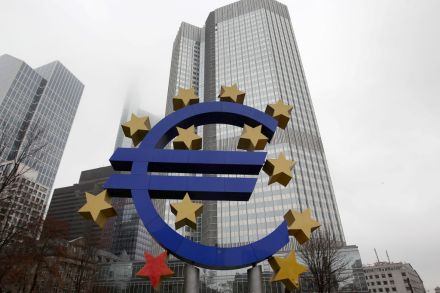
The President of the European Central Bank, Christine Lagarde, took some time out from presiding over the worst collapse in economic history last week to deliver a short lecture on how women leaders have proved better at dealing with Covid-19 than men. According to the impeccably politically correct French politician, they were more 'caring', better at dealing with the science, and smarter at delivering clear messages on health. Not very surprisingly, there was a lot of gushing commentary to support her view, at least in the liberal press. Indeed, the superiority of women Prime Ministers and Presidents has been a common theme ever since the epidemic started. But hold on. Less than a week later, the evidence for Lagarde’s claim is not looking quite so strong anymore.

Europe’s coronavirus rescue fund is dead on arrival

From our UK edition

Just imagine what would happen if real money was at stake. Over the last four days, the leaders of the European Union have been furiously haggling over their Coronavirus Rescue Fund. France’s President Macron has been banging the table angrily, the Dutch have taken on the role vacated by the British of the ‘bad Europeans’, and the Germans have been cautiously digging into their wallets to pay for the whole thing. In the end, however, they came up with a deal. Arch-federalists will hail this as a ‘Hamilton Moment’ – a decisive step towards a more united Europe where the richer states help rescue the poorer, distributing money around the continent in a moment of ‘solidarity’.

Apple has struck a blow against the EU’s out-of-control federalists

From our UK edition

A massively profitable American technology giant that pays small amounts of tax on vast profits, while massively over-charging for products that quickly become obsolete. Apple is a hard company to love, and an unlikely champion of anything apart from its own bottom line. And that might explain why many people instinctively cheered when the European Union slapped a massive 13 billion euro (£11.8bn) tax bill on Apple. Surely it was about time the company was cut down to size? Well, hold on. It now turns out the EU was wrong. The General Court of the EU today overturned the decision after the Irish (and Apple) appealed against it. It will probably go up to a higher court.

Britain’s GDP figures are dreadful but Sunak must still hold his nerve

From our UK edition

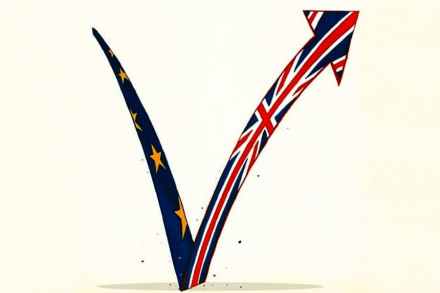
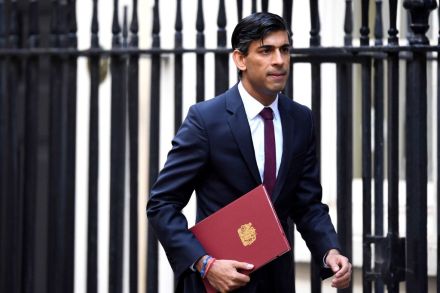
A five hundred quid shopping voucher for everyone. Five per cent off VAT across the board. Maybe suspending income tax for a couple of months, or getting rid of corporation tax until the end of the year. As today’s disappointing GDP numbers landed on his desk, the Chancellor Rishi Sunak must have been tempted to reach for the Treasury folder marked ‘extreme emergency measures’. The V-shaped recovery he was no doubt hoping to engineer is increasingly looking more like an L – a big drop followed by a flat line. Another round of government stimulus right now would be tempting. But it would also be a mistake: the Treasury has already borrowed and spent enough. All it can do now is to steadily re-open the economy and let supply catch up with demand.

Rishi Sunak should try something new: silence

From our UK edition

A huge increase in job centre advisers; special grants for companies taking on trainees; free cash for anyone insulating their home; cuts to National Insurance; reduction in VAT, and a £500 shopping voucher to re-boot a collapsing High Street. Oh, and an emergency GCRF, or Garden Centre Rescue Fund, to subsidise anyone who helps our heroic horticultural industry by building a new rockery or water feature. Okay, I’ll admit, I made that last one up. But all the others are suggestions that have been put forward for the Chancellor’s mini economic statement tomorrow. But perhaps Rishi Sunak should try something new: silence. In truth, the government has done an extraordinary amount to help people and businesses through this epidemic.

Boris’s Roosevelt remedy isn’t what Britain needs

From our UK edition

Huge infrastructure projects. A massive rise in public spending, and the creation of public works for an army of unemployed. Prime Minister Boris Johnson has started pitching himself as the new Roosevelt, modelling himself on the 1930s American president who spent big to pull the country out of the Great Depression, and re-wrote the rules of economics in the process. At this rate, he’ll be making speeches about there being nothing to fear ‘except fear itself’ and starting fireside chats over the wireless by the end of the week. But hold on. Is FDR a model we really want to emulate? Not really. We don’t face anything like the same challenges, and the solutions that worked ninety years ago won’t necessarily work today.

The EU’s new bond isn’t as solid as it seems

From our UK edition

Its rescue fund will bail out the poorer states. It will fuel a rapid economic recovery. And perhaps most of all, it will finally turn the European Union into a fiscal union, raising its own money, and distributing it based on which region needs its most. The EU’s new €750 billion (£680 billion) rescue fund has been hailed as a huge step forward for the Union. Perhaps it will be. There is a problem, however. Some analysts are starting to argue the new shiny new EU bonds should be rated as junk – or something close to it. On the surface, you might think an EU bond should be completely solid. After all, this is a £14.5 trillion economy, the largest single bloc in the world, with the world’s second-largest currency, the euro.

Trump is right to pick a fight with Germany

From our UK edition

He doesn’t know much about how to control a virus. Nor does he show much sign of being able to run an administration with any semblance of competence. But there is one thing that Donald Trump does know how to do. Hit a raw nerve. And in his decision to attack Germany, and its increasingly destabilising role in world affairs, he looks to have done that again. The president’s latest campaign speech in Tulsa mainly attracted attention for its reckless approach to Covid-19 and its inflammatory racial remarks on the Chinese origins of what, with his typical playground humour, he referred to as the ‘kung flu’.  But Trump also took a few swipes at the largest European country, and the place where the Trumps originally came from.

Four ways the Bank of England could ensure a V-shaped recovery

From our UK edition

At least we now know where Rishi Sunak is getting all the money from. The Bank of England has today unveiled the latest round of what should probably be called Covid rather then Quantitative Easing. It will print another £100 billion which in the roundabout way these things work will find itself in the Treasury’s bank account. That’s another couple of months of the furlough scheme paid for, with a bit left over for whatever grand-looking infrastructure scheme the guy next door is keen on this week. And yet, in truth, the Bank should have been bolder. Just funding an eye-watering government deficit is neither especially healthy nor particularly innovative. Every major central bank in the world is doing that.

Germany is picking up the tab for Brexit

From our UK edition

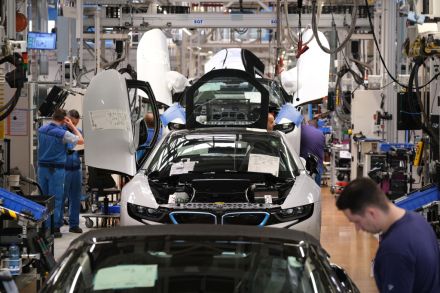
The car workers would pay a heavy price. The City would be muscled out of crucial markets. The Treasury would be sinking in red ink as tax receipts went into freefall, and farmers would lose their subsidies. During the long, painful debate about the UK’s departure from the EU there were lots of different groups which, we heard repeatedly, would pay a price for that. But now that we are out, we are finally getting a definitive answer. There will be a price to be paid. But it will be German tax-payers who will be picking up the tab, not anyone in Britain. And that could hardly come at a worse time. EU leaders are due to meet on Friday to discuss the Budget for the next seven years.

Unilever has shattered the great Brexit myth

From our UK edition

Goldman Sachs is still operating out of London. Airbus is still making wings in Broughton, even if the order book is not looking so healthy right now. Nissan has backed its Sunderland factory. Still, at least those who are clinging to the notion that leaving the European Union would lead to a mass exodus of multinational corporations always had one company they could rely on: Unilever. The Anglo-Dutch conglomerate would surely always champion the European Union cause. It had already tried once to flee the country as it plunges over the Brexit abyss and would no doubt try again as the transition period expired. Except, er, hold on. Not any more. Today the last bastion of Ultra-Remain, at least in business, appears to have crumbled.

A no-deal Brexit won’t mean a shortage of medicines

From our UK edition

Covid-19 has hit us harder than just about any country in the world. Lockdown has been eased chaotically, and no one has any idea what the rules are any more. And now, on top of everything else, it looks as if we are about to run out of medicines if the government doesn’t mange to reach a trade deal with the European Union by the end of the year. According to the Financial Times today, the UK is running dangerously low on stockpiles of essential pharmaceuticals, and might well run out just as a second wave of the coronavirus hits, probably next winter. We need to import lots of medicine from the rest of Europe, and the ‘crash out’ ideologues at Number 10 are putting us all at risk. There is a problem, however. It’s nonsense.

What happened to Brexit meaning the end of Nissan’s Sunderland plant?

From our UK edition

It would have to close down its factories. Thousands of job would be lost. Suppliers would be abandoned, and the local economy would be shattered for a generation. It was sometimes a little hard to work out why a few hardcore Remainers cared quite so much about Nissan. Its range of mid-market, family SUVs were not the kind of cars they would usually be seen dead in. But somehow the company became emblematic of the whole bitter debate about how the British economy would suffer if we left the European Union. If we weren’t in the Single Market, we were told again and again, the business was doomed. So today’s news from the company is, to put it mildly, slightly surprising.

Britain should demand a level playing field from the EU

From our UK edition

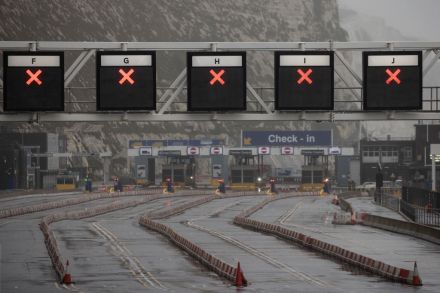
It will receive €9 billion (£8 billion) in free money from the government. It will be protected from any threat of a takeover. And, with a restored balance sheet, it will be free to make predatory acquisitions across the continent. It is of course Lufthansa, the German airline, which has just been given a massive package of financial support by its government. But hold on. Isn't there meant to be a level playing field across Europe? Over the course of the negotiations on a trade deal with the European Union, we have had a series of high-handed lectures from Michel Barnier demanding the UK sign up to EU oversight of state aid and competition rules. Apparently, it would be intolerable to have a major competitor, especially one right next door, playing by different rules.

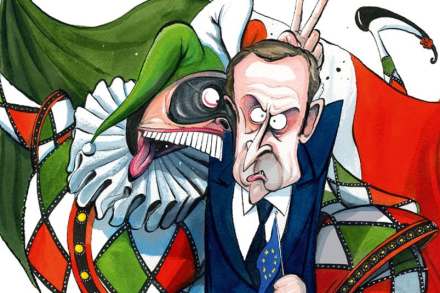
How Macron gamed the EU Covid fund

From our UK edition

There are not that many advantages to electing a former investment banker as president. They are often aloof. They don’t have much in the way of a common touch. And they have a sense of entitlement that blinds them to their failings. There is, however, always this to make up for all that. They know how to make a bond issue work for the bottom line. And in designing a 'rescue fund' to get the EU through the Covid-19 crisis, France's President Macron, an alumnus of Rothschild & Cie, has put some of those skills to work. Earlier this week, Macron announced a deal with Germany's Angela Merkel to create a €500 billion (£450 billion) European Union rescue fund for coping with the coronavirus crisis.

Macron and Merkel’s coronavirus rescue fund is a stitch-up

From our UK edition

It is finally here. Die-hard European Union federalists have plotted for it for years. Economists and thinks tanks have argued for it. The Greeks and Italians have pleaded for it. And French presidents have made no end of grand speeches, full of references to solidarity and common visions, proposing it. The Germans have finally relented and agreed, at least in part, to share debt within the EU and the euro-zone, and bail-out the weaker members of the club. France’s president Macron and Germany’s chancellor Merkel last night agreed a 500 billion euro (£450bn) plan that will re-distribute fund from the stronger members to the weaker. There is a problem however. It will make a British exit without a deal a lot more likely.

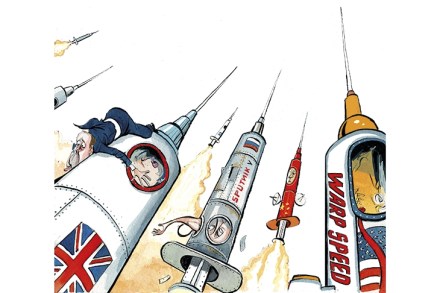
Britain should break the taboo on ‘challenge vaccines’

From our UK edition

So far, so good: the Oxford university trials on a potential vaccine for Covid-19 is reported to be going well. It has been tested on more than a thousand people, and it looks to be safe. There is another, more important question, however, and one where an answer might take a frustratingly long time. Does it work?  It is too early to say. Right now, not enough of the people vaccinated have been exposed to the virus for any reliable results. Now the team are planning to move it into hospitals where the chances of exposure are significantly higher. The chances are that will give them more of an idea. But hold on. That's crazy. In fact, what we need is a 'challenge vaccine'.

Sunak’s furlough scheme is a victim of its own success

From our UK edition

Who are we kidding? If you are still furloughed through July, August, and September, the chances are that your job isn’t on hold as you wait for lockdown to gradually be lifted or for your company to get back to normal levels of demand. In truth, you have probably been fired. It’s just that no one got around to telling you yet. Rishi Sunak's coronavirus job retention scheme, to give its full title, has in many ways been one of the most successful government projects we have seen for years. More than six million workers and half a million companies have taken it up. It has been brilliantly implemented by HMRC, who built the system in only a month, with hardly a hitch in the process (Who knew giving away free money was so easy? Maybe we should try it more often).

A German court has plunged the eurozone into fresh crisis

From our UK edition

An epidemic has been raging across the continent. The economy is in lockdown, and GDP is in freefall. But, hey, just when you thought things couldn't get any worse in the eurozone it now has a financial and currency crisis as well, and one that is being made worse by the week with the shambolic management of the European Central Bank by Christine Lagarde. Today, the German constitutional court has, at least in part, ruled against the ECB's bond-buying programme, which allows the central bank to print money and effectively bail out Italy, Spain, and probably quite soon France as well. You need to be a German lawyer – not usually among the most interesting people on the planet – to unpick the finer points of the ruling.

It’s no bad thing that the airline industry will never be the same again

From our UK edition

British Airways is laying off 12,000 staff. Virgin Atlantic is desperately looking for a buyer. Air France-KLM is being bailed out by the French and Dutch governments, Lufthansa is getting rid of planes, and Airbus is furloughing workers. The once mighty airline industry is in terminal trouble, with massive state support now required to keep it alive. Rishi Sunak hasn’t stepped in with his chequebook yet, but, heck, it is only Wednesday and it is probably somewhere on his ‘to-do’ list for the week. But hold on. Sure, we want to rescue most industries and bring them back to life as soon as practically possible.