Matthew Lynn

Matthew Lynn is a financial columnist and author of ‘Bust: Greece, The Euro and The Sovereign Debt Crisis’ and ‘The Long Depression: The Slump of 2008 to 2031’

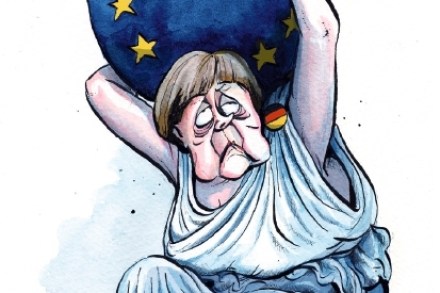
Could the Green party revive Germany’s fortunes?

From our UK edition

The BMWs and Mercs will be banned from the autobahns. People will only have electricity when there is enough of a breeze to keep the windmills turning. And the factories will be on a three-day week, while the airports will be converted into organic farms. Most businesses, and of course conservatives of any sort, will be nervous at the increasingly likely prospect of the Greens taking charge in Berlin later this year. But they shouldn't be. In fact, they would be a huge improvement on Angela Merkel’s chaotic twilight years. As she heads towards retirements, Merkel’s legacy is looking very tarnished. The CDU is slumping in the polls. It has made a mess of Covid-19, imposing a botched vaccine procurement programme on the whole of Europe that has come badly unstuck.

The EU’s ugly vaccine nationalism

From our UK edition

We have to rid the world of vaccine nationalism. No one is protected until we are all protected. And we need, above all, solidarity to fight a virus which by its nature does not respect borders or boundaries. Over much of the last year, European Union officials, led by the President of the Commission Ursula von der Leyen, have led the world in grandiose rhetoric about how we have to lead a global effort to fight Covid-19, contrasting its own noble internationalism with the grubby self-interest of the likes of Donald Trump or indeed Boris Johnson. But hold on. After much speculation, the EU has itself started firing the first shots in the vaccine wars, permitting Italy to block the export of 250,000 doses of the Oxford-AstraZeneca jab to Australia.

Rishi Sunak is turning into a Gordon Brown tribute act

From our UK edition

Lots of self-promotion. An avalanche of leaks. Fiddly tax changes that always somehow turn out to be an increase, plenty of creative double counting, and heavy spending on marginal seats, all wrapped up in a package designed to effortlessly transport its author into Number 10. Remind you of anyone? It is of course Gordon Brown, and one of his interminable Budget speeches, in his pomp. But it is also a pretty good description of Rishi Sunak.  The Tory Chancellor is quickly turning into the political equivalent of one of those bands hamming up Abba covers on a Saturday night: a Gordon Brown tribute act. The trouble is that the country could use something a little more original right now. Sunak's Budget yesterday was straight from the New Labour playbook.

Can the EU be trusted to introduce vaccine passports?

From our UK edition

The contracts were badly drafted. The orders were late. Too few resources were made available for the scale of the task, and the regulators dithered and delayed. Even the most fanatical federalists such as Guy Verhofstadt have admitted the EU’s vaccine programme was little short of a catastrophe. But hey, what does that matter? Ursula von der Leyen has decided this is the moment to double down on the EU’s Covid-19 strategy, and launch a centralised vaccine passport. What could possibly go wrong? Well, er, as the EU’s vaccine fiasco has taught us, lots actually. Von der Leyen has today tried to bounce back from her difficulties with the vaccine programme with a plan for EU-wide Covid passports.

Spectator Out Loud: Katy Balls, Matthew Lynn and Craig Brown

From our UK edition

33 min listen

On this episode, Katy Balls explains how No. 10 infighting could lose Scotland, and reveals how Boris plans to get his side in order. (01:05) Matthew Lynn is next on the show, and tells the story of the Up Crash. (10:10) Craig Brown finishes the podcast, reading his review of a 'dark portrait of sibling hatred': Samantha Markle's memoir.

Up Crash: why are markets soaring as the economy tanks?

From our UK edition

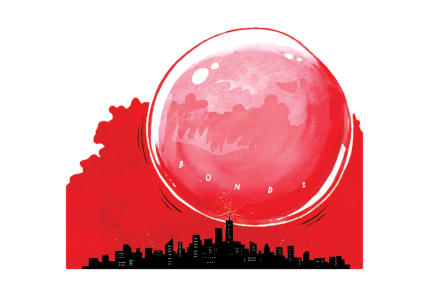
Shops are boarded up. More than four million people are on furlough with little idea of whether they will have jobs to go back to. Global trade has hit levels last seen a decade ago, and government deficits are soaring, while most developed economies have seen output shrink by 10 per cent, a collapse not seen since the Great Depression of the 1930s. On just about every measure imaginable, the global economy has never been in worse shape, and we are all a lot poorer. And yet here is a puzzle. Why can’t we see any evidence for that in the financial markets? Instead we are witnessing a series of extraordinary, epic bull markets. Crypto-currencies finally took a dive this week, but Bitcoin has quadrupled in value in recent months. Tesla is worth more than Toyota.

The problem with the Supreme Court’s Uber ruling

From our UK edition

They are monitored by the firm. They don’t have the option of working for other companies. And they are entitled to all the protections that come with being an employee. The Supreme Court today potentially blew up Uber’s business model, and the model of many other fast-growing ‘gig economy’ companies as well, with a ruling that drivers for the app operator are not self-employed after all, as the company likes to claim, but staff, and should be treated as such. In truth, you can argue the case for or against that decision, as the lawyers have just done expensively in court. But in reality, this is a hugely important verdict about the kind of economy we want to create.

Even Guy Verhofstadt has seen through the EU’s vaccine fiasco

From our UK edition

It is a rant worthy of Nigel Farage in his pomp. One of the leading figures within the European Parliament has launched a blistering tirade against the Commission's ineptitude in securing vaccines. The EU is a world leader in making inoculations, he points out. And yet there is a shortage of supply in every country within the Union. The measures taken to fix that so far have been ‘symbolic,’ ‘insufficient’ and sometimes even ‘counterproductive’. Worse, there has been a shocking lack of accountability, with no one held responsible for the failure. The critic? None other than the arch federalist, scourge of Brexiteers, and hero of Lib Dem party conferences, Guy Verhofstadt.

Biden’s rift with Brussels is only set to grow

From our UK edition

It was meant to be a special relationship. After the tumultuous Trump years, President Biden was planning to reset relations with the European Union, Inherently liberal, rules-based, and engaged with climate change, it would be a natural ally, and far more so than a UK still tainted by Brexit. The Biden team were no doubt looking forward to working closely with officials in Brussels, Paris, and Berlin to repair the damage of the last four years and put the world on a more rational course.  But hold on. It is not going according to plan. There are already reports that the White House is growing increasingly frustrated with the EU. And in truth, that rift is only going to get wider and wider in the months to come.

KPMG’s boss was right to tell staff to stop moaning

From our UK edition

You have to navigate the tricky etiquette of what to wear for Zoom meetings. That little black box in the corner has to be rebooted from time to time when the wi-fi goes wonky. You have to make your own sandwiches instead of popping out to Pret. And there is a severe risk of hand strain if you don’t have the right kind of ergonomic equipment while perched on the laptop in the kitchen.  There have, of course, been some challenges for the white collar classes as they make their way through lockdown. But, you know, all things considered, it is just possible that it hasn’t been that bad. The trouble is, it seems you can’t say that in public anymore – and if you do, like Bill Michael at KPMG, it will cost you your career. https://www.youtube.com/watch?

Von der Leyen has learnt nothing from the EU’s vaccine fiasco

From our UK edition

As non-apology apologies go, it was right up there with the best of them. Speaking to MEPs today, the president of the European Commission Ursula von der Leyen accepted that some ‘mistakes had been made’ in the procurement of vaccines against Covid-19.  Apparently the Commission had been a little too late authorising some of the shots, it had been a tad too optimistic about production, and not everything had gone according to plan. But, heck, these things happen, she went on to argue. And perhaps most crucially of all, the alternative would have been far, far worse.  'I can't even imagine if a few big players had rushed to it and the others went empty-handed,' she said.

Barclays has woken up to the good news about Brexit

From our UK edition

The bankers would all move to Frankfurt. The hedge funds would all decamp to Zurich. The asset managers would be off to Paris and Dublin, and the lawyers, accountants and consultants would swiftly follow them.  For much of the last four years since the UK voted to leave the European Union, it has been assumed across most of the continent that one of the big prizes of Brexit would be repatriating the lucrative financial services industry out of the City of London to a series of European centres. Indeed, Paris was confidently expecting to boom on the back of all the business that would hop on the first Eurostar to make sure it stayed within the Single Market. But hold on.

The vaccine disaster has fatally undermined the EU

From our UK edition

It might be a bit late, but the supply will come on tap eventually. France’s Sanofi has partnered with Pfizer to start manufacturing its vaccine. BioNTech has just bought a factory in Marburg, Germany from Switzerland’s drugs giant Novartis to retrofit into a vaccine plant. With plenty of money being splashed around, production will arrive soon. Making vaccines is tricky, but not that tricky. By the summer, Europe should have enough Covid-19 shots to jab everyone who wants one. Crisis over, right? Ursula von der Leyen can get back to setting diversity targets, or making climate pledges, or whatever it was she was up to before people started asking why the Israelis and the British were inoculating people so much faster than she was.

Ursula von der Leyen has broken the first rule of leadership

From our UK edition

Valdis Dombrovskis could probably do without his moment in the limelight. His spell as prime minister of Latvia, a country with a population of 1.9 million, was largely successful, at least until the collapse of a supermarket roof in 2014 brought his coalition to an early end.  Shunted off to Brussels, he worked quietly as commission vice-president for the euro and social dialogue– nope, I don’t know what the heck that means either – before being promoted to the slightly more important trade portfolio last year. Now it turns out he is responsible for what is rapidly turning into the biggest policy catastrophe in Europe since the Second World War, at least according to his boss.

Ursula von der Leyen has always left a trail of disaster

From our UK edition

The German Army had to join a NATO exercise with broomsticks because they didn’t have any rifles. It’s special forces became a hotbed for right-wing extremism. Working mothers were meant to get federally-funded childcare, to help fix the country’s demographic collapse, but it never arrived, and the birth rate carried on falling. Every child was supposed to get a hot lunch at school every day, but somehow or other it didn’t quite happen. There is a common thread running through the career of Ursula von der Leyen, the President of the European Commission. A series of catastrophic misjudgements, and a failure to deliver.

Vaccine wars: the global battle for a precious resource

From our UK edition

39 min listen

Why has the vaccine rollout turned nasty? (00:45) What's the sex abuse scandal rocking France's elite? (16:55) Have artists run out of new ideas? (28:35)With Daily Telegraph columnist Matthew Lynn; science journalist and author of Pale Rider: The Spanish Flu of 1918 Laura Spinney; Spectator contributor Jonathan Miller; journalist Anne-Elisabeth Moutet; Dean Kissick, New York editor of Spike Art Magazine; and Eddy Frankel, visual art editor of Time Out magazine.Presented by Lara Prendergast.Produced by Max Jeffery, Alexa Rendell and Matt Taylor.

Vaccine wars: the global battle for a precious resource

From our UK edition

Armed guards are patrolling the perimeter fence of a sleek factory. Software experts are fending off hackers. Border officials are checking trucks and ferries, not for weapons or illegal immigrants, but for a mysterious biochemical soup, while spies and spin doctors are feeding social media with scare stories flaming one national champion or another. Welcome to the first great geopolitical battle of the 21st century. It may sound like something ripped from the pages of a dystopian sci-fi novel, but in truth we’re seeing the opening salvos in the vaccine wars. Rather than co-operating with one another to roll out a global vaccination campaign to rid the world of Covid-19, the major powers of the world are instead descending into a fierce, increasingly nationalistic competition.

Matt Hancock is right: we are in a vaccine race with France

From our UK edition

There are plenty of different ways in which Matt Hancock, the health secretary, can be criticised for his handling of the Covid-19 crisis. Track and trace didn’t work, lockdowns were sporadic and probably too late, and the messaging wobbled all over the place. But comparing the British vaccination drive to France and the rest of the EU? That was completely right. When Hancock remarked on Sky News yesterday that the UK had vaccinated more people in just three days than France had managed in total, his critics on social media went into a predictable meltdown. It’s not a competition or a race lectured the finger-waggers. We have only done one dose.

The EU’s vaccine catastrophe is a crisis of its own making

From our UK edition

As news emerges that both Pfizer and AstraZeneca are cutting supplies of their Covid-19 vaccines to the EU by up to 60 per cent, EU officials are turning on the drug companies, threatening fines and lawsuits if they don’t speed up deliveries. The Italian Prime Minister Giuseppe Conte has blasted the delays as unacceptable and threatened to take the companies to court. While the European Council President Charles Michel is threatening to use ‘all the legal means at our disposal’ to make the drugs companies ‘respect the contracts’ signed with the EU. But hold on, because on closer inspection it turns out that much of the unfolding vaccine catastrophe in the EU is of its own making.