Matthew Lynn

Matthew Lynn is a financial columnist and author of ‘Bust: Greece, The Euro and The Sovereign Debt Crisis’ and ‘The Long Depression: The Slump of 2008 to 2031’

Jonathan Miller, Matthew Lynn and Melissa Kite

From our UK edition

19 min listen

On this week's episode, Jonathan Miller, author of France, a Nation on the Verge of a Nervous Breakdown talks about the French 'vaccine passport' protests; Financial columnist Matthew Lynn reflects on 50 years without the gold standard; and Melissa Kite tells us about her own ways of treating Covid.

How the ‘Nixon shock’ reshaped our economy

From our UK edition

The dotcom bubble. The financial crisis of 2008 and 2009. The oil price spiral of the 1970s. The launch of the single currency. It would be fun, in a nerdish kind of a way, to debate which was the most seismic economic event of postwar history. But in fact the answer would be this: the ‘Nixon shock’, a fateful day when the final link between gold and the money you carry around in your pocket, or on your bank card, was finally severed. And it happened 50 years ago this week. A half-century on — enough time for some historical perspective — how’s it going?

Google’s war on home workers was inevitable

From our UK edition

Tapping out some code in the back garden. Working on a sales presentation while watching the school sports day. Or even better, traveling though a continent or two while still pulling down a ritzy six figure salary.  Over the last year, middle class professionals have bought into the Work From Home Dream – or WFHD as it's known in HR circles – to create a working life that combines the best of all possible worlds. It is hardly surprising that so many highly-paid workers are happy to stay away from the office on a permanent basis. Forget Zero Covid. The WFH warriors will be aiming for Zero Flu and Zero Colds before they get back to their desks Google's move illustrates two big problems with WFH But hold on. It turns out there is dark side to that dream.

Rishi Sunak’s warm words won’t persuade workers back to offices

From our UK edition

It will be better for our careers. We will network more effectively, spark ideas off one another, and learn new things from our colleagues, as well as getting a reminder from time to time of how annoying they are.  Chancellor Rishi Sunak took a break today from his usual occupation of dishing out vast sums of free money to remind us all of how much he learned from working in an office. Sunak is urging us all to get back to the skyscraper, shop, warehouse, or whatever, as quickly as possible. But hold on. Sure, there is nothing wrong with a few warm words to that effect – but we need more than that to get us back to the office.

Australia shows the cost of zero Covid

From our UK edition

The UK is growing at the fastest pace in 80 years. The United States, fuelled by President Biden’s stimulus programme, is expanding at a breath-taking pace, while Sweden is growing at a rapid rate. Most of the global economy is bouncing back from the Covid recession at remarkable speed. There is, however, one exception. Australia. What has long been one of the most successful economies in the world is heading back not just into lockdown but into recession as well — and giving the world a sharp lesson in the cost of ‘zero Covid’. Over the last year, Australia, along with New Zealand, has been heaped with praise for the way it has managed to keep Covid-19 under control. There is, of course, plenty of justification for that.

Boris’s Brexit deal isn’t worth sacrificing Northern Ireland for

From our UK edition

There will be chaos at the borders. Food will run out at the supermarkets. Travellers will face long queues, and companies yet another round of disruption. As the UK lays the groundwork for breaking with the Northern Ireland Protocol, we will hear plenty of scare stories about how it might mean losing the Free Trade Agreement with the European Union. There is an element of truth in that, of course. The EU may well decide that if we are not sticking to the Protocol then the free trade deal has to go as well. But there is a flaw in that argument, and it is not exactly a minor one. In truth, the FTA is not worth saving – and certainly not worth sacrificing Northern Ireland for.

The EU’s Brexit bill doesn’t add up

From our UK edition

A dozen hospitals. A hundred million doses of the Pfizer vaccine, and a lot more of the Oxford one. Or even a few trips in one of Jeff Bezos’s new space rockets. Even with inflation, there is still plenty you can buy with an extra three to four billion pounds.  In recent days, it has emerged there is a big gulf between what the European Union insists we owe under the terms of our departure agreement, and what the UK believes is due.  In the EU’s accounts, it put the sum at £40.5 billion. The UK now says it will be £37.3 billion, or £3.2 billion less than the EU reckons. Despite this discrepancy, the EU continues to insist the UK should pay that full sum of money.

Branson vs Bezos: In praise of the billionaire space race

From our UK edition

They are rich boys with some very expensive toys. As Richard Branson completes his first space flight, it would be easy to dismiss the race between the Virgin founder and Amazon’s Jeff Bezos to be the first billionaire in space as the self-indulgence of a couple of tycoons with too much testosterone and too much money.  The competition will be seen by some on the liberal left as a symbol of widening inequalities. They will view it as the emergence of a plutocratic class separated from the rest of us, and as proof of the argument that space should be left to the public sphere. Of course there is an element of truth in all of those complaints.

Why has the EU let German car manufacturers off the hook?

From our UK edition

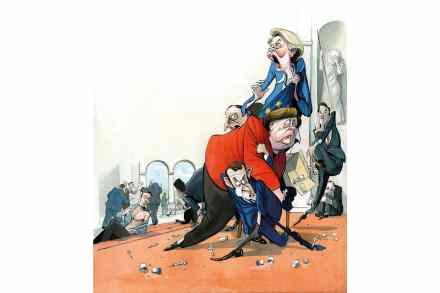
Two billion? Five billion? Perhaps ten billion to make it a nice round number? For colluding on diesel emissions you might think the European Union would hand out a pretty stiff fine to the big German auto-manufacturers. After all, it has hit American tech giants with huge penalties for far lesser transgressions.  Yet in the end, its response was predictable: the EU has largely let them off the hook. The reason? It turns out that protecting German auto manufacturers is what the Commission really cares about – and nothing else matters.

Labour’s disastrous switch to economic nationalism

From our UK edition

The government will ‘Buy British’ whenever possible. A new law would force every public body to publish the percentage of supplies bought from domestic suppliers. And Gareth Southgate will be appointed as the country’s new management tsar, tasked with turning every worker into a winner. Okay, I admit I made that last one up. The rest, however, were among the blizzard of policy announcements from Labour’s shadow chancellor, Rachel Reeves, over the weekend. Less than three months into her new role, she, along with Sir Keir Starmer, has clearly decided to shift Labour economic policy towards tub-thumbing economic nationalism. But hold on. Is that really a good idea? Sure, it is easy to understand what she is up to.

Has the Bank of England just blown its chance to stop inflation?

From our UK edition

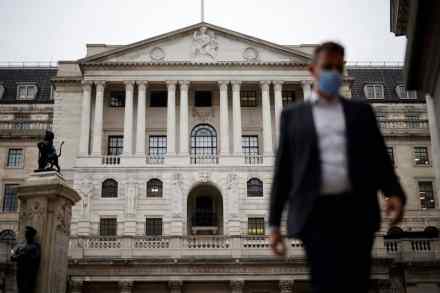
The economy is growing at a blistering pace, and likely to recover all its Covid losses by the autumn. Labour shortages are emerging across a range of industries, as the supply of Eastern European workers dries up. Prices are starting to edge upwards, house prices are soaring, and commodities are getting more expensive. But, hey, it is probably a good moment to keep the printing presses rolling and pump plenty of freshly minted pounds into the economy. The Bank of England’s Monetary Policy Committee (MPC) decided not just to keep base rates at 0.1 per cent today – that was largely expected – but also to maintain its programme of quantitative easing at £875 billion. And it may well have blown its chance to nip inflation in the bud before it starts to escalate.

The EU’s debt bondage expansion

From our UK edition

In the global market for government debt, worth an estimated $92 trillion (£66 trillion), it amounts to little more than a drop in the ocean. The European Union this week issued the first €20 billion (£17 billion) of bonds to pay for its Coronavirus Rescue Fund. The money itself doesn’t amount to very much one way or another. And yet, the Commission’s President Ursula von der Leyen was surely right when she described it as a ‘truly historic day’. Why? Because, the Commission is already using it to seize control of fiscal policy, just as it used vaccine procurement to take control of health policy.

Is lockdown’s tech bubble about to burst?

From our UK edition

Netflix is not signing up subscribers at the rate it once did. Disney+ has stalled. At Boohoo, growth is not as red hot as it was just a few months ago, while Deliveroo’s float on the London stock market was quickly dubbed ‘flopperoo’ by City wags. Zoom’s shares price has stopped, er, zooming, at least in the upward direction. A random collection of snippets of business news? Well, to some degree. But there is also a common theme to all these stories, and one that is significant for investors. We are about to witness a serious bout of what might be termed the post-pandemic blues. The companies that did brilliantly while the world locked down are going to see a significant slowdown as it opens up again.

We don’t have to swap sovereignty for trade

From our UK edition

A new court will be established with powers over both countries. Labour and product laws will be harmonised. Flags with kangaroos and crowns will flutter over buildings, there will be a special parliament moving weekly from Cairns to Coventry and an anthem that mashes up Rolf Harris and The Beatles will be played at every opportunity.  For years, we have been lectured by europhiles that free trade requires a pooling of sovereignty There were lots of things that could have been in the Australian-UK trade deal that was finally agreed today but which aren’t. In truth, the most significant point about the deal is not what it includes, but what it doesn’t. It liberalises trade, reduces tariffs and at the margin will help the economies of both countries.

Two reasons why Andy Haldane is right to worry about inflation

From our UK edition

Companies are facing critical shortages of staff. Commodity prices keep spiking upwards. Central banks are printing money on an unprecedented scale, and governments are running deficits of a size that haven’t been seen in peacetime before. What could possibly go wrong?  Well, quite a bit, as it happens. And the departing chief economist of the Bank of England Andy Haldane is completely right to warn that the real risk we face over the next couple of years is not a prolonged slump, but a re-run of the spiralling prices of the 1970s.  To his credit, Haldane was seldom afraid of challenging orthodox views during his time at the Bank. Now that he is leaving, he has become increasingly off-message.

The German takeover of the EU is accelerating

From our UK edition

Vetoes should no longer be allowed. Smaller countries should not be able to block the will of the ‘majority’. And the biggest countries, with the largest financial contributions, should be the ones that get to dictate policy. Ever since German re-unification made the country by far the largest in the bloc, there has been a creeping German take-over of the European Union. But with the British no longer around to hold that back, it is starting to accelerate. The real trend is towards an EU that is no longer a confederation of nations, but one that is dominated by Germany We had the clearest indication of that yet with a demand today for national vetoes to be ended.

The G7 tax deal is an unworkable mess

From our UK edition

Poverty will be abolished. Governments will be able to spend again. Inequality will be eradicated, our welfare systems secured and the power of the tech giants will finally be curbed. We will hear a lot of hype about today’s global tax deal. Given that the liberal-left have spent the last decade complaining that the main problem in the world is that Apple and Facebook don’t pay enough tax, a lot will be riding on the agreement reached by the finance ministers of the G7 today. There is just one small problem, however. The deal is an unworkable mess. Sure, the headlines are fine. There will be a global minimum corporate tax rate of 15 per cent designed to stop countries from unfairly competing with one another.

Tim Martin isn’t a Brexit hypocrite

From our UK edition

Heinz is expanding a huge factory in the UK. Tesla is reportedly scouting the north for locations for a new car or battery plant. Even the pound is bouncing to three-year highs.  It has been a difficult few weeks for some hardcore Remainers. Still, at least there is finally something to cheer them up. Tim Martin, the pugnacious founder of the pub chain JD Wetherspoon argued today that the government should relax immigration rules to ease a shortage of labour.  For the dwindling band of believers in the EU, it was a gotcha moment. At last, one of the leading backers of our departure from the EU was experiencing some ‘Bre-mourse’. 'Brexit fantasies succumb to Brexit reality,' tweeted the former editor of the Financial Times Lionel Barber.

Brexit Britain can capitalise on the breakdown in EU-Swiss talks

From our UK edition

It is a leading player in finance, and it's companies are giants in life sciences and consumer goods. There were already lots of similarities between the Swiss and British economies, except that they are quite a bit richer and more successful than we are. Now we have something else in common: we have both been frozen out of the European Union’s Single Market. But hold on. Isn’t there an opportunity there as well? In truth, this would be the perfect moment to offer the Swiss a deal that would work for both sides – a common market. The Swiss have always had a fractious relationship with the EU.

France is paying a heavy price for Macron’s vaccine catastrophe

From our UK edition

The United States is growing at such a blistering pace the Federal Reserve may have to raise interest rates. In Britain, retail sales grew by nine per cent this month, the fastest pace on record, as the economy opened up again. Around the world, economies are starting to bounce back strongly from the Covid-19 crisis. Except for one: France. We learned today that the country is now officially in a double-dip recession. The explanation? That is easy. It made a complete hash of its vaccination programme. In the first-quarter of this year, revised figures showed that France’s output shrank by 0.1 per cent. That followed a 1.5 per cent contraction in the final quarter of 2020, making two consecutive quarters of falling output, the standard definition of a recession.