Matthew Lynn

Matthew Lynn is a financial columnist and author of ‘Bust: Greece, The Euro and The Sovereign Debt Crisis’ and ‘The Long Depression: The Slump of 2008 to 2031’

The German takeover of the EU is accelerating

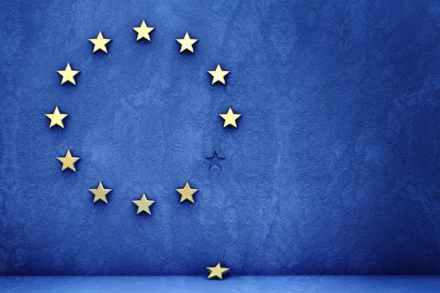
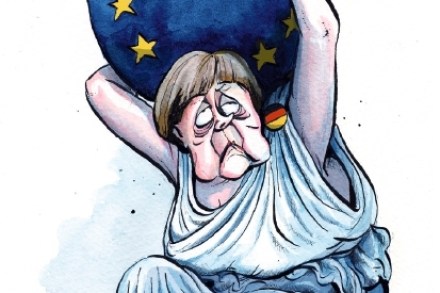
Vetoes should no longer be allowed. Smaller countries should not be able to block the will of the ‘majority’. And the biggest countries, with the largest financial contributions, should be the ones that get to dictate policy. Ever since German re-unification made the country by far the largest in the bloc, there has been a creeping German take-over of the European Union. But with the British no longer around to hold that back, it is starting to accelerate. The real trend is towards an EU that is no longer a confederation of nations, but one that is dominated by Germany We had the clearest indication of that yet with a demand today for national vetoes to be ended.

The G7 tax deal is an unworkable mess

Poverty will be abolished. Governments will be able to spend again. Inequality will be eradicated, our welfare systems secured and the power of the tech giants will finally be curbed. We will hear a lot of hype about today’s global tax deal. Given that the liberal-left have spent the last decade complaining that the main problem in the world is that Apple and Facebook don’t pay enough tax, a lot will be riding on the agreement reached by the finance ministers of the G7 today. There is just one small problem, however. The deal is an unworkable mess. Sure, the headlines are fine. There will be a global minimum corporate tax rate of 15 per cent designed to stop countries from unfairly competing with one another.

Tim Martin isn’t a Brexit hypocrite

Heinz is expanding a huge factory in the UK. Tesla is reportedly scouting the north for locations for a new car or battery plant. Even the pound is bouncing to three-year highs.  It has been a difficult few weeks for some hardcore Remainers. Still, at least there is finally something to cheer them up. Tim Martin, the pugnacious founder of the pub chain JD Wetherspoon argued today that the government should relax immigration rules to ease a shortage of labour.  For the dwindling band of believers in the EU, it was a gotcha moment. At last, one of the leading backers of our departure from the EU was experiencing some ‘Bre-mourse’. 'Brexit fantasies succumb to Brexit reality,' tweeted the former editor of the Financial Times Lionel Barber.

Brexit Britain can capitalise on the breakdown in EU-Swiss talks

It is a leading player in finance, and it's companies are giants in life sciences and consumer goods. There were already lots of similarities between the Swiss and British economies, except that they are quite a bit richer and more successful than we are. Now we have something else in common: we have both been frozen out of the European Union’s Single Market. But hold on. Isn’t there an opportunity there as well? In truth, this would be the perfect moment to offer the Swiss a deal that would work for both sides – a common market. The Swiss have always had a fractious relationship with the EU.

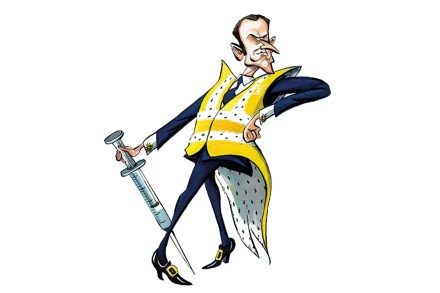
France is paying a heavy price for Macron’s vaccine catastrophe

The United States is growing at such a blistering pace the Federal Reserve may have to raise interest rates. In Britain, retail sales grew by nine per cent this month, the fastest pace on record, as the economy opened up again. Around the world, economies are starting to bounce back strongly from the Covid-19 crisis. Except for one: France. We learned today that the country is now officially in a double-dip recession. The explanation? That is easy. It made a complete hash of its vaccination programme. In the first-quarter of this year, revised figures showed that France’s output shrank by 0.1 per cent. That followed a 1.5 per cent contraction in the final quarter of 2020, making two consecutive quarters of falling output, the standard definition of a recession.

The EU is overplaying its hand on Northern Ireland

The EU's decision to take control of the vaccine programme was hardly a roaring success. The eurozone's economy remains stuck in recession. And the EU's foreign policy is a mess, as events in Belarus have just made clear.  Still, despite the evidence that she isn’t very good at managing anything, no one can argue that the European Union’s president Ursula von der Leyen lacks self-confidence. Last night, she made it clear there could be no possible compromise over the Northern Ireland protocol. The trouble is that she could easily bring the whole trade deal between the EU and the UK crashing down.

Inflation is the biggest threat to Boris

The vaccines are rolling out. Lockdown is easing, the EU has been forgotten about, and the Labour party has returned to its traditional pastime of plotting furiously against its leader. No one is even talking about wallpaper anymore. Things could hardly be going better for Boris Johnson, and that has been reflected in local election results and in the polls. There is one looming threat, however. The return of inflation. In truth, rising prices have been destroying governments for a hundred years, and it would be complacent to imagine this one will be the exception. President Biden has embarked on a tax, spend and borrowing spree the like of which has not been witnessed before in peacetime As figures out today make clear, prices are starting to rise again.

Boris must stand up to farmers – and back the Australia trade deal

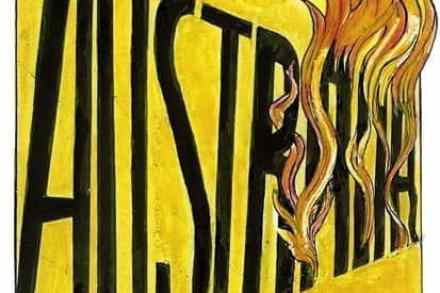
Farms will be devastated. The countryside will be ruined. And we will all be forced to eat weird food that will probably kill us. As the government tries to finalise a free trade deal with Australia, there are already reports of fierce rows over the future of agriculture played out against a backdrop of a angry backlash from the farming lobby.  It's time for the government so face up to these critics. True, farming is not crucial to the future of the British economy, and neither, as it happens, is trade with Australia. But the principle is important – and if the UK doesn’t embrace free trade then leaving the EU will hardly have been worth the bother.

Why the EU keeps losing against big tech

They shift revenues around. They create endless shadowy shell companies. And they undermine the social model by dodging taxes. To the European Union, the American tech giants, when they aren’t busy destroying democracy and hollowing out local economies, are paying far too little to the state, and it is the only organisation with the muscle to start forcing them to contribute their fair share. There is one flaw in that analysis, however. Whenever the matter is put before Europe’s own courts, it keeps losing – and the Commission itself looks like an increasingly rogue organisation. Yesterday, the European General Court decided that a £215 million fine handed to Amazon in 2017 by the Competition Commissioner Margrethe Vestager was in fact illegal.

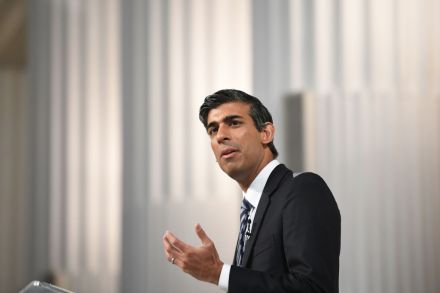
Rachel Reeves can easily make life difficult for Rishi Sunak

There is one thing to be said for Anneliese Dodds: as shadow chancellor, she set the bar very low. Virtually invisible, with few ideas, and a manner designed to send even political obsessives to sleep, her successor Rachel Reeves won’t have to do much to look like an immediate improvement. A wet tea towel would have more impact. And yet if Reeves wants to make a real impression, there is one move she should make, even though it would require some courage. She should focus on attacking the government from the liberal, pro-consumer right rather than the left – because that's where the space is. After a disastrous set of local elections, it is difficult to see why the hapless Dodds should be the most high-profile casualty on the Labour front bench.

Merkel is right to reject Biden’s vaccine patent plan

She handed the vaccine procurement process over to the European Union. She didn’t invest much in new production. And she allowed an American multinational to take control of a brilliant discovery by a small German biotech company. Angela Merkel, the out-going German Chancellor, has not had much success battling the Covid-19 crisis, and her handling of vaccines has been a catastrophe from start to finish. But she has finally got one thing right: she is defending the patents that protect the pharmaceutical industry. In the last week, president Biden has signalled that the United States is ready to back suspending patents on Covid vaccines.

Michel Barnier’s Brexit diary shows he needs a lesson in diplomacy

David Davis was ‘truculent’. Dominic Raab was ‘almost messianic’. Theresa May was ‘rigid. While Boris Johnson kept asking to borrow a tenner and whether it would be okay if Carrie joined the meeting.  Okay, I made that last one up, but the rest are among the startling revelations contained in Michel Barnier’s Brexit diary, published in France this week, and due to come out in the UK in the autumn.  Why is Barnier publishing a diary at all? After all, shouldn’t the negotiations have remained confidential? From the extracts so far, ‘The Great Illusion’, to give it is full-title, seems to be fairly standard Europhile stuff.

Ireland’s low-tax miracle is over

Okay, in fairness it might be the weather. Or the craic in the bars. Or the rugged coastline, golf courses, or the lakes. And yet for all its charms, there was always a far simpler reason why more than a thousand multinational companies have their main European headquarters in Ireland. Tax. For a generation, Ireland has had the lowest corporate tax rate - just 12.5 per cent - in the developed world. Even better, myriad breaks and allowances - in accounting circles the ‘Double Irish’ is not as you might imagine an especially stiff glass of Jameson’s but a fiendishly clever way of re-routing revenues - often take that down even further. The result?

The eurozone’s Covid recession has arrived

The US is booming. The UK is set to grow at the fastest pace in half a century. China is expanding again at a blistering pace. Stock markets are rising. And commodity prices are racing ahead.  Across most of the world, economists are starting to worry about a runaway boom, stimulated by too much easy money. This, they fear, could easily run out of control. There is one exception, however: the eurozone. As of today, the zone is officially in a double-dip recession. The vaccine downturn has arrived. And while the consequences remain unpredictable, one thing is clear: they won’t be good.

The EU will regret suing AstraZeneca

Well, that will teach them to go around manufacturing a vaccine against a global virus at cost price, and at record speed. The European Union has today said it is planning to take legal action against the pharmaceuticals conglomerate AstraZeneca for failing to deliver enough doses of the Oxford shot on time.  No doubt European Commission president Ursula von der Leyen and her team are planning to be exonerated. They will finally be able to demonstrate that the whole vaccine debacle, for which the Commission has taken so much flak, and which has already caused thousands of unnecessary deaths across continent, was all the fault of the Anglo-Swedish company. No doubt the untrustworthy British will also be implicated.

Juncker’s Brexit delusion

Regrets? It turns out he has a few. The former president of the European Commission Jean-Claude Juncker does not seem too bothered by the EU's miserable growth rate during his time in office, its geopolitical marginalisation, or indeed the growing power of corporate lobbyists in Brussels. But there is one thing that makes him at least a little sad. Not deploying the formidable force of his personality to swing the British referendum behind staying in the EU. Juncker now reckons the former PM's judgement was a couple of bottles short of a full case In an interview this week, Juncker revealed that David Cameron told him to keep out of the campaign. As in so many other ways, Juncker now reckons the former PM's judgement was a couple of bottles short of a full case.

In defence of football’s Super League

Short of dropping Harry Kane from the England team, and replacing him with Andy Carroll on the grounds that what we really need is a big man up front, it is hard to imagine a footballing decision that could be less popular. Twelve of Europe's biggest clubs, including Manchester City, Chelsea and Liverpool, have announced plans for a break-away ‘European Super League’. Alongside the domestic competitions, the 12 elite clubs would play each other regularly season after season. Football decided 30 years ago to become a big money game, and has been rewarded with massive global audiences The reaction, to put it mildly, has not been 100 per cent positive, and not just from the now empty terraces. The Prime Minister Boris Johnson condemned the plan on Twitter.

Money to burn: shoppers, not the state, will lead our recovery

Compared with the United States, the UK has so far been relatively cautious about launching stimulus programmes to kick-start the economy. And yet perhaps it doesn’t need to. People are paying off their credit cards, putting some money into the stock market, buying new houses, as well as finally booking a restaurant and getting back to the shops. A lot of money is about to be unleashed on the economy, even if this stimulus is largely invisible now. The interesting question is this: where will all the money go, and which sectors will be the big winners? It may at times seem as if Rishi Sunak is spending like crazy. By global standards, however, he is far from exceptional.

What happened to the great Brexit trade chaos?

The ports would reek from the smell of rotting fish. Factories would close en masse as orders got snarled up in red tape. There would be chaos at the borders as deliveries were blocked, and services would hit a wall of ‘non-tariff barriers’ that would make it impossible for British firms to sell them across Europe.  We have heard a lot over the last few weeks about how much disruption our departure from the European Union was causing for exporters, and there were lots of stories about firms that might go out of business or would have to move production to France or Poland. Membership of the single market, despite all the hype around it, doesn’t make much difference to most exporters But hold on. The actual data is telling a different story.

The UK’s vaccine roll-out has ended the Brexit debate

The country would remain implacably divided for a generation, with Remain and Leave replacing class and geography as the new fault line in British politics. International investors would take a generation to come round to the idea. And campaigns to re-join the EU would grow in strength as the chaos deepened. Even a few months ago, it was possible to argue that Britain's tortured debate about leaving the EU would run and run without any seeming end. And yet since then something very interesting has happened. The UK’s comparative success at rolling out Covid-19 vaccines has in effect sealed the Brexit deal. The debate is now over, both here, and around the world.