Martin Vander Weyer

Martin Vander Weyer

Martin Vander Weyer is The Spectator’s business editor

Want to cut top pay, Mrs May? Start with the bank you own

Theresa May sent a strong message to the corporate world when she criticised the ‘irrational, unhealthy and growing gap’ between the pay of top executives and average workers. Yet what should be a vigorous debate on this topic — about the balance between fairness and the right incentives for optimum performance — never quite takes off. More evidence came to hand this week from the ‘independent non-party’ High Pay Centre: it reports that average pay for a FTSE 100 chief executive last year was £5.5 million, up by 10 per cent on 2014 and a third since 2010, and that the ratio between chiefs’ average total pay and that of their workers stood at 129:1. Why should anyone earn so much, in absolute or relative terms, just for sitting at a desk?

Lagoons: the new technology better than Hinkley Point

Let’s turn our attention to ‘tidal lagoons’: you may have heard that phrase in discussion of alternatives to Hinkley Point and wondered what it means. It refers to a £1 billion project, awaiting ministerial approval, to build a walled lagoon in Swansea Bay that would generate (through largely British-built turbines) electricity on the ebb and flood of every tide, 14 hours a day for a project lifetime of 120 years. It could be brought into operation within five years — but to make that happen it requires subsidy at levels comparable to offshore wind or new nuclear generation; it also requires millions of tonnes of concrete and aggregates from quarries in Cornwall and elsewhere, and will radically alter the local environment for sea life and wading birds.

Top tips for UK-China trade: grab the cheque and sup with a long spoon

There are reasons why Theresa May might harbour doubts about the Hinkley Point nuclear project — chiefly its unproven French technology and the high probability of time and cost overruns — but the fear expressed by her aide Nick Timothy that ‘the Chinese could use their role to build weaknesses into computer systems which will allow them to shut down Britain’s energy production at will’ sounds — even to a Sino-cynic like me — far-fetched. As I wrote here during President Xi Jinping’s visit last year, ‘The least sinister thing about the Chinese is their money. A ten-digit cheque… even from China National Nuclear Corporation… does not carry a ‘backdoor’ listening device.

Theresa May’s new ministry of posh

Apart from Boris, where have all the posh boys (and girls) gone in Theresa May’s government? The answer, curiously, is the new department for Business, Energy and Industrial Strategy. Secretary of state Greg Clark is impeccably classless, being the product of a Roman Catholic secondary school in Middlesbrough where his father and grandfather were milkmen. But his ministerial team consists of three Old Etonians — Nick Hurd, Jo Johnson and Jesse Norman — plus Margot James (Millfield) and convent girl Baroness Neville-Rolfe. Reassuringly, however, all five have business experience — and more so than Clark himself, who has quietly climbed the greasy pole as an all-purpose policy wonk.

Rough justice for Sir Shifty, but MPs have got him bang to rights

Not even your quixotic columnist is prepared to mount a full-on defence of Sir Philip Green this week, following the publication of the joint select committees’ report on the sale and collapse of BHS, and committee chairman Frank Field MP’s description of Green himself as ‘much worse’ than Robert Maxwell. What I would say, however, is that if you’re really interested in this story, read the actual report — rather than the knockabout précis of it in the Daily Mail, which has renamed Green ‘Sir Shifty’ — and form your own judgment, both of the extent of Green’s culpability in the loss of 11,000 BHS jobs and the devastation of its pension funds, and of the fairness of the MPs’ exposition and conclusions.

Is the sale of our only global-scale tech firm to Japan a vote of confidence in the UK?

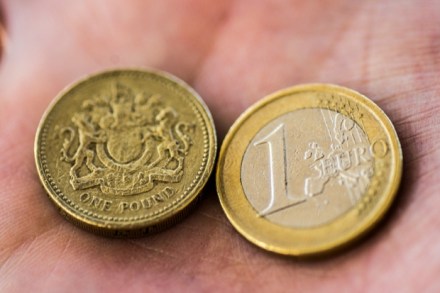
It’s easy to see why Arm Holdings, the UK’s only global-scale internet technology company, looked worth a quick £24 billion bet by Softbank of Japan. At $1.32 to the pound, the price is a lot cheaper than it could have been before polls closed on 23 June, when sterling stood at $1.50; that made it easy for Softbank to offer a fat premium over last Friday’s closing Arm share price — and harder for Arm’s board to say no. As for Arm’s business, it’s unlikely to be knocked by Brexit since its microchips are priced in dollars and sold chiefly to smartphone makers in Asia and the US. And its prospects — in the development of the ‘internet of things’, from driverless cars to WiFi-powered kitchens — are huge.

The new PM is right to want boardroom reform, but how can she make it happen?

I spent Sunday at the Sage Gateshead watching an epic performance of Götterdämmerung (I declare an interest, as a trustee of Opera North), so my head was full of it as I braced for more political backstabbing and immolation on Monday. That was very much the way it went as Andrea Leadsom fell, Theresa May rode her horse into the ring of flame that is the forthcoming Brexit negotiation, and Jeremy Corbyn, still clutching Labour’s tarnished ring, was dragged underwater by Angela Eagle, unlikeliest of Rhinemaidens. Enough of the Wagner mash-up: what really caught my ear during the brief moment between Mrs May’s campaign launch and coronation was her attack on the business elite.

Is Brexit’s impact coming at us like a derailed train – or am I panic-mongering?

I enjoyed the Daily Mail’s lambasting of the Financial Times as ‘panic-monger-in-chief’ for its doom-laden post-Brexit tone: ‘Is it determined to provoke a downturn in a bid to justify its lurid predictions?’ And I’m happy to let ‘Britain’s most self-important business newspaper’ take some flak, my own rather downbeat column last week having been so at odds with our ‘optimist’s guide’ on other pages. Panic-mongering used to be the Mail’s own stock-in-trade back in the Gordon Brown era, when it regularly invited me to wax apocalyptic on ‘the death of the middle classes’ in response to stock-market wobbles and stealth taxes.

We are where we are, clinging to the life raft of cliché

My column calling Brexit campaigners ‘hooligans’ and ending ‘Reader, I voted Remain’, caused quite a stir — coinciding as it did with The Spectator’s eloquent call for Leave. ‘Pathetic,’ spat a famous columnist encountered in the street. ‘Your words and Farage’s poster resonated so much that I (reluctantly) voted Remain,’ emailed a broadcaster who had previously given me a talking-to on the virtues of freedom. ‘I quite like being a hooligan,’ declared a Leaver on Facebook, alongside a selfie with the Boris-bus emblazoned ‘We send the EU £50 million a day.’ ‘Did someone else write your last paragraph?’ growled a veteran politico a day before the poll.

Business holds the antidote to acts of voter insanity on both sides of the Atlantic

Good news: ‘My sources in the Gulf tell me they’re poised with big cash to buy into sterling, UK equities and property on any weakness,’ says an email from a reader who does business across the Middle East. Will the phenomenon I once called ‘the Curse of Qatar’ be the horse that pulls us out of the post-referendum quagmire and tramples the short-sellers? Might it even be strong enough to save the professional services firm, dependent on inward investors, whose owner told me he expects to make 50 of his 180 staff redundant if the vote goes the wrong way? We have flirted with what the Washington Post called ‘an act of economic insanity’.

As my pen hovers over the ballot paper, I ask: am I a roundhead or a cavalier?

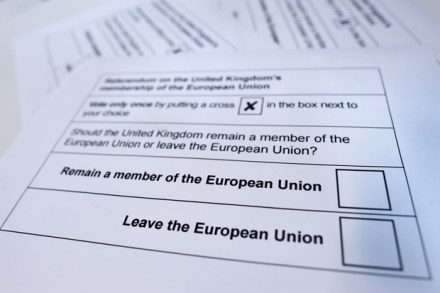
My pen hovers — but refuses to touch the postal ballot paper. I pour a drink (I won’t say whether claret, schnapps or English ale) and break off to watch Versailles, with its parade of lecherous continental backstabbers. The blood stirs, but still I cannot choose. So I defer the moment of decision, Remain or Leave, until after a short trip to France… Middle-aged match Meanwhile, business as usual. Microsoft is spending $26 billion to acquire LinkedIn, the social network for job-seekers. That looks a crazy price for a venture which lost $166 million last year on revenues of $2.9 billion and has never been regarded as cool.
Happy birthday, Barclaycard – even if you turned out to be a ticking time-bomb

‘In years to come we shall be able to claim that we pioneered in this country the general everyday use of credit instead of cash,’ said an ad for Barclaycard shortly after its launch as the UK’s first mass-market credit card 50 years ago this month. In that first campaign, one million cards were sent out, unsolicited, to Barclays customers and others. ‘In a short time,’ the ad went on, ‘we hope that four million people will show their Barclaycard, sign the bill and pay us at the end of the month.’ Back in June 1966, any public debate that was not about England’s chances in the World Cup was highly likely to be about the merits or dangers of this financial novelty.

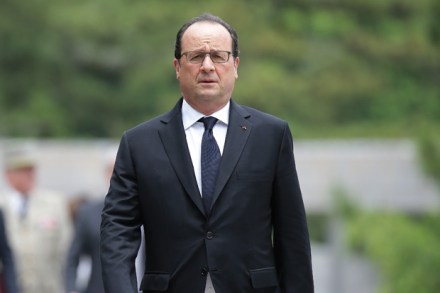
Hollande equals Thatcher? Not quite, Monsieur le President, but keep trying

Have you ever tried discussing the merits of gun control with a Texan, or of deregulated labour markets with a Frenchman and his Belgian cousin? The prejudices involved are much the same. Many Americans believe that guns in the home and the pick-up truck are their best protection against violent attack, and that the 13,286 US gunshot deaths last year would have hit an even higher number if gun ownership was more restricted. Likewise, French trade unionists believe a 35-hour working week combined with laws restricting any company that is a going concern from making redundancies are the best protection of their economic wellbeing, rather than a root cause of the fact that more than 3.5 million of their compatriots are unemployed. That’s 10.

Warning: top-performing funds are highly likely to contain tobacco

Axa will no longer invest in the tobacco industry: the French insurance giant will sell €184 million of shares and gradually reduce its €1.6 billion bond holdings in the sector. No surprise, given Axa’s role as a health insurer and the oft-repeated statistic that smoking kills six million people a year; indeed, you might think any health-related investor would have taken the decision years ago. Except that cigarette-makers have been stellar stock market performers since the beginning of the century: British American Tobacco’s shares have multiplied in value a dozen times while paying rich dividends, and Imperial Tobacco (now Imperial Brands) has been almost as good.

Don’t believe the Tory grumbling: HS2 is on the way

There’s a lot of negativity around HS2, and I sniff a Brexit connection. You might think Leave campaigners whose aim is to boost British self-belief would promote the idea that we have a talent for grands projets such as the Olympic Park and Crossrail, rather than a propensity to deliver half what’s promised at double the cost. But there’s also an overlap between Tory MPs opposed to the northbound high-speed rail link, usually because it bisects their constituencies, and Tory MPs opposed to the government on the EU referendum. So I suspect that’s where the trouble lies. The spin is that cabinet secretary Sir Jeremy Heywood is reviewing the project ‘as fears grow’ that it will bust its already inflated £55 billion budget.

Despite rumours to the contrary, the high-speed loco has left the drawing board

There’s a lot of negativity around HS2, and I sniff a Brexit connection. You might think Leave campaigners whose aim is to boost British self-belief would promote the idea that we have a talent for grands projets such as the Olympic Park and Crossrail, rather than a propensity to deliver half what’s promised at double the cost. But there’s also an overlap between Tory MPs opposed to the northbound high-speed rail link, usually because it bisects their constituencies, and Tory MPs opposed to the government on the EU referendum. So I suspect that’s where the trouble lies. The spin is that cabinet secretary Sir Jeremy Heywood is reviewing the project ‘as fears grow’ that it will bust its already inflated £55 billion budget.

The prospect of Brexit is already damaging growth, but Osborne doesn’t care

Has the shadow of Brexit already cost us a slice of GDP — and if so, is it a blip or an omen? The Office for National Statistics says UK growth was 0.4 per cent in the first quarter of this year, down from 0.6 per cent in last year’s final quarter. And we can’t blame the neighbours, because the eurozone upped its game from 0.3 per cent to a positively breathless 0.6 per cent — with even France trotting in ahead of us at 0.5 per cent. We still look stronger on the jobs front, mind you, with our unemployment rate, at 5.1 per cent, well down on a year ago and at half the rate for the eurozone. And our service sector continues to perform quite well.

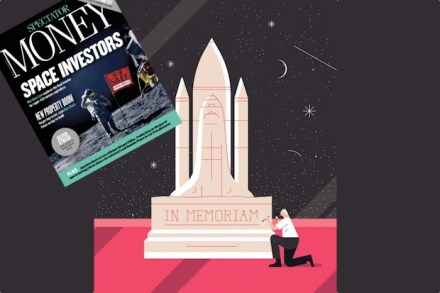
Spectator Money: The legacy issue. How to plan ahead for what you’ll leave behind

The new issue of Spectator Money is out on Thursday 19 May, and there’s a fantastic array of articles to look forward to. Here’s the editor, Martin Vander Weyer, on what you can expect. The magazine will come free with your next copy of The Spectator, and will also be available to read online at spectator.com/money. Times of political change are also times to think about ‘legacy’. What will Barack Obama be remembered for: his nuclear deal with Iran, his ‘Obamacare’ health programme, or simply his symbolic status as America’s first black president?

Have we sacrificed a quarter’s growth to answer the European question?

Has the shadow of Brexit already cost us a slice of GDP — and if so, is it a blip or an omen? The Office for National Statistics says UK growth was 0.4 per cent in the first quarter of this year, down from 0.6 per cent in last year’s final quarter. And we can’t blame the neighbours, because the eurozone upped its game from 0.3 per cent to a positively breathless 0.6 per cent — with even France trotting in ahead of us at 0.5 per cent. We still look stronger on the jobs front, mind you, with our unemployment rate, at 5.1 per cent, well down on a year ago and at half the rate for the eurozone. And our service sector continues to perform quite well.

My top tip for predicting whether a business is doomed

It’s a useful rule of thumb that any business which reduces its name to its initials is heading for trouble. Having gone that way under Goodwin, RBS almost doubled down last year by becoming the lower-case ‘rbs’, before apparently thinking better of it. British Petroleum became ‘BP’ after its 1998 merger with Amoco, tried to claim a greener image by suggesting that the B might stand for ‘Beyond’, and has never really been stable since. ‘British’, like Scottish, was evidently an unsuitable tag for a global player. Likewise BG, the former exploration arm of British Gas, was an unhappy ship for years before its recent takeover by the robustly unabbreviated Royal Dutch Shell.