Martin Vander Weyer

Martin Vander Weyer

Martin Vander Weyer is business editor of The Spectator. He writes the weekly Any Other Business column.

Why I won’t invest in Deliveroo

‘The reason we have the vaccine success is because of capitalism — because of greed, my friends.’ So Boris Johnson told his backbenchers last week, though he immediately muttered ‘Forget I said that’ while aides tried to explain it as a joke on the chief whip, who was munching a cheese and pickle sandwich at the time. Whatever, the PM’s gaffe makes a neat text for a short Easter sermon. The fact is that ‘capitalism’ — the mustering of vast private-sector resources to bring lab-tested potions to mass production in record time — has indeed delivered a triumph, in combination with university science, a smart Whitehall taskforce, military logistics and NHS networks.

Are we entering a new era of fractured trade?

Just as the auto industry embraces the electric future I wrote about last month, it hits a new crisis: a shortage of the microchips that power everything under the bonnet. As a parable of globalisation’s perils, this one has all the ingredients from trade war to fire, drought and Covid pestilence. When car production slumped last year, chip-makers switched to meet booming demand for parts for smartphones, tablets and laptops. Now car factories are keen to raise output again, but there aren’t enough chips to go round. The leading source, Taiwan, is entangled in US-China tensions and its factories are afflicted by water shortages; other plants have been stricken by fire (in Japan) or extreme cold (Texas).

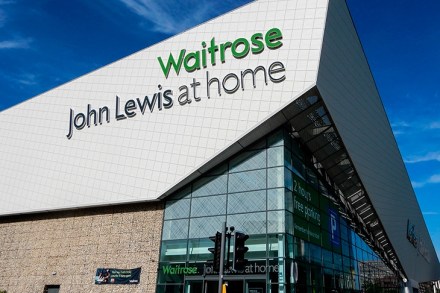
Can John Lewis and Waitrose really remain partners?

Historians of unforeseen crises talk about ‘chaos theory’ and the ‘butterfly effect’, in which a small perturbation far away — the flapping of a butterfly’s wings in Australia, as it were — have impacts across much larger connected systems. More usually applied to weather events, the theory had its 2008 moment when the collapse of AIG, a US insurer whose name meant little over here, threatened to cripple so many banks that, without immediate bailouts, our high street ATMs (we were told) might have been switched off there and then.

Are Wall Street’s ‘Spacs’ about to make waves in the City?

This column generally takes a sceptical view of financial novelties and gimmicks. So my antennae have twitched in recent days at frequent mentions of Spacs, or ‘Special Purpose Acquisition Companies’, which are the latest plaything of Wall Street and could be about to go large over here. Also known as a ‘blank cheque’ company, a Spac is a stockmarket-listed cash shell that raises money with a view to merging with a real — usually hi-tech, often relatively early-stage — business seeking a fast route to listed status. Hundreds of Spacs have been created in the US since the craze began last year, many with celebrity names — sports stars, astronauts, rappers — attached to win attention.

The case for keeping business taxes low

Why should business pay tax at all? That’s a provocative but forlorn question to ask in Budget week. Business pays corporation tax on profits because that’s what voters expect, partly because many are conditioned to believe profit is a sin and partly because all would prefer to pay less tax themselves. Investors pay tax on capital gains because — as the American bank robber Willie Sutton said of his crimes — that’s where the money is. And companies pay more tax as business rates on premises because that’s the easiest way to collect contributions towards public services from which they benefit — but it’s also an easy levy to relieve at times, like now, when the private sector needs help.

The car industry is accelerating towards an electric future

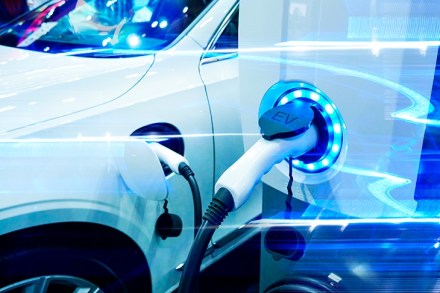
Back in November, when Downing Street’s pandemic responses looked daily more incompetent, the announcement of a ban on sales of new petrol and diesel cars by 2030, ten years earlier than originally planned, was largely greeted — along with the rest of the ‘Ten Point Plan for a Green Industrial Revolution’ — as another exercise in Johnsonian distraction and thin-air number-plucking. Auto makers responded defensively, citing the huge costs of re-engineering model ranges in short order and the shameful failure of ministers to encourage investment in plug-in networks for electric vehicles. Meanwhile, Tesla founder Elon Musk announced he would site a battery ‘gigafactory’ in Germany because Brexit made the UK ‘too risky’.

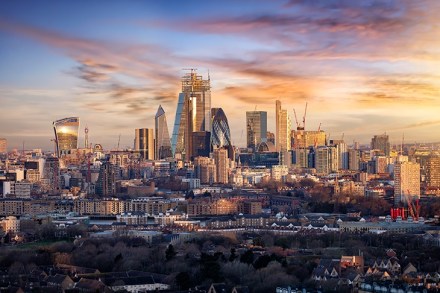
The City is losing its battle with Brussels and Amsterdam

No sign of progress towards a workable deal with the EU for financial services, on which news is due next month. Bank of England Governor Andrew Bailey warned in unusually frank terms this week that although the UK has granted ‘equivalence’ to the EU in some financial activities, ‘the EU has not so far done likewise to the UK’ and seems unwilling to do so by reference to a ‘common framework of global standards’. Instead, Brussels is seeking to apply to the UK ‘a standard that the EU holds no other country to’, amounting to ‘rule-taking pure and simple’. Given the importance of financial services to the UK economy, that’s a major defeat of the Brexit principle which seems to be passing almost unnoticed.

Why it’s a good time to invest in a pub

It’s obvious from the body language of Bank of England Governor Andrew Bailey that negative interest rates — much talked about this week — are the last device he ever wants to use. Deployed with mixed success in Europe, this monetary equivalent of Pulp Fiction’s adrenaline jab in the heart is a desperate remedy against deflation, recession and banks’ reluctance to lend. UK banks have been given six months to prepare for the possibility, while Bailey has been talking up the likelihood of rapid recovery as vaccinations advance and Brexit trade disruptions fade.

The Reddit rampage is a sign of market turmoil ahead

The Reddit story — in which a ragtag army of small investors have executed a spectacular short squeeze against hedge-fund goliaths — can be interpreted two ways. Some say it’s another populist citadel--storming in the spirit of the moment, but this time an admirable one because its target is ‘Wall Street’, which everyone hates: the so-called ‘stick it to the man’ version. Others see a fever of price-chasing, part-driven by lockdown despair, akin to crypto-mania and the surge in online gambling; in this version, it has nothing to do with serious investment but is a sure signal of more market turmoil ahead.

reddit

The Reddit rampage is a sign of market turmoil ahead

From our US edition

The Reddit story — in which a ragtag army of small investors have executed a spectacular short squeeze against hedge-fund goliaths — can be interpreted two ways. Some say it’s another populist citadel-storming in the spirit of the moment, but this time an admirable one because its target is ‘Wall Street’, which everyone hates: the so-called ‘stick it to the man’ version. Others see a fever of price-chasing, part-driven by lockdown despair, akin to crypto-mania and the surge in online gambling; in this version, it has nothing to do with serious investment but is a sure signal of more market turmoil ahead.

Business rebirth is always possible – with the right help

The online fashion retailer Boohoo is buying Debenhams without its stores and staff, confirming the demise of the high street. Airlines face quarantine rules that could kill international travel for many months ahead, while the cross--Channel Eurostar rail service cries out for state rescue. The travel and hospitality sectors, alongside what’s left of bricks-and--mortar retail, watch their survival chances evaporating. Amid unremitting economic mayhem, new milestones are easily taken for gravestones. But here’s an optimistic parable from half a century ago.

My stamp duty solution for the Chancellor

On the Wednesday in early July when Rishi Sunak announced a temporary increase from £125,000 to £500,000 in the stamp duty threshold for house purchases, a record 8.5 million people visited the Rightmove property website and I’m pretty sure I was one of them. I continued visiting it weekly: it became a lockdown obsession, alongside French television thrillers, until last month I finally spotted a London flat I wanted to buy. Now, like thousands of others, I’m pushing to complete before 31 March, when the stamp duty holiday — a £15,000 saving for me but the equivalent of a £3.9 billion annual giveaway for the Treasury — is due to expire.

Sell bitcoin, buy Tesla

From our US edition

Which is madder, bitcoin at $41,500 — oops, make that $31,000 on Monday — or Tesla shares at $880 apiece? Don’t get me started on the crypto-mania in which the UK Financial Conduct Authority has warned gamblers ‘they should be prepared to lose all their money’. But Tesla, relatively speaking, is a real thing: a California-based carmaker which has expanded the frontiers of the electric vehicle market that’s going to become huge in the next decade and could soon make carbon-fueled road transport extinct. Put that way, it’s not so surprising — in tech stock terms — that investors should value Tesla higher than the rest of the US auto industry combined. But those investors are not making an objective calculation based on projected profits or dividend flows.

tesla

Sell bitcoin, buy Tesla

Which is madder, bitcoin at $41,500 — oops, make that $31,000 on Monday — or Tesla shares at $880 apiece? Don’t get me started on the crypto-mania in which the Financial Conduct Authority has warned gamblers ‘they should be prepared to lose all their money’. But Tesla, relatively speaking, is a real thing: a California-based carmaker which has expanded the frontiers of the electric vehicle market that’s going to become huge in the next decade and could soon make carbon--fuelled road transport extinct. Put that way, it’s not so surprising — in tech stock terms — that investors should value Tesla higher than the rest of the US auto industry combined.

The Brexit deal has left the City to fight for its own future

‘This Article shall not apply with respect to financial services.’ That’s what it says on page 92 of the EU-UK Trade Co-operation Agreement, and my search engine has found nothing else in the monster document offering any comfort to the sector, which contributes £130 billion to the UK economy and provides more than a million jobs. That’s in marked contrast to fishing — £1.4 billion, 24,000 jobs — which gets a compromise settlement (pages 919-925, if you’re keen) accounting for every last haddock, hake and horse mackerel.

My fateful appearance at the Bank of England’s Christmas drinks

Tidings of comfort as the vaccination programme advances, but shortage of joy. That’s my summary of a season in which there’s no Spectator Christmas bash for the first time in my 29 years on the magazine; in which my panto-dame ball gown hangs forlornly as a decoration in the foyer of the theatre where social distancing has made it impossible for us to mount a show; and in which I can’t even offer my customary restaurant tips, because there have been so few opportunities to eat out anywhere and, apart from a brief French escape in July, no chance at all to travel abroad. Nevertheless I count my blessings, the greatest being is that I’m still here writing for you.

Can Mike Ashley defy high street reality?

Separating heroes from villains in the great retail survival struggle is like spotting bent coppers in Line of Duty — whose sixth series, I’m pleased to report, has just finished filming. The plot just keeps twisting. Sir Philip Green, as I said last week, is seen as an irredeemable baddie; and most commentators (though not usually me) put sportswear tycoon Mike Ashley in a similar category, as an opportunist with a track record as a harsh employer. But now here he is, trying through his company Frasers Group to launch a last-ditch rescue for Debenhams, despite having lost £150 million last year in previous pursuit of the department store chain. He can’t save all 124 shops and 12,000 jobs — but even saving half or a third of them would be remarkable.

Philip Green will be remembered as a nasty stain on capitalism

There really isn’t much left to be said about Sir Philip Green as his Arcadia fashion empire collapses into administration, taking the Debenhams chain down with it, unless a new rescuer steps in. An aggressive rag-trade wheeler-dealer since he started selling cheap jeans in the 1970s, Green was also once regarded as a brilliant merchandiser — until, it seems, he got too rich to bother keeping up with online competitors such as Asos, rising brands such as Zara and price-slashers such as Primark. So he won’t be remembered for his fashion sense — as the era’s other trouble-prone ‘King of the High Street’, George Davies of Next and Per Una, might be.

Beacons of light in the darkest of years

When we opened this year’s Economic Innovator Awards for entries back in March, we were concerned we might not be able to recreate the positive impact achieved in 2018 and 2019 — let alone the memorable glitz of last year’s finale dinner at the Postal Museum. The nation was in lockdown, the economy was clearly beginning to suffer the damage that was eventually confirmed in the Chancellor’s Spending Review last week, and we had already adopted ‘Innovator’ in the name of the Awards in place of ‘Disruptor’, because the advancing coronavirus was the nastiest disruptor the world had seen for decades. How many struggling entrepreneurs would even find time to fill in our form? But we need not have worried.

The Co-op Bank isn’t worthy of its name

We’ve heard a lot this week about infrastructure spending, and how much more will be needed if the UK is to achieve the ‘Green Industrial Revolution’ that the Prime Minister seems to have sketched on the back of a pizza box. We’ve also heard that the Chancellor is looking at ways to squeeze billions for Treasury coffers out of the private pension sector. What we haven’t heard so far is a plan to join those two pieces of the economic jigsaw — by encouraging pension managers to become committed investors in infrastructure projects.