Martin Bright

Smoking Gun: Katharine Goes to Hollywood

It was great to hear Katharine Gun the GCHQ whistleblower on Saturday Live this morning talking about the morality of the leaker. I suppose the pretext was the banking crisis, but Katharine used the opportunity to explain why she had revealed details of a US/UK spying operation on the United Nations just prior to the outbreak of the Iraq war in 2003. I have a close connection to the story as the journalist who received a copy of the original email request from the States. I published the revelations in the Observer in March 2003. The war went ahead despite Katharine's efforts.
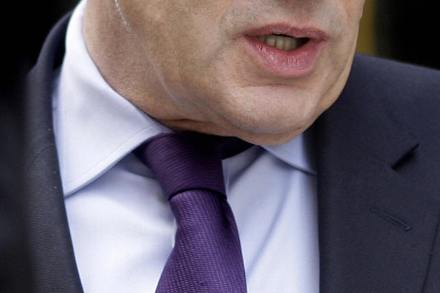
Damian McBride weighs in over Brown’s ‘apology DVD’

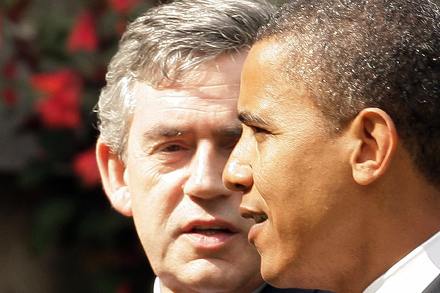
Funny what senior Downing St staff find time to do during the biggest economic crisis for 100 years. Here's a charming text message I received from Damian McBride, former frontline spinner turned backroom strategy man. It doesn't really need much explaining except to say that ME is Mike Ellam, the PM's mild-mannered official spokesman. Rather disconcerting how yr 'GB orders obama dvd' tale keeps being rehashed as fact elsewhere - despite being utter garbage, as ME told you yesterday. Shouldnt you at least update yr blog with the categoric denial frm No10? - Damian It's astonishing to me that this piece of relatively uncontroversial information should have disconcerted anyone but so be it. Let's clear this up.  For starters, I didn't say that Gordon ordered an Obama DVD.

Do the Downing St denials mean that Brown won’t apologise?

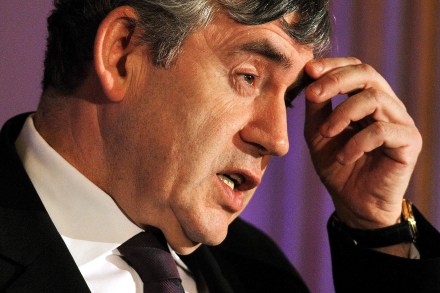
I am finding the Downing St reaction to the story about officials asking for copies of Obama's TV apologies rather mystifying. From their perspective, what's so wrong with asking for them anyway? Shouldn't Downing Street keep a close eye on the performance of the US president during his first 100 days? It's a strange thing to deny as surely officials must be asking for this sort of material all the time. More worrying, I suspect, is the speculation about the use to which it might be put. And does this mean that Brown has ruled out an apology for his role in creating the economic crisis we find ourselves in?

Ask the artists

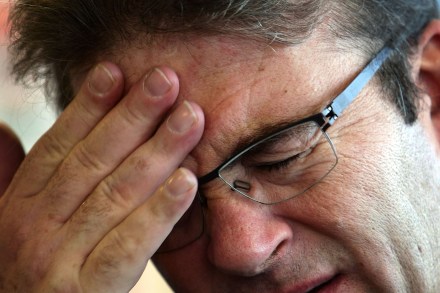
Sadly I had to miss the Channel 4 political awards last night. But it was worth it to be at a reception at No 11 to celebrate young British artists and the not-so-young Young British Artists, if you get my drift. Hosted by Alistair Darling and his wife Maggie, it was a great occasion. Andy Burnham even got a few laughs from a potentially difficult audience. The event also allowed me to pitch my idea for a New Deal of the Mind. It struck me that the phenomenally successful YBAs left college straight into the last recession and are therefore as well-placed as anyone to advise the government about how to get through it. I had a long chat to the Wilson twins (one at time, pictured above) who have been working on a piece about Stanley Kubrick's unfinished film about the Warsaw ghetto.

McNulty survives the Newsnight ambush

A great edition of Newsnight tonight, featuring an ambush of employment minister Tony McNulty in an empty, echoing Birmingham factory. McNulty had been characteristically honest by saying that things are likely to get worse before they get better. Paxman was right to remind Theresa May that there are still a million fewer people unemployed than under the last Tory government. She didn't have an answer for that. Yet that's no consolation for those people who are losing their jobs right now. But the real point is that this recession is hitting very quickly. Unless the government acts quickly then redundancies will already have been made and it will be too late. And then came psychologist Oliver James. I can only assume this will become a YouTube moment.

Why select committees matter

I take my hat off to the Treasury select committee for the spectacle of the hearings on the banking crisis. This is more theatre than genuine scrutiny - but without real powers to subpoena witnesses and force the disclosure of evidence then this is about as good as it's likely to get. In the absence of real judicial teeth, the committee has to rely on the tools of the jobbing journalist - leaks and whistleblowers. Step forward Paul Moore, the HBOS head of risk who was sacked by the bank's chief executive Sir James Crosby for warning of the dangers ahead. This is gobsmacking. In a better world, Crosby would be arraigned and dragged before the committee to account for his actions. Instead, he has been helping Gordon Brown fix the regulation system.

The crisis of investigative reporting

I caught Walter Isaacson on the Daily Show last night (video here) talking about the future of newspapers and it was pretty scary. Isaacson has written a long piece for Time magazine suggesting that media organisations have to find a way of charging for Internet content or journalism will die. His thinking is that if we are reliant entirely on advertising then there will be no demand for good old-fashioned investigative journalism, which is driven by the relationship between reporter and reader. Stewart put it to Isaacson that the only way to save the print media was to invent narcotic ink, and I'm nearly as pessimistic. However, I'm with Isaacson on the crisis of investigative reporting.

Who’s sorry now?

President Obama showed that it was possible to apologise with good grace over his appointment of Tom Daschle and now the masters of the financial universe are falling over themselves to follow his lead. Somehow he turned the fact that he "screwed up" to his advantage, though how many times he can get away with this ruse in future is open to question. The sight of the men from RBS and HBOS making their excuses for "screwing up" the economy of an entire country was pretty hard to watch. The difference is that people like Obama. At times like this you have to turn to the tabloids to fnd an expresssion of real fury. Sue Carroll put it rather well in her Mirror column today. I wonder if the bankers were reading her before they went before the Treasury Selct Committee today.

Escape from the Village

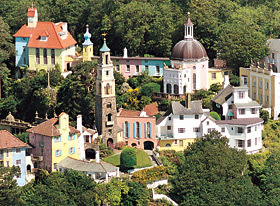
Patrick McGoohan's character never made it out of "the village". But I'm back in London after a six hour journey from Portmeirion, where the series was filmed and don't seem to have been followed by a giant white inflatable ball. I've just watched the first episode of The Prisoner again and it really is as brilliant as I remember: tight script, unfussy acting and shot with plenty of sixties zoom shots that went out of style with the Nouvelle Vague. As an examination of the totalitarian mentality it's pretty stunning stuff for mainstream TV. It's difficult not to identify with "No.6" as he becomes ever more mystified by the softly-softly authoritarianism around him. I had forgoten that the question "No.

We are not a number … We are a free man

Portmeirion is a surreal place at the best of times. But it gets even stranger when you see Clarence Mitchell, the spokesman for the McCanns taking a stroll through this pink and green mini-utopia, shortly before bumping into Yasmin Alibhai-Brown from the Independent, the historian Simon Schama and Julia Hobsbawn, the mad genius behind this crazy trip. This bizarre fantasy village on the north Wales coast is best-known as the set for the sixties sci-fi series, The Prisoner. What’s happening here is weirder than that. Two coach loads of journalists, PR folk and business people pitched up here yesterday evening to discuss… well what exactly? How to save capitalism from itself? How to put it out of its misery? How to find a new way of organising human society?

Talent spotting | 9 February 2009

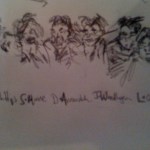
I hope to bring on new talent through this blog, so here's Tara Hamilton-Miller's drawing of the panel on social entrepreneurship: From left to right: Robert Phillips CEO of Edelman, Suzanne Moore, David Aaronovich, Professor James Woudhuysen, Oli Barrett, Louise Casey.

A note from Portmeirion

I'm posting from the We are Names not Numbers symposium in North Wales and wondering what the founder-builder of Portmeirion, Clough Williams-Ellis, would make of this discussion of individualism in the consumer society. His motto was Cherish the Past, Adorn the Present, Construct for the Future, which could come straight from an American mangement guru. I'll report back later today but, so far, only one panelist has mentioned the imminent collapse of capitalism...

Towards a modern New Deal

Good to see Will Hutton writing about Roosevelt's Works Progress Administration in today's Observer. I am convinced that the government needs to start looking at some seriously imaginative work creation schemes. Not everyone will be capable of putting in roof insulation or laying broadband cables. The WPA produced a generation of artists, writers and actors who benefitted from state support in the 1930s. This may smack of socialism but these are desperate times, and who knows what crazy ideas will be needed to bring us through this recession? Since I wrote about my idea for a New Deal of the Mind for the 21st century, I have been contacted by several people who want to get involved. So watch this space for news of the project.

The Opening Salvo

What I am about to do makes me more nervous than any other piece of writing I have embarked on since my first forays into journalism in the late 1980s. During most of my career I have had the luxury of writing for "people like me": the sort of middle-class liberals who read the Guardian or the Observer and carry those publications under their arms as the outward symbols of their right-minded decency. I spent 15 years writing for one or other newspaper. I was deeply honoured during the run-up to the Iraq war in 2003 to be described as a "liberal eurotrash" on the right-wing Drudge Report website. Until last month I was the political editor of the New Statesman, the iconic magazine of the Fabian left and damn proud to be so.