Mark Nayler

Spain faces up to Europe’s new terror threat

From our UK edition

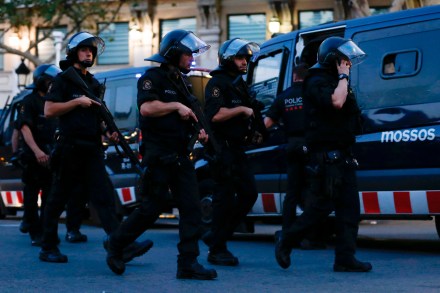
In the early hours of this morning, as police in Barcelona continued to piece together the terrible events on Las Ramblas yesterday afternoon, another vehicle attack occurred in the seaside town of Cambrils, a popular tourist destination about 75 miles south of the Catalonian capital. Five men, some wearing fake explosive belts, drove into crowds and injured seven people, including a police officer, before their car flipped over. Whilst trying to escape the scene, four of the suspects were shot dead on site and one died later after being arrested. Spanish police say that the Cambrils attack is linked to yesterday's incident in the Catalonian capital. Vehicle attacks, it seems, constitute a new threat to European cities. Now they have arrived in Spain, too.

Catalonia’s quest for independence takes another surreal turn

From our UK edition

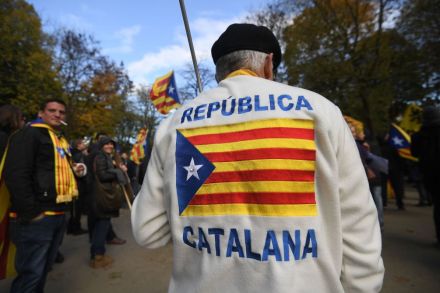
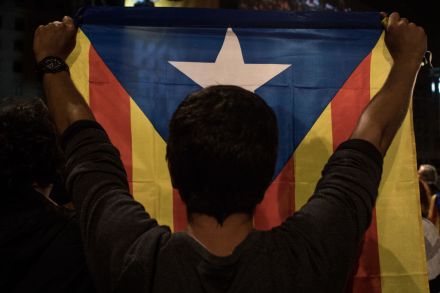
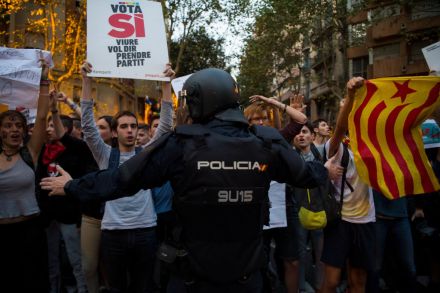
In Spain, the fight over Catalonian independence has just taken a surreal new turn. Catalonian president Carles Puigdemont – a passionate secessionist who has said he is prepared to go to prison for his cause - recently announced that there will be an independence referendum in his region on October 1st. His pledge prompted the Spanish prime minister, Mariano Rajoy, to declare, in full crusader-for-democracy mode, that “the government of Spain is going to defend the law” and prevent the vote from happening.    Would that be the same government currently implicated in one of the biggest corruption cases in recent Spanish history? Yes, it would.

Spain’s lost generation

From our UK edition

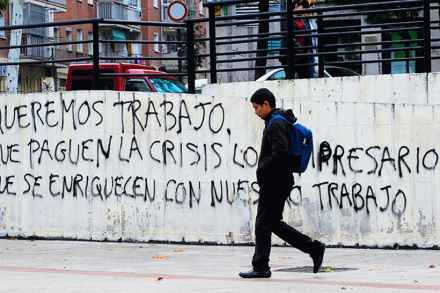
Spain’s recent economic expansion means little to young Spaniards. Many are angry with the country’s tirelessly corrupt politicians, and are unable to pursue rewarding careers in their own country. Despite three-and-a-half years of GDP growth at one of the fastest rates in the eurozone, Spain still has the second highest unemployment rate in the EU, at 18 per cent. More than 40 per cent of Spaniards aged between 16 and 25 are without jobs, while others struggle on temporary contracts with low salaries — or move abroad to find better work. Does this all mean that Spain suffering is from a ‘lost generation’ of youngsters who are struggling to fulfil their potential?

Can Anglo-Spanish relations survive Brexit?

From our UK edition

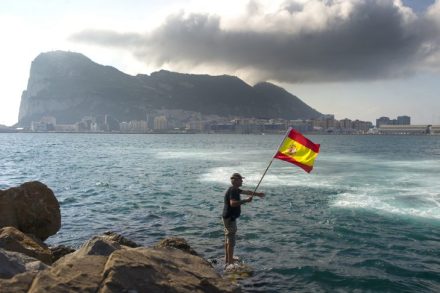
As the events of the last few days show, the increasingly toxic issue of Gibraltar means the UK's Article 50 talks with Spain might become more fraught than either party would like. It's not just that Spain wants to share sovereignty of the Rock with Britain; more dangerous is the fact that Brussels can exploit this dispute to punish the UK for Brexit. In fact, this weekend's fracas over Gibraltar's post-Brexit status shouldn't have caused the uproar it did. True, the document distributed to EU member governments on Friday by Donald Tusk highlighted Spain's ability to veto Gibraltar's inclusion in any EU-UK deal; but as part of the soon-to-be 27 member bloc, Spain already possessed that ability.

Can Brexit inspire Catalan independence?

From our UK edition

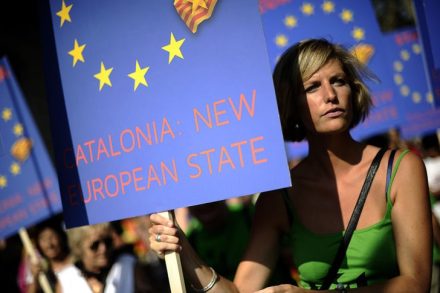
The increasingly radical Catalonian independence project has been dealt its latest blow this week: on Tuesday, Spain's constitutional court ruled that a projected September referendum on secession would be illegal. This means any plebiscite is effectively banned. But whether Catalonia's pro-independence president Carles Puigdemont goes ahead anyway remains to be seen. A similarly defiant course of action was pursued by his predecessor Artur Mas, who held a vote in 2014 (in which eighty per cent of people backed independence), and is currently on trial. The latest setback in the quest for Catalonian secessionism is particularly ill-timed.

It’s no surprise Spain has already blocked Nicola Sturgeon’s half-baked Brexit plan

From our UK edition

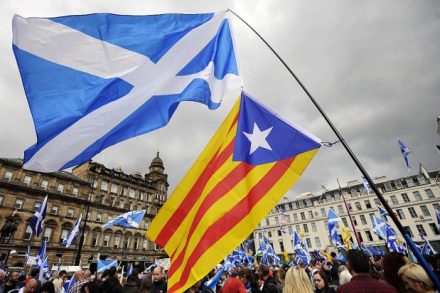
It should come as no surprise that the Spanish government has so swiftly rejected Nicola Sturgeon’s proposal of a bespoke Brexit deal for Scotland. Although Spain might have finally ended its ten month political freeze a couple of months ago, the febrile issue of Catalonian independence remains unresolved. Far from quietening down or going away, the secessionist movement in Barcelona is becoming more aggressive and radical. As it does so, the central government in Madrid adopts tougher measures to try and suppress it including, last week, another ruling by its constitutional court against a referendum on the region’s independence.

After a tumultuous year, Spanish politics returns to an uneasy status quo

From our UK edition

It's been exactly a year ago since Spain held what would turn out to be the first of two general elections in ten months. The first vote unleashed chaos: new parties Podemos (‘We Can’, on the radical left) and Ciudadanos ('Citizens', on the centre-right) split 35 per cent of the vote between them. This ended the joint hegemony of Spain’s two oldest parties, meaning it was time to say goodbye to a status quo established when Franco’s death inaugurated democracy in 1975 - a world in which the Conservatives and the Socialists simply swapped power back and forth. Everything had changed. Or had it?

Spain’s political deadlock finally ends

From our UK edition

After nearly a year of bickering and stalling, Spanish politicians have finally formed their country’s new government. Mariano Rajoy, leader of the conservative Popular Party (PP), returns for a second term as prime minister. This time, Rajoy heads up a coalition made up of the PP, centrist newcomer Ciudadanos (‘Citizens’) and the centre-right Canary Islands Coalition. This is good news for Spain and shows that, at last, pragmatism has trumped ideology. It has ensured that a dreaded third election, which had been looming in December, won't now be needed. Rajoy’s administration won’t have it easy though. The coalition is deeply unpopular with many Spaniards and will face formidable opposition in congress.

The Spanish left is a defeated force

From our UK edition

There aren’t many certainties in the maelstrom of Spanish politics at the moment, but there is one: that the left, for now at least, is a defeated force. A civil war within the PSOE, the traditional Socialist party, resulted in the resignation of its leader Pedro Sanchez a couple of weeks ago. Meanwhile, radical hard-left newcomer Unidos Podemos is suffering its own identity crisis, and has been unable to capitalise on the surge of anti-establishment feeling that brought it to prominence in last December’s general election. Perhaps the only other certainty is that the left’s splintering and infighting cannot fail to benefit the traditional Spanish right, represented by the acting Popular Party government.

Spain’s political freeze starts to bite

From our UK edition

The circus of Spanish politics shows no signs of stopping. For now, the country is managing to weather this eight month-long deadlock surprisingly well: Spain’s GDP growth has continued at one of the fastest rates in the eurozone. But this is in spite, rather than because, of Spain's zombie government. A record-breaking tourist season has helped, as has a jump in consumer spending. Yet finally, the cracks are beginning to show; and the impasse crippling Spanish politics - which now looks set to lead to the increasingly-likely prospect of a third election on Christmas Day this year - is starting to take its toll. So what's the hold up?

Will Spain’s election finally end the country’s power vacuum?

From our UK edition

The only surprise result in Spain’s repeat general election on Sunday – rendered necessary by the impasse produced by December’s – was the failure of the new Spanish left to nudge the Socialists out of second place. The radical-left coalition Unidos Podemos (‘United We can’), a combination of Podemos (We Can) and Izquierda Unida (United Left), was expected to increase its joint share of the votes and take second-place behind the Conservative Popular Party (PP), replacing Pedro Sanchez’s PSOE as the dominant force of the Spanish left. Instead it came in third place, taking 21.11 per cent of the vote and 71 seats.

Was Spain’s ‘new political era’ just a mirage?

From our UK edition

More than four months on from Spain’s December general election, optimism has given way to fatigue and cynicism among the electorate. Coalition negotiations between leading parties have failed, and a repeat election will now be held in Spain on 26 June, a few days after Britain's EU referendum. But there is little enthusiasm for this second-take. Many Spaniards are now saying they will register disappointment with their politicians by abstaining. And what of the supposed new breed of Spanish politician represented by Albert Rivera, the leader of Ciudadanos (‘Citizens’) and Pablo Iglesias, leader of Podemos (‘We Can’)?

As Catalonia turns up the heat, Madrid’s politicians are ever more divided

From our UK edition

Almost a month on from an unprecedentedly divisive general election, Spain seems further away from forming a new government than ever. In Madrid’s grandiose Palacio de las Cortes on Wednesday, the Spanish parliament convened for the first time since the December 20 vote, and it proved an eventful session - but not because some combination of the four main parties managed to move towards a coalition government. Division, not unity, was the order of the day.

Spain has rejected austerity. So what does it do now?

From our UK edition

Spain is a long way from being Greece or Portugal, but in Sunday’s historic general election, Spaniards sent out the same message that the Greeks did in July and the Portugese did in October – namely, a resounding ‘No’ to austerity economics. Anti-austerity Podemos—the left-wing challenger party that is less than two years old—took a staggering 20.7 per cent of the national vote and is now the third-strongest political force in Spain. As long as the composition of Spain’s new government is unknown, the country's economic recovery is on hold – but two things, at least, are now very clear.

Spain’s hunger for political change may be just what Catalonia needs

From our UK edition

Some unjustified assumptions inform the Spanish government’s anti-Catalonian rhetoric: that it will be in power long enough to prevent Catalonia leaving Spain; that it can disallow the region’s continued or renewed membership of the EU as an independent state; or, at the very least, that it can ban a referendum on the matter. On 20 December, Spaniards head to the polls in a general election that will see the country’s two main parties - the governing, conservative Popular Party and the socialist PSOE - challenged, for the first time in the country's democratic history, by newcomers such as leftist Podemos ('We Can') and centre-right Ciudadanos ('Citizens').