Mark Mason

Mark Mason talks about trivia via books, articles, guided walks and the pub.

Farewell, Jimmy Anderson

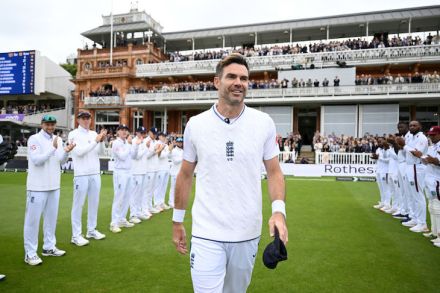
Forget the extraordinary achievements – the reason we’re going to miss James Anderson is that, as a man, he’s so ordinary. Yes, he’s played more Tests for England than anyone else (188), and taken more wickets (701 and counting, at least for another day or two). Indeed his haul is easily the best by any fast bowler in the world – only the spinners Muttiah Muralitharan and Shane Warne did better, Warne by a very slim margin. Goodbye then, Jimmy, you routine superstar, you everyday hero Anderson has bowled more Test maidens than Phillip de Freitas bowled Test overs. (This is a tribute to the former rather than a dig at the latter, who played 44 times for his country.) Shoaib Bashir, one of his teammates in this final match, wasn’t even born when Anderson played his first.
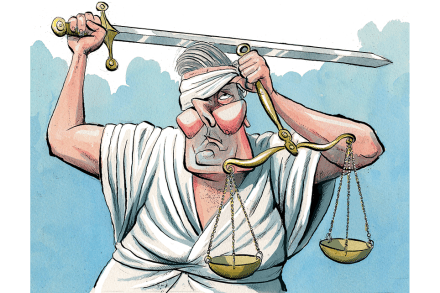
Lawfare: how Starmer will govern through the courts

40 min listen

This week: Lawfare Our cover piece examines how Keir Starmer’s legal experience will influence his politics. Ross Clark argues that Starmer will govern through the courts, and continue what he describes as the slow movement of power away from elected politicians. As poll after poll predicts an unprecedented Labour majority, what recourse would there be to stop him? Ross joined the podcast to discuss alongside solicitor and commentator Joshua Rozenberg (02:15). Next: we’ve become accustomed to the police wearing cameras, but what’s behind the rise in bodycams in other industries? In her article this week, Panda La Terriere highlights the surprising businesses that have begun using them, but what are the implications for daily life and how concerned should we be?

Why we love to be baffled

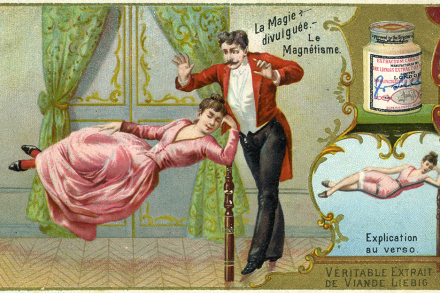
So much of life is a search for answers. How to get ahead, how to earn more money, how to be happy. But deep down, is there a part of us that likes not knowing an answer? Do we sometimes want to be baffled? It’s a question that’s come to fascinate me as I’ve embarked on a new career leading corporate team-building sessions based around magic. I do the tricks (close-up stuff – cards, coins and the like), then the team has to work out how I’m doing them. People who don’t want to know how a magic trick is done are saying: ‘I want to be three again’ Of course they need hints to get them started, but you’d be amazed at how much the group brain can achieve.

Peter Parker, Wayne Hunt, Nicholas Lezard, Mark Mason and Nicholas Farrell

33 min listen

On this week’s Spectator Out Loud: Peter Parker takes us through the history of guardsmen and homosexuality (1:12); Prof. Wayne Hunt explains what the Conservatives could learn from the 1993 Canadian election (9:10); Nicholas Lezard reflects on the diaries of Franz Kafka, on the eve of his centenary (16:06); Mark Mason provides his notes on Horse Guards (22:52); and, Nicholas Farrell ponders his wife’s potential suitors, once he’s died (26:01). Presented and produced by Patrick Gibbons.

Assassination attempts, executions and volleyball: a history of Horse Guards

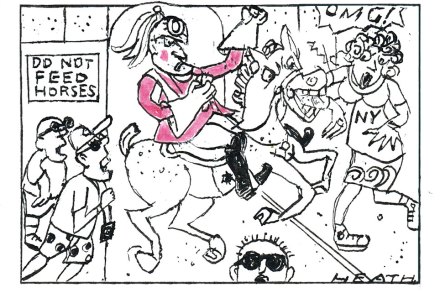
Will they never learn? The signs are very clear: ‘Beware! Horses may kick or bite.’ Yet last week a woman became the latest tourist to get a shock at Horse Guards, when the animal she was fussing suddenly turned its head and bit her arm. She was unhurt, but you can see why the animals occasionally lose their rag. They’re there to protect the monarch, after all. Sending a gentle message once in a while can’t do any harm. This small patch on Whitehall is where the King’s Life Guard do their thing because it’s still classed as the official entrance to Buckingham Palace. The building also used to house the office of the commander-in-chief of the British Army.

What I resent about my dog

The main benefits of dog ownership are well-known – you get companionship, unconditional love and the exercise that comes with taking the thing for a walk. But there’s a side-effect that no one ever mentions: having a dog teaches you what it’s like to be famous. I’ll be sitting in a café, happily reading a book or doing a sudoku. Then someone appears. ‘Do you mind if I say hello to your dog?’ ‘Of course not,’ I reply. They start fussing about him, and there’s a brief exchange in which the essentials are disclosed. ‘Ralph’, ‘lurcher’, ‘we think he’s eight – the rescue centre guessed he was three when they picked him up off the street, and that was five years ago’.

Why do people make excuses for surly staff?

‘You grab that table, I’ll get the drinks.’ I did as bid. A couple of minutes later, Paul was back, beers in hand, and we started chatting. Soon the member of staff who’d served him appeared. She was stony-faced and holding a card machine. ‘You didn’t pay,’ she said. Paul looked confused for a second, then glanced down at the machine. ‘Oh, it didn’t go through?’ The staff member shook her head. Paul held out his card, she punched the numbers again, we all waited for the beep. Then she handed him his receipt and left. ‘Service with a smile,’ I said. He laughed. And then, a second or two later: ‘Oh well, I guess she’s having a bad day.

Douglas Murray, Lionel Shriver, Mark Mason and Graeme Thomson

29 min listen

On this week’s Spectator Out Loud: reporting from St Helena, Douglas Murray reflects on the inhabitants he has met and the history of the British Overseas Territory (1:12); Lionel Shriver opines on the debate around transgender care (9:08); following a boyhood dream to visit the country to watch cricket, Mark Mason reads his letter from India as he travels with his son (17:54); and, Graeme Thomson reviews Taylor Swift’s new album (22:41). Produced and presented by Patrick Gibbons.

Forget Eton. This Mumbai team should play Harrow at Lord’s

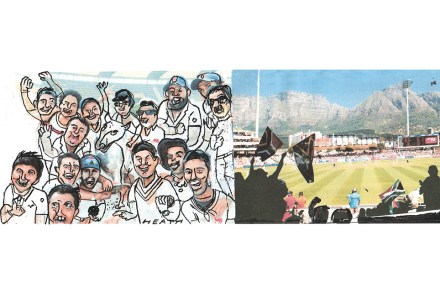
The first thing I do is turn my watch upside down. India is five-and-a-half hours ahead of the UK, so the trick does the conversion for you. Well, sort of – a time like 11.40 works perfectly (becoming 5.10), but anything on the half hour leaves you guessing which number the short hand should be pointing to. Still, it feels appropriate, because I learned it from Christopher Martin-Jenkins on Test Match Special, and cricket is the reason my son and I are here. Our first match is in Jaipur, where the Rajasthan Royals host the Delhi Capitals. Ever since I was Barney’s age (14) I’ve wanted to visit this country and experience its national religion, and these days that means the Indian Premier League. The match is an evening one, so the temperature has dipped to a comfortable level.

Game theories: is the head vs heart distinction real?

When you play a game – cards, backgammon, chess – should you listen to your head or your heart? Do you sit there coldly calculating the odds, or do you go with a hunch, gut instinct, your sixth sense? It’s a question I’m discussing with Marcus du Sautoy as we sit in the Beaumont Hotel in Mayfair, enjoying one of their regular games evenings. Even if our subconscious picks up on someone’s body language without us registering that that’s what we’ve done, it’s still reason Marcus laughs when I mention the head or heart choice. ‘Head, of course! I’m a mathematician.’ His latest book, Around the World in 80 Games (which I reviewed for the magazine) examines the games he’s encountered on his travels.

The thrill of busking

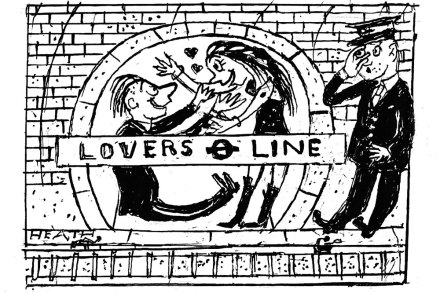
They are, to quote Mark Knopfler, down in the tunnel trying to make it pay. Transport for London has this week been holding auditions for buskers, assessing the performers for licences that allow access to pitches on the Tube and, for the first time, the Elizabeth line. It’s a bureaucratic approach to a traditionally informal activity, but passengers will get their tunes and buskers will get their money. Knopfler wrote his Dire Straits hit ‘Walk of Life’ after seeing a photo of a busker turning his guitar towards the subway wall to improve the echo. It’s the sort of attention to detail you need. Busking is the ultimate ‘give the audience what they want’ test – forget artistic merit, you have to entertain. Succeed and you eat, fail and you don’t.

Cricket is one of the best anti-depressants

I love it when the England cricket team flies east in the winter. It means they’re playing in the early morning, UK time, and that’s just when I need them the most. Because cricket is a powerful antidepressant. Without the sound or sight of bat on ball, early mornings at the moment would hold their usual threat The fireworks of Bazball have been lighting up the sky for nearly two years now, and as that period has coincided with war and economic doom, the on-field heroics of Ben Stokes and the gang have been particularly welcome. But, thrilling as last year’s Ashes undoubtedly were, they still took place in the summer, the time of year when depression is at its least potent.

Why criminals love a tunnel

What is it about a tunnel that excites us so? Last week’s story about the secret one in a New York synagogue fascinated the world, despite (or perhaps because of) the fact that no one knew why the thing had been built in the first place. Police attempted to close it, and indeed fill it with cement, leading to fights with a group of young men trying to defend the tunnel, which went under the street and led to at least one other nearby building. Maybe it’s the word ‘secret’. Of course that explains our interest in Tom, Dick and Harry, the three tunnels dug during the Great Escape.

Flavour of the month: January – robots, Dr Who and The Beatles

Welcome to the month that faces backwards to last year and forwards to this – which is why it’s named after Janus, the Roman god of transitions, who himself has two faces. Read on to discover January’s trivia, including a joke from Stevie Wonder, a mistake by David Blunkett’s officials, and the reason Heather Mills thinks her daughter is musical … 1 January 1900 – Nigeria becomes a British protectorate. Today the country is home to approximately one-fifth of the world’s black population. (230 million out of 1.2 billion.) 2 January 1921 – premiere of the play R.U.R. by the Czech writer Karel Capek. The play gave us the word ‘robot’ – the roboti are artificial people used to perform tasks for humans. 4 January – World Braille Day.

Is Keir Starmer too boring to be prime minister?

‘What do you know about Keir Starmer?’ My friend’s question came as we sat in the pub. It was part of an experiment, based on something he’d noticed. ‘Used to be Director of Public Prosecutions,’ I replied. ‘That’s the first thing everyone says. Anything else?’ ‘Er …’  John gave me a prompt: ‘Is he married? Does he have kids?’ ‘Pretty sure he’s married. And I think he has kids. But not totally sure on either. Certainly couldn’t give you names or ages.’ ‘Constituency?’ This was when it really hit me: Keir Starmer is anti-matter for facts. I had to know his constituency – like John, I’m an amateur political nerd. But somehow the information had exited my memory.

Flavour of the month: December – luna graffiti, Sinatra’s pockets and the voice of golf

This month’s timely trivia includes a canny England footballer, an endangered Lady Astor and a confused Nicholas Parsons. Oh, and we learn how many cups of coffee Steven Spielberg has drunk in his life … 1 December 1919 – Lady Astor becomes the first female MP to take her seat in the House of Commons. One of the regular visitors to her country house Cliveden was Baroness Trumpington, whose young son enjoyed sledging in the snow there. ‘Adam’s other main entertainment,’ wrote Trumpington in her memoirs, ‘was travelling up and down in the lift. He also, to my shame, headbutted Lady Astor.’ 2 December 1697 – St Paul's Cathedral is consecrated.

The biggest music feuds of all time

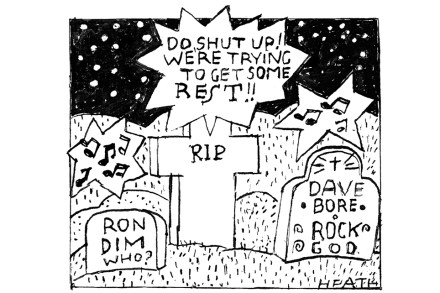
Sad news from the Hall and Oates camp, where ‘I Can’t Go For That’ has become ‘I Can’t Go Within A Specified Distance of You’, Daryl Hall having taken out a restraining order on John Oates. Actually, we don’t know whether a distance is specified, as the details of the order remain secret. But we do know that Hall last year called Oates ‘my business partner… not my creative partner… We’ve always been very separate, and that’s a really important thing for me’. Such discord is in the finest traditions of pop. The most famous feud was in the most famous band, or rather after it: John Lennon reacted to Paul McCartney’s solo song ‘Too Many People’ (a dig at Lennon’s preach-iness) with ‘How Do You Sleep?

Flavour of the month: November – Celebrity homes, the Tube and Disney romance

This month’s crop of trivia includes a secret about the Tube map, the US state that’s named after Elizabeth I and something Jimi Hendrix had in common with Winston Churchill…  1 November 1947 – birth of Nick Owen. The television presenter and Luton Town fan has a lounge named after him at the club’s ground – to which he was once refused entry. ‘You can’t go in,’ said a steward. ‘It’s packed.’ Not being a ‘don’t you know who I am?’ type, Owen simply walked away. He heard someone say to the steward: ‘Don’t you know who that is?’ ‘Haven’t a clue,’ came the reply. ‘His name,’ the steward was told, ‘is in bloody great capitals above your head.’ 2 November 1889 – North and South Dakota are granted statehood in the US.

Are Ouija boards really that scary?

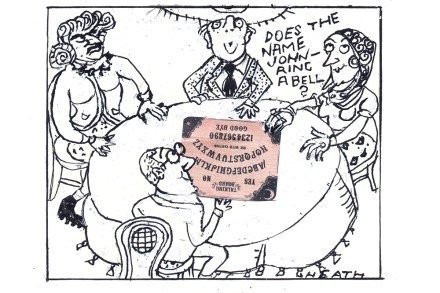
The name is the only clue you need. The French and German words for ‘yes’ show that the board will always tell you what you want to hear. Mind you, Elijah Bond and Charles Kennard, who invented the Ouija board for their novelty games company, claimed that Bond’s sister-in-law, a spiritualist, was given the name by the board itself at a séance in 1890, and that it meant ‘good luck’. Clearly the person on the other side wasn’t much of a linguist. Another explanation comes from the US comedian Brett Erlich: ‘“Ouija” is short for “we just push this thing around and make it say what we want to”.

Why the Square Mile beats Canary Wharf

When a building’s construction requires the closure of a nearby airport, you know that the building is tall. But that’s the thing about the Square Mile at the moment – it’s so successful that the only way is up. The cranes on 22 Bishopsgate (rather than the building itself) reached such a height, as the skyscraper neared completion, that they exceeded the permitted limit for City Airport, meaning that for a few short periods the airport had to halt flights. As you stand in Horizon 22, the viewing gallery that has just opened (tickets are free but booking up fast), looking down at nearby streets is like reading the A to Z. But while 22 Bishopsgate might be head and shoulders above its neighbours (912 feet, 62 storeys), there are plenty more office towers on the way.