Mark Galeotti

Mark Galeotti

Mark Galeotti heads the consultancy Mayak Intelligence and is honorary professor at the UCL School of Slavonic and East European Studies and the author of some 30 books on Russia. His latest, Forged in War: a military history of Russia from its beginnings to today, is out now.

Dmitry Medvedev and the weakness of Putin’s Kremlin

From our UK edition

It’s a long time since Dmitry Medvedev was last considered a potential liberal hope for Russia. Most recently, after all, he has threatened to bomb any country that seeks to apply the International Criminal Court’s (ICC) recent arrest warrant on Vladimir Putin and separately read a working group of the Military Industrial Commission a 1941 telegram from Stalin that threatened anyone who failed to meet their targets with being 'smashing as criminals who disregard the honour and interests of the homeland'. What is going on?

After his trip to Moscow, Xi Jinping still holds all the cards

From our UK edition

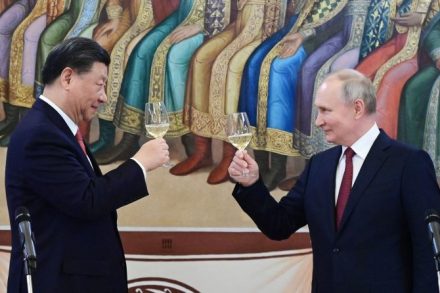
After his arrival in Moscow on Monday, President Xi Jinping said that China is ready, along with Russia, ‘to stand guard over the world order based on international law’. This statement came closer than ever before to articulating his view that a normative struggle is going on between a western-dominated order, and one more suited to Beijing’s interests. As he departed yesterday, he went further: ‘Right now there are changes, the likes of which we haven’t seen for 100 years. And we are the ones driving these changes together.’ Having positioned himself as a potential peacemaker, Xi clearly believes the war in Ukraine presents him with a win-win situation ­­­– or even a win-win-win one.

Wagner’s founder Evgeny Prigozhin is in a fight for his life

From our UK edition

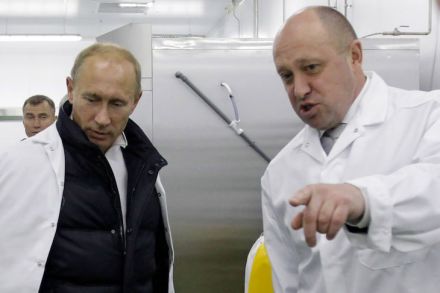
As Wagner mercenaries are being deliberately expended by the regular military as cannon-fodder in the battle for Bakhmut, their backer, Evgeny Prigozhin, is learning a hard lesson in Kremlin politics: it doesn’t matter how useful you were yesterday, what matters is how useful you may be tomorrow. Last year, the Russians were desperately short of soldiers. Ukraine was fully mobilised, but Vladimir Putin was unwilling for political reasons to follow suit, only launching a partial mobilisation in September. His generals simply lacked the soldiers they needed. In politics, as in economics, the laws of supply and demand meant that whoever had soldiers to offer – such as Prigozhin – could command a high price.

How Russia is dodging sanctions

From our UK edition

They might not be the quick knock-out blow their champions misleadingly claimed they’d be, but sanctions are having a serious effect on the long-term viability of the Russian economy. However, we should never underestimate the Russians' capacity to find rough and ready workarounds. Back in Soviet times, I was regaled with stories of Lada cars being fixed with sticky tape and cast-off hosiery. Likewise, people would find ways around onerous bureaucracy and uncaring officialdom, whether turning to the black market or stealing from the state (as one told me, ‘only a fool buys a light bulb if he works in an office and can steal one’).

Did the Ukrainians bomb the Nord Stream pipeline?

From our UK edition

There’s an uncomfortable fact about covert operations in the information-saturated modern world. Like personal WhatsApp messages, they always leak – the only questions are how long it takes, who leaks, and what the consequences will be. With reports coming from both Washington and Berlin that Ukrainians may have been behind the spectacular bombings of the Nord Stream gas pipeline back in September, it looks as if the current lag is just months. If, as some suggest, the operation was bankrolled by a Ukrainian oligarch, he could presumably afford to hire the best At the time, the mysterious attacks were variously blamed on Moscow, Kyiv, Washington, London and who knows who else. The quandary was that it was hard to see who would benefit.

Ukraine’s drone war on Russia could backfire

From our UK edition

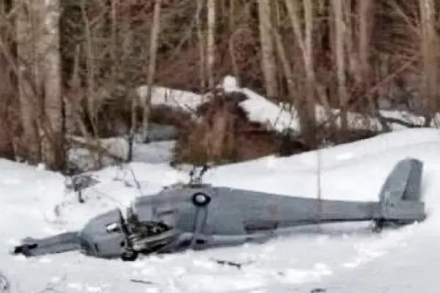
Vladimir Putin has sold his Ukrainian war to the Russian people by trying to find the sweet spot between existential threat and reassuring distance: the Russian president portrays the conflict as a struggle to preserve the nation from a hostile West and its Ukrainian proxy, but one fought safely outside its borders. Increasingly, Kyiv seems to want to bring the war to Russia, though, in a gamble which could go either way. A drone identified as a Ukrainian-made Ukrjet UJ-22 Airborne, capable of carrying up to 20kg of explosives, crashed close to a gas distribution station 60 miles southeast of Moscow yesterday. This is more than 300 miles from the closest Ukrainian territory – and too close to comfort for Putin.

Why is Zelensky playing deadly mind games with Putin?

From our UK edition

Many have weighed in on how Vladimir Putin’s reign will end. Now it is the turn of Volodymyr Zelensky, asserting that he will be killed by his own. But is this wishful thinking, prediction or trolling? The Ukrainian president was speaking in a documentary, when he said that There will definitely be a moment when the fragility of Putin’s regime will be felt inside the state and then the predators will devour a predator. It is very important, and they will need a reason to justify this. They will remember. They will find a reason to kill the killer. Will it work? Yes. When? I don’t know.

Has Prigozhin pushed his luck too far with Putin?

From our UK edition

Yevgeny Prigozhin, the businessman behind Russia's Wagner Group mercenaries, is hardly a man to keep a low profile. He is at his loudest and most vitriolic, though, either when he feels he has the upper hand over his (many) enemies or when he is on the ropes. He’s pretty outspoken these days, and no one thinks it’s because he's winning. For months, many of the small gains made by the Russians had been thanks to Wagner and its use of expendable soldiers recruited from the prison system. This had given Prigozhin a degree of latitude and license and, true to form, he had used that to prosecute his personal vendettas, against targets ranging from Alexander Beglov, the governor of St Petersburg to, most strikingly, defence minister Sergei Shoigu.

Macron is right about the danger of Russia after Putin

From our UK edition

France's President Macron has raised hackles time and again with his interventions on Russia's aggression against Ukraine. For all his grandstanding bombast though, he has often raised the policy dilemmas that the West really ought to be discussing. Most recently, he warned, while returning from the Munich Security Conference, that active efforts to topple Vladimir Putin would be a mistake, because someone more dangerous would succeed him. Discussions about Russia's future after Putin – and the advisability of outright seeking to unseat him – are in many ways a touchstone about attitudes towards Russia.

Putin’s real threat comes from Russia’s ‘turbo-patriots’

From our UK edition

Does Vladimir Putin face a challenge, not from cuddly, West-looking liberals, but from even sharper-toothed nationalists? Certainly this is suddenly the message coming from loyalists. Oleg Matveychev, a parliamentarian and spin doctor, who also has a widely-read blog, has made waves by claiming in an online video that ‘2023 will be very dangerous,’ because of the threat of so-called ‘turbo-patriots.’ Discounting the liberals (who ‘have all run away’), he warned that the turbo-patriots had become ‘the only danger to our state.’ A kleptocratic elite is seeing Putin as bad for business His scenario was that after some new reversals in the war, a combination of disgruntled nationalism, anger at corruption and ‘a light dose of leftism’ could trigger some rising.

Tank warfare: why the West is worried about arming Ukraine

From our UK edition

Ukraine’s top soldier, General Valery Zaluzhny, has said that if he is to launch a successful counter-offensive, the West will have to provide him with another 300 tanks. This is, of course, a negotiating position. President Volodymyr Zelensky’s government has been very effective in managing western allies: cajoling, demanding and guilting them into providing more than they intended. He’s actually going to be getting more tanks, if not 300, now that Berlin has been browbeaten into lifting its objections. Might Germany’s initial reluctance suggest a changing perception of the war? It has certainly revealed the limited nature of the European powers’ arsenals.

Tank warfare: why the West is worried about arming Ukraine

From our UK edition

Ukraine’s top soldier, General Valery Zaluzhny, has said that if he is to launch a successful counter-offensive, the West will have to provide him with another 300 tanks. This is, of course, a negotiating position. President Volodymyr Zelensky’s government has been very effective in managing western allies: cajoling, demanding and guilting them into providing more than they intended. He’s actually going to be getting more tanks, if not 300, now that Berlin has been browbeaten into lifting its objections. Might Germany’s initial reluctance suggest a changing perception of the war? It has certainly revealed the limited nature of the European powers’ arsenals. Nato countries have already been supplying tanks.

Putin is using fear to mobilise the masses

From our UK edition

There was nothing subtle about it, as cranes lifted truck-based Pantsir-S1 air defence systems onto the roofs of the sprawling Defence Ministry building on Frunzenskaya Embankment and another structure in the Taganka neighbourhood, south-east of the Kremlin. As a former president and the Patriarch of the Russian Orthodox Church both warned of the risks of Armageddon, one would be tempted to assume that Vladimir Putin was deeply rattled. Yet much of this is more performative than anything else. This is all part of the new phase of the Kremlin's effort to sell the war to a sceptical or disengaged Russian people The Pantsir is a short-to-medium range gun-and-missile point air defence system that can handle targets from drones to cruise missiles, and which has shown its value in Syria.

Will Putin’s latest general escalate the war in Ukraine?

From our UK edition

So, one granite-faced general has been replaced by another. The announcement that, after just three months in post, General Sergei Surovikin is being succeeded as overall commander of Russia’s war in Ukraine by Chief of the General Staff Valery Gerasimov may sound like appointing a new captain for a hull-breached Titanic. But it is significant in what it says, not just about the war, but Putin’s relationship with his generals. Surovikin becomes one of Gerasimov’s three deputies, in what is being sold not as a demotion but simply a reflection of the need for an ‘increase in the level of leadership’ because of the ‘amplified range of tasks’ and the need for closer cooperation between different military forces. Of course, it is.

The age of AI diplomacy 

From our UK edition

We’ve long known that computers can beat us at chess, so does it matter if they have started to beat us at more verbal and collaborative games such as Diplomacy? It certainly does, and suggests a future in which artificial intelligence may begin to play a growing role in the whole spectrum of international affairs, from crafting communiqués to solving disputes and analysing intelligence briefings. Diplomacy, a strategic board game that was a favourite of both Henry Kissinger and John F. Kennedy, is set in Europe before the first world war. The objective is to gain control of at least half the board by negotiating alliances via private one-to-one conversations. There are no binding agreements, so players can misrepresent their plans and double-deal.

Putin’s hollow dream of a mightier army

From our UK edition

Who needs Santa when you have Vladimir Putin? Just in time for Christmas, the Russian president has promised his military ‘everything it needs’ and an extra half a million men. On one level, this represents a further militarisation of the state – but at the same time, it is unattainable, and probably a misreading of the lessons of the Ukraine war. While Volodymyr Zelensky was receiving an ovation in the US Congress, Putin was hunkered down with his military leaders. He was in no mood to be stingy, saying that there were no ‘funding restrictions’ for the military and that ‘the country and the government will give everything that the army asks for. Everything.

Putin’s hawks are turning on each other

From our UK edition

Feathers are flying and divisions are widening among Russia’s hawks as the degree to which the invasion of Ukraine was a mistake becomes more evident. It is a powerful reminder that the main threat to Vladimir Putin these days comes not from liberals – largely imprisoned or forced into exile – but from increasingly disgruntled nationalists. Some of these nationalists opposed the war from the beginning, but most welcomed what they saw as a necessary counter to Nato expansion and Ukraine’s ‘betrayal’ in turning away from Moscow. However, many of them became quickly appalled and angered by what they regarded, with good reason, as the amateurishness, incompetence and corruption which so grievously undermined the invasion.

Ilya Yashin is in jail, but his words will sting Vladimir Putin

From our UK edition

Fewer than one in 100 defendants in the Russian court system get acquitted. Even in the best of circumstances then, Ilya Yashin’s chances looked poor. As the last of Russia's high-profile opposition politicians who remains alive and isn't in prison or in exile, there never was any question as to whether he was going to be convicted. Today, he was predictably found guilty in Moscow’s Meshchansky District Court under Article 207.3 of the Criminal Code, on the deeply-questionable charge of 'spreading false information about the Russian military'. His crime was to raise the allegations of systematic human rights abuses in the Ukrainian town of Bucha on his YouTube channel in April.

The Viktor Bout hostage swap is a victory for the Kremlin

From our UK edition

After a quiet swap in the United Arab Emirates, the American basketball star Brittney Griner is out of a Russian prison while the Russian arms dealer and presumed intelligence asset Viktor Bout is out of a US one. A little glimmer of humanity amidst Cold War 2.0, or a dangerous hostage exchange with Moscow getting the best of the deal? Sadly, this is more the latter. Viktor Bout, a former Soviet army officer and alleged military intelligence asset, emerged as both an arms dealer and a gonzo cargo agent in the chaos that followed the collapse of the Soviet Union. His fleet of ex-Soviet aircraft and pilots were notorious for their willingness and ability to fly anything anywhere.

Putin’s peace talks bluff has been called out

From our UK edition

It is almost as if Vladimir Putin doesn’t mean it when he claims to be open to peace talks with Ukraine. Having originally said they have ‘no preconditions’ on peace talks with Ukraine, the Russians are now throwing obstacles in their way, as their bluff is called. As one US official told me, ‘we are not at all backing away from our support for Ukraine, but it is time to start at least thinking about endgames’ After US President Joe Biden, in a joint press conference on Thursday with French President Emmanuel Macron, made very vague suggestions of being ‘happy to sit down with Putin to see what he wants, has in mind,’ Kremlin spokesman Dmitri Peskov struck an uncompromising note in return: ‘what did President Biden say in fact?