Mark Galeotti

Mark Galeotti

Mark Galeotti heads the consultancy Mayak Intelligence and is honorary professor at the UCL School of Slavonic and East European Studies and the author of some 30 books on Russia. His latest, Forged in War: a military history of Russia from its beginnings to today, is out now.

Will Putin manage to spin Kyiv’s counter-offensive as a victory?

From our UK edition

The Ukrainian counter-offensive has duly started and, needless to say, there is a rush to judgement. It is going to play out over the coming weeks, even months, though, and at present we are still working off partial and often deceptive information. But, while there is relatively little one can say about the events unfolding on the battlefield, there is more to be said about the way they are being spun. After weeks of diversionary actions and then days of feints and probes, the fighting has begun in earnest. It is focused on the rubbled ruins of what were once Bakhmut, the towns of Avdiivka and Marinka towards the city of Donetsk, and in the south, at Lobkova and Orikhiv, towards the crucial transport hub of Tokmak.

Russia flounders as Kyiv gears up for its counter-offensive

From our UK edition

According to Moscow, Ukraine’s long-awaited counter-offensive has begun, and has begun badly for Kyiv. Of course, we need to treat the Russian account with all necessary scepticism, but the evidence is that the droney, phony war stage of this campaign season is ending and the real fighting is beginning. The unverified Russian claim is that Kyiv launched a 'large-scale offensive in five sectors of the front in the South Donetsk direction', which was beaten back at the cost of some 250 Ukrainian casualties and the loss of a full 16 tanks and 24 other armoured vehicles. Even by the Russian account, this attack comprised just six mechanised and two tank battalions from two of their newly created brigades, the 23rd and the 31st, or some 3,500 troops in all.

Ukraine’s next move

From our UK edition

39 min listen

This week: In his cover piece, journalist Mark Galeotti asks whether Putin can be outsmarted by Zelensky’s counter-offensive. He is joined by The Spectator’s own Svitlana Morenets to discuss Ukraine's next move. (01:08) Also this week:  Journalist David Goodhart writes a moving tribute to his friend Jeremy Clarke, The Spectator’s much-missed Low Life columnist who sadly passed away earlier this week. David is joined by Cass Pennant and Freddy Gray, The Spectator’s deputy editor, to remember the life and writing of Jeremy Clarke. (12:52)  And finally: The Spectator’s deputy features editor Gus Carter writes this week about the curious business of fertility.

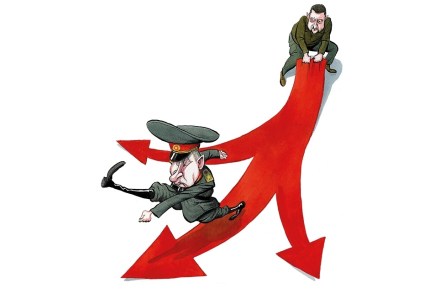
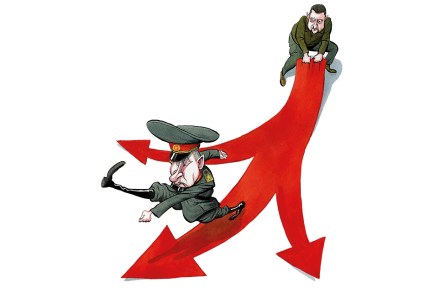
Ukraine’s next move: can Putin be outsmarted?

From our UK edition

Has Ukraine’s much-heralded counter-offensive already begun? At the end of last month, defence minister Oleksy Reznikov promised that ‘as soon as there is God’s will, the weather and a decision by the commanders, we will do it’. The past few weeks have seen an upsurge in what the military describe as shaping operations, preparing the ground for battle, with attacks on Russian fuel and weapons depots and command centres. This week’s incursion by Ukraine’s anti-Kremlin Russian units over the border into the Belgorod region could also be an attempt to distract Moscow and make it disperse its forces away from likely lines of attack.

Russia’s fake news machine has a fresh target

From our UK edition

There is a certain perverse cachet in one's words being wilfully distorted by someone who thinks it gives their argument weight. Increasingly, the Russians are adopting this as a tactic. But the target of their disinformation appears not to be foreign audiences, but Russians themselves. I’ve never really subscribed to the view that being banned from Russia on the charge that I was 'involved in the deliberate dissemination of false and one-sided information about Russia and events in Ukraine,' and 'contributing to fueling Russophobia in British society' was a badge of honour. It would be tempting to run with it and market myself as 'the man Putin fears' or some other grandiose label. But above all, I feel rather sad at being banned from a country that means so much to me.

Why has Ukraine admitted that it assassinates people in Russia?

From our UK edition

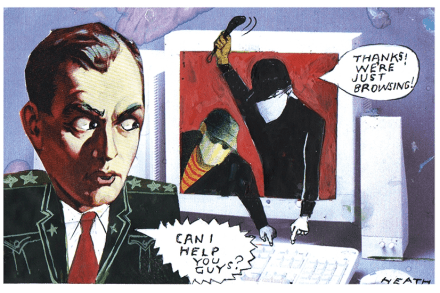
After months of flat denials, the head of Ukrainian military intelligence has admitted that Kyiv is carrying out a campaign of sabotage and assassination inside Russia. But why change the official line now? Even if this is a good cop/bad cop routine, it still risks embarrassing the president, raising questions as to how far he is fully in control of HUR Major General Kyrylo Budanov, the head of the Main Directorate of Intelligence (HUR), has become one of the media stars of this war, not least thanks to an artfully curated public persona that a senior US intelligence official characterised as ‘George Smiley meets Jason Bourne.’ This week he took advantage of interviews on two separate YouTube channels to acknowledge a Ukrainian role in a spate of recent attacks in Russia.

Prigozhin’s ‘treachery’ poses a dangerous challenge to Putin

From our UK edition

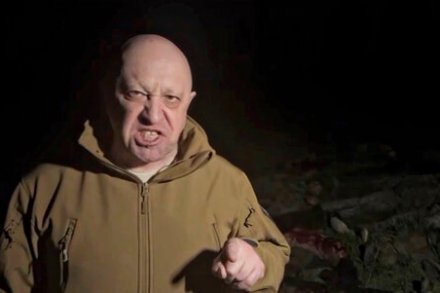
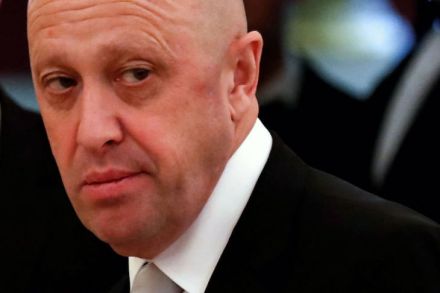
Yevgeny Prigozhin, the businessman behind the Wagner mercenary army, likes accusing his political enemies of 'treason' for not backing him as much as he’d like. Now, though, he appears to have committed that very crime himself – with the revelation that US intelligence reports suggested he tried to cut a deal with HUR, Ukrainian military intelligence. These reports were part of the trove of classified materials leaked onto the Discord gaming server earlier this year. Taken on their own, they could be regarded as sneaky fakes intended to undermine Prigozhin, yet many other documents within the collection have quietly been acknowledged as real. While it still cannot be taken as wholly proven, in Russia even some of Prigozhin's erstwhile supporters are accepting their veracity.

The Black Sea is Nato’s new front line against Russia

From our UK edition

Earlier this month, an unarmed Polish aircraft monitoring potential human smuggling and illegal fishing on the Black Sea almost ditched into the sea when a Russian Su-35 fighter engaged it over international waters. It was a reminder that while attention is inevitably focused on the land battles anticipated when Kyiv launches its spring counter-offensive, this is also a war playing out at sea. It was also a reminder that what happens offshore has far wider implications. The twin-engine L-410 Turbolet, more commonly used as a small commuter aircraft, was being used by Frontex, the European Union’s border security agency, as part of its Western Black Sea 2023 operation.

War in Ukraine rains on Putin’s Victory Day parade

From our UK edition

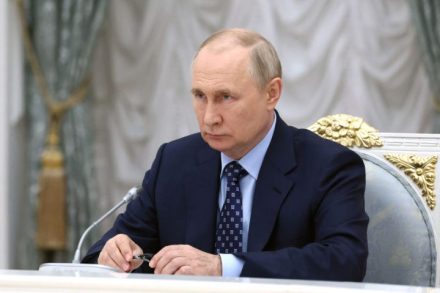
It may be having trouble on the battlefield, but the Russian army does know how to stage a parade. Behind the goose-stepping ranks, massed bands, and rumbling missile launchers, though, was a clear sense of the practical and political costs of the war in Ukraine. Although parades from Crimea in the south to Pskov in the north had been cancelled on reasons of security, there was no way Vladimir Putin could let this one not run – even Covid had not accomplished that. The Senate’s golden dome had been repaired after last week’s drone attack – and anti-drone guns were very much in evidence among the security team – and the sky was a requisite blue (if need be, the air force seed clouds to make them rain the day before, to ensure the appropriate backdrop).

Putin has made Wagner boss Yevgeny Prigozhin eat his words

From our UK edition

He huffed, and he puffed, and he damn near blew his own house down. The way Yevgeny Prigozhin, the man behind the Wagner mercenary force, was forced to walk back his threat to pull out of the fighting for Bakhmut is a reminder of the divided nature of Russia’s war effort in Ukraine. Prigozhin has periodically and publicly called out defence minister Sergei Shoigu and chief of the general staff Valery Gerasimov for their alleged back of support for Wagner. But on Friday, he escalated with two expletive-laden videos posted on social media. In the first, he pointed at the corpses of dead soldiers and bellowed: 'Shoigu, Gerasimov, where the fuck is our ammunition?' He continued: 'You scum sit there in your expensive clubs.

How ordinary Russians continue to resist Putin

From our UK edition

Russia is gearing up for its annual festival of state-sponsored militarist kitsch that are the 9 May Victory Day celebrations, albeit in rather more limited form thanks to security concerns surrounding the ongoing war. Amongst all this, it is all too easy to forget that not everyone is consumed with nationalist pageantry. Instead, what is in many ways so much more striking is that there is still an active, if beleaguered, civil society in this country. To be sure, open protests against the war have become increasingly small in scale. This is an authoritarian regime sliding into full-blown totalitarianism, which has been cracking down viciously on any such 'fifth columnists'.

What’s the truth about the Kremlin drone attack?

From our UK edition

The Russian government has claimed that ‘two unmanned aerial vehicles were aimed at the Kremlin. As a result of timely actions taken by the military and special services with the use of radar warfare systems, the vehicles were put out of action.’ There were, it continues, ‘no victims and material damage’, although it is considering it a ‘terrorist’ attempt to kill Putin. That said, unverified videos circulating on social media (which, of course, is not necessarily proof in the age of deep fakery), shows at least one drone hitting the Senate Building, one of the larger structures inside the Kremlin complex, starting a small fire. Ukraine has been developing longer-range drones and getting closer to Moscow.

What’s behind Putin’s digital crackdown on draft dodgers?

From our UK edition

With the break-neck pace with which it tends to respond to measures coming from the Kremlin, this month Russia’s parliament rushed through a new measure intended to make it harder for draftees and mobilised reservists to dodge military service. In the process, it highlighted the country’s slide into techno-authoritarianism. Until now, the law demanded that the state prove that it had presented the potential serviceman (or his family) with the appropriate draft papers. Although they were meant to be signed for, this still created opportunities for the individuals in question to claim they had never received them. – or make a dash for the border. Hundreds of thousands of reservists did just this in September and October, during the first mobilisation wave.

Can Zelensky hold back his hawks?

From our UK edition

There is no doubt that the West supports Ukraine’s fight for its sovereignty and survival. There is equally no doubt that, for all the fulsome rhetoric, this support is both conditional and limited by a desire to prevent the war from escalating. This was amply demonstrated by recent revelations about Washington’s relationship with Kyrylo Budanov, head of HUR, Ukrainian military intelligence.

Russia’s spy ships are playing mind games in British waters

From our UK edition

The news that Russian spy ships appear to be mapping British and other underwater cables and pipelines in the North Sea sounds very Cold War. But in fact it reflects the realities of modern conflict, and also the ways Moscow is playing psychological games with the West. In November, The Admiral Vladimirsky, an Akademik Krylov-class ship officially classified as an oceanographic research vessel but regarded by Western authorities to be an intelligence-gathering asset, entered the Moray Firth and loitered near the RAF's maritime patrol base at Lossiemouth. Since then, it has been on a tour around British and Nordic waters, on a route that took it past seven British and Dutch offshore wind farms and then a Swedish naval training ground.

The US intelligence leak and the hypocrisy of the spy world

From our UK edition

So what did everyone learn from the massive trove of more than a hundred top secret US documents a 21-year-old Air National Guardsman apparently put on a gaming server to wow some fellow God-fearing gun enthusiasts? Both little and a lot. Despite some clumsy cut-and-paste editing of casualty figures, as well as some carefully-worded claims that, as a British defence official put it, ‘a significant proportion of the content of these reports is untrue, manipulated, or both,’ the Americans are shamefacedly admitting that these are genuine documents. There will no doubt continue to be suspicions in some quarters that there is some baroque plot at work, whether a Russian long con or a US attempt to spread disinformation.

Kyiv wants to make it untenable for Russia to hold Crimea

From our UK edition

Crimea matters to Russians – whether they adore or abhor Vladimir Putin – in a way none of the other claimed or occupied Ukrainian territories do, and as such the peninsula’s fate will probably be central to any eventual resolution of the current war. That some Ukrainian sources are now talking about a military reconquest in the summer campaign season and others of diplomatic solutions suggests the possibility of movement. Whatever the official line, there are also many in Kyiv who are uncertain if they really want Crimea To be sure, there is no fundamental shift in Kyiv’s official position, that Crimea – like all the occupied territories – must be returned to its control, and that this could be by military force if necessary, negotiation if possible.

Who is behind the murder of Putin’s propagandist?

From our UK edition

Those who live by hate often die by hate, too. Maxim Fomin, better known as Vladlen Tatarsky, was one of the ultra-nationalist social media 'milbloggers' who emerged largely off the back of Russia's war on Ukraine. On Sunday evening, he was addressing a gathering at a cafe in St Petersburg when he was killed by a bomb that also injured another 16 people. Fomin came from Makiivka, in the contested Donetsk region. In 2014, on escaping from prison where he was serving time for a bank robbery, he joined the pro-Russian Vostok Battalion. He would go on to become amongst the more famous 'milbloggers', whose Telegram channel had over 560,000 followers.

Evan Gershkovich and Russia’s descent into thugocracy

From our UK edition

It’s a crude but inescapable fact of history that many states had their origins in better-organised bandit gangs. It’s a depressing feature of the present that some states seem determined to slide back into bandit status. While Putin's Russia retains the institutions of modern statehood, he and his clique of cronies and yes-men have no problem adopting the tactics of the thug – including kidnapping. The arrest of American journalist Evan Gershkovich on espionage charges appears to be the most recent example. The Kremlin is tiptoeing closer to a kind of ‘North Koreanisation’ Gershkovich, part of the Wall Street Journal's Moscow bureau, was on assignment in Ekaterinburg when he was detained by the Federal Security Service (FSB).

Nikolai Patrushev, the man dripping poison into Putin’s ear

From our UK edition

If I were to have to pick the figure in Vladimir Putin's inner circle who scares me the most, it would have to be Nikolai Platonovich Patrushev, secretary of the Security Council and the closest thing there is in the Russian system to a national security adviser. Patrushev's profile has grown steadily as both cause and symptom of the system's drift towards nationalist imperialism, and he best channels the worst impulses within the id of Putin's clique. Whenever he speaks, it is sadly worth listening. After all, he does not just channel but shape those worst impulses. The Security Council itself is not the Soviet Politburo 2.0 that some assume. While it does bring together all key security-related officials, it is not a decision-making body.