Mark Galeotti

Mark Galeotti

Mark Galeotti heads the consultancy Mayak Intelligence and is honorary professor at the UCL School of Slavonic and East European Studies and the author of some 30 books on Russia. His latest, Forged in War: a military history of Russia from its beginnings to today, is out now.

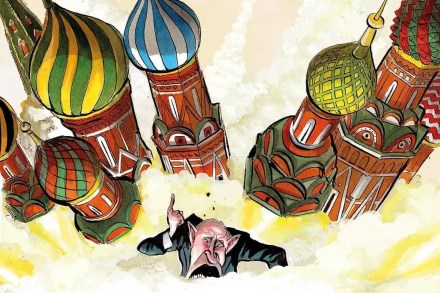
Putin’s peace talks bluff has been called out

From our UK edition

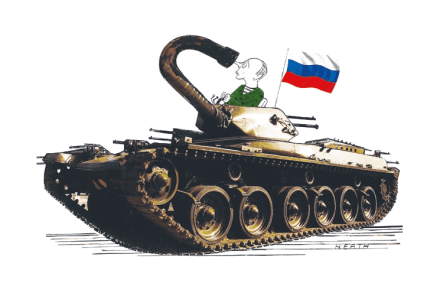
It is almost as if Vladimir Putin doesn’t mean it when he claims to be open to peace talks with Ukraine. Having originally said they have ‘no preconditions’ on peace talks with Ukraine, the Russians are now throwing obstacles in their way, as their bluff is called. As one US official told me, ‘we are not at all backing away from our support for Ukraine, but it is time to start at least thinking about endgames’ After US President Joe Biden, in a joint press conference on Thursday with French President Emmanuel Macron, made very vague suggestions of being ‘happy to sit down with Putin to see what he wants, has in mind,’ Kremlin spokesman Dmitri Peskov struck an uncompromising note in return: ‘what did President Biden say in fact?

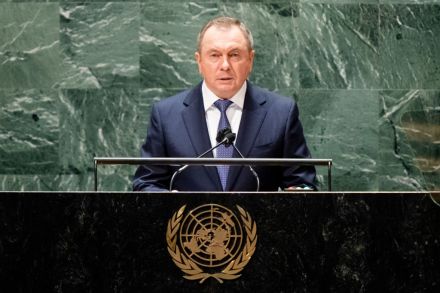
Is Putin really to blame for this Belarusian minister’s sudden death?

From our UK edition

Saturday’s news of the sudden death of Belarusian foreign minister Vladimir Makei, as well as the rather terse nature of the official notice, has raised the inevitable storm of instant speculation, revolving around notional Russian plots. In the process it has illustrated both some of the shortcomings of ‘instant punditry’ and the continuing significance of Alexander Lukashenko, dubbed ‘Europe’s last dictator’ (before Putin challenged for the title). Lukashenko has been in power since 1994, and the whole system is built around him The 64-year-old Makei had been in office since 2012, and apparently died of a heart attack shortly after an official visit to Armenia and two days before he was meant to meet his Russian counterpart, Sergei Lavrov.

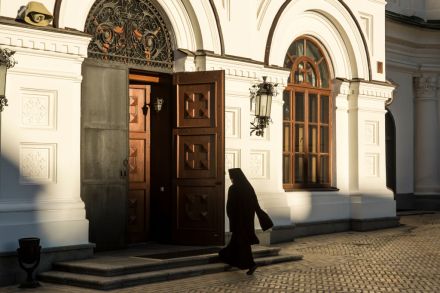
Why Ukraine raided a Kyiv monastery

From our UK edition

Perhaps it should not have been a surprise to see the camouflaged special forces of the SBU, the Ukrainian Security Service, fanning out over the usually serene grounds of Kyiv’s Holy Dormition Kyiv-Pechersk Lavra monastery on Tuesday. After all, Vladimir Putin’s political alliance with the Russian Orthodox Church has ensured that his war with Ukraine is also a holy one. And until this year the monastery was under the jurisdiction of the Russian church. But the raid is also a reminder of the dangerous potential for civic strife and the politics of revenge tearing at Ukraine’s unity. Putin, himself a member of the faith, has developed close ties with Kirill, the Patriarch of Moscow and All Russia since 2009.

A worrying lesson from the Polish missile tragedy

From our UK edition

When what seems to have been a Ukrainian S-300 air defence missile accidentally hit the village of Przewodów in Poland, killing two farm workers, it became at once a litmus test of national attitudes and a reminder of the wider dangers of the war in Ukraine. At first, confusion about what had happened allowed everyone to reach for their favourite conclusion. There were suggestions that this was a deliberate Russian attack to test Nato’s will, and calls for the alliance’s Article 5 – whereby an attack on one member should be considered an attack on all – to be invoked. Poland’s early assessment that this was a ‘Russian-made missile’, which could still apply to much of Ukraine’s arsenal, too, was quickly turned into a ‘Russian missile’ in clickbait headlines.

The decline and fall of Sergei Lavrov

From our UK edition

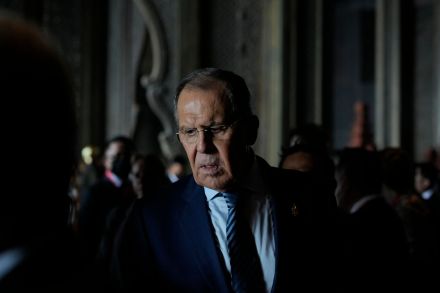
First came the claims that Russian Foreign Minister Sergei Lavrov was admitted to hospital in Bali on arriving for the G20 summit. No, we were then told by spokeswoman Maria Zakharova – it was ‘the ultimate fake’. Then local accounts emerged, saying that he popped in ‘for a check-up’. But does any of it matter? On the face of it, it should. Vladimir Putin, true to form, havered as to whether to attend the summit, apparently deciding less than a week beforehand not to, both for security reasons but also because he knew that he would hardly get a warm welcome. The prospect of being publicly shunned and taken to task was enough to keep him home. With Putin not willing to leave the comfort of his bunker, the task of representing Russia fell to Lavrov.

Russia will be sweating over its withdrawal from Kherson

From our UK edition

Almost everyone has known that the city of Kherson, stranded on the right bank of the Dnipro River, was all but indefensible. Now it looks as if the one man who, like Canute was setting himself against the tide, has finally acknowledged that: Vladimir Putin has let his generals withdraw. This could conceivably be some cunning ruse, but the odds on this are lengthening. Putin, though always willing to let his henchmen hurl themselves on grenades in his name, was happy not to be visibly connected with the decision.

Mark Galeotti, Katja Hoyer and Tanya Gold

From our UK edition

19 min listen

This week: Mark Galeotti tells us why Ukraine has become a weapons testing ground (00:53), Katja Hoyer discusses Germany’s extreme monarchists (09:12), and Tanya Gold reads her Notes on … espressos (15:24).  Produced and presented by Oscar Edmondson.

Is Russia preparing to surrender Kherson?

From our UK edition

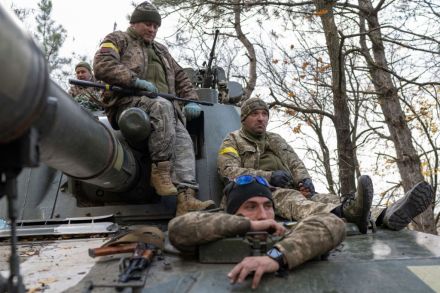
Will they stay or will they go? The southern Ukrainian city of Kherson has become the current focus of the toughest fighting in the war, and what was once seen as Moscow’s potential gateway to Odessa and the rest of the Black Sea coast is now looking like Kyiv’s access towards occupied Crimea. However, it is unclear whether the Russians are finally preparing to withdraw from the city. On the one hand, Russia’s generals have reportedly been petitioning the Kremlin for weeks to be allowed to fall back. As it stands, Kherson is almost impossible for them to defend. It is on the western bank of the Dnipro River, and with the Antonivsky Bridge and the Kherson Rail Bridge heavily damaged, reinforcing and resupplying it is proving difficult and dangerous.

Ukraine is becoming a showroom for modern weaponry

From our UK edition

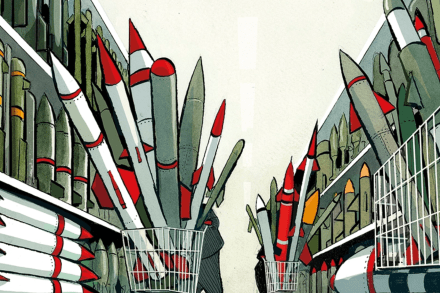
The war in Ukraine has become a testing ground for new technology, an opportunity to develop weapons and find different ways of fighting. Nations that are supposedly neutral have been sending weapons to the front line to find out just how they work in the heat of battle. This is a relatively new trend in the history of warfare, one that first emerged in the 1936-39 Spanish Civil War. The backers of both sides treated the war not just as a testing range but also a showroom. The Germans, supporting Franco’s nationalists, first tried Blitzkrieg on the Spanish peninsula. Hermann Göring saw the civil war as a chance ‘to test my young Luftwaffe’.

Is Putin preparing a nuclear strike?

From our UK edition

Russia is peddling implausible tales of Ukrainian ‘dirty bombs’. Kyiv and the West are embarked on a campaign to counter this propaganda, and again the talk is of the risk of Moscow using weapons of mass destruction in Ukraine. And that’s the point. First of all, Russian Defence Minister Sergei Shoigu broke months of relative silence – with the West, at least – and called his British, American, French and Turkish counterparts. His main message was to assert, with no evidence in support of his claims, that Kyiv was preparing to use a dirty bomb. This is a conventional munition, around which is packed radioactive materials, which is dispersed when it explodes.

Tsar Vladimir brings in martial law

From our UK edition

Martial law can arrive with a bang: tanks on the streets, Swan Lake on the TV. It can also creep up on a country in the guise of a presidential edict with the title ‘The Decree On Measures taken in the Constituent Entities of the Russian Federation in Connection with the Decree of the President of the Russian Federation of October 19, 2022 No. 756’. Either way, Vladimir Putin has just moved Russia one step closer to totalitarianism. What is interesting is just how long and half-hearted a process this has been. When Putin invaded Ukraine in February, the sharpest-beaked hawks in his entourage were urging total war, and with it an imposition of tight state control over much of the economy.

The misconception about Putin’s big red nuclear button

From our UK edition

There is a common misconception that the leaders of nuclear states have a 'red button' that can unleash Armageddon. As Vladimir Putin continues to hint at the use of non-strategic ('tactical') nuclear weapons in Ukraine, there is some comfort in the knowledge that it is not so easy. Ironically, launching the kind of strategic nuclear missiles whose use would likely spiral into global destruction is somewhat easier than deploying the smaller weapons which – however vastly unlikely – could conceivably be used in Ukraine. These lower-yield warheads would need to be reconditioned in one of the 12 'Object S' arsenals across Russia holding them, and then transported to one of 34 'base-level storage depots'.

Putin’s attack dog brings a terrible type of warfare to Ukraine

From our UK edition

The Crimean Bridge bombing was an unwelcome gift to both Vladimir Putin – who had celebrated his 70th birthday the day before – and the new overall commander of the 'Special Military Operation,' General Sergei Surovikin. Today, they returned the favour with a missile bombardment of Kyiv and other major cities of the like not seen since the start of the war. Missiles and kamikaze drones hit a range of targets, some perhaps considered strategic in the loosest sense such as bridges and railway hubs, but most entirely civilian. The west of the country, which has largely avoided the worst of Russian attacks, also came in for an indiscriminate pounding.

Crash course: how the Truss revolution came off the road

From our UK edition

37 min listen

On this week's podcast: As Liz Truss returns from Conservative Party Conference with her wings clipped, has she failed in her revolutionary aims for the party?James Forsyth discusses this in the cover piece for The Spectator, and is joined by former cabinet minister and New Labour architect Peter Mandelson to discuss (01:08).Also this week: Is it time that the West got tough with Putin?Mark Galeotti writes in this week's magazine about the likely scenarios should Putin make good on his thermonuclear threats. He is joined by Elisabeth Braw, fellow at the American Enterprise Institute, to consider how the West should respond (13:14).

How should the West respond to Putin’s threats?

From our UK edition

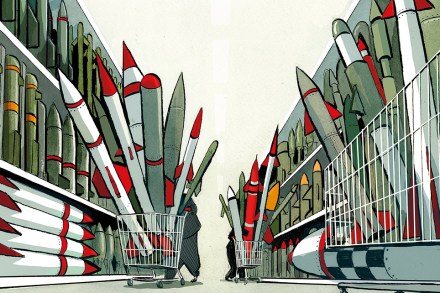
Vladimir Putin clearly wants us to worry that he is crazy enough to use a tactical nuclear weapon in Ukraine. This fear was intensified this week when images surfaced that some – possibly in error – believed showed a train operated by the secretive nuclear security forces moving towards Ukraine. Despite this, many believe the likelihood of a nuclear attack remains extremely low. Yet it is a plausible enough threat for the West to be considering how it should respond if Putin were to unleash one. Russia has an estimated 1,900 non-strategic nuclear weapons (NSNWs), from artillery shells to warheads for missiles; their yields range from a mere 0.5 to 100 kilotons, more than twice the power of the bomb that devastated Nagasaki.

Even Putin’s minions are turning against him

From our UK edition

Sergei Melikov, head of the Dagestan Republic within the Russian Federation, is hardly a dissident. As Colonel General Melikov, he was deputy head of the National Guard, the main militarised internal security force, and he has been a loyal agent of Moscow’s all his life. Nonetheless, he has become a no-doubt-temporary phenomenon on social media for his abusive diatribe against over-enthusiastic military recruiters. https://twitter.com/francis_scarr/status/1575570319104184321?ref_src=twsrc%5Etfw Draft officers had been driving round Derbent, Dagestan’s second city, loudspeakers blaring calls for every adult male to go straight to their local military commissariat.

The Nord Stream blasts are Putin’s warning shot to the West

From our UK edition

While the Ukrainians are fighting a conventional war on their own territory, Russia and the West are engaged in an unconventional one fought by economic pressure, political subterfuge and dirty tricks. The apparent sabotage of the Nord Stream gas pipelines seems just the latest example. Both of these lines linking Russia to Germany have sprung devastating leaks. The cause, according to seismological readings, was a series of explosions off the Danish island of Bornholm, too directed (and powerful enough to breach 4cm of steel and a thick concrete mantle) and too synchronised to be any kind of an accident. There are those in Russia who, predictably enough, are blaming the Ukrainians.

Even Putin knows he is losing

From our UK edition

Vladimir Putin's latest escalation over Ukraine not only demonstrates that even he doesn’t think he’s winning the war but what happens when a leader knows he has to do ‘something' but doesn’t quite know what. Momentum was, after all, no longer on his side. He seems to have hoped that over a hard winter, either Ukraine would lose the will to fight or the West would succumb to ‘Ukraine fatigue'. However, Ukraine's impressive counter-offensive in the north-east not only confirmed Kyiv's continued and even growing will and ability to fight but also galvanised Western support. Meanwhile, the West is not alone in feeling the pain.

How Russia’s ‘shock jocks’ covered the Queen’s funeral

From our UK edition

Modern Russia is a propaganda state, but not in the same way as the Soviet Union. The Kremlin has squeezed out any independent media, but all the same, the coverage of the Queen's funeral demonstrated how this is a post-modern propaganda state, in which competing 'narrative entrepreneurs' try to make their mark and please the boss. As I have written before, the official line on the Queen's death was strikingly respectful, taking its lead from Vladimir Putin's own message of condolences. There were some spiteful and critical comments, primarily on social media, but even these were then shouted down in what seems to have been a genuine public outcry.

How will Putin respond to his latest defeat?

From our UK edition

Russia is retreating at speed along the Kharkiv front, leaving behind burnt-out tanks and, even more tellingly, undamaged ones, too. There are television images of locals welcoming Ukrainian forces and accounts from eyewitnesses on the spot – but none of that has made it into Russian state media. As the Kremlin struggles to find some way of spinning the unspinnable, this will affect not just its public credibility but also elite unity. The Russian defence ministry is talking about a 'regrouping' of its units. State TV is extolling the 'exploits' of its gallant soldiers. Government newspaper Rossiiskaya Gazeta, recounting an alleged victory, trips itself up by placing the action deep into formerly Russian-held territory.