Mark Galeotti

Mark Galeotti

Mark Galeotti heads the consultancy Mayak Intelligence and is honorary professor at the UCL School of Slavonic and East European Studies and the author of some 30 books on Russia. His latest, Forged in War: a military history of Russia from its beginnings to today, is out now.

How will Putin respond to his latest defeat?

From our UK edition

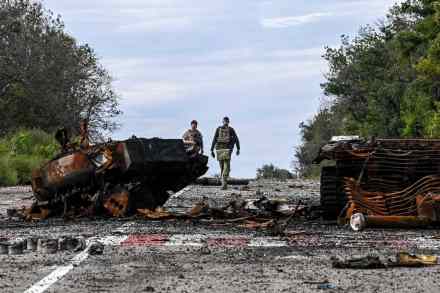
Russia is retreating at speed along the Kharkiv front, leaving behind burnt-out tanks and, even more tellingly, undamaged ones, too. There are television images of locals welcoming Ukrainian forces and accounts from eyewitnesses on the spot – but none of that has made it into Russian state media. As the Kremlin struggles to find some way of spinning the unspinnable, this will affect not just its public credibility but also elite unity. The Russian defence ministry is talking about a 'regrouping' of its units. State TV is extolling the 'exploits' of its gallant soldiers. Government newspaper Rossiiskaya Gazeta, recounting an alleged victory, trips itself up by placing the action deep into formerly Russian-held territory.

Why even Vladimir Putin has paid tribute to the Queen

From our UK edition

It is a mark of the Queen’s standing that even Vladimir Putin, in the midst of an undeclared economic and political war between Russia and the West, sent King Charles III his ‘deepest condolences’ after Her Majesty’s death. The Russian leader noted that: ‘The most important events in the recent history of the United Kingdom are inextricably linked with the name of Her Majesty. For many decades, Elizabeth II rightfully enjoyed the love and respect of her subjects, as well as authority on the world stage.’ Calling it a ‘heavy, irreparable loss,’ he wished the King ‘courage and perseverance’ and sent ‘the words of sincere sympathy and support to the members of the royal family and all the people of Great Britain.

Russia’s Ben Stiller ban is a sign of Putin’s desperation

From our UK edition

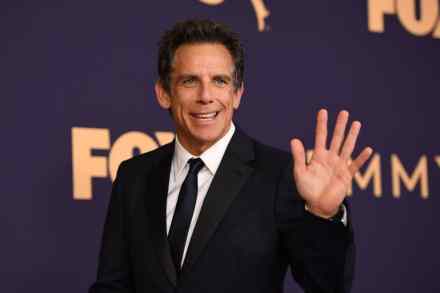
What do Ben Stiller, Sean Penn, the chairman of the BBC, Piers Morgan, and, er, me, have in common? The answer is that we’ve all been banned from Russia. For some of us, that’s a blow. For others, an irrelevance. But for all of us, it’s a strange accolade: somehow Vladimir Putin’s Kremlin thinks we’re significant, dangerous or hostile enough to need to be kept out at all costs. What level of insecurity does it take to worry that the screen Zoolander and Harvey Milk, respectively, represent a threat to the stability and integrity of the Russian Federation?

What the defenestration of Ravil Maganov says about Russia

From our UK edition

In my travels when I was still persona grata in Russia, I never got the sense that their windows were unduly flimsy or inviting. Nonetheless, the tally of Russians and Russian-connected individuals who have met their end by jumping or falling out of windows is such that it has become a rather tacky and tasteless meme. Most recently, Ravil Maganov, chair of the Lukoil conglomerate died after falling out of a window in Moscow on Thursday. This follows on the heels of the death in Washington DC of Dan Rapoport, an American businessman who used to be active in Russia before leaving and becoming a critic of the regime. He apparently jumped from an apartment building in Georgetown.

Gorbachev was no saint. But he was a kind of hero

From our UK edition

Mikhail Gorbachev is dead at the age of 91, and in a way I feel orphaned. I became fascinated by what was still then the Soviet Union in its late years of sclerosis, when one moribund geriatric at the top of the system succeeded another (the dark joke at the time went as follows: a KGB guard stopped someone at one of the state funerals and asked him if he had a pass – ‘oh,’ came the reply, ‘I’ve got a season ticket’). But my early years as a Russia-watcher were during his time as General Secretary, and if my seniors had become used to the idea that the USSR was a stagnant, unchanging police state, for us, the thought that there could be change, even change for the good, was baked into our assumptions.

The stalemate in Ukraine won’t last forever

From our UK edition

Addressing the vexed question of who is winning the war in Ukraine, six months on, is a task to challenge military strategists, geopolitical analysts – and semanticists, because so much depends on what ‘winning’ means. On one level, after all, one could suggest everyone is losing. That said, we cannot escape the fact that both Moscow and the West had essentially written Ukraine off at the start of the war. The conventional wisdom was that it would take perhaps a fortnight for Vladimir Putin’s much-vaunted war machine, the product of two decades of heightened military spending, to defeat its Ukrainian counterpart.  Instead, the Ukrainians proved determined and disciplined in the defence, and imaginative and impassioned in the attack.

What the Dugin assassination tells us about Russia

From our UK edition

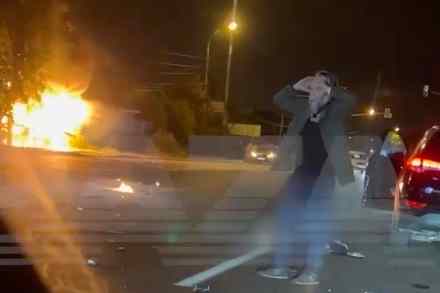
Car bombs used to be a fixture of gangland feuds in 1990s Russia but have since fallen out of fashion. This makes it all the more striking when, as happened on Saturday night, such a device rips through a car just outside Moscow, killing Darya Dugina, daughter of the controversial nationalist ideologue Alexander Dugin. She was a prominent figure in her own right, a journalist working for an outfit Washington says is owned by Russian businessman Evgeny Prigozhin – under sanctions in the West for being the godfather of both the Wagner mercenary group and the infamous social media ‘troll farms’ – who had been a cheerleader for the war in Ukraine.

Ukraine has found Russia’s Achilles’ heel in Crimea

From our UK edition

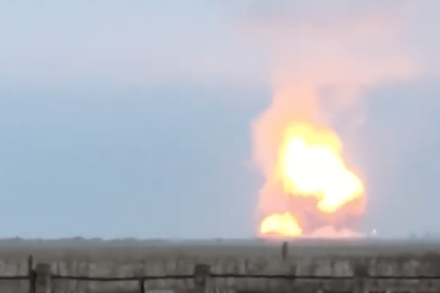
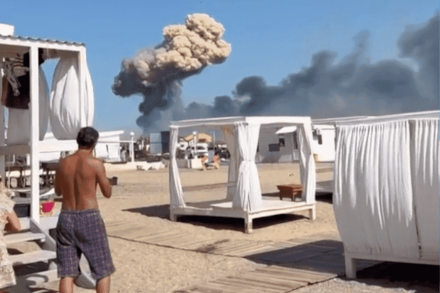
Another day, another Russian arms depot up in smoke. The latest attack, this time on an ammunition storage site near Mayskoye on the Crimean peninsula, highlights three particular aspects of this phase of the war, and the degree to which Kyiv is adapting quicker and more effectively than Moscow. The first is that the long-heralded Ukrainian counter-attack is, so far, less about a melee on the ground and more about a methodical attempt to target Russian supply lines. Until now, this has been through missile and rocket strikes, although Moscow’s claim that the Mayskoye attack was carried out by ‘saboteurs’ would – if true – represent an interesting new approach.

Ukraine’s Crimean strike marks a new stage of the war

From our UK edition

For most Russians, the brutal realities of Vladimir Putin's 'special military operation' have not really struck home. Ukraine's attack on the Saki airbase near Novofedorivka in western Crimea on Tuesday begins to change all that, marking a new stage of the war, one with both dangers and opportunities for Kyiv. The Kremlin’s spin doctors tried to claim that the explosions filmed by horrified Russian holidaymakers were caused by an ammunition fire. However, as videos began going viral on Russian social media, there was no question in the posters' minds but that this was an attack. They voted with their feet, or at least their wheels, and the Kerch Bridge connecting Crimea to the mainland became one long traffic jam as panicked holidaymakers fled the peninsula.

Why Zelensky is purging the security services of Ukraine

From our UK edition

Could a general of the SBU, the security service of Ukraine, really have helped Russia take the city of Kherson? Could a colonel have tipped off the Russians as to where the Ukrainians had lain mines north of Crimea? The Ukrainian government certainly appears to believe that fifth columnists within the SBU have been Moscow’s secret weapon in this war – this week Volodymyr Zelensky fired the head of the agency (and his childhood friend) Ivan Bakanov, along with the country’s prosecutor general, Iryna Venediktova.

Russia is militarising its economy

From our UK edition

The ‘special military operation’ in Ukraine isn’t a war – there’s a law and a possible maximum sentence (though no one seems to have faced it yet) of 15 years in prison to stop you claiming it is in Russia. Yet Russia does seem to be inching towards a wartime economy, for all Vladimir Putin’s recent bullishness. At the recent (if rather sparsely-attended) St Petersburg International Economic Forum, Putin struck a triumphalist note, crowing that ‘the economic blitzkrieg against Russia never had any chances of success,’ and ‘gloomy predictions about the Russian economy’s future didn't come true.’ That’s both true and not true.

Does Putin’s ‘toxic masculinity’ really matter?

From our UK edition

Apparently, if Vladimir Putin had been a woman, everything would be just tickety-boo. Speaking to German TV, Boris Johnson has said that Putin is the ‘perfect example of toxic masculinity’ and that had he been a women – ‘which he obviously isn’t’, Boris felt the need to clarify – then ‘I really don’t think he would’ve embarked on a crazy, macho war of invasion and violence in the way that he has.

What Russia’s military shake-up reveals about Putin’s war in Ukraine

From our UK edition

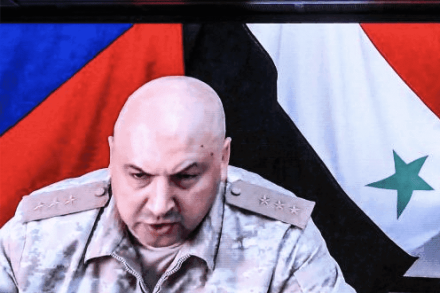
When General Alexander Dvornikov was made overall commander of Russia’s forces in April, it looked as if the amateurishness and incoordination of the early stage of the Ukraine war might be being addressed. Now, though, Dvornikov is not around, and a new commander may shape a savage new phase of operations. In recent days, the Russian defence ministry announced that Colonel General Alexander Lapin was in command of the Central Group of Forces in Ukraine, while General Sergei Surovikin was heading the Southern Group of Forces during the invasion. Of Dvornikov, who has not been seen for weeks, there was no mention, and the British Ministry of Defence suggests he has been removed from his post.

How Russia’s cartoon heroine turned on Vladimir Putin

From our UK edition

Vladimir Putin’s regime has a track record in building up public heroes whom it hopes to use, only to find the ungrateful wretches unwilling to play the roles it intends. The most recent is Natalia Poklonskaya, a woman whose trajectory from cartoon heroine to legal adviser has starkly illustrated the way Putin faces criticisms not just from remaining liberals at home, but also nationalists. Poklonskaya shot to fame amidst the Russian take-over of Crimea. A Ukrainian, she had been a senior prosecutor in Crimea, then in Kyiv, until she resigned in the wake of the ‘Euromaidan’ rising, ‘ashamed to live in the country where neo-fascists freely walk the streets.’ She returned to Crimea and after it was annexed by Moscow was appointed its Prosecutor.

Putin is no Peter the Great

From our UK edition

Putin has a penchant for history, but only insofar it flatters him and his views. Last year, he gifted the world a 5,000 essay that essentially pre-justified his invasion of Ukraine with amateurish fantasy history, and now he is comparing himself with Tsar Peter the Great. It is not a comparison that fits or flatters. Peter the Great is one of the, well, greats of the Russian historical pantheon. He ruled from the late 17th to the early 18th century, and in that time became the first tsar to travel in Europe, built a new capital at St Petersburg, and was both founder of the Russian navy and victor, on points, of the 20-year Great Northern War against the Swedish Empire, leaving Russia a dominant Baltic power.

How the West is helping Putin’s propagandists

From our UK edition

One might not think that J. R. R. Tolkien has much to do with the bitter war in Ukraine, but one would be wrong. A particular epithet, once used by Ukrainians specifically for the Russian soldiers who have shelled, looted and raped their way into their country has begun to be applied also to the Russians who support the war and, increasingly, all Russians. That epithet is orc, the brutal and brutish foot soldiers of the dark lord Sauron, who spill in their countless numbers from the land of Mordor to kill and to despoil. Tolkien's works are very popular in both Russia and Ukraine, and there as elsewhere have been subjected to scholarly deconstruction, naked plagiarism and appropriation into memes.

Does Putin have blood cancer?

From our UK edition

Suddenly, we are all diagnosticians. Clips of a puffy Putin slurring his words, his hands twitching or clutching a table for grim death, have led to all kinds of speculation about his health. It does seem probable that he is suffering from some ailments, to be sure. However, we need to be careful we do not get carried away with the speculation. Putin is notoriously private and his health is considered well off-limits. For a man who built much of his personal brand on his judo-fighting, ice hockey-playing, bare-chested horseback-riding persona, illness and ageing are obviously sensitive topics. Nonetheless, it has long been known that he suffers from recurring back problems, and appears to have undergone surgery more than once.

The real reason for Putin’s intelligence shake-up

From our UK edition

It has been reported this week that Vladimir Putin is shifting responsibility for covert operations in Ukraine to a different intelligence agency. The Fifth Service of the Federal Security Service (FSB) has now reportedly been usurped by ‘military intelligence’ – still widely known by its old acronym of GRU, but actually called the GU, the main directorate of the general staff. Lt Gen. Vladimir Alekseev, first deputy head of the GU, is now expected to take over Russia’s intelligence capabilities in Ukraine. To some this is evidence of inter-agency conflict and the decline of the FSB inside the Kremlin’s walls. But it is more likely that Putin is simply digging in for a long war.

How Ukraine rained on Putin’s parade

From our UK edition

The Russians know how to put on a parade, and Victory Day is the showiest of the shows. It may have been a portent, though, that inclement weather conditions forced the cancellation of the aerial flypast. It quite literally might have rained on Vladimir Putin’s parade. This shouldn’t have happened. Typically, if there is any danger that this high holy day of Putinism might see rain, then the air force seeds the offending clouds the day before to make them rain, so the sun can shine on 9 May. It usually works, until it doesn’t. Which is itself something of a metaphor for what is happening now in Russia. https://www.youtube.com/watch?

Why Putin’s ‘Satanic’ missile launch matters

From our UK edition

In some ways, it’s a headline-writer’s dream: Putin puts his faith in Satan. In reality, it’s actually Putin’s new RS-28 Sarmat (‘Sarmatian’) heavy intercontinental ballistic missile, which has become colloquially known in western circles as the ‘Satan II’. It is intended as a replacement for the R-36M, which in Nato parlance is known as the SS-18 ‘Satan.’ Following a successful test on Wednesday Putin asserted that the missile would not only ‘reliably ensure Russia's security from external threats’ but that it would ‘provide food for thought for those who, in the heat of frenzied aggressive rhetoric, try to threaten our country.’ It is certainly true that it is a powerful, next generation weapon.