Mark Galeotti

Mark Galeotti

Mark Galeotti heads the consultancy Mayak Intelligence and is honorary professor at the UCL School of Slavonic and East European Studies and the author of some 30 books on Russia. His latest, Forged in War: a military history of Russia from its beginnings to today, is out now.

How long will Nadezhdin dare to defy Putin?

From our UK edition

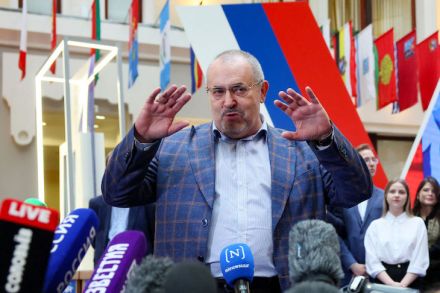
Despite a little eleventh-hour drama, Boris Nadezhdin’s bid to become the only genuine opposition candidate in March’s Russian elections has been blocked. What’s interesting is not that he was barred, but what this whole process says about the evolution of ‘late Putinism.’ Once, after all, it was marked both by a – limited but real – degree of genuine pluralism, especially at a local level, and also dramaturgiya, a theatrical facsimile of genuine democratic politics. The elections were stage-managed, of course, and the so-called ‘systemic opposition’ knew that their job was to put on a show rather than actually challenge the regime.

Zelensky’s rivalry with Zaluzhny spells bad news for Ukraine

From our UK edition

Is he out or not? After a night of claim, counter-claim, rumour and speculation, it appears that Ukrainian president Volodymyr Zelensky has decided not to dismiss his commander-in-chief Valery Zaluzhny. Tension, however, clearly remains between the two – and this is bad news for Ukraine. Ukrainian news outlets were the first to begin claiming that General Zaluzhny had either been dismissed or was about to be. Insider sources contacted by well-connected Western journalists were, on balance, also apparently confirming rather than denying the claims. Ukrainian parliamentarian Oleksy Goncharenko asserted that Zaluzhny had resigned and had refused the offer of an ambassadorial position in Europe.

Putin’s Kaliningrad visit wasn’t a threat to Nato

From our UK edition

President visits part of his own country. Shock. Vladimir Putin’s visit yesterday to the Russian exclave of Kaliningrad, perched precariously on the other side of the Baltic states, was not, as some overheated commentary has claimed, a threat to Nato. Rather, it was a sign of his renewed need to campaign domestically. The threat from Kaliningrad and to the Suwałki Gap is heavily mythologised Kaliningrad, once East Prussian Königsberg, is a territory a little larger than Northern Ireland that was annexed by the Soviets at the end of the second world war and subject to an intensive period of industrialisation, militarisation and colonisation.

Who shot down the plane carrying Ukrainian PoWs?

From our UK edition

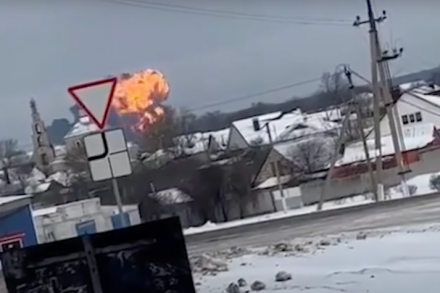
It will prove to be a terrible and tragic irony if it turns out that Kyiv shot down a Russian transport aircraft today that was transporting Ukrainian prisoners of war ready to be exchanged. Around 11 a.m. local time this morning an Il-76 transport aircraft crashed in a fireball near the Russian village of Yablonova in the Belgorod Region, some 35 miles from the Russian-Ukrainian border. Everyone on board was killed. It appears that, perhaps alongside a military cargo, the plane was carrying 65 Ukrainian PoWs – if the claims of the Russian defence ministry are to be believed. As is always the case in this war, multiple and contradictory explanations quickly emerged, often without any real evidence.

Why is Zelensky echoing Putin’s rhetoric?

From our UK edition

Today is Ukraine’s Day of Unity which necessarily had to be marked with an expression of national pride. However, president Volodymyr Zelensky’s decision to issue a decree ‘On the Territories of the Russian Federation Historically Inhabited by Ukrainians’ represented not simply that, but an open political challenge to Moscow, and one which strangely echoed Putin’s rhetoric. The decree begins castigating Russia for oppressing Ukrainians ‘in the lands historically inhabited by them,’ which is defined as the ‘modern Krasnodar, Belgorod, Bryansk, Voronezh, Kursk and Rostov regions’ – a large swathe of south-western Russia.

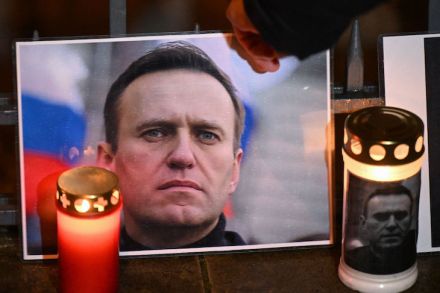
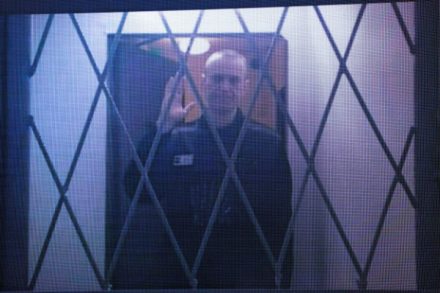
Despite three years in prison, Navalny still scares Putin

From our UK edition

The March presidential elections in Russia will, of course, be a stage-managed farce, but that doesn’t mean that real politics has been entirely extinguished. It offers a narrow window of opportunity for the opposition to try and connect with the Russian people – so the Kremlin is doing its best to muzzle them. On the third anniversary of his return to Russia on Wednesday, opposition leader Alexei Navalny issued a statement on X (via his lawyers, his only connection with the outside world) intended to bolster his supporters’ morale. He returned from Germany in 2021 following a poisoning attempt that saw government agents lace his underwear with Novichok.

Has Putin really revived Stalin’s infamous spy-catching unit?

From our UK edition

Is Moscow reviving a notorious 1940s security agency? Or is the suggestion that the infamous SMERSH counterintelligence unit has been revived in Russia simply a way to troll the West? Worse yet, could it be that the country is facing the threat of a neo-Stalinist revival? A recent video circulated on Russian social media shows a young man from the Belgorod region making a public apology for having filmed and posted footage of Russian air defences online. In front of him, with only their backs shown, are two uniformed men. On their vests are patches with the infamous name 'SMERSH', a contraction of 'Smert’ Shpionam' or ‘Death to Spies' on them.

Putin’s migrant headache

From our UK edition

The Russian economy has become heavily dependent on migrant workers, largely from Central Asia. As the defence ministry tries to recruit them into the army, and certain extremists call for them to be sent home, the Kremlin is having to tread a fine line between economic pragmatism, nationalism and the immediate needs of the war. The glittering new metro stations still being built and opened around Moscow are to a considerable extent built by migrant workers. Migrants also shovel the snow off roofs and pavements, pack boxes at the warehouses of Russia’s equivalents to Amazon and drive taxis. In all there are more than four million legal guest workers across the country, and possibly as many illegals.

Russia’s egg shortage is panicking Putin

From our UK edition

The fall of the house of the Romanovs in 1917 may have been a long time coming, but arguably it was finally triggered by bread prices. It would be ironic if another Russian autocrat fell to food, which may help explain why the Kremlin has been moving so decisively to address Russia’s egg crisis, after prices rose by over 40 percent last year. On Friday, the Investigatory Committee – loosely analogous to an FBI on steroids – ordered an enquiry into potential price fixing, following on the heels of Prosecutor General Igor Krasnov’s decision to launch his own probe. Rather more directly, the much-feared Federal Security Service (FSB) has been instructed to arrest anyone hoarding eggs.

Why Putin didn’t mention the war in his New Year’s address

From our UK edition

With ‘don’t mention the war!’ the order of the day, it felt as if Vladimir Putin’s message to his people this year was haunted by the ghost of Basil Fawlty. The New Year’s message is a Soviet and then Russian tradition dating back to the 1970s. It is watched widely across the country, sometimes with reverence, often with irony, but nonetheless something of a ritual observed almost regardless of class, location or political orientation. Aired just before midnight in each of the country’s 11 time zones, before the chimes of the Kremlin belltower and the national anthem, in the past it was an opportunity for Putin to try and present himself as the caring father of the household.

Does Putin use body doubles?

From our UK edition

It has become something of a fad to try to identify and quantify the body doubles of Vladimir Putin. There are even outlandish claims that the man himself is dead and has been replaced by one. But why the fascination? It is hardly unusual for autocrats to have doubles – as a shield against assassination or simply as handy proxies to take on the more tedious and less important duties. Stalin had at least a couple; Panamanian strongman Manual Noriega apparently had no fewer than four. North Korean dictator Kim Jong-un was once photographed chatting with two of his identically-dressed doubles. The likelihood is that those uncharacteristic public events were, indeed, carried out by Putin's double Certainly there is good reason to suppose Putin has at least one.

Why Ukraine’s attack on the Novocherkassk warship matters

From our UK edition

It was not quite in time for Christmas (which Ukraine now celebrates on 25 December, after switching this year from the Russian Orthodox Julian calendar), but Kyiv will still be celebrating today’s apparently successful Storm Shadow missile attack on a landing ship in a Crimean port. There are no seasonal ceasefires on either side in this increasingly bitter conflict. The Ropucha-class landing ship Novocherkassk (BDK-46) had already had a rather unhappy war. In March 2022, it was damaged by Ukrainian shelling when docked in Berdyansk in occupied southern Ukraine. Later in the year the Novocherkassk, along with its sister ship, the Tsezar Kunikov, were reportedly immobilised by a lack of spare parts thanks to sanctions.

Vladimir Putin bores the nation

From our UK edition

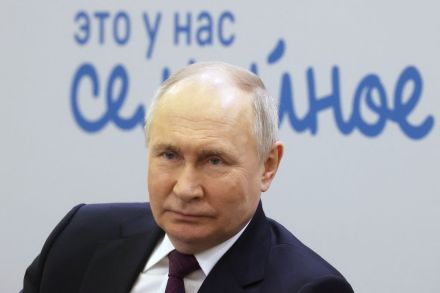
From time to time, the tsar must listen to the complaints of his subjects. Having dodged this duty last year, Vladimir Putin has an election looming, so held a press conference. While he punished his viewers in the process with a performance of stupefying boredom, nonetheless today’s event gave us a sense of his election strategy. Once a year Putin traditionally held a press conference and also his Direct Line event, a kind of town hall at which he would field questions from around the country. Both were marathon events that peaked at over four and a half hours, respectively, and they were opportunities for him not just to connect with his people but also demonstrate his mastery of his brief.

An election campaign is still dangerous for Putin

From our UK edition

It was elaborately staged precisely to try and look unstaged. After a medals ceremony at the Kremlin for Heroes of the Fatherland day, Vladimir Putin joined an oh-so-unchoreographed gaggle of participants. One, Lt Colonel Artem Zhoga, appealed for him to stand for re-election. Although Putin admitted he had had second thoughts, he accepted ‘that there is no other way,’ and would indeed be running. This is, it is fair to say, not much of a surprise. Nor will it be a surprise if Putin wins in March. But that doesn’t mean there won’t be upsets along the way.

The US Senate is playing into Putin’s hands

From our UK edition

The news this week that Republicans in the US Senate had voted together to block a supplemental funding bill that included provision for $61 billion for Ukraine was greeted with predictable dismay in Kyiv and glee in Moscow. Ostensibly this was a bid to force the White House into prioritising more spending on securing the Mexican border. However it also reflects a real sense on the part of some within the GOP that the United States is either throwing good money after bad in maintaining support for the conflict, or continuing to subsidise a backsliding Europe that really ought to be taking the lead on this crisis. After all, while Europe as a whole has committed more funds to Ukraine – $143.

Sanctions against Russia haven’t failed

From our UK edition

One of Russia’s toxic TV presenters recently cackled that Western sanctions ‘have only helped Russia wean itself off dependence on foreign imports and given a boost to our own producers’. At a time when Russia’s third quarter growth has actually exceeded expectations, hitting 5.5 per cent, it is worth noting what sanctions can and cannot do. The bottom line is that sanctions have not failed – but were never going to be the silver bullet solution to Kremlin aggression some claimed at the start. As in so many aspects of the West’s response to the 2022 Ukraine invasion, unrealistic early boosterism has led to subsequent, and arguably equally unrealistic, despondency.

Putin isn’t afraid of Cameron

From our UK edition

Considering the obsession Russia has with Britain as the source of all its woes, it is perhaps surprising how David Cameron's return to politics is being taken. Or rather, how little Moscow thinks it matters. After all, there is a flatteringly pervasive sense that while the United States is the main threat to Russia, Britain is more than just its sidekick. Instead, if Washington has the resources, London has the low cunning. Time and again, the Kremlin claims to see MI6 or the Foreign Office or some other arm of Perfidious Albion behind its reversals. Even the recent allegations that a Ukrainian officer masterminded the bombing of its Nord Stream 2 pipeline, which one would have thought was a propaganda gift, was rubbished as Kyiv simply taking the punch for its 'Anglo-Saxon masters.

Is the West losing interest in Ukraine?

From our UK edition

There’s a very different tone coming from Kyiv these days. Speaking to Time magazine, Volodymyr Zelensky had just returned from Washington after failing to make another impassioned public address on Capitol Hill, and not even managing to get on Oprah. The Ukrainian president sounded angry. The constant struggle to maintain international support seems to be taking its toll. ‘Nobody believes in our victory like I do. Nobody,’ he insisted, but added that dragging Ukraine’s allies along with him ‘takes all your power, your energy… It takes so much of everything.’ Meanwhile, in the Economist, Gen.

Why the Kremlin will fear Dagestan’s anti-Semitic mob

From our UK edition

As the war in Gaza continues to have global repercussions, a mob in the southern Russian city of Makhachkala stormed their local airport, after news spread that a flight from Tel Aviv was due to land. Beyond the heightened passions of Muslims around the world, this incident also demonstrates the particular challenges for multi-ethnic Russia. Tensions in the predominantly Muslim regions of the North Caucasus had been rising in recent days. Last week, there was an arson attack on a Jewish centre under construction in Nalchik, capital of Kabardino-Balkaria.

Are Ukraine’s sabotage tricks going too far?

From our UK edition

There has never been any doubt that Ukraine was the focus of an intelligence war as much as a physical one. But the extent of Western assistance, as well as growing concern at some Ukrainian tactics, is only now becoming clear. On Monday, the Washington Post ran a lengthy examination of the level of CIA assistance for the Ukrainian Security Service (SBU) and military intelligence (HUR) that bore all the hallmarks of being facilitated by the US government. It acknowledged that since the annexation of Crimea in 2014, the Americans has invested ‘tens of millions’ of dollars in training and technical assistance for their Ukrainian counterparts, even building new headquarters for HUR’s special forces, for fear that the old ones were compromised.