Mark Galeotti

Mark Galeotti

Mark Galeotti heads the consultancy Mayak Intelligence and is honorary professor at the UCL School of Slavonic and East European Studies and the author of some 30 books on Russia. His latest, Forged in War: a military history of Russia from its beginnings to today, is out now.

Why the Kremlin sees Britain as the ultimate bogeyman

From our UK edition

Perfidious Albion is at it again. The Kremlin’s increasingly unhinged obsession with seeing a British hand behind its various upsets has now manifested itself in a claim that the UK is behind the establishment of a death squad operating in Africa. The claim, trumpeted across Russia's state-run media, is that MI6 is behind a ‘punitive saboteur unit consisting of Ukrainian nationalists and neo-Nazis’ being trained for operations in Africa. According to an unnamed ‘military-diplomatic source,’ London requested in July that the Ukrainian government help it recruit this force.
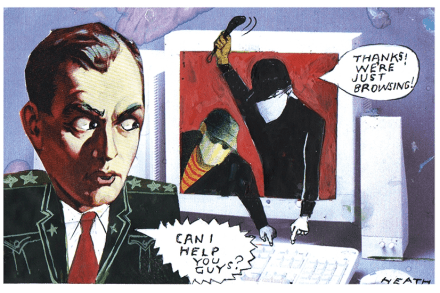
Was Putin behind the Electoral Commission hack?

From our UK edition

The hacking of the Electoral Commission’s databases highlights the way that in the interconnected modern world, ‘warfare’ can be as much about undermining faith in a country’s institutions and disrupting its political processes as anything else. The Electoral Commission has admitted that ‘hostile actors’ penetrated their systems in August 2021, in a ‘complex cyberattack’ that was only detected in October 2022. In those 14 months, the hackers accessed the details (most, admittedly, openly available) of up to 40 million voters, as well as the commission’s email system. One former Russian spook from the SVR once admitted to me that ‘MI6, CIA and the rest are the opposition: it’s the FSB who are the enemy’ Was it the Russians?

Will MI6’s Russian recruitment drive work?

From our UK edition

Sir Richard Moore, head of the Secret Intelligence Service – MI6 – follows the tradition of only giving one public address a year, so it is inevitably scrutinised carefully for signs and portents. His speech at the UK embassy in Prague, inviting Russians to spy for Britain, required no particular reading between the lines. After a suitable preamble noting Britain’s strong relationship with the Czech Republic, he pivoted from Moscow’s brutal suppression of the liberal Prague Spring in 1968 to Soviets, the bravest of whom, seeing ‘the moral travesty of what was being done...acted on their convictions by throwing in their lot with us, as partners for freedom.

Moscow’s pyrrhic Nato victory

From our UK edition

Despite the inevitable and performative expressions of anger, regret and dismay following this week’s Nato summit, Moscow feels it has reason to be moderately content with its outcome. It has seen Ukraine frustrated in its failure to secure Nato membership – and fractures emerge between Kyiv and the West. Moscow’s contentment, however, may well be misplaced. In fact, the summit’s inconclusiveness when it comes to Ukrainian membership has ensured a range of other initiatives which are rather less comfortable for the Kremlin.  The notion ahead of the summit that Ukraine would be invited to join the alliance before peace had been concluded – essentially forcing the rest of Nato into war – was always a non-starter.

Putin is struggling to solve his Prigozhin problem

From our UK edition

It’s satisfying when a jigsaw piece slots into place. Today we heard that Wagner leader Evgeny Prigozhin met Vladimir Putin in the Kremlin just a few days after his abortive mutiny of 23-24 June. That detail helps clear up some of the confusion of this past week. How come Prigozhin has been at liberty in Russia? We were told he would be going directly into exile in Belarus. Why is the Federal Security Service (FSB) apparently no longer seeking to arrest him? Is his Wagner mercenary army being disbanded or not?  Putin’s spokesman Dmitry Peskov has now acknowledged that, on 29 June, Prigozhin was among 35 people invited to a three-hour meeting in Moscow held to discuss the war.

The Kremlin is trying to humiliate Prigozhin

From our UK edition

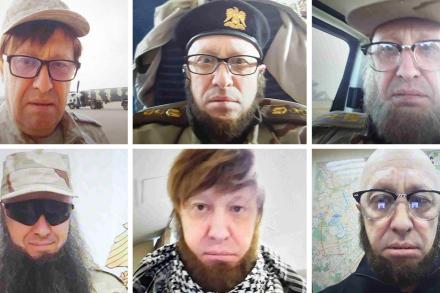
When corrupt Ukrainian President Viktor Yanukovych was toppled in 2014, his private estate at Mezhyhirya turned out to contain an ostrich farm, chandeliers worth thousands and and a two-kilo gold loaf of bread. When Wagner mercenary chief Yevgeny Prigozhin’s St Petersburg estate was raided, investigators found cash, guns – and a bizarre collection of wigs. But what does the eager ‘through the keyhole’ leak of footage from the raid tell us about the state of play in the Putin-Prigozhin grudge match? A giant sledgehammer in one room was inscribed, ‘For use in important negotiations’  Prigozhin himself is still at large.

Yevgeny Prigozhin

After Putin: how nervous should we be?

From our UK edition

The brief mutiny by Yevgeny Prigozhin and his Wagner mercenaries represented the most serious shock yet to Vladimir Putin’s 23-year reign. No wonder alarmed western governments are considering nightmare scenarios. Yet the outlook may actually be rather more optimistic. When news of the mutiny broke, there were fears of mass defections to the side of Prigozhin, a man who has sanctioned the murder of prisoners and even suggested that Russia ‘needs to live like North Korea’ to win its war with Ukraine. Rishi Sunak convened a Cobra meeting to consider possibilities apparently including a Russian collapse and nuclear proliferation. The concern is that a serious challenge to Putin risks pushing Russia into anarchy and so poses an even more intractable security challenge to the West.

Why did Wagner get so far?

From our UK edition

13 min listen

Fraser Nelson is joined by Svitlana Morenets and Mark Galeotti as Vladimir Putin faces an armed insurrection from the Wagner mercenary group – what could happen next?

Putin faces challenge from his own creation

From our UK edition

It took a characteristically long time for Vladimir Putin to respond to the coup-that-dare-not-speak-its-name launched by Yevgeny Prigozhin, but when his statement came, it was steeped in bitterness. And no wonder, for Prigozhin was essentially Putin’s creation, and we know that Putin’s greatest venom is reserved for those he considers traitors. An ex-con who moved into the hot dog business and then finer dining options, Prigozhin’s early restaurant business in 1990s St Petersburg was given a dramatic boost by the patronage of the deputy mayor, one Vladimir Putin.

The Kremlin is still afraid of Alexei Navalny

From our UK edition

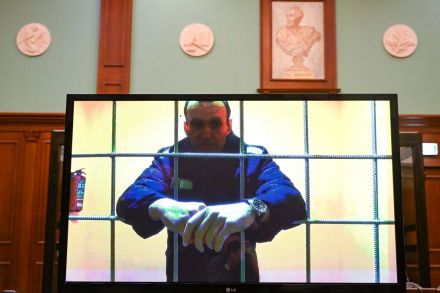
As Russian opposition leader Alexei Navalny is once again in court, facing charges that could extend his time in prison by 30 or more years, he is showing that he is not giving up his uneven but unyielding challenge to the Putin regime. When Navalny returned to Russia in January 2021 after recovering from a government attempt to poison him, it was to no one’s surprise that he was immediately arrested and sent to prison for nine years on spurious parole violation charges (which included the surreal accusation that he was in breach for not reporting to the police while he was in a coma). Since then, he has faced an escalating campaign of pressure, being repeatedly sent into solitary and punishment cells, sometimes simply for not buttoning his prison uniform correctly.

Putin is lining up a lengthy list of scapegoats for his war

From our UK edition

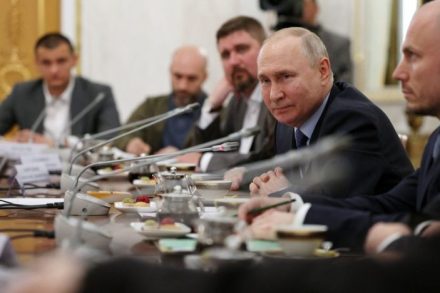
Lately Vladimir Putin has been strikingly unwilling to subject himself to any serious debate about his war in Ukraine. On Tuesday, he came the closest yet, spending more than two hours talking to war correspondents working for either the state media or nationalist social media channels. It was hardly an inquisition, but there were some interesting insights into his thinking to be gleaned. Despite the clear evidence of a steady contraction in the Kremlin's aspirations and expectations from the original intent to conquer the whole of Ukraine, he refused to accept that the goals of the 'special military operation' had changed in any way.

Will Putin manage to spin Kyiv’s counter-offensive as a victory?

From our UK edition

The Ukrainian counter-offensive has duly started and, needless to say, there is a rush to judgement. It is going to play out over the coming weeks, even months, though, and at present we are still working off partial and often deceptive information. But, while there is relatively little one can say about the events unfolding on the battlefield, there is more to be said about the way they are being spun. After weeks of diversionary actions and then days of feints and probes, the fighting has begun in earnest. It is focused on the rubbled ruins of what were once Bakhmut, the towns of Avdiivka and Marinka towards the city of Donetsk, and in the south, at Lobkova and Orikhiv, towards the crucial transport hub of Tokmak.

Russia flounders as Kyiv gears up for its counter-offensive

From our UK edition

According to Moscow, Ukraine’s long-awaited counter-offensive has begun, and has begun badly for Kyiv. Of course, we need to treat the Russian account with all necessary scepticism, but the evidence is that the droney, phony war stage of this campaign season is ending and the real fighting is beginning. The unverified Russian claim is that Kyiv launched a 'large-scale offensive in five sectors of the front in the South Donetsk direction', which was beaten back at the cost of some 250 Ukrainian casualties and the loss of a full 16 tanks and 24 other armoured vehicles. Even by the Russian account, this attack comprised just six mechanised and two tank battalions from two of their newly created brigades, the 23rd and the 31st, or some 3,500 troops in all.

Ukraine’s next move

From our UK edition

39 min listen

This week: In his cover piece, journalist Mark Galeotti asks whether Putin can be outsmarted by Zelensky’s counter-offensive. He is joined by The Spectator’s own Svitlana Morenets to discuss Ukraine's next move. (01:08) Also this week:  Journalist David Goodhart writes a moving tribute to his friend Jeremy Clarke, The Spectator’s much-missed Low Life columnist who sadly passed away earlier this week. David is joined by Cass Pennant and Freddy Gray, The Spectator’s deputy editor, to remember the life and writing of Jeremy Clarke. (12:52)  And finally: The Spectator’s deputy features editor Gus Carter writes this week about the curious business of fertility.

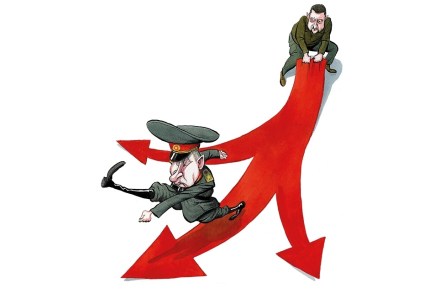
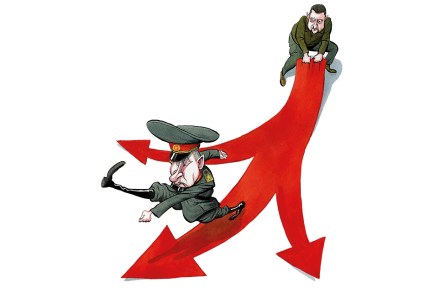
Ukraine’s next move: can Putin be outsmarted?

From our UK edition

Has Ukraine’s much-heralded counter-offensive already begun? At the end of last month, defence minister Oleksy Reznikov promised that ‘as soon as there is God’s will, the weather and a decision by the commanders, we will do it’. The past few weeks have seen an upsurge in what the military describe as shaping operations, preparing the ground for battle, with attacks on Russian fuel and weapons depots and command centres. This week’s incursion by Ukraine’s anti-Kremlin Russian units over the border into the Belgorod region could also be an attempt to distract Moscow and make it disperse its forces away from likely lines of attack.

Russia’s fake news machine has a fresh target

From our UK edition

There is a certain perverse cachet in one's words being wilfully distorted by someone who thinks it gives their argument weight. Increasingly, the Russians are adopting this as a tactic. But the target of their disinformation appears not to be foreign audiences, but Russians themselves. I’ve never really subscribed to the view that being banned from Russia on the charge that I was 'involved in the deliberate dissemination of false and one-sided information about Russia and events in Ukraine,' and 'contributing to fueling Russophobia in British society' was a badge of honour. It would be tempting to run with it and market myself as 'the man Putin fears' or some other grandiose label. But above all, I feel rather sad at being banned from a country that means so much to me.

Why has Ukraine admitted that it assassinates people in Russia?

From our UK edition

After months of flat denials, the head of Ukrainian military intelligence has admitted that Kyiv is carrying out a campaign of sabotage and assassination inside Russia. But why change the official line now? Even if this is a good cop/bad cop routine, it still risks embarrassing the president, raising questions as to how far he is fully in control of HUR Major General Kyrylo Budanov, the head of the Main Directorate of Intelligence (HUR), has become one of the media stars of this war, not least thanks to an artfully curated public persona that a senior US intelligence official characterised as ‘George Smiley meets Jason Bourne.’ This week he took advantage of interviews on two separate YouTube channels to acknowledge a Ukrainian role in a spate of recent attacks in Russia.

Prigozhin’s ‘treachery’ poses a dangerous challenge to Putin

From our UK edition

Yevgeny Prigozhin, the businessman behind the Wagner mercenary army, likes accusing his political enemies of 'treason' for not backing him as much as he’d like. Now, though, he appears to have committed that very crime himself – with the revelation that US intelligence reports suggested he tried to cut a deal with HUR, Ukrainian military intelligence. These reports were part of the trove of classified materials leaked onto the Discord gaming server earlier this year. Taken on their own, they could be regarded as sneaky fakes intended to undermine Prigozhin, yet many other documents within the collection have quietly been acknowledged as real. While it still cannot be taken as wholly proven, in Russia even some of Prigozhin's erstwhile supporters are accepting their veracity.

The Black Sea is Nato’s new front line against Russia

From our UK edition

Earlier this month, an unarmed Polish aircraft monitoring potential human smuggling and illegal fishing on the Black Sea almost ditched into the sea when a Russian Su-35 fighter engaged it over international waters. It was a reminder that while attention is inevitably focused on the land battles anticipated when Kyiv launches its spring counter-offensive, this is also a war playing out at sea. It was also a reminder that what happens offshore has far wider implications. The twin-engine L-410 Turbolet, more commonly used as a small commuter aircraft, was being used by Frontex, the European Union’s border security agency, as part of its Western Black Sea 2023 operation.

War in Ukraine rains on Putin’s Victory Day parade

From our UK edition

It may be having trouble on the battlefield, but the Russian army does know how to stage a parade. Behind the goose-stepping ranks, massed bands, and rumbling missile launchers, though, was a clear sense of the practical and political costs of the war in Ukraine. Although parades from Crimea in the south to Pskov in the north had been cancelled on reasons of security, there was no way Vladimir Putin could let this one not run – even Covid had not accomplished that. The Senate’s golden dome had been repaired after last week’s drone attack – and anti-drone guns were very much in evidence among the security team – and the sky was a requisite blue (if need be, the air force seed clouds to make them rain the day before, to ensure the appropriate backdrop).