Mark Galeotti

Mark Galeotti

Mark Galeotti heads the consultancy Mayak Intelligence and is honorary professor at the UCL School of Slavonic and East European Studies and the author of some 30 books on Russia. His latest, Forged in War: a military history of Russia from its beginnings to today, is out now.

Putin is deluded if he thinks Ukraine will quickly fold

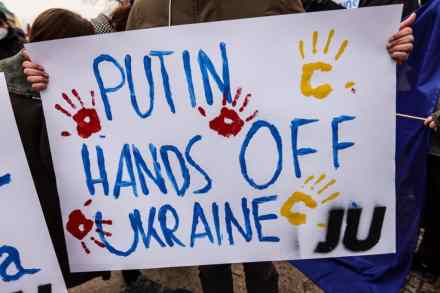
So it’s war. For all Vladimir Putin may want to call it a ‘special military operation,’ as missiles rain down on targets all across Ukraine and tanks pour across its borders, this is nothing less than a full-scale act of unprovoked aggression, recognised as such everywhere except in one place: Putin’s head. Can Putin honestly believe that any quisling could rule in Kiev from anything other than a throne of Russian bayonets? His pre-recorded announcement of the invasion was a case study in emotive button-pressing, claiming that Ukraine was a hotbed of Nazism, and that Russia was simply intervening ‘to protect people who have been subjected to bullying and genocide by the Kiev regime for eight years.
Has Putin outplayed Macron in Africa?

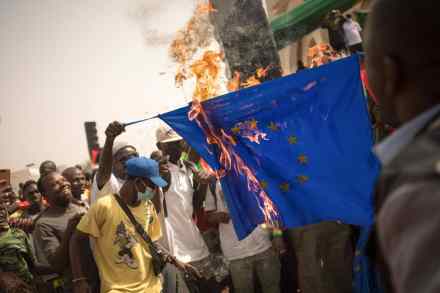
While the world is focused on Ukraine, Emmanuel Macron has withdrawn all French forces from Mali. Last weekend, thousands of soldiers were flown out of the former French colony after nine years of fighting Islamist insurgents in the Sahel. Malian protesters bid the French soldiers farewell by shouting ‘Shit to France’ at the departing planes. Following a military coup in May, Mali’s ‘interim President’ Colonel Assimi Goïta began to tire of the French and their calls for free elections. There were also lingering doubts over France’s motivation, stoked by a Russian disinformation campaign. So Goïta began looking for allies who could provide him with muscle to fight the Islamist insurgency without any lectures about democracy.

Russia’s Ukraine invasion is an own goal for Putin

Vladimir Putin does like to keep us guessing. While western governments were warning in increasingly apocalyptic terms of a full-scale invasion of Ukraine, instead he has chosen to recognise the Donbas and Lugansk pseudo-states and to send in Russian ‘peacekeepers’. Is this a step back, forward, or sideways? Only Vladimir Vladimirovich knows for sure. The very theatricality of this conflict — already highlighted by James Forsyth — was given a new twist by a surreal meeting of the Security Council, nationally televised in which Putin forced his most powerful underlings to incriminate themselves.

Putin has created a Schrödinger’s war in Ukraine

In his famous thought experiment, Schrödinger’s cat was both dead and alive in potential, until its box was opened to find out. Likewise, it seems the much-heralded war in Ukraine is at once imminent and unthinkable, and we don’t know which. The date and indeed time of a massive invasion of Ukraine asserted with such confidence in certain newspapers seems, mercifully, to have come and gone. Vladimir Putin is saying that he wants talks to continue, and the Russian military is claiming it is moving some of its forces away from the border area. But where does that leave us? In many ways, exactly where we were before.

Putin and Xi’s Potemkin alliance

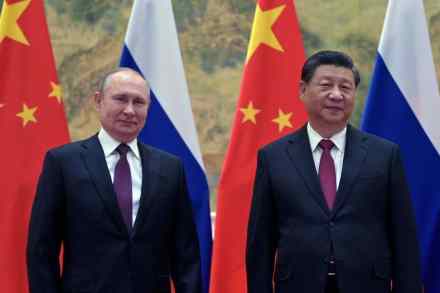
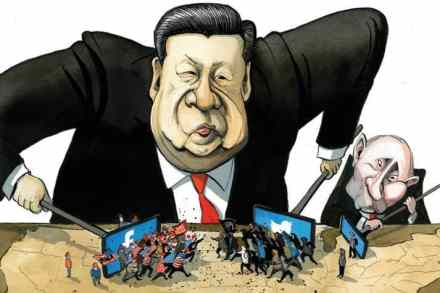
Vladimir Putin very rarely travels abroad these days – and Xi Jinping has not met a foreign leader in person for almost two years. Yet there they were together, just before the opening of the Beijing Olympics, hailing their and their nations’ friendship and concluding $117 billion in oil and gas deals. Although they themselves avoid the word, can we yet talk of a Sino-Russian alliance? Not quite: there’s more here than meets the eye. Certainly the focus was on amity and common interests. This had been signalled in the lead-up to the summit. Chinese foreign minister Wang Yi said that Moscow’s security concerns about Nato were ‘legitimate’ and needed to be ‘taken seriously and addressed.

Britain’s fiery relationship with Russia could help Ukraine

Britain last night sent soldiers and hi-tech kit to bolster up Ukraine's defences amidst the threat of a Russian invasion. But as well as preparing for war, the UK is also opting for jaw jaw with the Kremlin. For some, this is grounds for apoplexy, as – in the midst of arguably the most dangerous European security crisis since the end of the Cold War – Defence Secretary Ben Wallace invites his Russian counterpart, Sergei Shoigu, to visit Britain. But he’s absolutely right to do so. No one is going to mistake Wallace for some closet Putinist, what the Germans call a Putinversteher, or ‘Putin understander.

No, Putin isn’t trying to bring the Soviet Union back

On Christmas Day 1991, in his last act as president, Mikhail Gorbachev signed away the existence of the Union of Soviet Socialist Republics. A 74-year experiment that began with the ‘Great October Revolution’ of 1917 (although the USSR was formally constituted in 1922) was over. Or was it? Thirty years on, Stalin regularly tops the Levada Centre’s survey of ‘the most outstanding personality in history’, while half of Muscovites favour the return to Lubyanka Square of the statue of ‘Iron Felix’ Dzerzhinsky, founder of the Bolshevik political police. Russian troops are massing on Ukraine’s borders. Moscow demands that Nato should stay out of the countries of the former USSR. The control of the media and public conversation tightens.

Is Vladimir Putin really willing to invade Ukraine?

Is Putin preparing to invade Ukraine? It certainly looks that way, with western intelligence agencies estimating this week that around 100,000 troops are now massing at the country’s eastern border. To some, this build-up is proof enough that the Kremlin plans to invade. This week the US president Joe Biden even made significant diplomatic concessions to Moscow to prevent a looming conflict. But the US president should keep in mind that capability does not prove intent: and Putin may well decide that the cost of invasion is too hard to justify. His recent Ukrainian mobilisation could still be a piece of ‘heavy-metal diplomacy’ – a show of force intended to bully and bluff Kyiv and the West into concessions.

Britain’s duty to the Black Sea

With Russian troops massing on Ukraine’s borders, the Black Sea is looking choppy. While that may seem to have little significance for us, in an age of globalised supply chains, international security commitments and Britain’s ‘tilt to the Indo-Pacific,’ that matters more than we might think. However, there is also an opportunity for the UK. In a report for the Council on Geostrategy that was published this week, I, James Rogers and Alexander Lanoszka, suggest that the Black Sea region is at risk of becoming an anarchic environment where insecurity reigns amid Russian domination. This matters.

There is no Russia-China axis

You should be careful what you wish for, because you might just get it, so the old cliché goes. In diplomacy at the moment, it seems you should be careful of the threats you prepare for, because you may end up producing them. There is a growing trend in the West towards treating Russia and China as some single, threatening ‘Dragonbear’ (a reference to the two countries' national animals). This underrates the very real tensions between Moscow and Beijing, but risks pushing them even closer together. The most recent case in point was Nato secretary-general Jens Stoltenberg’s interview in the Financial Times, in which he criticised ‘this whole idea that we either look Russia, or to China… because it goes together.

Is Russia ready for a Romanov restoration?

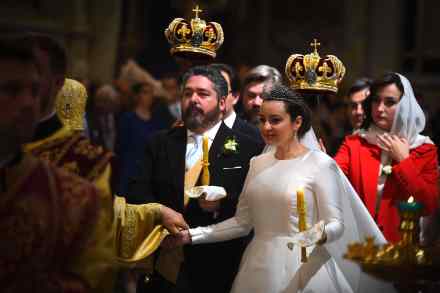
Hail the tsar! Georgy Romanov, great-grandson of Grand Duke Kirill, cousin to Nicholas II, the ill-fated final Emperor of Russia, is Grand Duke and Sovereign Heir to the throne — at least according to some. He has just wed Italian consultant and author Rebecca Bettarini in the first royal wedding in St Petersburg for over a century. It was an over-the-top, three day event that brought together not only the scattered scions of Europe’s intermarried royal families, from Queen Sofia of Spain to Simeon II of Bulgaria, but also figures from the new Russian elite.

Putin’s Covid cocoon is a sign of his terror

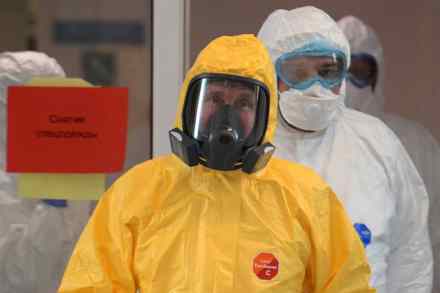
Although he has been vaccinated, Vladimir Putin is self-isolating for at least a week after ‘dozens’ in his entourage came down with Covid. He is apparently showing no signs of being infected. And perhaps no wonder, as even by the standards of his usual presidential protection, since the start of the pandemic Putin has been shielded within a formidable bio-security regime. Those due to meet him face-to-face are tested, required to isolate beforehand, and – if visiting him either in the Kremlin or his mansion outside Moscow – has to pass through a tunnel fogged with aerosolised disinfectant and bathed in germ-killing ultraviolet light.

Why Russia’s Olympic punishment backfired

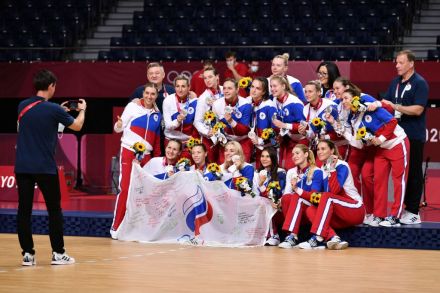
The Tokyo Olympics are over and fifth place in the medals table went to the ‘ROC’, the Russian Olympic Committee. Rather than being punished for its state-run doping programme, Russia has turned it into a perverse triumph, illustrating the weakness of sanctions as a way of trying to shape international behaviour. Of course, Moscow denied systematic cheating, but after the World Anti-Doping agency imposed a four-year ban in 2019, reduced to two years by the Court of Arbitration for Sport in 2020, they were forced to accept that if Russian athletes were going to compete, they could not do so under their own flag. They hardly went deep undercover, though. At the 2018 PyeongChang winter Olympics, they wore plain grey uniforms and took the podium to the Olympic anthem.

Why Joe Biden’s Russia-bashing is a tactical mistake

You might not think that Geoff Norcott, the self-proclaimed conservative comedian, has something to contribute to western relations with Russia, but you’d be wrong. And it’s a shame that President Biden doesn’t seem to have read Where Did I Go Right? (Norcott’s account of his estrangement from his leftist roots), because time and time again, he illuminates the way that progressives’ enthusiasm for demonising their opponents only entrenches them. Take Remainers characterising Brexiteers as racist xenophobes or gullible victims of obvious lies or Hillary Clinton’s claim that half of Donald Trump’s supporters were ‘deplorables… racist, sexist, homophobic, xenophobic, Islamophobic – you name it’?

The Soviet spectre haunting Afghanistan

As US and British forces pull out of Afghanistan, further victims of the ‘grave of empires’, Russia is experiencing a mix of satisfaction, exasperation and trepidation. It has its own bitter memories of the country, after all. In 1979, as a friendly regime was falling back in the face of a mounting Islamic fundamentalist insurgency, Soviet forces rolled into Afghanistan. The idea was that by installing a new leader and mounting a brief show of force, the rebels would be intimidated back into line. Six months, the old men in the Kremlin told themselves, that is all it would take. And so began a vicious ten-year war that saw the deaths of 15,000 Soviets and hundreds of thousands of Afghans.

Lukashenko’s migrant warfare against the EU

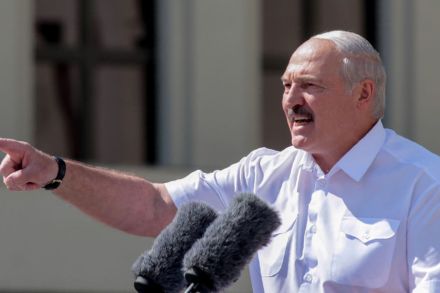
When you have already forced a plane down with spurious claims of a bomb threat, just to arrest one dissident journalist, where do you go from there? For the Belarusian dictator Alexander Lukashenko, a man looking to punish the European Union after it imposed sanctions on Belarus, it seems that exploiting would-be migrants and asylum seekers is the way forward. Last week, the dictator threatened to send masses of migrants to the EU, in retaliation for the bloc’s sanctions against Belarus. ‘We will not stop anyone’, Lukashenko said, saying migrants would be on their way to a ‘warm and comfortable Europe’ soon.

Why an EU-Russia summit was always going to fail

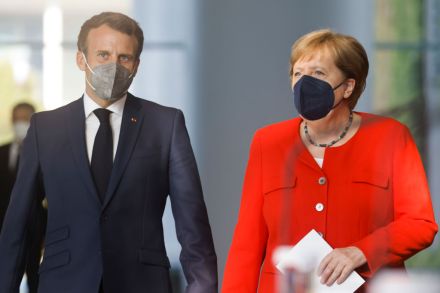
When Emmanuel Macron and Angela Merkel unilaterally proposed a European Union summit with Vladimir Putin, they managed to open deep fault lines in the continent over the EU’s Russia policy. Soon afterwards, Macron and Merkel were forced into an embarrassing reversal, largely by the countries of Central Europe, and had to cancel the proposed summit. In the process the two world leaders highlighted that this was not the right time for a summit, that the EU is divided over Russia, and that this kind of initiative plays into Russia’s misunderstanding of the Union. The suspicion must be that Macron and Merkel wanted to emulate the success of Joseph Biden’s recent meeting with Putin. It certainly did not seem like they had a specific and sensible agenda in mind.

The real reason Putin targeted HMS Defender

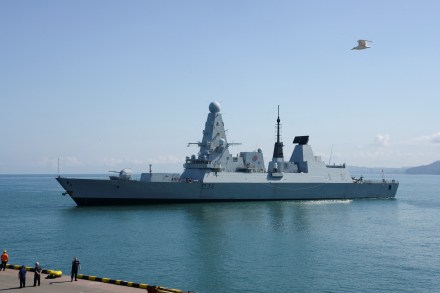
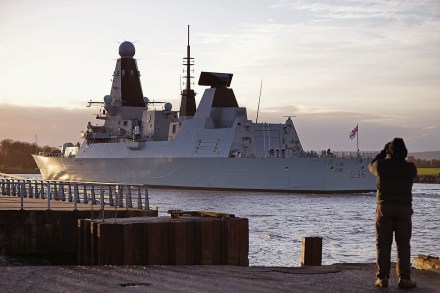
When military personnel talk of ‘theatres’ they mean a zone of conflict. Moscow seems to take the term increasingly literally, though, regarding spin as an essential tool of martial statecraft. This was especially visible in yesterday's claims that its Border Guard ships fired warning shots and Black Sea Fleet Su-24 bombers dropped OFAB-250 fragmentation bombs because the Royal Navy destroyer HMS Defender ‘intruded’ onto Russia’s ‘territorial waters.’ After which, Moscow smugly noted, Defender ‘left’ those waters. Except that very little of that seems to be true. First of all, the waters in question were off Cape Fiolent, at the southern tip of the Crimean peninsula.

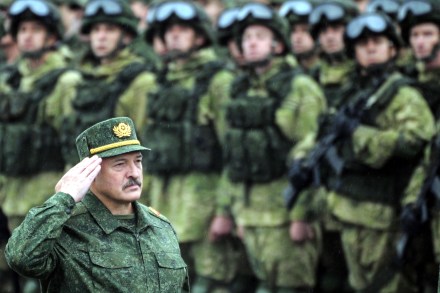
It’s time to kick out Lukashenko’s KGB thugs

While the EU agonises about whether to boycott Belarusian potash or state-owned oil companies, there is one very easy measure that would not only be a powerful symbolic rebuke but also limit the regime’s campaign to spy on, harass, intimidate and harm the opposition outside the country’s borders. Kick out the KGB.It is a stark statement about Alexander Lukashenko’s thuggish dictatorship that it never even pretended to reform its security apparatus after the Soviet Union was dissolved. Instead, the local branch of the USSR’s State Security Committee (KGB) simply became the Belarus KGB in a transition so seamless they scarcely even changed the logo.

Alexei Navalny’s big gamble

Alexei Navalny seems to undergoing a metamorphosis. Yesterday, we saw him attending another trial by video, looking gaunt after 24 days of hunger strike. But if anything, the more attenuated his frame, the more his moral certainty shone through it. An appeals hearing for a separate charge of insulting a Second World War veteran gave him a rare opportunity to speak to the outside world. Characteristically, he made a joke of his condition to his wife, Yulia, saying he now looked like ‘a creepy skeleton.’ However, this was a moment’s light-hearted intimacy in a bravura performance primarily directed towards both the Kremlin and the wider Russian population.