Mark Galeotti

Mark Galeotti

Mark Galeotti heads the consultancy Mayak Intelligence and is honorary professor at the UCL School of Slavonic and East European Studies and the author of some 30 books on Russia. His latest, Forged in War: a military history of Russia from its beginnings to today, is out now.

Does Putin’s ‘toxic masculinity’ really matter?

Apparently, if Vladimir Putin had been a woman, everything would be just tickety-boo. Speaking to German TV, Boris Johnson has said that Putin is the ‘perfect example of toxic masculinity’ and that had he been a women – ‘which he obviously isn’t’, Boris felt the need to clarify – then ‘I really don’t think he would’ve embarked on a crazy, macho war of invasion and violence in the way that he has.
What Russia’s military shake-up reveals about Putin’s war in Ukraine

When General Alexander Dvornikov was made overall commander of Russia’s forces in April, it looked as if the amateurishness and incoordination of the early stage of the Ukraine war might be being addressed. Now, though, Dvornikov is not around, and a new commander may shape a savage new phase of operations. In recent days, the Russian defence ministry announced that Colonel General Alexander Lapin was in command of the Central Group of Forces in Ukraine, while General Sergei Surovikin was heading the Southern Group of Forces during the invasion. Of Dvornikov, who has not been seen for weeks, there was no mention, and the British Ministry of Defence suggests he has been removed from his post.

How Russia’s cartoon heroine turned on Vladimir Putin

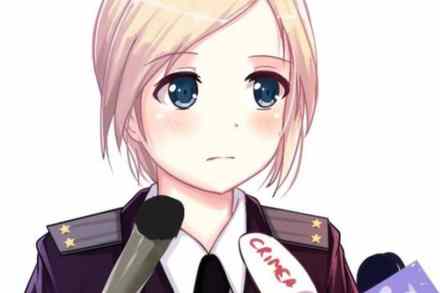
Vladimir Putin’s regime has a track record in building up public heroes whom it hopes to use, only to find the ungrateful wretches unwilling to play the roles it intends. The most recent is Natalia Poklonskaya, a woman whose trajectory from cartoon heroine to legal adviser has starkly illustrated the way Putin faces criticisms not just from remaining liberals at home, but also nationalists. Poklonskaya shot to fame amidst the Russian take-over of Crimea. A Ukrainian, she had been a senior prosecutor in Crimea, then in Kyiv, until she resigned in the wake of the ‘Euromaidan’ rising, ‘ashamed to live in the country where neo-fascists freely walk the streets.’ She returned to Crimea and after it was annexed by Moscow was appointed its Prosecutor.

Putin is no Peter the Great

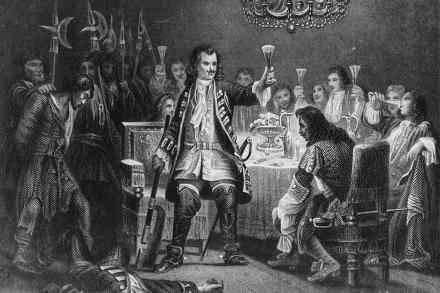
Putin has a penchant for history, but only insofar it flatters him and his views. Last year, he gifted the world a 5,000 essay that essentially pre-justified his invasion of Ukraine with amateurish fantasy history, and now he is comparing himself with Tsar Peter the Great. It is not a comparison that fits or flatters. Peter the Great is one of the, well, greats of the Russian historical pantheon. He ruled from the late 17th to the early 18th century, and in that time became the first tsar to travel in Europe, built a new capital at St Petersburg, and was both founder of the Russian navy and victor, on points, of the 20-year Great Northern War against the Swedish Empire, leaving Russia a dominant Baltic power.

How the West is helping Putin’s propagandists

One might not think that J. R. R. Tolkien has much to do with the bitter war in Ukraine, but one would be wrong. A particular epithet, once used by Ukrainians specifically for the Russian soldiers who have shelled, looted and raped their way into their country has begun to be applied also to the Russians who support the war and, increasingly, all Russians. That epithet is orc, the brutal and brutish foot soldiers of the dark lord Sauron, who spill in their countless numbers from the land of Mordor to kill and to despoil. Tolkien's works are very popular in both Russia and Ukraine, and there as elsewhere have been subjected to scholarly deconstruction, naked plagiarism and appropriation into memes.

Does Putin have blood cancer?

Suddenly, we are all diagnosticians. Clips of a puffy Putin slurring his words, his hands twitching or clutching a table for grim death, have led to all kinds of speculation about his health. It does seem probable that he is suffering from some ailments, to be sure. However, we need to be careful we do not get carried away with the speculation. Putin is notoriously private and his health is considered well off-limits. For a man who built much of his personal brand on his judo-fighting, ice hockey-playing, bare-chested horseback-riding persona, illness and ageing are obviously sensitive topics. Nonetheless, it has long been known that he suffers from recurring back problems, and appears to have undergone surgery more than once.

The real reason for Putin’s intelligence shake-up

It has been reported this week that Vladimir Putin is shifting responsibility for covert operations in Ukraine to a different intelligence agency. The Fifth Service of the Federal Security Service (FSB) has now reportedly been usurped by ‘military intelligence’ – still widely known by its old acronym of GRU, but actually called the GU, the main directorate of the general staff. Lt Gen. Vladimir Alekseev, first deputy head of the GU, is now expected to take over Russia’s intelligence capabilities in Ukraine. To some this is evidence of inter-agency conflict and the decline of the FSB inside the Kremlin’s walls. But it is more likely that Putin is simply digging in for a long war.

How Ukraine rained on Putin’s parade

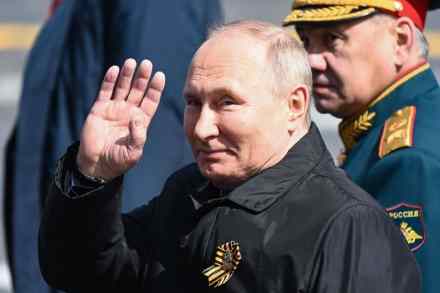
The Russians know how to put on a parade, and Victory Day is the showiest of the shows. It may have been a portent, though, that inclement weather conditions forced the cancellation of the aerial flypast. It quite literally might have rained on Vladimir Putin’s parade. This shouldn’t have happened. Typically, if there is any danger that this high holy day of Putinism might see rain, then the air force seeds the offending clouds the day before to make them rain, so the sun can shine on 9 May. It usually works, until it doesn’t. Which is itself something of a metaphor for what is happening now in Russia. https://www.youtube.com/watch?

Why Putin’s ‘Satanic’ missile launch matters

In some ways, it’s a headline-writer’s dream: Putin puts his faith in Satan. In reality, it’s actually Putin’s new RS-28 Sarmat (‘Sarmatian’) heavy intercontinental ballistic missile, which has become colloquially known in western circles as the ‘Satan II’. It is intended as a replacement for the R-36M, which in Nato parlance is known as the SS-18 ‘Satan.’ Following a successful test on Wednesday Putin asserted that the missile would not only ‘reliably ensure Russia's security from external threats’ but that it would ‘provide food for thought for those who, in the heat of frenzied aggressive rhetoric, try to threaten our country.’ It is certainly true that it is a powerful, next generation weapon.

Putin is devouring his children

Like the Greek titan Cronos devouring his own children, Vladimir Putin seems determined to turn against those he was once closest to – out of fear, anger and hubris. In the process, he is only further weakening his regime. The former deputy head of the infamous Federal Security Service (FSB), colonel general Sergei Beseda, has been moved from house arrest to the investigations wing of the equally infamous Lefortovo prison. Designed to break inmates’ wills, guards escorting prisoners through its corridors use clickers to announce their presence. This allows other prisoners to be placed face to the wall in niches along the way so that they don’t get to see who else is in there.

The terrifying neo-Nazi mercenaries being deployed in Ukraine

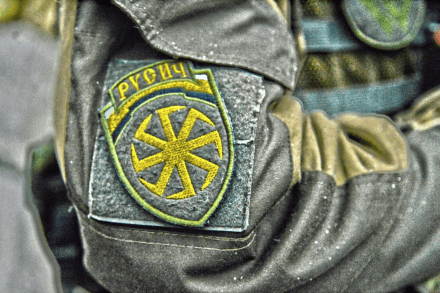
Given how the Kremlin is so determined to portray Ukraine as a hotbed of Nazis, it is tragically ironic not only that its own forces seem determined to recreate some of the horrors of the German invasion in the second world war, but also that it is so willing to use its own fascists in pursuit of its war. The latest unit to hit the news is Rusich, a unit affiliated to the infamous mercenaries of Wagner Group. Its name simply means a member of the old Rus’ people, and speaks to its inchoate ideology, a mix of traditional Slavic (and Viking) paganism, Nazism, and extreme Russian nationalism.

Good riddance to Vladimir Zhirinovsky, Russia’s clown prince

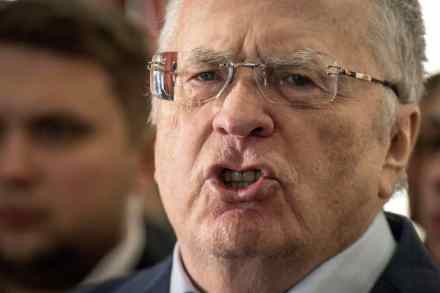
He wanted to see the Baltic States bombarded with toxic waste. He brawled in parliament. He encouraged Vladimir Putin to declare himself tsar. Vladimir Zhirinovsky, one of the most grotesque fixtures in Russian politics for over thirty years, is dead. It is the end of an era – and good riddance. The 75-year-old died in a Moscow hospital of Covid, despite by his own account, having had eight vaccinations. Even in death, he is surrounded by a cloud of hyperbole and mythology. Although never personally close to Putin, he nonetheless played a crucial role in the emergence of the debauched pseudo-democracy that has characterised the past twenty years.

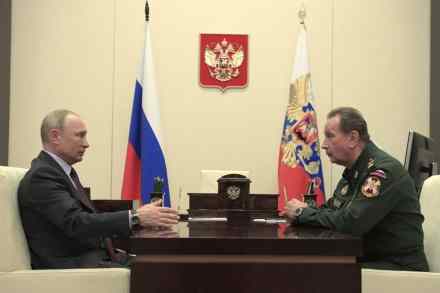
Even Putin’s Praetorian Guard is turning against him

You’d think a ruthless autocrat who believes he faces a West that wants to unseat him with people power would make damn sure he keeps his Praetorian Guard on side. You’d think. After all, it has long been one of the Kremlin's tenets that the West is committed to first isolating and then reshaping Russia using a 'colour revolution' or 'Trojan Horse' strategy. The idea is that popular revolutions and street protests are mobilised and weaponised by the dark arts of Western 'political technologists', with military force only deployed as a last resort. Rising against post-Soviet authoritarians? The protests against rigged elections in Russia and Putin's return to the presidency in 2011-13? The Syrian Civil War? The Ukrainian 'EuroMaidan' revolution of 2014?

Russia’s best and brightest are fleeing Putin

News that Putin’s climate envoy Anatoly Chubais has quit his position and left the country is no great surprise and, to many Russians, not that great a loss. However his departure is still significant as it illustrates a growing haemorrhage of the talents in the wake of Putin's invasion of Ukraine. Those Russians with the resources and, above all, skills to make it abroad are fleeing while they can. Chubais himself is still remembered by most Russians as one of the so-called ‘boys in pink shorts’ under former finance minister Yegor Gaidar. These men were responsible for implementing the ‘shock therapy’ transition to the market in the 1990s that left most Russians impoverished, while a handful became ultra-rich oligarchs.

Why is Putin firing a hypersonic missile in Ukraine?

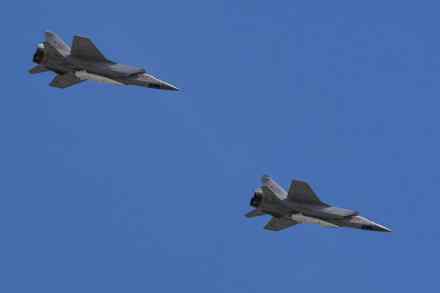
Putin, like many other belligerent autocrats, does like his Wunderwaffen, or ‘wonder weapons.’ Now it appears he’s even used one in an act of wasteful overkill in Ukraine: using the hypersonic Kh-47M2 Kinzhal (Dagger) missile to apparently destroy an arms depot in western Ukraine. The Kinzhal was one of the six ‘magic weapons’ Putin unveiled in a moderately-deranged section of his 2018 state-of-the-nation address, which was memorably enlivened by a computer animation of what looked like a nuclear attack on Donald Trump’s Mar-a-Lago resort in Florida.

Putin’s totalitarian turn

Putin, of course, can never be wrong. Hence the desperate struggle, familiar to other personalised authoritarianisms, to find suitable scapegoats, because if the monarch is infallible, then anything that goes badly must be someone else’s fault, whether because they misled the boss or simply failed to follow orders. What is especially alarming is when the blame comes to fall on a whole country for failing to live up to his notion of their destiny. Colonel General Sergei Beseda, head of the Fifth Service of the infamous Federal Security Service (FSB), is reportedly under house arrest, accused of embezzling funds intended for the subversion of Ukraine.

The West needs to prepare for guerrilla war in Ukraine

Russia's deputy foreign minister Sergei Ryabkov warned this week that convoys of weapons being sent to Ukraine would be considered legitimate military targets by Russia. It was a deliberately ambiguous and political statement more than anything else, but it is also a useful reminder of the need to think about the potential next phase in the war. It is still unclear whether the Russians will be able to recover from their unimpressive initial onslaught, but one way or another it seems likely that at least part of Ukraine will end up under Moscow’s control. It also seems pretty certain that Ukrainians behind the lines will not quietly submit, but instead wage a partisan war against the occupiers.

Is Russia becoming a dictatorship?

Is Russia heading for dictatorship? Some would think it is already there, but even today there are still some remnants of a civil society and constitutionalism. It is harder to believe they will last for long though. For a long time, Vladimir Putin’s regime was something of a post-modern authoritarianism that in the main relied not so much on fear and force as control of the narrative and occasional, measured applications of prophylactic repression. Back in the 2000s and even 2010s the elections were rigged, but the real trick was to allow opposition parties and candidates who were, in the main, so personally unsavoury and politically unattractive that while the scale of Putin’s victories was exaggerated, they were not wholly fictitious.

Putin’s propaganda machine is breaking down

As protests continue against the war in Ukraine, and as Russian casualties mount, the Kremlin has launched the predictable two-prong propaganda campaign. This is made up of a barrage of nonsensical rationalisations of Russia's invasion and legal and technological measures to try and keep honest reporting at bay. Much like the soldiers engaged in the invasion, Putin’s propagandists are looking as committed or competent as might have been expected. Although the state has a firm grip on TV and most other media outlets, this is not a totalitarianism and there are still some independent outlets. Hosts and ordinary citizens calling in to the Silver Rain radio station were barely holding back the tears as they talked about the war.

War in Ukraine has divided Putin’s court

It is striking how little enthusiasm there is in Russia for Vladimir Putin’s war in Ukraine – but for some, it has become an opportunity to steal a march and curry favour with the boss. Thousands of Russians have been out on the streets protesting against the conflict, despite the heavy-handed and unstinting response of the security forces. Journalists and experts, sports stars and cultural icons have been making their opposition clear as well. Even those within the system, including senior diplomats and businesspeople, aren’t trying to hide how far they were blindsided by Putin’s decision to invade, and how little they appreciated it.