Mark Galeotti

Mark Galeotti

Mark Galeotti heads the consultancy Mayak Intelligence and is honorary professor at the UCL School of Slavonic and East European Studies and the author of some 30 books on Russia. His latest, Forged in War: a military history of Russia from its beginnings to today, is out now.

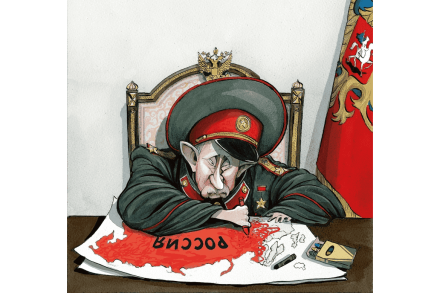
Tsar Vladimir brings in martial law

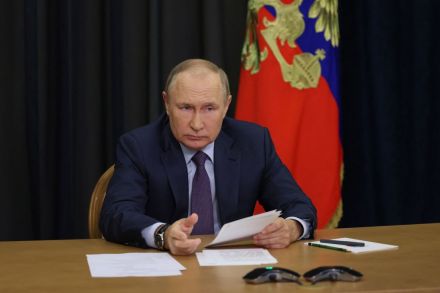
Martial law can arrive with a bang: tanks on the streets, Swan Lake on the TV. It can also creep up on a country in the guise of a presidential edict with the title ‘The Decree On Measures taken in the Constituent Entities of the Russian Federation in Connection with the Decree of the President of the Russian Federation of October 19, 2022 No. 756’. Either way, Vladimir Putin has just moved Russia one step closer to totalitarianism. What is interesting is just how long and half-hearted a process this has been. When Putin invaded Ukraine in February, the sharpest-beaked hawks in his entourage were urging total war, and with it an imposition of tight state control over much of the economy.
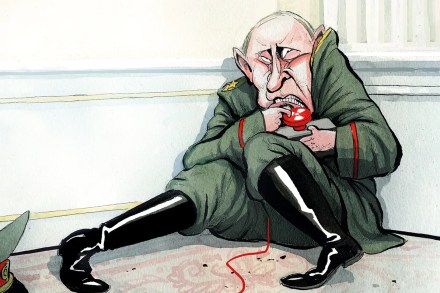
The misconception about Putin’s big red nuclear button

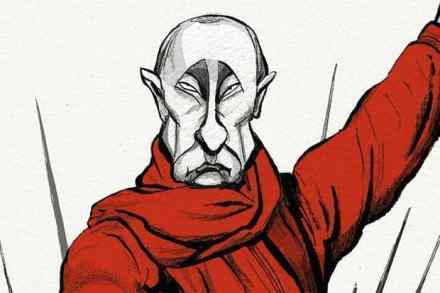
There is a common misconception that the leaders of nuclear states have a 'red button' that can unleash Armageddon. As Vladimir Putin continues to hint at the use of non-strategic ('tactical') nuclear weapons in Ukraine, there is some comfort in the knowledge that it is not so easy. Ironically, launching the kind of strategic nuclear missiles whose use would likely spiral into global destruction is somewhat easier than deploying the smaller weapons which – however vastly unlikely – could conceivably be used in Ukraine. These lower-yield warheads would need to be reconditioned in one of the 12 'Object S' arsenals across Russia holding them, and then transported to one of 34 'base-level storage depots'.

Putin’s attack dog brings a terrible type of warfare to Ukraine

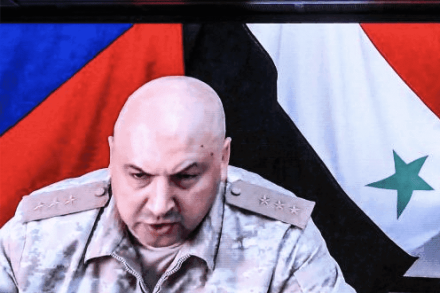
The Crimean Bridge bombing was an unwelcome gift to both Vladimir Putin – who had celebrated his 70th birthday the day before – and the new overall commander of the 'Special Military Operation,' General Sergei Surovikin. Today, they returned the favour with a missile bombardment of Kyiv and other major cities of the like not seen since the start of the war. Missiles and kamikaze drones hit a range of targets, some perhaps considered strategic in the loosest sense such as bridges and railway hubs, but most entirely civilian. The west of the country, which has largely avoided the worst of Russian attacks, also came in for an indiscriminate pounding.

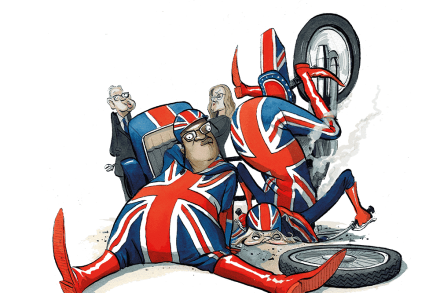
Crash course: how the Truss revolution came off the road

37 min listen

On this week's podcast: As Liz Truss returns from Conservative Party Conference with her wings clipped, has she failed in her revolutionary aims for the party?James Forsyth discusses this in the cover piece for The Spectator, and is joined by former cabinet minister and New Labour architect Peter Mandelson to discuss (01:08).Also this week: Is it time that the West got tough with Putin?Mark Galeotti writes in this week's magazine about the likely scenarios should Putin make good on his thermonuclear threats. He is joined by Elisabeth Braw, fellow at the American Enterprise Institute, to consider how the West should respond (13:14).

How should the West respond to Putin’s threats?

Vladimir Putin clearly wants us to worry that he is crazy enough to use a tactical nuclear weapon in Ukraine. This fear was intensified this week when images surfaced that some – possibly in error – believed showed a train operated by the secretive nuclear security forces moving towards Ukraine. Despite this, many believe the likelihood of a nuclear attack remains extremely low. Yet it is a plausible enough threat for the West to be considering how it should respond if Putin were to unleash one. Russia has an estimated 1,900 non-strategic nuclear weapons (NSNWs), from artillery shells to warheads for missiles; their yields range from a mere 0.5 to 100 kilotons, more than twice the power of the bomb that devastated Nagasaki.

Even Putin’s minions are turning against him

Sergei Melikov, head of the Dagestan Republic within the Russian Federation, is hardly a dissident. As Colonel General Melikov, he was deputy head of the National Guard, the main militarised internal security force, and he has been a loyal agent of Moscow’s all his life. Nonetheless, he has become a no-doubt-temporary phenomenon on social media for his abusive diatribe against over-enthusiastic military recruiters. https://twitter.com/francis_scarr/status/1575570319104184321?ref_src=twsrc%5Etfw Draft officers had been driving round Derbent, Dagestan’s second city, loudspeakers blaring calls for every adult male to go straight to their local military commissariat.

The Nord Stream blasts are Putin’s warning shot to the West

While the Ukrainians are fighting a conventional war on their own territory, Russia and the West are engaged in an unconventional one fought by economic pressure, political subterfuge and dirty tricks. The apparent sabotage of the Nord Stream gas pipelines seems just the latest example. Both of these lines linking Russia to Germany have sprung devastating leaks. The cause, according to seismological readings, was a series of explosions off the Danish island of Bornholm, too directed (and powerful enough to breach 4cm of steel and a thick concrete mantle) and too synchronised to be any kind of an accident. There are those in Russia who, predictably enough, are blaming the Ukrainians.

Even Putin knows he is losing

Vladimir Putin's latest escalation over Ukraine not only demonstrates that even he doesn’t think he’s winning the war but what happens when a leader knows he has to do ‘something' but doesn’t quite know what. Momentum was, after all, no longer on his side. He seems to have hoped that over a hard winter, either Ukraine would lose the will to fight or the West would succumb to ‘Ukraine fatigue'. However, Ukraine's impressive counter-offensive in the north-east not only confirmed Kyiv's continued and even growing will and ability to fight but also galvanised Western support. Meanwhile, the West is not alone in feeling the pain.

How Russia’s ‘shock jocks’ covered the Queen’s funeral

Modern Russia is a propaganda state, but not in the same way as the Soviet Union. The Kremlin has squeezed out any independent media, but all the same, the coverage of the Queen's funeral demonstrated how this is a post-modern propaganda state, in which competing 'narrative entrepreneurs' try to make their mark and please the boss. As I have written before, the official line on the Queen's death was strikingly respectful, taking its lead from Vladimir Putin's own message of condolences. There were some spiteful and critical comments, primarily on social media, but even these were then shouted down in what seems to have been a genuine public outcry.

How will Putin respond to his latest defeat?

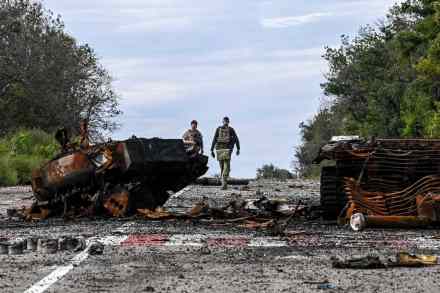
Russia is retreating at speed along the Kharkiv front, leaving behind burnt-out tanks and, even more tellingly, undamaged ones, too. There are television images of locals welcoming Ukrainian forces and accounts from eyewitnesses on the spot – but none of that has made it into Russian state media. As the Kremlin struggles to find some way of spinning the unspinnable, this will affect not just its public credibility but also elite unity. The Russian defence ministry is talking about a 'regrouping' of its units. State TV is extolling the 'exploits' of its gallant soldiers. Government newspaper Rossiiskaya Gazeta, recounting an alleged victory, trips itself up by placing the action deep into formerly Russian-held territory.

Why even Vladimir Putin has paid tribute to the Queen

It is a mark of the Queen’s standing that even Vladimir Putin, in the midst of an undeclared economic and political war between Russia and the West, sent King Charles III his ‘deepest condolences’ after Her Majesty’s death. The Russian leader noted that: ‘The most important events in the recent history of the United Kingdom are inextricably linked with the name of Her Majesty. For many decades, Elizabeth II rightfully enjoyed the love and respect of her subjects, as well as authority on the world stage.’ Calling it a ‘heavy, irreparable loss,’ he wished the King ‘courage and perseverance’ and sent ‘the words of sincere sympathy and support to the members of the royal family and all the people of Great Britain.

Russia’s Ben Stiller ban is a sign of Putin’s desperation

What do Ben Stiller, Sean Penn, the chairman of the BBC, Piers Morgan, and, er, me, have in common? The answer is that we’ve all been banned from Russia. For some of us, that’s a blow. For others, an irrelevance. But for all of us, it’s a strange accolade: somehow Vladimir Putin’s Kremlin thinks we’re significant, dangerous or hostile enough to need to be kept out at all costs. What level of insecurity does it take to worry that the screen Zoolander and Harvey Milk, respectively, represent a threat to the stability and integrity of the Russian Federation?

What the defenestration of Ravil Maganov says about Russia

In my travels when I was still persona grata in Russia, I never got the sense that their windows were unduly flimsy or inviting. Nonetheless, the tally of Russians and Russian-connected individuals who have met their end by jumping or falling out of windows is such that it has become a rather tacky and tasteless meme. Most recently, Ravil Maganov, chair of the Lukoil conglomerate died after falling out of a window in Moscow on Thursday. This follows on the heels of the death in Washington DC of Dan Rapoport, an American businessman who used to be active in Russia before leaving and becoming a critic of the regime. He apparently jumped from an apartment building in Georgetown.

Gorbachev was no saint. But he was a kind of hero

Mikhail Gorbachev is dead at the age of 91, and in a way I feel orphaned. I became fascinated by what was still then the Soviet Union in its late years of sclerosis, when one moribund geriatric at the top of the system succeeded another (the dark joke at the time went as follows: a KGB guard stopped someone at one of the state funerals and asked him if he had a pass – ‘oh,’ came the reply, ‘I’ve got a season ticket’). But my early years as a Russia-watcher were during his time as General Secretary, and if my seniors had become used to the idea that the USSR was a stagnant, unchanging police state, for us, the thought that there could be change, even change for the good, was baked into our assumptions.

The stalemate in Ukraine won’t last forever

Addressing the vexed question of who is winning the war in Ukraine, six months on, is a task to challenge military strategists, geopolitical analysts – and semanticists, because so much depends on what ‘winning’ means. On one level, after all, one could suggest everyone is losing. That said, we cannot escape the fact that both Moscow and the West had essentially written Ukraine off at the start of the war. The conventional wisdom was that it would take perhaps a fortnight for Vladimir Putin’s much-vaunted war machine, the product of two decades of heightened military spending, to defeat its Ukrainian counterpart.  Instead, the Ukrainians proved determined and disciplined in the defence, and imaginative and impassioned in the attack.

What the Dugin assassination tells us about Russia

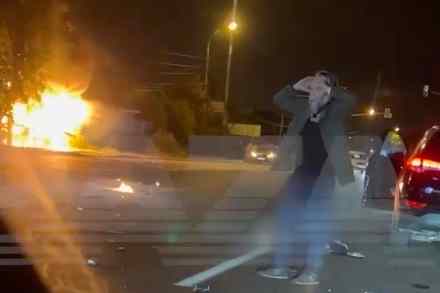
Car bombs used to be a fixture of gangland feuds in 1990s Russia but have since fallen out of fashion. This makes it all the more striking when, as happened on Saturday night, such a device rips through a car just outside Moscow, killing Darya Dugina, daughter of the controversial nationalist ideologue Alexander Dugin. She was a prominent figure in her own right, a journalist working for an outfit Washington says is owned by Russian businessman Evgeny Prigozhin – under sanctions in the West for being the godfather of both the Wagner mercenary group and the infamous social media ‘troll farms’ – who had been a cheerleader for the war in Ukraine.

Ukraine has found Russia’s Achilles’ heel in Crimea

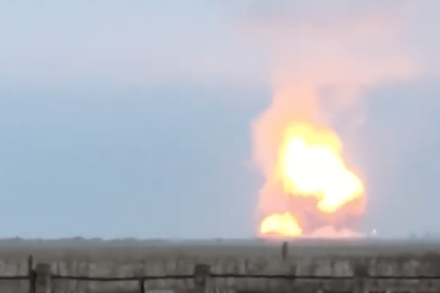
Another day, another Russian arms depot up in smoke. The latest attack, this time on an ammunition storage site near Mayskoye on the Crimean peninsula, highlights three particular aspects of this phase of the war, and the degree to which Kyiv is adapting quicker and more effectively than Moscow. The first is that the long-heralded Ukrainian counter-attack is, so far, less about a melee on the ground and more about a methodical attempt to target Russian supply lines. Until now, this has been through missile and rocket strikes, although Moscow’s claim that the Mayskoye attack was carried out by ‘saboteurs’ would – if true – represent an interesting new approach.

Ukraine’s Crimean strike marks a new stage of the war

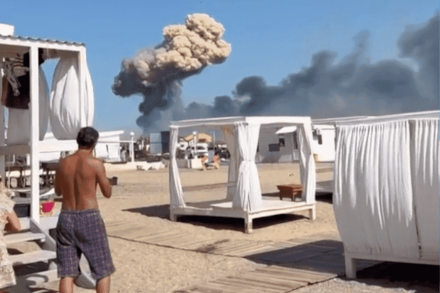
For most Russians, the brutal realities of Vladimir Putin's 'special military operation' have not really struck home. Ukraine's attack on the Saki airbase near Novofedorivka in western Crimea on Tuesday begins to change all that, marking a new stage of the war, one with both dangers and opportunities for Kyiv. The Kremlin’s spin doctors tried to claim that the explosions filmed by horrified Russian holidaymakers were caused by an ammunition fire. However, as videos began going viral on Russian social media, there was no question in the posters' minds but that this was an attack. They voted with their feet, or at least their wheels, and the Kerch Bridge connecting Crimea to the mainland became one long traffic jam as panicked holidaymakers fled the peninsula.

Why Zelensky is purging the security services of Ukraine

Could a general of the SBU, the security service of Ukraine, really have helped Russia take the city of Kherson? Could a colonel have tipped off the Russians as to where the Ukrainians had lain mines north of Crimea? The Ukrainian government certainly appears to believe that fifth columnists within the SBU have been Moscow’s secret weapon in this war – this week Volodymyr Zelensky fired the head of the agency (and his childhood friend) Ivan Bakanov, along with the country’s prosecutor general, Iryna Venediktova.

Russia is militarising its economy

The ‘special military operation’ in Ukraine isn’t a war – there’s a law and a possible maximum sentence (though no one seems to have faced it yet) of 15 years in prison to stop you claiming it is in Russia. Yet Russia does seem to be inching towards a wartime economy, for all Vladimir Putin’s recent bullishness. At the recent (if rather sparsely-attended) St Petersburg International Economic Forum, Putin struck a triumphalist note, crowing that ‘the economic blitzkrieg against Russia never had any chances of success,’ and ‘gloomy predictions about the Russian economy’s future didn't come true.’ That’s both true and not true.