Mark Galeotti

Mark Galeotti

Mark Galeotti heads the consultancy Mayak Intelligence and is honorary professor at the UCL School of Slavonic and East European Studies and the author of some 30 books on Russia. His latest, Forged in War: a military history of Russia from its beginnings to today, is out now.

Is Russia ready for a Romanov restoration?

From our UK edition

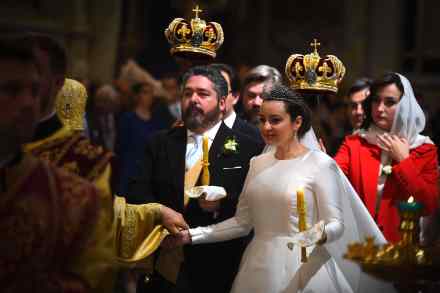
Hail the tsar! Georgy Romanov, great-grandson of Grand Duke Kirill, cousin to Nicholas II, the ill-fated final Emperor of Russia, is Grand Duke and Sovereign Heir to the throne — at least according to some. He has just wed Italian consultant and author Rebecca Bettarini in the first royal wedding in St Petersburg for over a century. It was an over-the-top, three day event that brought together not only the scattered scions of Europe’s intermarried royal families, from Queen Sofia of Spain to Simeon II of Bulgaria, but also figures from the new Russian elite.

Putin’s Covid cocoon is a sign of his terror

From our UK edition

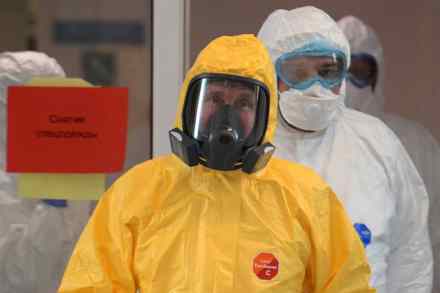
Although he has been vaccinated, Vladimir Putin is self-isolating for at least a week after ‘dozens’ in his entourage came down with Covid. He is apparently showing no signs of being infected. And perhaps no wonder, as even by the standards of his usual presidential protection, since the start of the pandemic Putin has been shielded within a formidable bio-security regime. Those due to meet him face-to-face are tested, required to isolate beforehand, and – if visiting him either in the Kremlin or his mansion outside Moscow – has to pass through a tunnel fogged with aerosolised disinfectant and bathed in germ-killing ultraviolet light.

Why Russia’s Olympic punishment backfired

From our UK edition

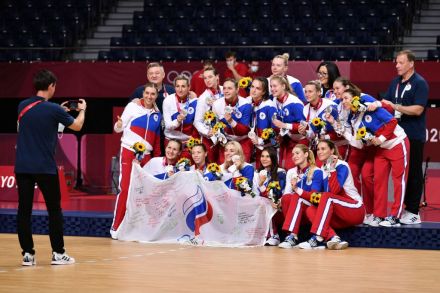
The Tokyo Olympics are over and fifth place in the medals table went to the ‘ROC’, the Russian Olympic Committee. Rather than being punished for its state-run doping programme, Russia has turned it into a perverse triumph, illustrating the weakness of sanctions as a way of trying to shape international behaviour. Of course, Moscow denied systematic cheating, but after the World Anti-Doping agency imposed a four-year ban in 2019, reduced to two years by the Court of Arbitration for Sport in 2020, they were forced to accept that if Russian athletes were going to compete, they could not do so under their own flag. They hardly went deep undercover, though. At the 2018 PyeongChang winter Olympics, they wore plain grey uniforms and took the podium to the Olympic anthem.

Why Joe Biden’s Russia-bashing is a tactical mistake

From our UK edition

You might not think that Geoff Norcott, the self-proclaimed conservative comedian, has something to contribute to western relations with Russia, but you’d be wrong. And it’s a shame that President Biden doesn’t seem to have read Where Did I Go Right? (Norcott’s account of his estrangement from his leftist roots), because time and time again, he illuminates the way that progressives’ enthusiasm for demonising their opponents only entrenches them. Take Remainers characterising Brexiteers as racist xenophobes or gullible victims of obvious lies or Hillary Clinton’s claim that half of Donald Trump’s supporters were ‘deplorables… racist, sexist, homophobic, xenophobic, Islamophobic – you name it’?

The Soviet spectre haunting Afghanistan

From our UK edition

As US and British forces pull out of Afghanistan, further victims of the ‘grave of empires’, Russia is experiencing a mix of satisfaction, exasperation and trepidation. It has its own bitter memories of the country, after all. In 1979, as a friendly regime was falling back in the face of a mounting Islamic fundamentalist insurgency, Soviet forces rolled into Afghanistan. The idea was that by installing a new leader and mounting a brief show of force, the rebels would be intimidated back into line. Six months, the old men in the Kremlin told themselves, that is all it would take. And so began a vicious ten-year war that saw the deaths of 15,000 Soviets and hundreds of thousands of Afghans.

Lukashenko’s migrant warfare against the EU

From our UK edition

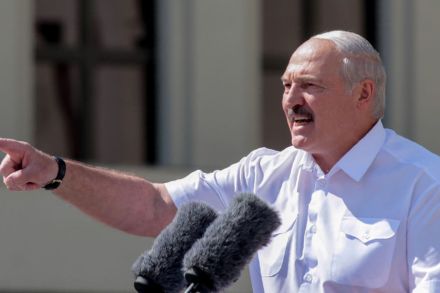
When you have already forced a plane down with spurious claims of a bomb threat, just to arrest one dissident journalist, where do you go from there? For the Belarusian dictator Alexander Lukashenko, a man looking to punish the European Union after it imposed sanctions on Belarus, it seems that exploiting would-be migrants and asylum seekers is the way forward. Last week, the dictator threatened to send masses of migrants to the EU, in retaliation for the bloc’s sanctions against Belarus. ‘We will not stop anyone’, Lukashenko said, saying migrants would be on their way to a ‘warm and comfortable Europe’ soon.

Why an EU-Russia summit was always going to fail

From our UK edition

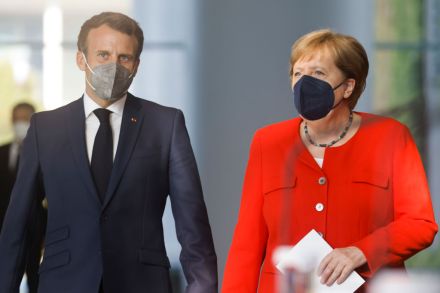
When Emmanuel Macron and Angela Merkel unilaterally proposed a European Union summit with Vladimir Putin, they managed to open deep fault lines in the continent over the EU’s Russia policy. Soon afterwards, Macron and Merkel were forced into an embarrassing reversal, largely by the countries of Central Europe, and had to cancel the proposed summit. In the process the two world leaders highlighted that this was not the right time for a summit, that the EU is divided over Russia, and that this kind of initiative plays into Russia’s misunderstanding of the Union. The suspicion must be that Macron and Merkel wanted to emulate the success of Joseph Biden’s recent meeting with Putin. It certainly did not seem like they had a specific and sensible agenda in mind.

The real reason Putin targeted HMS Defender

From our UK edition

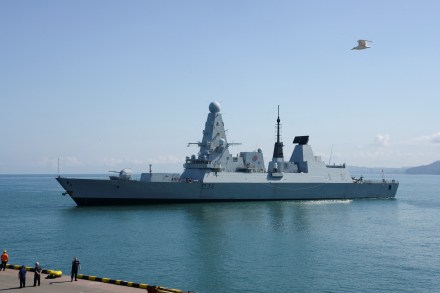
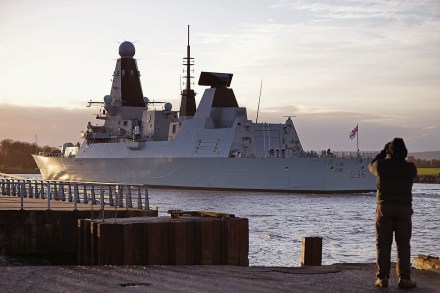
When military personnel talk of ‘theatres’ they mean a zone of conflict. Moscow seems to take the term increasingly literally, though, regarding spin as an essential tool of martial statecraft. This was especially visible in yesterday's claims that its Border Guard ships fired warning shots and Black Sea Fleet Su-24 bombers dropped OFAB-250 fragmentation bombs because the Royal Navy destroyer HMS Defender ‘intruded’ onto Russia’s ‘territorial waters.’ After which, Moscow smugly noted, Defender ‘left’ those waters. Except that very little of that seems to be true. First of all, the waters in question were off Cape Fiolent, at the southern tip of the Crimean peninsula.

It’s time to kick out Lukashenko’s KGB thugs

From our UK edition

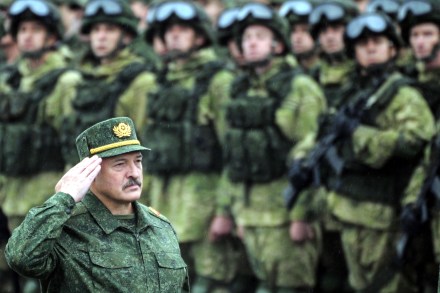
While the EU agonises about whether to boycott Belarusian potash or state-owned oil companies, there is one very easy measure that would not only be a powerful symbolic rebuke but also limit the regime’s campaign to spy on, harass, intimidate and harm the opposition outside the country’s borders. Kick out the KGB.It is a stark statement about Alexander Lukashenko’s thuggish dictatorship that it never even pretended to reform its security apparatus after the Soviet Union was dissolved. Instead, the local branch of the USSR’s State Security Committee (KGB) simply became the Belarus KGB in a transition so seamless they scarcely even changed the logo.

Alexei Navalny’s big gamble

From our UK edition

Alexei Navalny seems to undergoing a metamorphosis. Yesterday, we saw him attending another trial by video, looking gaunt after 24 days of hunger strike. But if anything, the more attenuated his frame, the more his moral certainty shone through it. An appeals hearing for a separate charge of insulting a Second World War veteran gave him a rare opportunity to speak to the outside world. Characteristically, he made a joke of his condition to his wife, Yulia, saying he now looked like ‘a creepy skeleton.’ However, this was a moment’s light-hearted intimacy in a bravura performance primarily directed towards both the Kremlin and the wider Russian population.

Putin steps back from the Ukrainian brink

From our UK edition

After weeks building up forces in Crimea and close to the Ukrainian border — over 100,000, all told — Moscow is now saying it plans to pull most of them back to barracks. Is this a climb-down, mission accomplished, or mind games? Of course, we’ll have to see what actually happens. We’ve seen footage of tanks being loaded back onto railway cars and soldiers taking down tents, but until we have independent verification of substantial movements, we need to be cautious. After all, in 2008, Russian troops deployed to the Caucasus for major military exercises were just packing up when they were promptly ordered back to launch their five-day invasion of Georgia.

The rules of Putin’s game

From our UK edition

What does Putin want? It's more straightforward than you might think: usually the answer is 'what he says'. It's worth remembering this when thinking about what Putin had to say in his latest state of the nation address this week, in which he warned other countries against crossing a 'red line' with Russia. There is, of course, a huge difference between the tactical and the strategic. All politicians have a tendency to economise with the truth, and at times it can feel that the Kremlin has taken this to the level of an art form. Remember those 'little green men' taking Crimea? Putin initially denied any responsibility, even suggested they might have bought their up-to-the-minute kit from army surplus shops, before later comfortably acknowledging them as Russian special forces.

Biden’s sanctions send a warning to Putin

From our UK edition

It’s not easy to frame sanctions, these days. They occupy that huge, hazy diplomatic no man’s land between sternly-worded but essentially vacuous expressions of concern – grave concern, if you really want to pretend you’re serious – and sending a gunboat. When it comes to trying to make an impression on Vladimir Putin, who has no qualms about causing the West concerns – and has a good few gunboats of his own – this is a doubly-difficult challenge. The latest US sanctions are a case in point, a mix of the cosmetic and the consequential that are more about political signalling than anything else.

Russian sabre-rattling over Ukraine demands a different response

From our UK edition

Russian heavy armour is on the move, and Moscow is making no move to hide it. Is this the prelude to a new upsurge in fighting in south-eastern Ukraine, or especially brutal sabre-rattling? The problem is that we don’t know – and this challenges our usual responses. The war in the Donbas – neither civil war nor straightforward foreign intervention, but a messy and toxic mix of the two – has tended to flare up at the end of winter. As thick spring thaw mud begins to dry, campaign season begins. Politically, it already has.

The truth behind Putin’s hit lists

From our UK edition

If we are to believe the gossip, Vladimir Putin draws up death lists the way ordinary people jot down their shopping. And bang on schedule, as Joe Biden makes a point of labelling him a ‘killer,’ not one but two death lists materialise from parts unknown. This weekend the Daily Mirror — not, it has to be said, usually a Kremlinologist’s ‘must-read’ — claimed that Putin is ‘now beside himself with rage’ and is drawing up lists of would-be victims, saying ‘we have long arms. No scum can hide from us.’ The quotes come from an unnamed office of Russia’s much-feared Federal Security Service (FSB), which is apparently planning how to execute Putin’s laundry list of kidnappings and murders.

The EU’s sorry excuse for sanctions won’t change Putin’s ways

From our UK edition

Russian opposition leader Alexei Navalny has been poisoned and then sentenced to two and a half years in prison. But never mind, the European Union is on the case and has decided to impose sanctions. Just not that many. There are apparently just four officials on the list: Alexander Bastrykin, head of the Investigative Committee, which tackles major crimes; Alexander Kalashnikov, head of the Federal Prison Service; prosecutor-general Igor Krasnov; and Viktor Zolotov, the much-feared commander of the National Guard. There is, to be sure, some rationale. Bastrykin, under British sanctions since July, was a key figure in pushing trumped-up charges against Navalny.

Will Iron Felix scare Moscow’s protesters?

From our UK edition

While in the West, the debate seems to be about which statue to topple next, in Russia it’s rather different. Felix Dzerzhinsky – ‘Iron Felix,’ founder of the Bolshevik secret police – looks like he may be coming home, thirty years after his statue was pulled down from its place in front of the KGB’s Lubyanka headquarters. Dzerzhinsky, a Polish aristocrat turned revolutionary, was charged by Lenin in 1917 to form what was then called the All-Russia Extraordinary Commission to Combat Counter-Revolution and Sabotage – rather more concisely known as the Cheka after the Russian initials for ‘extraordinary commission’ – and lead it into the coming civil war.

The EU humiliated itself in Moscow

From our UK edition

It was a masterclass in the worst of European Union diplomacy. Josep Borrell’s controversial visit to Moscow was a triumph. Sadly, though, for the Russians. In light of the treatment. of opposition leader Alexei Navalny — imprisoned this week after he returned to the country whose leadership had tried to murder him — there had been calls for Borrell to cancel his visit. At the very least, the High Representative of the European Union for Foreign Affairs and Security Policy needed to make a robust defence of the opposition, whose marches had been met with violence from the security forces, and whose leaders were being persecuted and harassed, to prove that there was genuine will behind the EU’s professed commitment to universal human values.

Putin’s poisonous prisoner

From our UK edition

Alexei Navalny, the man Putin tried to poison, has been sent to prison for two years and eight months — conveniently keeping him out of the way until long after September’s parliamentary elections. It’s fair to say this was no great surprise. The trial was typically stage-managed, Navalny locked in a glass box during the day-long proceedings that combined the surreal and the sinister. The term represents the three and a half years suspended sentence Navalny was given in a 2014 trial — where the evidence was so flimsy as to be virtually translucent — less time already served. The European Court of Human Rights had ruled that trial 'arbitrary and unfair', but with such political cases, there need be no crime for punishment.

Alexei Navalny is getting under the Kremlin’s skin

From our UK edition

Only half a year ago the opposition leader Alexei Navalny was a non-person on Russian state media, and Putin’s opulent palace built on the Black Sea was largely unheard of inside the country. Navalny had his loyal base of supporters who followed him on YouTube, and the palace had been discussed in the West for a decade. But for the overwhelming majority of Russians, both were unknown. Today, Navalny is everywhere on the Russian media. Vladimir Putin himself may still not be willing to name ‘that man’ – which after a certain point begins to look downright strange – but the President’s loyal army of pundits, news anchors and state journalists have leapt into the fray.