Mark Cocker

The world’s largest, rarest owl is used for target practice in Siberia

From our UK edition

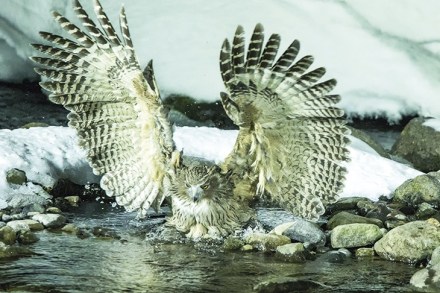
The montane forests of far-eastern Russia have given rise to one of the finest nature books of recent years, The Great Soul of Siberia. In it the Korean cameraman Sooyong Park describes his quest to document the life of the region’s Amur tigers, evoking both his totem beast and its remarkable landscape in loving detail. Jonathan Slaght is an American author, cut from the same cloth in terms of the sheer grit required to cope with the sub-zero temperatures and gloomy, snow-entombed winter woods of Siberia. Nearly 20 years ago he embarked on a similarly arduous mission, not to study the world’s biggest cat, but its largest owl, a ten-pound beast called Blakiston’s fish owl (Bubo blakistoni), named after the English naturalist Thomas Blakiston.

Where did birds first learn to sing?

From our UK edition

The crisis inflicted by Covid-19 has been a source of anguish for everyone; yet we frequently hear how people are rediscovering solace in nature, especially in their gardens or in the surging renewal of life in the spring. According to Tim Burt and Des Thompson, the editors of a collection of essays about the importance of field research, this fulfilment reveals something much more profound than a distraction from lockdown.They argue that a response to the natural world is hardwired in the human psyche. Out of that fundamental reflex has evolved not just our prowess as hunters, then agriculturalists, but the entire edifice of science, whose assembled vision of the physical universe was described by C.P.

Mother nature is finally getting the art she deserves

From our UK edition

I guess that few would currently dispute that the world is in crisis. I’m not talking about Covid-19. Nor am I primarily addressing the issues arising from the 36 billion tonnes of carbon that the human project sends into our atmosphere every year. Climate chaos is a part of the issue, but I’m thinking principally of those things that most impact upon the biosphere as an ongoing live enterprise.

Dangerously desirable: the white-morph gyr falcon commands sky-high prices

From our UK edition

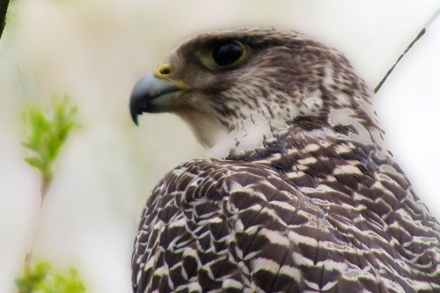
The art of falconry is more than 3,000 years old and possibly as popular now as at any time. Its devotees argue that in a pure form it is a deeply honourable tradition, requiring superhuman patience to coax a magnificent predator to hunt at the owner’s behest. It is a relationship, they would also claim, of mutual understanding and partnership between hawk and human. That’s the positive version. At its most degraded, falconry seems to be a psychopathological obsession, rooted in a fetish for control over beautiful raptors, which sometimes drives practitioners to morally dubious, even illegal, behaviour. The American journalist Joshua Hammer has written a revealing portrait of the sport that is located at a point where these two versions intersect.

In the high Himalayas

From our UK edition

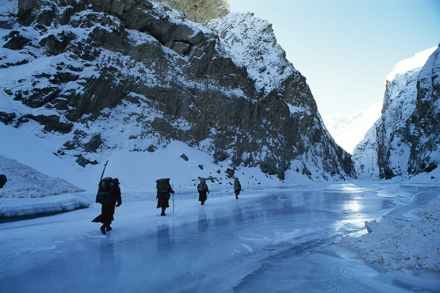
In my twenties I once visited a lonely spot among the western Himalayas called Zhuldok in the Suru valley. Politically it is part of the Indian state of Jammu and Kashmir, but geographically, ethnically and culturally the region is bound to the Tibetan plateau and its former Buddhist theocracy centred on Lhasa. I remember one compelling moment, with the twin peaks of Nun Kun looming above us to 7,000 metres, when we watched two wolves on the far shore of a torrent of glacial meltwater. Those predators lolloped at easy pace through the autumn colour of that immense Himalayan landscape and for one of the few occasions in my life I felt at the edge of all that I had known.

No stone left unturned | 1 February 2018

From our UK edition

Alan Bennett once defined a classic as ‘a book everyone is assumed to have read and forgets if they have or not’. The Victorian nature writer Richard Jefferies 1848–1887 is in the peculiarly unfortunate position of having produced a whole library that falls pretty much into this category. His novels such as Bevis (1882) or the apocalyptic After London (1885) have cult status for some who, almost 70 years ago, had cohered into an active Richard Jefferies’ Society.

Spooky stories for Halloween

From our UK edition

It is surely significant that Ed Parnell’s first novel The Listeners was an updated examination of themes latent in Walter de la Mare’s famously spooky poem of that title. The author credits this predilection for the macabre to an aunt’s VHS recordings of the Quatermass stories in the 1970s, when he was just a small child. Since then he has become an aficionado of the genre, and in his latest book makes a journey through Britain, from Cornwall to the Scottish Highlands, to pin down his own passion for ghost stories while exploring our national obsession with writings on the supernatural. Ghostland includes many of the genre’s key exponents, such as M.R.

Thrills and trills

From our UK edition

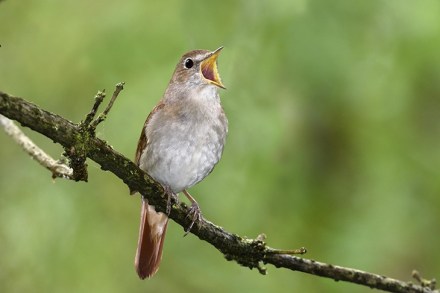
In a sense, the song of the bird in the title of this short, hugely thoughtful and fascinating book is a measure of the gap between nature and human culture. On the one hand stands the most mythologised, celebrated and interrogated maker of natural sound on earth: the nightingale. On the other, the most densely populated metropolitan area in western Europe: Berlin. One might expect our light-winged dryad, in honour of its place in poetry, art, folktale and fiction, to sing in a sylvan glade by a brook full of beaded bubbles. Not a bit of it. It’s by traffic lights in a Berlin park. The bird itself is quite indifferent to the three millennia of cultural churn it has inspired. It is drawn to the German capital by insect biomass and the right vegetation density.

Return of the iceman

From our UK edition

It is more than a generation since the appearance of Barry Lopez’s classic Arctic Dreams. That book’s effortless integration of history, anthropology and ecology, mediated through its author’s radiant prose, introduced a global audience to the frozen north. It freed the frigid ice world from much historical polar literature, conjuring instead landscapes of delicate beauty and extraordinary natural abundance. Lopez also revealed the Arctic as a place of remarkable human achievement, as expressed in the survival skills and spiritual endurance of the indigenous Inuit. A follow-up has long been anticipated and now, 33 years later, Horizon has finally arrived.

Mission improbable

From our UK edition

Alex Dehgan is clearly someone with a penchant for hazardous jobs. Even in the first few pages we find him in postwar Baghdad, he had spent the early part of the century searching for Iraqi scientists who had previously worked on weapons’ manufacture for Saddam Hussein. Presumably the life-threatening risks entailed in that role were insufficient, because he then allowed himself to be headhunted for fresh challenges in Afghanistan. Not only was the new post more dangerous, even on paper its goals looked to border on madness.

Night vision

From our UK edition

Like most of our ape ancestors, we have really had only one response to the fall of night. We have stretched and yawned, we have climbed upwards, we’ve lain down somewhere soft, closed our eyes and shut the whole thing out until morning. Humans may have exchanged tree trunks for a set of stairs, and bunches of green leaves for sprung mattresses, but the same basic reflex has been ongoing among large primates for four million years. The new exhibition at the Natural History Museum, Life in the Dark, reveals to us a little of what and who we have been missing as a result of our diurnal bias. Not surprisingly, it turns out that night-time is peopled with creatures that we find scary.

Pet perversions

It was in his play Back to Methuselah that George Bernard Shaw honoured a lesser known aspect of Charles Darwin’s originality as a thinker, when he described him as ‘an intelligent and industrious pigeon fancier’. Britain’s greatest natural scientist was indeed a keeper of fowl, with pigeons among his favourites. The habit arose from Darwin’s instinctual recognition that in the animal-rearing experiments conducted over millennia by our ancestors, we had inadvertently stored away crucial evidence about the way in which all of life can change in response to environmental stimuli.

Wading to extinction

From our UK edition

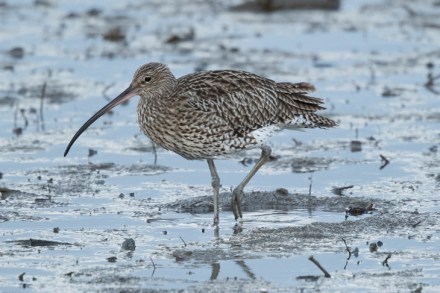
Mary Colwell, a producer at the BBC natural history unit, is on a mission: to save the British curlew from extinction. Yet there is a key moment in this readable, highly informed and heartfelt book, when its author shows you the scale of her challenge. It is at the beginning of her 500-mile trek across Ireland, Wales and England to raise the flag for the totem bird. She goes to a school in Ballinamore in the heart of rural Ireland — where curlews would once have been abundant — and is asked to address a classroom of 17- to 18-year-olds. The pupils are taking their final exams in agriculture and the environment. Yet not one of them has even heard of a curlew, let alone seen one or listened to its heart-piercing spring vocalisations. These are the future farmers of Ireland.

Winged messengers

Even the most cursory glance at the classical period reveals the central place that birds played in the religious and political lives of the two key Mediterranean civilisations. Their gods, for example, were often represented in avian form, so that the Athenian currency bore an owl image, which was intended as a portrait of the city’s patron, Athene. ‘Owls to Athens’ was a proverbial expression, much like ‘coals to Newcastle’. From North Africa to the shores of the Black Sea there are still Greek temples dedicated to Zeus that are topped by weathering stone eagles as symbols of their supreme deity, while the imperial legions of Rome fought under an eagle standard for much the same symbolic reasons.

Animals make us human

From our UK edition

There was a time when biologists so scorned the attribution of human qualities to other animals that anthropomorphism was seen as the ultimate scientific sin and suitable only for children’s stories. Not anymore. Today the inner lives of other creatures are widely accepted as a major research frontier, and here are three books that reflect these preoccupations. One of them even defines it as an entirely new discipline: anthrozoology. Peter Wohlleben may be no scientist, but he is a professional German forester and the author of the enormously successful The Hidden Life of Trees. In this new book he sets out to overturn the stock assumption that other creatures are mere automata driven by instinct, drawing particularly on studies that use MRI digital imaging of the human brain.

On matters maritime

From our UK edition

The Greenland shark has to be one of the most fascinating creatures of which you’ve probably never heard. Growing sometimes to 25ft, it is the largest flesh-eating shark, longer even than a great white. It dwells in the deepest northern oceans. It eats seabirds, huge fish and seals, most of which it probably surprises and devours on the seabed. The youngest Greenland shark of reproductive age is 100 and the oldest may have been alive when the Mayflower set sail. It is, thus, the longest-lived vertebrate life form on the planet. Whalers and the native people of the Arctic have hunted it for centuries, primarily for the immense oil-rich liver. Yet catching one is no easy business. As the author notes, the teeth are like ‘over-sized steel traps’.

Buzzing bees and chocolate trees

From our UK edition

It is estimated that the world’s insects perform an annual pollination service for all humankind worth $215 billion. In return, every year, we run up a pesticide bill of about $40 billion to exterminate them (this doesn’t include the $10 billion costs in social and environmental damage wrought by the same chemicals). Why is it still such a reflex in our encounters with invertebrates to reach for the fly spray? Here are two great books that try to change our minds on creepy-crawlies. On the face of it, Dave Goulson has the more straightforward task. This is not just because the founder of Bumblebee Conservation over a quartet of books has perfected the art of turning the entomologist’s technical expertise into easy-reading everyman’s prose.

Lord of the Arctic

From our UK edition

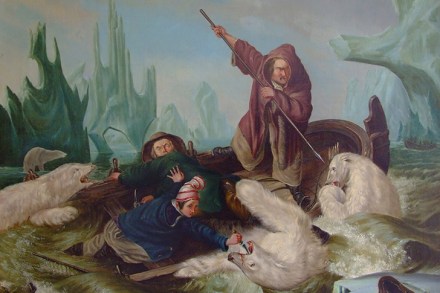
According to the author of this beautifully illustrated, hugely engaging book, if we were ever to choose a fellow mammal to serve as symbol for our time, then the polar bear would probably make any shortlist. Standing ten feet tall on their hind legs and weighing as much as a ton, the males are the world’s largest terrestrial predators and the only ones to seek human flesh actively. This extraordinary whale- and walrus-wrestling monster is proof positive that wildness persists on our planet, despite the onslaughts of the Anthropocene. For all its nightmare-haunting power, however, the aspect of the polar bear that really makes it an icon of the age is its vulnerability.

Spectator Books of the Year: Mark Cocker on trailing Siberian tigers

From our UK edition

Two nature books have really stood out this year. The Great Soul of Siberia: In Search of the Elusive Siberian Tiger (Collins, £16.99) is by the Korean filmmaker Sooyong Park, who has been on the trail of his totem animal for 20 years and singlehandedly obtained most of the cinematic footage which humankind possesses of this, the largest felid on earth. He has now produced a classic evoking the utterly bleak landscapes of Siberia as well as the grotesque abuse meted out to wildlife by poachers. Yet the book is most memorable for its soaring beauty and for Park’s Franciscan love for his fellow creatures. Jennifer Ackerman’s The Genius of Birds (Corsair £14.

Trees of life and death

From our UK edition

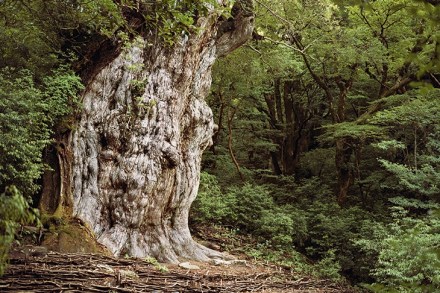
Was it perhaps the landscape historian Oliver Rackham who gave rise to our present preoccupation with old trees through his pioneering works on ancient woodland? He certainly pointed out more than 40 years ago that 10,000 centurion oaks ‘are not a substitute for one 500-year-old oak’. Since then, shelves of books have been written on these veterans, and in The Long, Long Life of Trees Fiona Stafford makes a welcome and entertaining contribution. She draws on material from fields including folklore, natural science, literature, cultural history, European art, ancient mythology and modern medicine to illuminate such trees’ central place in western civilisation. Sometimes all of these are skilfully blended in her accounts of different species. The yew is a good example.