Mark Cocker

Gods and monsters

From our UK edition

Although Nepal’s earthquake last April visited our television screens with images of seismic devastation, the disaster has probably had little impact upon the prevailing western impression of this country. For many the mountain state remains steadfastly exotic and remote. This is not just a consequence of those sublimely unattainable Himalayan peaks. For generations Nepal was a source of western fantasy that bordered on the obsessive and carried an undercurrent of late-imperial eroticism. What had so stirred European appetites was the long-standing Nepalese policy of playing hard to get. A short, bitter conflict in 1814–1816 with the East India Company inspired its militant Gurkha elite to pursue the rigorous exclusion of all foreigners.

Tracking the super cats

From our UK edition

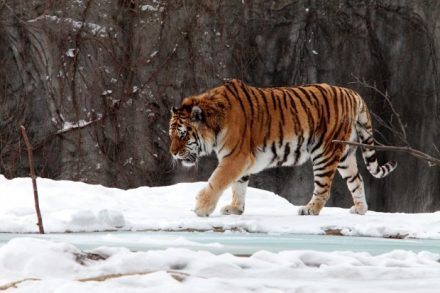
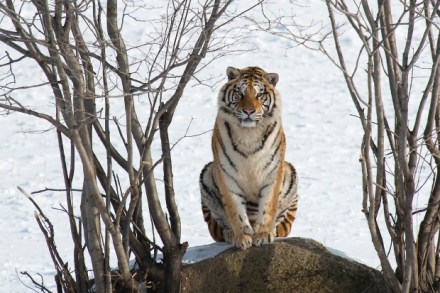
Of all charismatic animals, tigers are surely the most filmed, televised, documented, noisily cherished and, paradoxically, the most persecuted on Earth. It is also probably the one wild mammal more people wish to see than any other. In Asia, images of striped cats are indivisible from the modern tourist industries of several countries, especially India and Nepal. Yet this is not the case for the most impressive of all tiger populations, which is the race found in Siberia. Just to give you a sense of its stature: most Bengal tigers weigh about 150kg, but this relative from south-easternmost Russia can be more than twice as heavy. The Korean author of this extraordinary book describes a moment when he investigates the claw marks left by one of these super cats, a male called Khajain.

Spectator books of the year: Mark Cocker on a stake through the heart of pseudoscience

From our UK edition

The Invention of Nature: The Adventures of Alexander von Humboldt, the Lost Hero of Science by Andrea Wulf (John Murray, £25). Darwin pronounced him the greatest scientific traveller who ever lived, but the brilliant German Alexander von Humboldt (1769–1859) left no groundbreaking theory or world-changing book. Wulf sets out to restore his diminished reputation, and has given us the most complete portrait of one of the world’s most complete naturalists. Derek Ratcliffe occupied a smaller stage but was no less committed to a panoramic understanding of British nature.

Green is the colour of happiness

From our UK edition

According to this wonderfully thought-provoking book, human attachment to plants was much more evident in the 19th century than it is now. In those days people showed genuine wonder at their ‘strange existences and unquantifiable powers’, especially the British, who fashioned the most ambitious glass building of the age —the Crystal Palace in Hyde Park — drawing on the weird architecture of the amazonica lily as a blueprint. Richard Mabey suggests that these are more prosaic times, where trees are invariably seen as primary producers, economic heavy-lifters or practical oxygen-supply operatives, or merely as a vegetative background to the planet’s real agents: ourselves and other animals.

The soul takes flight

From our UK edition

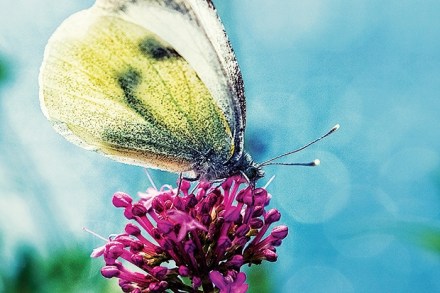
Last month, at Edinburgh School of Art, I was interested to come across a student who’d chosen Marlowe’s Dr Faustus as her end-of-year degree project. In the wonderful stage costume she’d designed for its central figure were three gloriously embroidered butterflies fluttering around his hat. Bats, yes, moths, maybe, but what exactly was the significance of butterflies to a man bound for subterranean hell? The answer is in Rainbow Dust, Peter Marren’s superbly distilled statement on our national obsession with butterflies. It turns out that western civilisation has projected a stream of ideas and meanings on to these creatures that have made them fertile artistic territory for centuries.

To Hell in a handcart — again

From our UK edition

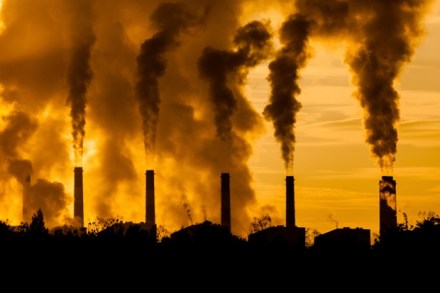
Despite the offer of joy proposed in the subtitle, this is a deeply troubling book by one of Britain’s foremost journalists on the politics of nature. Michael McCarthy was the Independent’s environmental editor for 15 years, and his new work is really a summation of a career spent pondering the impacts of humankind on the world’s ecosystems. The case he lays bare with moving clarity in the opening chapters is compelling stuff. Essentially he argues that the world of wild creatures, plants, trees and whole habitats — you name it — is going to Hell in a handcart as a consequence of what he calls ‘the human project’.

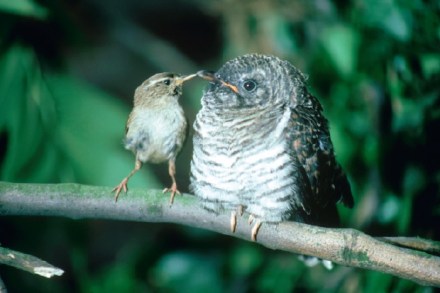
Why the cheating cuckoo may finally be getting its comeuppance

From our UK edition

In recent years there has been a fashion for so-called ‘new nature writing’, where the works are invariably heavy with emotion, while the descriptions of place and wildlife often serve as a hazy green backcloth against which the author depicts the main subject —their own personalities. It comes as something of a shock, therefore, to find a new nature book that returns to a traditional format. It’s one in which the character of the writer barely intrudes and the real subject, picked apart in meticulous detail, is nature itself. In the hands of a scholar who is also a first-rate storyteller, you realise just how entertaining such a work can be.

John Lister-Kaye tracks Highland wildlife through a pair of binoculars as he lies in his bath

From our UK edition

Sir John Lister-Kaye has adopted a very familiar format in his new book of wildlife encounters. Essentially he charts a single 12-month cycle in the life of the Scottish Highlands near his home at the Aigas Field Centre, just to the west of Inverness. The author has lived in the region since the 1960s, when he was lured north out of a business career to take up work with the famous naturalist Gavin Maxwell. In the intervening half-century he has acquired a deep knowledge of wildlife, and many of his observations are skilfully woven into the fabric of his 12-month narrative, so that we end up with a lifetime’s rich experience for the price of one year’s diary.

From water-dwelling sponges to face-eating hyenas: the whole of life is in this book

From our UK edition

‘The meaning of life’, announces Simon Barnes in the opening pages of his new book, ‘is life, and the purpose of life is to become an ancestor.’ Simple really. Yet it is hard to imagine a title launched this autumn that has a more all-encompassing theme or a larger moral purpose. Ten Million Aliens is an impassioned hymn to the teeming multitude of organisms crowded alongside humanity on this ever-smaller planet. In truth even Barnes’s vast panorama is only a partial statement about the Earth’s genuine biodiversity. For, as he readily acknowledges, he has been obliged to omit for want of space all 28 kingdoms of bacterial organism, five other kingdoms of unicellular life, as well as all the hundreds of thousands of green plant and fungi species.