Mark Cocker

Will we ever stop predicting the end of civilisation?

From our UK edition

In the sphere of British environmentalism, Paul Kingsnorth is admired as a maverick in thought and deed. Starting out as a journalist with the Ecologist magazine, he co-founded the Dark Mountain Project, an online portal devoted to stories about the more-than-human world in a time of ecological collapse. On resigning from both, he retreated as

Bats have suffered too long from the ‘Dracula effect’

From our UK edition

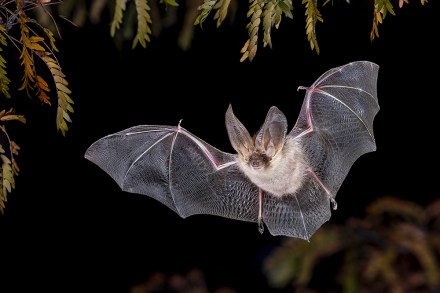
Perhaps it is not surprising that bats, which sleep by day, feed by night and swoop through the darkness as erratically as moths, are among the least understood group of mammals. Yet one of the most poorly appreciated facts about them is their global success. They have a near universal presence across six continents and

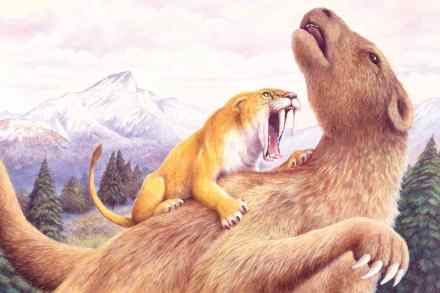
Man’s fraught relationship with nature extends back to prehistory

From our UK edition

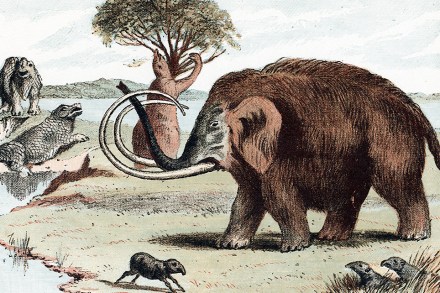
It is now almost a prerequisite of any dispute among environmentalists to recall a judgment offered by the literary critic Raymond Williams – that ‘nature’ is perhaps the most complex word in the English language. Attempts to unravel its meaning are fraught with challenge. Does it signify just the living elements of the biosphere, or

The sad history of the Hawaiian crow

From our UK edition

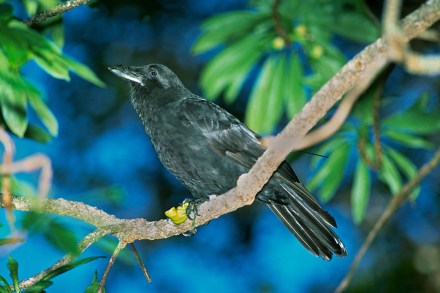
Over a 40-year career, Sophie Osborn has evolved from a greenhorn volunteer for nature, doing mundane tasks in the wilds of Wyoming, to the manager of a captive-release programme for California condors in Arizona. This post placed her at the heart of perhaps the most sophisticated operation for a threatened bird anywhere in the world.

Tom Cruise and the art of falconry

From our UK edition

Last week, the Hollywood team making the latest Mission Impossible film was desperate to clear Trafalgar Square of its superabundant pigeons for a scene involving its star, Tom Cruise. But it was not an ultrasonic laser in Ethan Hunt’s high-tech kitbag that did the trick. What you apparently need to rid central London of its

Do we really want to bring back the wolf?

From our UK edition

Near our house on the Derbyshire-Staffordshire border is a place called Wolf Edge. It is a raven-haunted slope set to the sounds of curlew song in high spring and I visit it regularly, not least because I imagine that within the deep peat soil there is some remembrance of the site’s eponymous predator, and the

Life is a far richer, more complicated affair than we imagined

From our UK edition

In 1982, the philosopher Karl Popper suggested that ‘science may be described as the art of systematic simplification’. In this mind-stretching book, Philip Ball seems to wish to prove Popper’s statement both wrong and correct. On the one hand, Ball is a clarifier supreme. It is hard to imagine a more concise, coherent, if also

The world is ablaze – yet climate chaos still takes us by surprise

From our UK edition

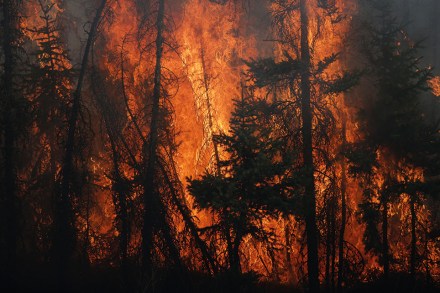
In the light of recent fire emergencies on the Greek islands and in the wider Mediterranean, this book has just acquired even more relevance. It centres on another catastrophe in May 2016, a Canadian inferno nicknamed the ‘Beast’, which has become the most expensive natural disaster in the country’s history. Within three weeks, Fort McMurray’s

Living trees that predate the dinosaurs

From our UK edition

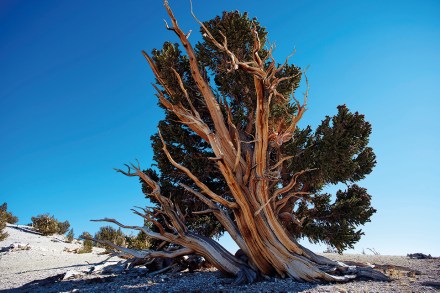
It is perhaps easy to understand why some of the Earth’s largest trees, with roots spreading deep into the underworld as their upper limbs ascend to heaven, are charged with symbolic importance. Yet the origins of our fixation are perhaps surprising. To give one example, the Buddha was said to have attained enlightenment beneath the

Healing herbs in abundance in an unspoilt corner of central Europe

From our UK edition

The only thing I’m uncertain about in this uplifting and beautifully written book is its subtitle. Granted, the landscape Kapka Kassabova invokes does sound like ‘a place that struck you dumb with its majesty’, but we are not in some Shangri-La beyond the reach of mortals. The valley in question is a two-hour drive from

Finally, the Sherpas are heroes of their own story

From our UK edition

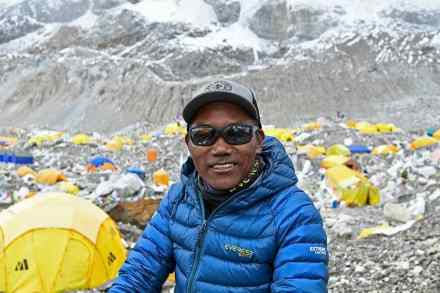
John Keay has for many years been a key historian and prolific contributor to the romance attaching to the highest mountains on Earth. His latest book is described as a summation of that lifetime’s contribution, offering an overview of the Himālaya – the Sanskrit version (‘Abode of Snow’) that Keay bids us use – both

The catastrophe that allowed mammals to reign supreme

From our UK edition

Humans are so comfortable with their self-declared dominance over the rest of life, appointing themselves titular head of an entire geological age in the ‘Anthropocene’, that we forget how we are party to a much wider evolutionary alliance: the mammals. Steve Brusatte announces that mammals reign supreme upon this planet. One thinks especially of their

Adapt or die: what the natural world can teach us about climate change

From our UK edition

Climate change may be the central challenge of our century, but almost all attention has focused on its consequences for one organism: Homo sapiens. In an original, wide-ranging and carefully researched book, the American biologist Thor Hanson addresses its implications for the rest of life. Rather than overwhelming us with a sense of catastrophe, he

Beavers, not concrete barriers, can save Britain from floods

From our UK edition

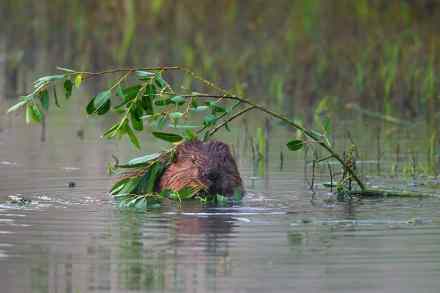
As the start date of COP26 draws closer, and just when we are assailed by daily proof of climate chaos, it is easy to think that this is the only threat to the global environment. It is not. Systemic biological loss assails the world and, while it is closely related to the issues of climate,

Richard Dawkins delights in his own invective

From our UK edition

The late Derek Ratcliffe, arguably Britain’s greatest naturalist since Charles Darwin, once explained how he cultivated a technique for finding golden plovers’ nests. As he walked across the featureless moor, ‘the gaze’, he wrote, had to be ‘concentrated as far ahead as possible, not in one place, but scanning continuously over a wide arc from

Bird migration is no longer a mystery — but it will always seem a miracle

From our UK edition

Bird migration was once one of those unassailable mysteries that had baffled humankind since Aristotle. A strange hypothesis, genuinely advanced in the early modern period, was that birds flew to the Moon for winter, and barely more credible was a notion, which haunted the patron saint of British naturalists Gilbert White, that swallows buried themselves

Where time stands still: a Himalayan pilgrimage

From our UK edition

The region of Dolpo in Nepal forms part of a border zone between that country and China in the central Himalayas. It is essentially a high-altitude desert encircled by towering snow-capped peaks and has long been celebrated in the West as a real-life version of Shangri-La. Part of the image flows from the restricted access